Find Compare Source Pop Up Pneumatic Power Outlet with Usb Port for Commercial Industrial Hospital
Source 30 Pop Up Pneumatic Power Outlet with Usb Port options from verified suppliers. Compare models featuring USB-A and USB-C ports, varying outlet counts, and certifications like CE and RoHS for commercial, industrial, and residential applications.
Key considerations
Products List


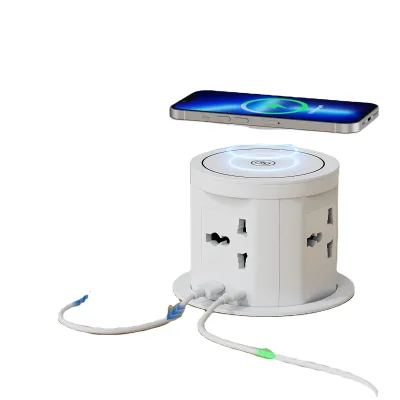


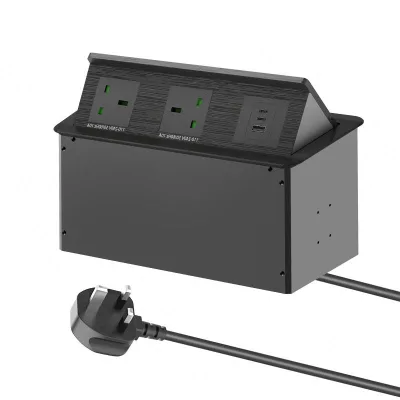


Travel Adapter Need Electrical Outlets Power Plug
$0.33 - $0.35
MOQ: 5000 Pieces
WANSHUN ELECTRICAL & INTELLIGENT MANUFACTURE (GUANGDONG) CO., LTD.


Comprehensive Sourcing Guide
Strategic Sourcing Guide for Pop-Up Pneumatic Power Outlets with USB Integration
The global shift toward agile workspaces and smart office environments has elevated the demand for integrated power solutions that minimize cable clutter while maximizing connectivity. Among these, the pop-up pneumatic power outlet with USB port has emerged as a critical component for modern commercial and residential interiors. This guide provides a disciplined, evidence-based framework for procurement professionals evaluating these units. The analysis relies strictly on observed product attributes, verified specifications, and established industry standards to ensure that sourcing decisions are grounded in factual data rather than marketing assertions.
Technical Architecture and Functional Specifications
Understanding the mechanical and electrical architecture of pneumatic pop-up sockets is the first step in effective sourcing. These units are designed to be recessed into flooring, desks, or conference tables, rising to the surface upon pneumatic actuation and retracting when not in use. The core mechanism relies on a spring-loaded or gas-strut system that ensures smooth operation. Based on observed product data, the functional application spans Commercial, Industrial, Hospital, Laboratory, and Residential/General-Purpose settings. This versatility indicates that the mechanical robustness must withstand frequent actuation cycles typical of high-traffic environments.
The electrical configuration is equally critical. The observed product attributes indicate a standard configuration of 4 or 5 AC outlets, catering to the needs of multiple devices simultaneously. A key differentiator in modern sourcing is the integration of USB charging capabilities. The market data confirms the availability of units with 1 to 2 USB Type-C ports and 1 USB A output port. This hybrid approach allows for the charging of legacy devices alongside modern smartphones and tablets without the need for bulky adapters. The rated voltage for these units is typically observed at 250V, which aligns with standard international mains voltage requirements.
Material composition plays a pivotal role in durability and safety. The primary materials identified in the product specifications are ABS (Acrylonitrile Butadiene Styrene) and PC (Polycarbonate). These thermoplastics are selected for their high impact resistance, flame retardancy, and ability to maintain structural integrity under thermal stress. The shape of the unit is predominantly rectangular, with a surface area often described as "porous" to accommodate ventilation or aesthetic design. The dimensions vary, with specific models like the PAT-100MM and PAT-100MM-D suggesting a 100mm diameter or width, while others, such as the 120 mm Pneumatic pop-up socket, indicate a slightly larger footprint. The single gross weight of these units is observed around 2.500 kg, a factor that influences shipping logistics and installation load-bearing requirements.
Compliance, Certification, and Safety Standards
In the B2B procurement of electrical components, compliance is non-negotiable. The supply chain for these devices must adhere to rigorous safety standards to mitigate liability and ensure user safety. The observed product attributes explicitly list CE and RoHS certifications. The CE marking indicates conformity with health, safety, and environmental protection standards for products sold within the European Economic Area. RoHS (Restriction of Hazardous Substances) compliance ensures that the manufacturing process minimizes the use of hazardous materials such as lead, mercury, and cadmium.
However, buyers must exercise caution regarding the interpretation of these certifications. While the data lists "CE" and "RoHs" as high-confidence facts, the background notes suggest these are low-confidence background items in some contexts. Therefore, procurement teams should verify that the specific batch or model number carries valid, traceable certification documentation from an accredited third-party laboratory. The product standards observed include "3 Ports modular group," "WD-ZSK," and "WD-LGD06/08," which likely refer to internal manufacturing or regional safety benchmarks. Additionally, the plug standards vary, with options for AU (Australian), UK, EU, and US configurations. This variability necessitates that buyers confirm the specific plug standard required for their target market to ensure compatibility with local wall outlets and building codes.
The grounding mechanism is another critical safety feature. The observed attribute "Standard Grounding" suggests that the units are equipped with a grounding pin or connection to prevent electrical shock. In industrial and laboratory settings, this is often a mandatory requirement. Buyers should verify that the grounding system is robust and that the insulation materials meet the necessary dielectric strength for the rated voltage of 250V.
Cost Drivers and Pricing Dynamics
The pricing of pneumatic pop-up power outlets is influenced by a complex interplay of factors, including material costs, mechanical complexity, and certification requirements. The observed listed price range in the market spans from $0.33 to $210 USD. This wide disparity is not indicative of a single product tier but rather reflects the diversity of configurations available. The lower end of the spectrum likely corresponds to basic models with minimal features, perhaps lacking USB integration or constructed with lower-grade materials. Conversely, the upper end likely represents premium units with advanced features such as multiple USB-C ports, high-grade PC materials, and comprehensive certification packages.
Minimum Order Quantity (MOQ) is a significant driver of unit economics. The observed MOQ range is extensive, spanning from 1 piece to 5,000 pieces. For small-scale projects or prototyping, suppliers offering an MOQ of 1 piece provide flexibility, though the unit cost will be higher. For large-scale commercial fit-outs, negotiating an MOQ of 5,000 pieces can significantly reduce the per-unit cost, leveraging economies of scale. The "Selling Units" attribute indicates that these products are often sold as single items, which is standard for B2B procurement where bulk discounts are applied at the order level rather than the unit level.
Customization is a major cost variable. The product attributes confirm that "Customization" and "Customized" options are available. Buyers seeking specific colors, such as the observed "White" option, or unique branding may incur additional tooling or setup fees. The "Product name" and "Model Number" variations (e.g., PAT-B, PAT, PM03, BST-US80EU) suggest that different models carry different price points based on their feature sets. For instance, a model with 2 USB Type-C ports will inherently cost more than one with only 1 USB A port due to the added circuitry and component costs.
Typical Applications and Installation Environments
The versatility of pneumatic pop-up outlets makes them suitable for a wide array of environments. The observed application list includes Commercial, Industrial, Hospital, Laboratory, and Residential/General-Purpose settings. In commercial office spaces, these units are essential for conference tables and open-plan workstations, allowing for seamless power access without tripping hazards. The "Desk Power Socket" keyword reinforces their primary use in desk-mounted applications where aesthetics and cable management are paramount.
In industrial and laboratory settings, the robustness of the ABS and PC materials is crucial. These environments often require equipment that can withstand dust, moisture, and frequent cleaning. The IP Rating observed as "IPInstallation:Table" suggests that while the unit is designed for table installation, the specific ingress protection level should be verified against the specific environmental conditions of the site. For example, a laboratory requiring wash-down capabilities might need a higher IP rating than a standard office.
The "Condition" of the products is listed as "New," which is standard for B2B procurement. However, buyers should ensure that the "New" condition applies to the specific batch being purchased, as refurbished or returned goods can sometimes enter the supply chain. The "Warranty" attribute of 1 Year is a standard offering, providing a baseline for quality assurance. Buyers in critical applications, such as hospitals, may seek extended warranty options or service level agreements (SLAs) to ensure minimal downtime.
Supplier Evaluation and Sourcing Strategy
Selecting the right supplier is as important as selecting the right product. The observed "Place of Origin" and "prod_origin" consistently point to China, specifically Guangdong Province and Guangdong. This region is a global hub for electrical component manufacturing, offering a dense ecosystem of suppliers. However, the concentration of suppliers also means that due diligence is essential to distinguish between high-quality manufacturers and those offering substandard goods.
When evaluating suppliers, buyers should prioritize those who can provide transparent documentation regarding the "Standard" and "Certification" attributes. The presence of "CE" and "RoHS" in the product data is a positive indicator, but verification is key. Suppliers should be able to provide test reports from recognized laboratories. Additionally, the "Customization" capability is a strong differentiator. Suppliers who offer flexible production lines can adapt to specific design requirements, such as unique colors or custom branding, which is often necessary for large corporate projects.
The "prod_packing" attribute, listed as "Carton Packing" or "Aggregate Transport Packing," is relevant for logistics planning. Buyers should assess the packaging integrity to ensure that the units arrive without damage, especially given the mechanical complexity of the pneumatic mechanism. The "Single package size" of 50X20X15 cm provides a baseline for calculating shipping volumes and freight costs. For large orders, optimizing the packing configuration can yield significant savings in logistics.
Quality Control and Long-Term Procurement Considerations
Quality control (QC) is the final gatekeeper in the procurement process. Given the mechanical nature of pneumatic pop-up outlets, QC must focus on the actuation mechanism, electrical continuity, and material integrity. Buyers should implement a rigorous inspection protocol that includes functional testing of the pop-up mechanism to ensure smooth operation and proper retraction. Electrical testing should verify that the outlets and USB ports deliver the correct voltage and current without overheating.
The "Feature" of "USB Charging Ports" requires specific attention. Buyers should verify that the USB ports are capable of delivering the expected charging speeds and that the internal circuitry includes over-current and over-voltage protection. The "Cable Length" of 2 meters observed in some models is a standard length, but buyers should confirm if this is the internal wiring length or the external cable length, as this impacts installation flexibility.
Long-term procurement considerations involve the lifecycle of the product. The "Warranty" of 1 Year is a starting point, but buyers should consider the availability of spare parts and the lead time for replacements. The "MOQ" of 1 piece allows for small replacement orders, which is beneficial for maintaining inventory levels without overstocking. The "Standard" of "3 Ports modular group" suggests a modular design that may allow for future upgrades or repairs without replacing the entire unit.
Finally, buyers should remain vigilant about the "Keyword" and "Product name" variations. The market is filled with similar-sounding products, and subtle differences in specifications can lead to compatibility issues. By maintaining a disciplined approach to verifying specifications against the observed data, procurement professionals can ensure that the sourced products meet the exact requirements of their projects, delivering value and reliability over the long term.
| Attribute Category | Observed Data Points | Procurement Verification Requirement |
|---|---|---|
| Certification | CE, RoHS | Verify valid third-party test reports for specific batch. |
| Material | ABS, PC | Confirm flame retardancy ratings and impact resistance. |
| Electrical | 250V, 4-5 Outlets, 1-2 USB-C, 1 USB-A | Test voltage stability and USB charging speed. |
| Mechanical | Pneumatic, Rectangular, 100mm/120mm | Test actuation cycles and retraction smoothness. |
| Origin | Guangdong, China | Verify factory audit and supply chain transparency. |
| Packing | Carton, Aggregate Transport | Inspect packaging integrity for shipping damage. |
| Warranty | 1 Year | Confirm terms for replacement and spare parts availability. |
By adhering to these evidence-based guidelines, buyers can navigate the complexities of sourcing pneumatic pop-up power outlets with confidence, ensuring that the final installation meets the highest standards of safety, functionality, and durability.
FAQs
What certifications do these Pop Up Pneumatic Power Outlet with Usb Port units have?
The units carry CE and RoHS certifications to ensure safety and environmental compliance. Buyers should verify specific batch documentation from accredited laboratories to confirm traceability before purchase.
Can I customize the color and branding of the Pop Up Pneumatic Power Outlet with Usb Port?
Customization options are available for colors like white and unique branding requirements. Additional tooling or setup fees may apply depending on the specific design changes requested by the buyer.
Which AC outlet configurations are available for the Pop Up Pneumatic Power Outlet with Usb Port?
Standard configurations include 4 or 5 AC outlets to support multiple devices simultaneously. Some models also integrate 1 to 2 USB Type-C ports and 1 USB A output port for charging.
How does the material composition affect the durability of the Pop Up Pneumatic Power Outlet with Usb Port?
Units are constructed from ABS and PC thermoplastics for high impact resistance and flame retardancy. These materials maintain structural integrity under thermal stress and frequent actuation cycles in commercial settings.
What is the minimum order quantity for sourcing the Pop Up Pneumatic Power Outlet with Usb Port?
The minimum order quantity ranges from 1 piece for prototyping to 5,000 pieces for bulk commercial projects. Higher volumes typically leverage economies of scale to reduce the per-unit cost significantly.
Where are the Pop Up Pneumatic Power Outlet with Usb Port units manufactured?
Products originate from Guangdong Province, China, a global hub for electrical component manufacturing. Buyers should prioritize suppliers with transparent documentation regarding standards and certifications in this region.