Source Portable Digital Hygrometer for Home, Warehouse, and Greenhouse
Find 30 Portable Digital Hygrometer options with varying measuring ranges and accuracy levels. Buyers can compare models like CMS-EX and HTC-1 for household or industrial moisture monitoring needs.
Key considerations
Products List


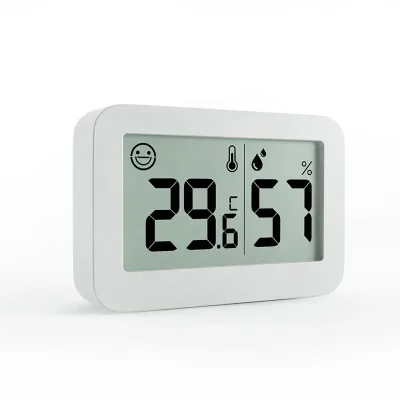
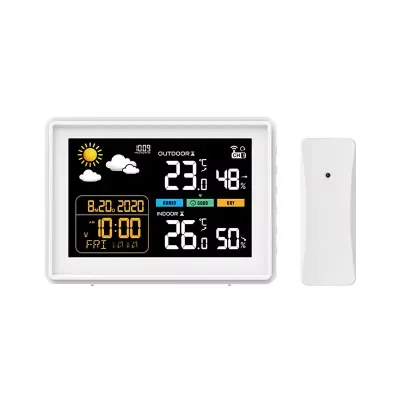
Indoor Room Digital Thermometer Hygrometer Meter for Temperature and Humidity
$1.60 - $2.70
MOQ: 100 Pieces




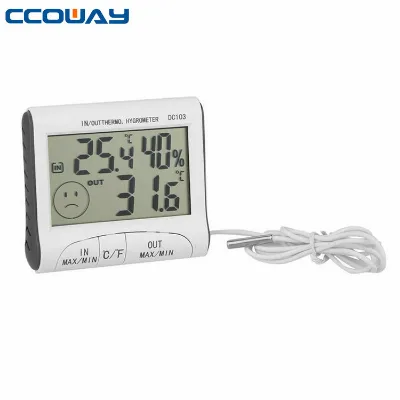
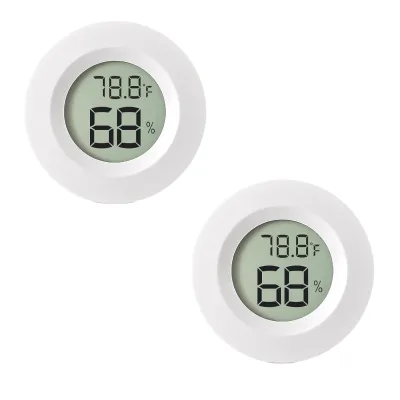
Portable LCD Digital Hygrometer Thermometer for Laboratory Warehouse
$162.00 - $165.00
MOQ: 100 Pieces


Comprehensive Sourcing Guide
Strategic Sourcing Guide for Portable Digital Hygrometers
Understanding Core Technical Specifications and Measurement Capabilities
When sourcing portable digital hygrometers, the primary objective is to identify devices that align with specific environmental monitoring requirements while maintaining portability. The market offers a diverse array of units, each defined by distinct measurement ranges, accuracy levels, and display technologies. A critical observation from current product listings indicates that many devices operate within a temperature range of -50°C to 70°C (-58°F to 158°F), with a corresponding humidity range spanning from 10% to 99% Relative Humidity (RH). However, buyers must exercise caution, as these ranges are not universal across all SKUs. Some models, such as those designated for specific indoor or outdoor applications, may feature narrower operational windows, such as an indoor temperature range of -10°C to 50°C (14°F to 122°F) and an outdoor range of -40°C to 60°C (-40°F to 140°F).
Accuracy is another pivotal specification that varies significantly between product tiers. While some units advertise a temperature accuracy of 1°C, more precise instruments claim a resolution of 0.1°C with an error margin of ±1°C within the 0°C to 40°C range. Humidity accuracy also presents a wide variance; certain specifications list a humidity accuracy of 1%, whereas others indicate a measurement error of ±5% RH under specific conditions (e.g., between 15°C and 40°C). The display technology is predominantly digital, ensuring clear readability in various lighting conditions. Furthermore, the unit of measurement is typically selectable between Celsius and Fahrenheit, a feature essential for international procurement. The physical construction often involves materials like ABS plastic or thermocouples, influencing the device's durability and thermal response time. Buyers should verify the specific model number, such as HTC-1, CMS-EX, or LDTH-6605, to confirm the exact technical capabilities required for their application, as these identifiers often correlate with specific performance profiles.
Compliance, Certification, and Standard Verification
Navigating the compliance landscape for digital hygrometers requires a rigorous verification process, as regulatory requirements differ by destination market. A recurring standard observed in product documentation is the CE mark, which indicates conformity with health, safety, and environmental protection standards for products sold within the European Economic Area. However, the presence of a CE label in a listing does not automatically guarantee compliance for every unit; it must be validated against the specific manufacturer's declaration of conformity. Beyond CE, buyers should investigate whether the product adheres to local safety standards or industry-specific norms relevant to their region.
Packaging standards also play a role in compliance and logistics. Products are frequently shipped in aluminum boxes with plywood cases for heavy-duty protection, or alternatively in standard cartons and brown boxes. Specific dimensions for packaging are sometimes listed, such as 643932cm or 1069822mm, which are critical for calculating freight costs and storage requirements. It is imperative for buyers to request official certification documents rather than relying solely on product descriptions. The absence of a specific certification claim in a listing should not be interpreted as a lack of compliance, but rather as a need for direct supplier confirmation. Buyers must ensure that the supplier can provide valid test reports or certificates that match the specific model being purchased, as certification status can vary even within the same product line.
Cost Drivers and Pricing Structure Analysis
The pricing structure for portable digital hygrometers is influenced by a complex interplay of factors, including technical specifications, customization levels, and order volume. The observed price range in the market spans from $0 to $30,000, a wide variance that reflects the difference between basic consumer-grade units and specialized industrial instruments. Several key drivers contribute to these cost fluctuations. First, the accuracy and resolution of the sensor are primary cost determinants; devices offering 0.1°C temperature accuracy or ±1% humidity accuracy typically command higher prices than those with ±1°C or ±5% error margins.
Second, the degree of customization available significantly impacts the final cost. Many suppliers offer OEM (Original Equipment Manufacturer) and ODM (Original Design Manufacturer) support, allowing buyers to brand the device with their own logo or modify technical specifications. These customizations often involve additional tooling costs and minimum order quantity (MOQ) requirements, which can range from 1 to 500 units. The packaging configuration is another cost factor; while standard white boxes or OPP bags are common, specialized packaging like aluminum boxes inside plywood cases incurs higher material and labor costs. Additionally, the origin of the product, often listed as Guangdong, China, influences labor and manufacturing costs, but this is balanced against the economies of scale achieved by large production volumes. Buyers should analyze the total cost of ownership, including potential shipping costs based on packaging dimensions and weight, rather than focusing solely on the unit price.
Typical Applications and Usage Scenarios
Portable digital hygrometers serve a multitude of applications across various industries, driven by the need for precise environmental monitoring. The most common usage scenario identified is for household applications, where these devices help maintain optimal indoor air quality and comfort levels. In residential settings, they are used to monitor humidity levels to prevent mold growth, protect wooden furniture, and ensure the longevity of sensitive electronics. The ability to switch between indoor and outdoor temperature ranges allows users to monitor both the internal environment and external weather conditions simultaneously.
Beyond the household sector, these devices are essential in industrial and commercial environments. For instance, in storage facilities for pharmaceuticals, food products, or sensitive materials, maintaining specific humidity and temperature ranges is critical to prevent spoilage or degradation. The wide measuring range of -50°C to 70°C makes these units suitable for cold storage applications, while the robust construction of models with ABS materials ensures durability in harsher environments. Some units are specifically designed for outdoor use, featuring extended temperature ranges down to -40°C, making them ideal for agricultural monitoring or outdoor equipment protection. The inclusion of time displays (12/24H) and digital readouts further enhances their utility in scenarios requiring continuous monitoring and data logging. Buyers should match the specific model's temperature and humidity ranges to their intended application to ensure reliable performance.
Supplier Evaluation and Customization Capabilities
Evaluating suppliers for portable digital hygrometers requires a focus on their ability to meet specific customization and quality requirements. A significant number of suppliers offer customized support, including OEM and ODM services, which allows buyers to tailor the product to their brand identity or specific functional needs. The brand name "CCOWAY" is one example of a supplier identity found in the market, but buyers should not limit their search to specific names. Instead, they should assess the supplier's flexibility in handling different packaging requirements, such as white boxes, brown boxes, or custom packaging solutions.
The production location, often cited as Guangdong, China, suggests a concentration of manufacturing capabilities in a region known for electronics production. Buyers should verify the supplier's capacity to handle varying order volumes, as the observed MOQ ranges from 1 to 500 units. This flexibility is crucial for businesses ranging from small startups to large enterprises. Additionally, the warranty period, often listed as 1 year, is a key indicator of the supplier's confidence in their product quality. When evaluating suppliers, buyers should request detailed product data sheets that confirm the specific model numbers, such as H-5289 or OW-03591, and verify the accuracy of the listed specifications. It is also important to inquire about the supplier's quality control processes and their ability to provide sample units for testing before committing to a large order.
Quality Control and Long-Term Procurement Considerations
Ensuring the long-term reliability of portable digital hygrometers requires a robust quality control strategy. The accuracy of these devices can degrade over time due to sensor drift or environmental exposure. Therefore, buyers should prioritize suppliers who offer clear warranty terms, such as the 1-year warranty observed in some listings, and who provide support for calibration or replacement. The temperature detection cycle, which can be as frequent as every 30 seconds in some models, is an indicator of the device's responsiveness and suitability for dynamic environments.
For long-term procurement, buyers should consider the availability of spare parts and the supplier's ability to maintain consistent quality across production batches. The use of standardized materials like ABS and thermocouples suggests a focus on durability, but buyers should verify the specific material grades used. Packaging standards, such as the use of aluminum boxes or plywood cases, also play a role in protecting the devices during transit and storage, ensuring they arrive in optimal condition. Buyers should establish clear communication channels with suppliers to address any issues regarding accuracy, functionality, or packaging damage. Regular audits and sample testing can help maintain high standards and ensure that the procured devices continue to meet the required performance criteria over time.
Comparative Analysis of Key Product Attributes
To facilitate informed decision-making, the following table summarizes the key attributes observed across different product models, highlighting the variations in specifications that buyers should consider.
| Attribute | Model Example A (e.g., HTC-1) | Model Example B (e.g., LDTH-6605) | Model Example C (e.g., H-5289) |
|---|---|---|---|
| Type | Dew Point of Moisture Meter | Thermo-Hygrometer | Mini Hygrometer |
| Temp Range | -50°C ~ 70°C | -9.9°C ~ 60°C | -40°C ~ 60°C (Indoor: -10°C~50°C) |
| Humidity Range | 10% ~ 99% RH | Not Specified | 1% ~ 99% RH |
| Temp Accuracy | 1°C | 0.1°C | ±1°C (0-40°C), ±2°C (40-60°C) |
| Humidity Accuracy | Not Specified | ±5% RH | Not Specified |
| Material | Thermocouple | ABS | ABS |
| Display | Digital | Digital | Digital |
| Packaging | Aluminum Box/Plywood Case | Brown Box | White Box / Customized |
| Customization | Available | OEM, ODM | OEM, ODM |
| Warranty | Not Specified | 1 Year | Not Specified |
| Origin | China | Guangdong, China | China |
This comparison underscores the importance of selecting a model that precisely matches the buyer's specific needs. While some models offer broader temperature ranges, others provide superior accuracy or specialized materials. By carefully reviewing these attributes, buyers can ensure they procure a device that delivers the necessary performance for their specific application.
FAQs
What is the typical temperature accuracy for portable digital hygrometers?
Temperature accuracy varies by model, with some units offering 1°C precision while others achieve 0.1°C. Specific error margins depend on the operating range, such as ±1°C between 0°C and 40°C for certain devices.
Can these devices measure humidity in extreme conditions?
Yes, many models support a wide humidity range from 1% to 99% RH. Some units are rated for outdoor use with temperature ranges extending down to -40°C, ensuring reliability in harsh environments.
Which certifications are commonly available for these hygrometers?
The CE standard is frequently observed in product documentation for these devices. Buyers should verify specific certification documents for each model to ensure compliance with regional safety and environmental regulations.
How does customization affect the minimum order quantity?
Customization options like OEM and ODM support are available for many models. The minimum order quantity for customized units can range from 1 to 500 pieces depending on the supplier and specific requirements.
What packaging options are typically used for shipping?
Packaging varies from standard cartons and white boxes to aluminum boxes inside plywood cases. Specific dimensions like 64*39*32cm or 106*98*22mm are often listed to assist with freight and storage planning.
Where are most portable digital hygrometers manufactured?
The majority of these devices originate from Guangdong, China. This region is a known hub for electronics production, offering a concentration of manufacturing capabilities for various model numbers and specifications.
What is the standard warranty period for these instruments?
A 1-year warranty is commonly provided for portable digital hygrometers. This coverage indicates supplier confidence in product quality and offers protection against defects during the initial period of use.