Source Portable Digital Hardness Testing Instrument for Metallurgy, Mining, and Engineering
Find 30 portable digital hardness testing instruments from verified Chinese suppliers. Compare models like DB20-LX and Leeb432A with ISO standards, CE certification, and options for liquid or solid material testing in pharmaceutical and chemical applications.
Key considerations
Products List


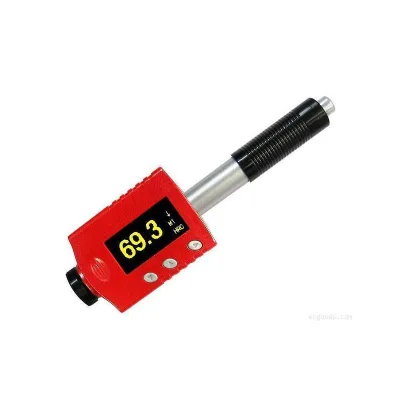
Digital Portable Hardness Tester HARTIP 1800 Leeb Hardness Measurement
$1000.00 - $1500.00
MOQ: 1 Minimum


High-Precision Portable Ultrasonic Hardness Tester with Digital Display
$2566.00 - $5899.00
MOQ: 1 Pieces

Portable Ultrasonic Hardness Tester for Academic and Research Purposes
$2566.00 - $5899.00
MOQ: 1 Pieces


Portable Ultrasonic Hardness Tester with Multi-Scale Measurement Capability
$2566.00 - $5899.00
MOQ: 1 Pieces

Portable Ultrasonic Hardness Tester for Metallurgical and Engineering Use
$2566.00 - $5899.00
MOQ: 1 Pieces


Digital Brinell Hardness Tester Touch Screen Universal Hardness Tester with High Quality
$3200.00 - $3600.00
MOQ: 1 Pieces


Comprehensive Sourcing Guide
Strategic Sourcing Guide for Portable Digital Hardness Testing Instruments
Understanding the Core Instrument Category
The Portable Digital Hardness Testing Instrument represents a critical class of metrology equipment designed for on-site material verification. Unlike laboratory-bound devices, these instruments prioritize mobility and rapid data acquisition, making them indispensable for metallurgy, construction, and manufacturing sectors where moving large workpieces to a testing facility is impractical. The primary operational mechanism for the majority of these portable units relies on the Leeb hardness testing principle. This method involves impacting the material surface with a carbide-tipped indenter and measuring the rebound velocity to calculate a hardness value. This approach allows for non-destructive testing of large assemblies, such as pressure vessels, pipelines, and heavy machinery components, without requiring sample preparation or sectioning.
Buyers must recognize that the term "portable" in this context often correlates with specific physical attributes. The observed market data indicates that these instruments frequently feature a compact design with a weight range typically falling between 0 and 100 kilograms, though many handheld variants are significantly lighter, often around 12 kilograms for the complete unit including accessories. The power requirements are generally standardized to AC220V or 220V 50Hz, ensuring compatibility with standard industrial power grids in many regions. However, the specific power source configuration should always be verified against the local electrical infrastructure of the intended testing site. The mobility of these devices is a key selling point, allowing technicians to perform quality control directly on the production floor or at remote construction sites.
Technical Specifications and Operational Parameters
When evaluating a portable digital hardness tester, the technical specifications provided by the manufacturer must be scrutinized to ensure alignment with the specific material and application requirements. The core specification for these devices is the model number, which often dictates the specific capabilities and accessory kit included. Observed model identifiers in the current market include DB20-LX-DW, DB13-934-1, DB20-LX, DB22-HM455, LONN140, and Leeb432A. These alphanumeric codes serve as unique identifiers for the hardware configuration, software version, and included probes.
The accuracy and reliability of the instrument are heavily dependent on the calibrating method employed. High-quality units utilize standard hardness test blocks for calibration, ensuring that the readings are traceable and consistent. The calibrating method is a fundamental attribute that distinguishes professional-grade instruments from generic tools. Buyers should verify that the device supports calibration against certified reference blocks, as this is essential for maintaining data integrity over time. Furthermore, the control system is a critical operational feature. Many modern units employ button control interfaces, offering a user-friendly experience that minimizes training time for operators. Some advanced configurations may offer manual control options, allowing for fine-tuned adjustments during complex testing scenarios.
The physical dimensions and weight of the instrument are also vital considerations for logistics and field deployment. While the general weight category spans up to 100 kilograms, specific models like the 12kg variant offer superior portability for extended field work. The packing method is another technical detail that impacts shipping and storage; units are typically supplied in protective cases or plywood cases to prevent damage during transit. The standard dimensions for some packaging or internal components may be specified as 230mm86mm46mm, though this varies by model. Understanding these physical constraints is essential for planning storage space and transportation logistics, particularly when shipping international orders.
Compliance, Certification, and Standard Verification
In the realm of industrial testing equipment, compliance with international standards is not merely a formality but a prerequisite for data acceptance. The primary standard observed in the current product landscape is the ISO standard. Buyers must confirm that the specific model they intend to purchase adheres to relevant ISO guidelines for hardness testing. While background knowledge suggests the existence of standards such as ASTM A956-02, DIN 50156, and ASTM A956, these specific numerical designations should not be asserted as universal facts for every listed product without explicit verification from the supplier. Instead, procurement teams should request documentation proving that the instrument meets the specific ISO standard applicable to the material being tested.
Certification status is another critical compliance factor. The CE certification is a widely recognized mark indicating conformity with health, safety, and environmental protection standards for products sold within the European Economic Area. The presence of CE certification on a portable hardness tester suggests that the device has undergone rigorous testing for electrical safety and electromagnetic compatibility. However, the absence of a specific certification claim in a product listing does not necessarily imply non-compliance; it may simply indicate that the listing focuses on other attributes. Buyers should explicitly request copies of certification documents to verify the validity and scope of the CE mark or any other regional certifications required for their operations.
It is also important to note that the standard for the instrument itself may differ from the standard for the material being tested. For instance, while the instrument may be built to ISO standards, the material testing procedure must align with the specific industry requirements, such as those for pharmaceuticals, metallurgy, or construction. The application area for these instruments is broad, covering sectors like pharmaceuticals, metallurgy and mineral processing, food engineering, construction, daily chemicals, and agricultural chemicals. Ensuring that the instrument's capabilities align with the specific standards required for these diverse applications is a key step in the compliance verification process.
Cost Drivers and Procurement Economics
The pricing of portable digital hardness testing instruments is influenced by a complex interplay of factors, including brand reputation, technical specifications, and included accessories. The observed price range in the current market spans from 25 to 5899 USD, reflecting the vast diversity in product tiers. Entry-level models may be available at the lower end of this spectrum, while high-end units with advanced features, extended warranties, and specialized probes command premium prices. The significant variance in pricing underscores the importance of defining the specific testing requirements before making a purchase decision.
Minimum Order Quantity (MOQ) is another economic factor that affects procurement strategy. In the current market, the observed MOQ range is consistently 1 to 1, indicating that suppliers are generally willing to accept single-unit orders. This flexibility is beneficial for small businesses or projects requiring only a single unit for a specific task. Additionally, the availability of small orders is explicitly noted as an accepted practice, further supporting the feasibility of purchasing individual units without the need for bulk commitments.
The total cost of ownership extends beyond the initial purchase price. Buyers should consider the cost of consumables, such as test blocks and replacement probes, as well as the cost of maintenance and calibration services. The warranty period, typically observed as 1 year for these instruments, provides a baseline for after-sales support. However, the cost of extending the warranty or purchasing additional service contracts should be factored into the long-term budget. The supply ability of the manufacturer, often cited as 20 sets per month, can also impact the availability of the product and the potential for bulk discounts. Understanding these economic drivers helps buyers make informed decisions that balance immediate needs with long-term value.
Typical Applications and Industry Use Cases
Portable digital hardness testers are versatile tools employed across a wide array of industries where material integrity is paramount. The primary application area includes metallurgy and mineral processing, where the hardness of steel, cast iron, and other alloys must be verified to ensure structural integrity. In the construction sector, these instruments are used to test the hardness of reinforcing bars, structural steel, and concrete components. The ability to perform non-destructive testing on large, fixed structures makes these instruments invaluable for quality control in infrastructure projects.
Beyond heavy industry, these instruments find applications in the pharmaceutical, food, and chemical sectors. While the primary function is hardness testing, the versatility of the equipment allows for use in environments where material consistency is critical. For example, in the pharmaceutical industry, the hardness of tablets or capsules may be tested to ensure they meet dosage and dissolution requirements. In the food and chemical industries, the testing of packaging materials or processing equipment components ensures that they can withstand the rigors of production. The instrument's ability to handle liquid with suspended solids or pure liquids in related mixing and homogenization processes further highlights its adaptability.
The specific application also dictates the choice of probe and calibration method. For instance, testing soft materials may require a different probe configuration than testing hardened steel. The instrument's range of spindle speed, which can vary from 1 to 1500 r.p.m in related mixing equipment, suggests a level of precision and control that can be adapted for various testing scenarios. The cooling method, such as water cooling, and the heating method, such as electric heating, are features that may be relevant in specific industrial contexts where temperature control is necessary during the testing or preparation process. Understanding these diverse applications helps buyers select the right instrument for their specific operational needs.
Supplier Evaluation and Quality Assurance
Selecting the right supplier is as critical as selecting the right instrument. Buyers should evaluate potential suppliers based on their ability to provide comprehensive after-sales support. The observed market data indicates that suppliers typically offer online support and video technical support, which are essential for troubleshooting issues and ensuring proper operation. The condition of the product, usually listed as "New," is a baseline expectation, but buyers should verify the manufacturing date and storage conditions to ensure the instrument has not degraded over time.
Quality control measures should be a central part of the supplier evaluation process. Buyers should inquire about the manufacturer's quality assurance protocols, including the testing procedures used to validate the instrument's accuracy before shipment. The material processed by the instrument, such as liquid, cream, toothpaste, or ointment, may also be relevant in specific contexts, though the primary focus remains on hardness testing. The mixing capacity, often listed as less than 10 liters, and the stirring type, such as spiral, are features that may be relevant for related equipment but should be distinguished from the core hardness testing function.
Customization is another factor to consider. While some suppliers offer customization options, others may provide only non-customized, standard models. The availability of customization can be a significant advantage for buyers with unique testing requirements. However, buyers should carefully weigh the benefits of customization against the potential for increased lead times and costs. The brand name, such as DUBAN, is a factor in supplier reputation, but it should not be the sole criterion for selection. Buyers should also consider the supplier's location, with China being a common origin for these instruments, and the associated logistics implications.
Long-Term Procurement and Maintenance Strategy
Sourcing a Portable Digital Hardness Testing Instrument is not a one-time transaction but the beginning of a long-term relationship with the supplier. Buyers should develop a maintenance strategy that includes regular calibration, probe replacement, and software updates. The warranty period of 1 year provides a safety net for initial defects, but long-term reliability depends on proactive maintenance. Buyers should establish a schedule for periodic calibration using standard hardness test blocks to ensure the instrument remains accurate over time.
The support language, typically English, is a crucial factor for international buyers. Ensuring that the supplier's technical support team can communicate effectively in the buyer's language is essential for resolving issues quickly and efficiently. The selling units, often listed as single items, allow for flexible procurement, but buyers should consider the potential need for multiple units in the future. The supply ability of 20 sets per month suggests that the supplier can handle moderate demand, but buyers should verify lead times for larger orders or specialized configurations.
Finally, buyers should consider the environmental and safety aspects of the instrument. The use of electric heating and water cooling methods may require specific safety protocols and infrastructure. The material processed, such as liquid or cream, may also have safety implications that need to be managed. By developing a comprehensive long-term strategy that addresses maintenance, support, and safety, buyers can ensure that their portable digital hardness testing instruments continue to provide reliable and accurate results throughout their operational lifespan.
FAQs
What calibrating method does the instrument use?
The instrument uses standard hardness test blocks for calibration. This method ensures traceable and consistent readings, which is essential for maintaining data integrity over time in various industrial applications.
Which certification does the device typically hold?
The device typically holds CE certification. This mark indicates conformity with health, safety, and environmental protection standards, suggesting the unit has undergone rigorous testing for electrical safety and electromagnetic compatibility.
Can buyers place small orders for this equipment?
Yes, small orders are accepted by suppliers. The observed minimum order quantity is one unit, allowing businesses to purchase individual items without needing to commit to bulk quantities for their specific testing needs.
How is the product packed for shipping?
The product is packed in either a standard case or a plywood case. This protective packaging prevents damage during transit and ensures the instrument arrives in good condition for immediate field deployment.
What is the warranty period for the tester?
The warranty period is typically one year. This baseline coverage provides after-sales support, though buyers should consider the cost of extending warranties or purchasing additional service contracts for long-term value.
Which control system operates the instrument?
The instrument operates with a button control system. This user-friendly interface minimizes training time for operators and allows for efficient data acquisition during on-site material verification tasks.
What is the origin location of the product?
The product originates from China. Buyers should verify specific shipping logistics and lead times based on this origin when planning international procurement for their metallurgy or construction projects.