Source Portable Photoelectric Automatic Balance Polarimeter for Biochemistry, Medical Research, Food Analysis
Find 30 Portable Photoelectric Automatic Balance Polarimeter options for biochemistry, medical research, and food analysis. Compare specifications including wavelength, repeatability, and measurement modes from verified Chinese manufacturers.
Key considerations
Products List


High Quality Touch Screen Auto Polarimeter Price Laboratory Digital Polarimeter
$1545.00 - $6441.00
MOQ: 1 Pieces


$900.00 - $1050.00
MOQ: 1 Pieces

$300.00 - $2000.00
MOQ: 1 Pieces

$1200.00 - $1300.00
MOQ: 1 Pieces


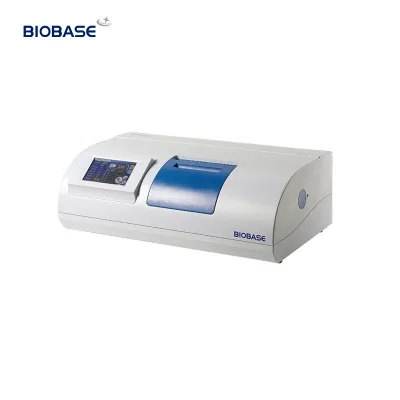

Biobase Polarimeter Digital Polarimeter Price Portable Polarimeter for Lab Use
$1280.00 - $2510.00
MOQ: 1 unit


Biobase Automatic Polarimeter Measure LCD Display Substance Polarimeter for Lab Use
$500.00 - $900.00
MOQ: 1 unit

Biobase Polarimeter with Auto Calibration Function and Temperature Control
$2000.00 - $2720.00
MOQ: 1 Pieces

High Quality Lab Analysis Instrument Portable Disc Optical Rotation Polarimeter
$175.00 - $205.00
MOQ: 1 Pieces
Comprehensive Sourcing Guide
Portable Photoelectric Automatic Balance Polarimeter Sourcing Guide
Procuring a Portable Photoelectric Automatic Balance Polarimeter requires a nuanced understanding of the tension between mobility and laboratory-grade precision. While the term "portable" suggests ease of transport, the supplied product data reveals a complex landscape where devices range from compact, handheld units to substantial desktop instruments weighing up to 32 kg. Buyers must carefully distinguish between true handheld portability and desktop units that are merely lighter than traditional benchtop models. The core keyword implies a device that combines optical rotation measurement with automated digital readouts, yet the observed market includes variations such as sugar refractometers and gem refractometers, which may share optical principles but differ significantly in application and accuracy.
The sourcing process is further complicated by the diversity of product models and specifications available from Chinese manufacturers. Observed listings include models like the WZZ-3, JH-P Series, and SGW-1, each with distinct physical dimensions, weight profiles, and measurement capabilities. For instance, some units are described as having a metal shell and weighing 21 kg, while others feature plastic shells and different overall dimensions. This variance indicates that "portable" is not a standardized industry term but rather a marketing descriptor that varies by manufacturer. Buyers must therefore verify the specific form factor and weight constraints of their intended use case, whether it be field testing in food analysis or controlled measurements in a medical research laboratory.
Product Scope and Observed Listing Signals
The observed product listings indicate a broad scope of applications, primarily centered around biochemistry, medical research, and food analysis. The presence of specific measurement modes such as optical rotation, specific rotation, and sugar degree suggests that these instruments are heavily utilized in industries where concentration and purity of chiral substances are critical. The data also highlights a subset of products labeled as gem refractometers, which implies that some suppliers may offer multi-purpose optical instruments capable of measuring refractive index in addition to optical rotation. Buyers should be aware that while the core technology is similar, the calibration and scale ranges may differ significantly between a sugar-focused polarimeter and a general-purpose optical rotation meter.
Listing signals also reveal significant variation in customization options and packaging standards. Some products are explicitly marked as customizable, while others are non-customized, indicating that buyers with specific workflow requirements may need to engage in direct negotiation with suppliers. The packaging descriptions, ranging from "Standard Export Package" to "Safe and Pure English" packaging, suggest that international buyers should pay close attention to logistics and handling instructions. Furthermore, the observation that some units are described as "Non Portable" despite the core keyword being "portable" serves as a critical warning. Buyers must scrutinize the physical dimensions and weight specifications, such as the 605mm x 370mm x 260mm size for the WZZ-3, to ensure the device fits within their operational constraints.
Technical Specifications to Verify
When evaluating technical specifications, the light source and wavelength are primary considerations for accuracy and longevity. The supplied facts indicate that many modern units utilize Light-Emitting Diode (LED) sources combined with color filters, specifically at a wavelength of 589.44 nm, which corresponds to the sodium D-line commonly used in polarimetry. This LED-based approach offers advantages in stability and lifespan compared to traditional sodium lamps. Buyers should verify the spectral purity and intensity stability of the LED source, as these factors directly impact the repeatability of measurements. The observed repeatability of ≤0.003 degrees for optical rotation is a key performance indicator that should be confirmed through independent testing or certified calibration reports.
Measurement range and resolution are equally critical for determining the suitability of the instrument for specific samples. The data shows a measuring range of 45 to 89.99 degrees for some models, with minimum readings as fine as 0.001 degrees. However, other listings mention a minimum indicating value of 0.001 degrees alongside a standard deviation of repeatability ranging from 0.02 to 0.002. This discrepancy highlights the need for buyers to clarify whether the stated resolution is the display resolution or the actual measurement precision. Additionally, the transmission percentage of 10% for certain models suggests limitations in handling highly turbid or concentrated samples. Buyers must ensure that the instrument's transmission capabilities align with the optical density of their typical samples to avoid measurement errors.
Compliance and Safety Documentation
Compliance with international safety standards is a fundamental requirement for laboratory equipment. The CE certification observed in the product data is a mandatory mark for products sold within the European Economic Area, indicating conformity with health, safety, and environmental protection standards. Buyers importing these devices into Europe or other regions that recognize CE marking must verify that the certification is valid and covers the specific model and voltage configuration being purchased. It is advisable to request the technical file or declaration of conformity from the supplier to ensure that the device meets the relevant Low Voltage Directive and Electromagnetic Compatibility Directive requirements.
Beyond electrical safety, documentation related to calibration and traceability is essential for maintaining data integrity in regulated environments such as food analysis and medical research. Buyers should inquire about the availability of factory calibration certificates and whether the instruments can be calibrated against national or international standards. The presence of digital interfaces such as USB and RS232, as noted in the JH-P Series specifications, facilitates data export and integration with laboratory information management systems. However, buyers must verify that the data output formats are compatible with their existing software infrastructure and that the device firmware supports secure and accurate data transmission without corruption.
Cost Drivers and Commercial Terms
The cost of a photoelectric automatic balance polarimeter is influenced by several factors, including the complexity of the optical system, the quality of the display interface, and the level of automation. Units featuring LCD or TFT touch screens, as seen in the JH-P Series, may command a higher price due to the enhanced user interface and ease of operation. The inclusion of multiple measurement modes, such as optical rotation, concentration, and sugar degree, also adds value by reducing the need for multiple specialized instruments. Buyers should compare the total cost of ownership, considering not just the purchase price but also the cost of consumables, maintenance, and potential software upgrades.
Commercial terms, including minimum order quantities (MOQ) and lead times, vary significantly among suppliers. The observed MOQ range of 1 to 1 suggests that many suppliers are willing to sell single units, which is beneficial for small laboratories or research institutions. However, buyers should be cautious of hidden costs such as shipping, insurance, and import duties, especially when sourcing from international locations like China, Shanghai, or Chongqing. The standard export packaging described in the listings is designed to protect the instrument during transit, but buyers should confirm that the packaging is suitable for the specific shipping method and destination. Negotiating clear terms for warranty coverage and after-sales support is also crucial to mitigate the risk of downtime due to equipment failure.
Supplier Qualification and Quality Control
Supplier qualification is a critical step in ensuring the reliability and longevity of the purchased equipment. Buyers should verify the manufacturer's production capabilities, quality management systems, and history of exporting to their target market. The observation that products originate from various Chinese provinces, including Zhejiang, Shanghai, and Chongqing, indicates a diverse manufacturing base. Buyers should assess the supplier's ability to provide consistent quality across batches, particularly for customized orders. Requesting references from other international clients or visiting the manufacturing facility, if feasible, can provide valuable insights into the supplier's operational standards.
Quality control processes should include rigorous testing of the optical components, electronic stability, and mechanical durability of the instrument. Buyers should inquire about the testing procedures used to verify repeatability, accuracy, and linearity of the measurements. The specification of a metal or plastic shell material affects the durability of the instrument, with metal shells generally offering better protection against physical damage. Additionally, buyers should confirm that the supplier provides comprehensive user manuals and technical support in English, as indicated by the "Standard English Package" and "Pure English" packaging descriptions. Clear communication and accessible support are essential for troubleshooting issues and maximizing the utility of the instrument.
Long-Term Procurement Checks
Long-term procurement success depends on establishing a sustainable relationship with the supplier and ensuring ongoing access to spare parts and technical support. Buyers should verify the availability of replacement components such as light sources, detectors, and sample cells, which may wear out over time. The specified net weight and dimensions of the instruments, such as the 21 kg weight for the WZZ-3, should be considered in the context of long-term usage, including potential relocation or maintenance requirements. Buyers should also assess the supplier's policy on software updates and firmware improvements, which can enhance functionality and address security vulnerabilities.
Regular calibration and maintenance are essential for maintaining the accuracy of the polarimeter over its lifespan. Buyers should develop a maintenance schedule that includes periodic verification of the instrument's performance against known standards. The interface options, such as USB and RS232, should be utilized for regular data logging and performance monitoring. By maintaining detailed records of calibration results and maintenance activities, buyers can demonstrate compliance with quality standards and ensure that the instrument continues to meet their analytical requirements. Proactive engagement with the supplier for preventive maintenance and training can further extend the useful life of the equipment and optimize its performance.
FAQs
What measurement modes does the polarimeter support?
The instrument supports Optical Rotation, Specific Rotation, Sugar Degree, and Concentration measurements. It utilizes a wavelength of 589.44nm with a light source combining LED and color filters to ensure accurate readings for various sample types.
Can I customize the polarimeter for specific lab needs?
Yes, customization is available for this automatic polarimeter model. Buyers can request specific configurations to suit their scientific research or food analysis requirements while maintaining the standard export packaging for safe delivery.
What is the minimum reading value for this device?
The minimum indicating value is 0.001 degrees, allowing for high precision in sugar and optical rotation analysis. This sensitivity ensures reliable data collection for medical research and biochemistry applications requiring detailed concentration measurements.
How heavy is the Portable Photoelectric Automatic Balance Polarimeter?
The net weight of the instrument is 21kg, while the gross weight can reach 32kg depending on the specific model and packaging. The metal shell provides durability, though the unit is classified as non-portable for fixed lab use.
Which certifications does the polarimeter hold for safety?
The device holds CE certification, ensuring compliance with relevant safety and performance standards for laboratory equipment. This certification applies to the automatic polarimeter models originating from China, suitable for use in various international markets.
What interface options are available for data transfer?
The system offers USB and RS232 interfaces for connecting to external computers or printers. These ports facilitate easy data export and integration into existing laboratory information management systems for efficient workflow management.
What is the repeatability of the optical rotation measurement?
The repeatability is less than or equal to 0.003 for optical rotation, ensuring consistent results across multiple tests. This high level of precision is critical for applications in food analysis and sugar concentration determination.