Source Portable Plastic New Jersey Barrier for Road, Parking, Construction
Compare 30 Portable Plastic New Jersey Barrier options from verified suppliers. Evaluate models by dimensions, weight, and color to find the right separation or warning solution for car, road construction, and parking applications.
Key considerations
Products List


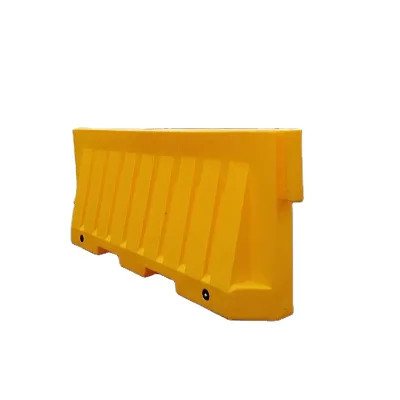


New Lightweight Plastic Crowd Control Pedestrian Barrier for Marathons
$1.00 - $100.00
MOQ: 200 Pieces


Comprehensive Sourcing Guide
Portable Plastic New Jersey Barrier Sourcing Guide
Sourcing portable plastic New Jersey barriers requires a disciplined approach to balancing structural integrity, visibility, and logistical efficiency. These barriers are critical for traffic management, construction zone delineation, and temporary crowd control, serving as a robust physical separation between vehicles, pedestrians, and hazardous work areas. Buyers must recognize that while the core function remains consistent—separation and warning—the specific material properties, dimensional tolerances, and customization options vary significantly across suppliers. The procurement process demands a clear understanding of how these variables impact long-term durability and total cost of ownership, rather than focusing solely on initial unit pricing.
The market for these barriers is characterized by a wide range of product models, from heavy-duty water-filled units to lightweight modular panels. Procurement teams must navigate this diversity by establishing precise technical requirements before engaging with suppliers. Key decision points include the choice of material composition, the method of filling (water or sand), and the specific dimensions required for the intended application. By grounding sourcing decisions in verified product attributes and trusted industry knowledge, buyers can mitigate risks associated with substandard materials, poor UV resistance, and inadequate structural performance in high-impact scenarios.
Product Scope and Observed Listing Signals
The observed product landscape for portable plastic barriers includes a variety of configurations designed for different operational needs. Listings indicate a price range of $1 to $135 USD, reflecting significant variation in size, weight, and material quality. Minimum Order Quantities (MOQs) typically range from 10 to 1,000 units, with some suppliers specifying a standard MOQ of 200 units. This variability suggests that buyers can access both small-scale replacement orders and large-scale infrastructure projects, but must carefully align their volume requirements with supplier capabilities to avoid premium pricing or stockouts.
Product attributes reveal a strong emphasis on visibility and durability, with common color options including red, white, yellow, and orange. Specific models, such as the LZL-HB-03-007, are identified as "Water Barriers" with dimensions of 1000500600mm and a weight of 20kg, indicating a heavy-duty, water-filled design suitable for high-impact zones. In contrast, other models like the HZCHW-36 are lighter, weighing 2.2kgs, with dimensions of 1070490130mm, suggesting a modular or panel-based system. Buyers must distinguish between these distinct product types to ensure the selected barrier meets the specific load-bearing and spatial requirements of their project.
Technical Specifications to Verify
Dimensional accuracy and weight are critical technical parameters that directly influence the stability and effectiveness of the barrier. Standard specifications observed in the market include sizes such as 2000X1000X50MM for larger fence-like structures and 970390240mm for smaller modular units. Buyers must verify that the supplier’s stated dimensions match the physical product, as deviations can affect interlocking mechanisms and overall barrier continuity. Additionally, weight specifications, ranging from 2.2kgs for lightweight panels to 20kg for water-filled units, must be confirmed to ensure the barrier provides adequate resistance against vehicle impact or wind loads.
Material composition and UV resistance are equally important technical factors that determine the lifespan of the barrier in outdoor environments. Trusted category knowledge indicates that high-quality plastic barriers should exhibit resistance to fading and cracking under prolonged sun exposure. Some suppliers claim color lasting up to two years without fading, a metric that buyers should request verification for through independent testing or sample evaluation. Furthermore, the structural design, whether it involves water filling, sand filling, or solid construction, must be clearly defined to ensure compatibility with the intended deployment method and site conditions.
Compliance and Safety Documentation
Safety compliance is paramount when deploying traffic control devices, as barriers must meet specific regulatory standards to ensure public and worker safety. Buyers should request documentation that verifies the barrier’s compliance with local traffic safety regulations, such as those governing impact resistance and visibility. While specific certification names may vary by region, the presence of test reports demonstrating compliance with recognized standards is essential. Buyers must ensure that the supplier can provide evidence of rigorous testing, including drop tests, impact tests, and UV exposure tests, to validate the product’s performance claims.
Visibility and warning functions are integral to the safety profile of these barriers, requiring high-contrast colors and reflective properties. The observed color options, including red, white, yellow, and orange, are standard for warning applications, but buyers must verify the reflectivity ratings if the barriers will be used in low-light conditions. Additionally, the structural integrity of the barrier, particularly its ability to withstand impact without shattering or collapsing, must be documented. Buyers should insist on clear safety data sheets and compliance certificates that outline the barrier’s performance under stress, ensuring that the product meets the necessary safety thresholds for its intended application.
Cost Drivers and Commercial Terms
The cost of portable plastic barriers is influenced by several key drivers, including material quality, dimensions, and customization options. Larger, heavier barriers with higher weight capacities typically command higher prices due to the increased volume of plastic and the complexity of the mold. Customization, such as specific branding, logos, or unique color schemes, can also add to the cost, as it requires additional production steps and setup time. Buyers should analyze the total cost of ownership, considering not just the unit price but also the durability and replacement frequency, to determine the most cost-effective solution for their needs.
Commercial terms, including packaging and shipping logistics, play a significant role in the overall procurement cost. Observed packaging details vary, with some products packed in cartons (e.g., 1PCS/Carton) and others in pallets or film bags (e.g., 95 pcs/20" container). Efficient packaging can reduce shipping costs and minimize damage during transit, so buyers should evaluate the supplier’s packaging methods for robustness and space efficiency. Additionally, supply ability, such as the capacity to produce 2,000 sets per month, should be considered to ensure that the supplier can meet the project’s timeline and volume requirements without compromising quality or incurring rush fees.
Supplier Qualification and Quality Control
Supplier qualification is a critical step in ensuring the reliability and consistency of the barriers supplied. Buyers should conduct thorough due diligence on potential suppliers, verifying their manufacturing capabilities, quality control processes, and track record in the industry. This includes assessing their production facilities, equipment, and workforce expertise, as well as reviewing their history of delivering products that meet specified standards. Suppliers with a strong reputation for quality and consistency are more likely to deliver products that perform as expected, reducing the risk of project delays and additional costs associated with defective goods.
Quality control measures should be implemented throughout the production and delivery process to ensure that the barriers meet the buyer’s specifications. Buyers should request samples for evaluation before placing large orders, checking for dimensional accuracy, material quality, and finish. Additionally, implementing a pre-shipment inspection process can help identify any defects or discrepancies before the goods are dispatched. Buyers should also establish clear communication channels with the supplier to address any issues promptly and ensure that any necessary adjustments are made in a timely manner, maintaining the integrity of the procurement process.
Long-Term Procurement Checks
Long-term procurement success depends on establishing a robust framework for ongoing supplier performance evaluation and product quality monitoring. Buyers should regularly review supplier performance metrics, including on-time delivery rates, product defect rates, and responsiveness to issues. This continuous monitoring helps identify potential problems early, allowing for corrective actions to be taken before they impact the project. Additionally, buyers should stay informed about industry trends and technological advancements in barrier design, ensuring that their procurement strategy remains aligned with best practices and evolving safety standards.
Sustainability and lifecycle management are increasingly important considerations in the procurement of plastic barriers. Buyers should evaluate the recyclability and environmental impact of the materials used, as well as the supplier’s commitment to sustainable manufacturing practices. This includes assessing the barrier’s end-of-life options, such as recycling or repurposing, and the supplier’s ability to provide guidance on proper disposal. By incorporating these long-term considerations into their procurement strategy, buyers can contribute to environmental sustainability while ensuring the long-term viability and cost-effectiveness of their barrier solutions.
FAQs
How does a Portable Plastic New Jersey Barrier handle vehicle impacts on roads?
It serves as a separation, obstruction, and warning barrier for car, parking, and road construction applications. The plastic construction provides a lighter alternative to concrete barriers, making it easier to reposition as work zones change. For higher-impact zones, buyers should confirm anchoring or ballasting options, since plastic units typically rely on weight or interlocking rather than mass alone to resist displacement.
What sizes are available for Portable Plastic New Jersey Barrier products?
Listed specifications include 1000*500*600mm, 2000X1000X50MM, 1250*1000*30, 970*390*240mm, and 1070*490*130mm. Unit weights range from about 2.2 kg to 20 kg depending on the model. Choose a size based on whether the barrier will separate parking areas, channel traffic at construction sites, or create longer continuous fence lines where larger panels reduce joint count.
What colors can I order for a Portable Plastic New Jersey Barrier?
Red and white is a standard combination, and single-color options include red, yellow, white, and orange. Bright colors support the warning function in construction and parking environments. Some suppliers note color lasting around two years without fading, though actual durability depends on sun exposure, so ask about UV treatment when sourcing for outdoor long-term deployment.
Can I customize a Portable Plastic New Jersey Barrier for my project?
Yes, customization is listed as available on this category of products. Typical customization covers color selection, branding, and dimensional adjustments, but confirm exact capabilities with each supplier before ordering. Also verify whether custom work affects the stated MOQ of 200 units, as personalized molds or colors sometimes carry higher minimums than standard catalog models.
What is the minimum order quantity for Portable Plastic New Jersey Barrier units?
The listed MOQ is 200 units for this product line. MOQs across the wider category range from 10 to 1000 units depending on model and supplier, so smaller pilot orders may be possible elsewhere. When planning budgets, remember to factor in packaging format, since units ship individually in cartons, on pallets, or as multiple pieces per carton.
How are Portable Plastic New Jersey Barrier products packed for shipping?
Packing options include carton boxes, pallets, and 1 pc per carton configurations, with some models packing 2-4 pieces per carton. One model ships in a film bag, with roughly 95 pieces fitting a 20-inch container and 208 pieces a 40-inch HQ container. Confirm carton dimensions and per-container counts with your supplier, because these directly affect freight cost per unit.
Which applications suit a Portable Plastic New Jersey Barrier best?
These barriers fit car-related settings, parking management, road construction zones, and general road separation tasks. Their primary functions are separation, obstruction, warning, and visual appeal. Because plastic units weigh far less than concrete, they are ideal where frequent repositioning matters, but assess whether the site needs temporary channeling or semi-permanent containment before choosing a model.
Where are Portable Plastic New Jersey Barrier products manufactured?
Products in this listing originate from China, with some suppliers located in Zhejiang province. Zhejiang is a recognized cluster for plastic traffic-safety products, which supports competitive pricing and varied model availability. Confirm each supplier's exact origin, export experience, and production capacity when comparing candidates, since capacity figures such as monthly output vary significantly between manufacturers.