Source Portable Wooden Game Board for Home, Travel, and Events
Compare 30 Portable Wooden Game Board options from verified suppliers. Browse listings featuring diverse models, materials, and specifications to find suitable items for home, travel, and event use.
Key considerations
Products List




Comprehensive Sourcing Guide
Strategic Sourcing Guide for Portable Wooden Game Boards
The global market for portable wooden game boards has expanded significantly as buyers seek durable, eco-friendly, and engaging entertainment solutions for both recreational and educational settings. Sourcing these items requires a nuanced understanding of material properties, safety compliance, and logistical variables. Unlike mass-produced plastic alternatives, wooden game boards offer a distinct tactile experience and longevity, but they also present specific challenges regarding moisture sensitivity and weight distribution. This guide provides a comprehensive framework for procurement professionals to evaluate suppliers, verify product specifications, and mitigate risks associated with importing wooden game boards from international markets.
Technical Specifications and Material Integrity
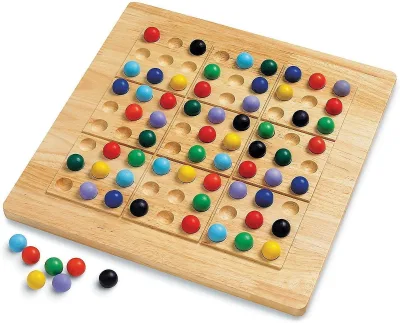
When evaluating a Portable Wooden Game Board, the primary focus must be on the material composition and dimensional accuracy. The core material is invariably wood, which dictates the product's weight, durability, and aesthetic appeal. Buyers should verify that the wood source is treated to prevent warping, a common issue in humid environments. In the context of portable units, the dimensions are critical for shipping efficiency and user portability.
Observed product data indicates a wide variance in physical specifications. Some units are designed as compact boards with dimensions around 22.5cm x 22.5cm x 1.6cm, while others may feature larger play surfaces or integrated storage components. The thickness of the board is a key indicator of quality; thinner boards may be prone to cracking during transport, whereas thicker boards offer better stability but increase shipping costs. Packaging standards also play a role in the final product condition. Typical packaging involves carton boxes, with specific configurations such as 12 sets per carton to optimize container space. The gross weight and net weight ratios, often observed around 10kg and 9kg respectively for specific models, help buyers calculate freight charges accurately.
Furthermore, the design of the game board must align with its intended genre. Whether the product is an abstract strategy game, a memory game, or a counting board, the layout of the board must be precise. The "portable" aspect often implies a folding mechanism or a compact storage case. Buyers must confirm if the board includes a protective wooden box or if it relies solely on cardboard packaging. The presence of a wooden box, often cited with dimensions like 28cm x 7cm x 3cm for storage components, adds significant value and protection but also increases the unit price and volume.
Compliance and Safety Standards Verification
Safety is the paramount concern when sourcing products intended for children or general use. Wooden game boards must adhere to rigorous international testing standards to ensure they are free from toxic substances and physical hazards. The most critical compliance benchmarks include the European EN71-1, 2, and 3 standards, which cover mechanical safety, flammability, and chemical migration, respectively. Similarly, the American ASTM F963 standard is essential for products entering the North American market.
Buyers must request current test reports from suppliers to verify that the specific batch of wooden game boards has passed these tests. It is not sufficient to rely on a supplier's general claim of compliance; the documentation must explicitly reference the specific product model numbers, such as TY409 or TF496, to ensure the report matches the item being purchased. Additionally, environmental certifications are increasingly important for modern procurement strategies. The Forest Stewardship Council (FSC) certification is a recognized indicator that the wood was sourced from responsibly managed forests. While some suppliers may claim "Eco" status or FSC compliance, buyers should treat these as observations requiring verification rather than guaranteed attributes of every listed product.
The age grading of the product is intrinsically linked to safety standards. Products labeled for children under three years old must undergo stricter testing for small parts and choking hazards compared to those designed for adults or older children. Data indicates that some wooden game boards are suitable for ages 3 and up, while others are targeted at adults or all ages. This distinction affects the type of testing required and the labeling on the packaging. A mismatch between the claimed age range and the actual safety testing can lead to regulatory violations and product recalls.
Cost Drivers and Pricing Structures
The pricing of portable wooden game boards is influenced by a complex interplay of material costs, labor, and logistical factors. The raw material cost for high-quality wood fluctuates based on global supply chains, and the processing required to create smooth, splinter-free surfaces adds to the manufacturing expense. The level of customization is another significant cost driver. While many suppliers offer standard designs, custom branding, unique game layouts, or specific wood finishes can substantially increase the unit price.
Minimum Order Quantity (MOQ) requirements also play a crucial role in the total cost of ownership. Observed data shows a wide range in MOQs, from as low as 1 unit for sample orders to 2000 units for bulk production. Some suppliers set a specific MOQ of 1000 units for custom orders, which can be a barrier for small businesses. Buyers must balance the per-unit cost savings of larger orders against the capital tied up in inventory. The price range for these products is extensive, spanning from $0.20 to $1995.00, reflecting the diversity from simple counting boards to complex, multi-piece strategy games with premium packaging.
Shipping costs are a hidden but significant cost driver. The volume of the product, often measured in cubic meters (CBM), directly impacts freight charges. For instance, a product with a carton size of 24cm x 24cm x 26.2cm occupies 0.015 CBM per carton. When calculating the total landed cost, buyers must factor in the number of cartons per container and the chosen shipping method. Options like DHL for express delivery or sea freight for bulk orders will yield different cost structures. Sea freight is generally more economical for large volumes but involves longer lead times, whereas air or courier services are faster but more expensive.
Typical Applications and Market Segmentation
Portable wooden game boards serve a diverse range of applications, from educational settings to high-end recreational use. The versatility of the product allows it to fit into various market segments. In educational environments, these boards are used as teaching tools for mathematics, logic, and strategic thinking. The "Teaching Mode" often involves instructions or disc-based learning aids, making them suitable for classrooms and home schooling. The "Counting Game Board" category, for example, is specifically designed to aid in early childhood development.
In the recreational sector, the applications vary based on the genre of the game. Abstract strategy games appeal to adults and older children who enjoy complex decision-making, while memory games are often targeted at younger audiences or used as cognitive training tools. The "Board Type" classification, such as chess or generic board games, helps buyers identify the specific niche. These products are commonly used in homes, chess-and-card rooms, and even in corporate team-building events. The "Level of Difficulty" ranges from intermediate to advanced, catering to different skill levels and ensuring a broad market appeal.
The target demographic is equally diverse. While some products are explicitly marked for children under three years old, others are designed for adults or all ages. The "Gender" attribute is typically listed as unisex, making these products suitable for a wide audience. Understanding the specific application is vital for marketing and distribution strategies. A buyer targeting the educational market should prioritize products with clear instructional guides and durable construction, whereas a buyer targeting the luxury gift market should focus on aesthetic finishes and premium packaging.
Supplier Evaluation and Selection Criteria
Selecting the right supplier is a critical step in the procurement process. Buyers should evaluate potential partners based on their ability to meet technical specifications, compliance requirements, and delivery timelines. The "Place of Origin" is a key factor, with many suppliers located in China, specifically in regions like Shandong. This location often indicates a mature supply chain for wooden products, but buyers should verify the specific factory capabilities and quality control measures.
Supplier reliability can be assessed by examining their product range and consistency. A supplier offering multiple models, such as KUS-02198d or KU-003491, demonstrates a broader capacity and experience in the field. The "Brand" associated with the product, such as "Wooden Tool Toys" or "Green Wooden Toys," can also provide insights into the supplier's market positioning and reputation. However, buyers should avoid relying solely on brand names and instead focus on the tangible attributes of the products.
Communication and transparency are essential. Suppliers should be willing to provide detailed product specifications, including dimensions, materials, and testing reports. The ability to offer customization is another important criterion, as it allows buyers to differentiate their offerings. The "Customization" attribute being available suggests that suppliers are flexible, but buyers must clarify the scope and cost of these customizations upfront. Additionally, the "Condition" of the product, typically listed as "New," should be confirmed to ensure that no refurbished or used items are being sold.
Quality Control and Long-Term Procurement Considerations
Implementing a robust quality control (QC) process is essential to ensure that the received goods meet the agreed-upon standards. Buyers should consider conducting pre-shipment inspections to verify product dimensions, finish quality, and packaging integrity. The "Testing Standard" compliance should be re-verified during the inspection process, especially for products intended for children. Any discrepancies in the "Member" count or "Time" requirements, such as a game requiring less than 0.5 hours or more than 2 hours of play, should be checked against the product description.
Long-term procurement considerations involve building a sustainable relationship with suppliers. This includes negotiating favorable terms for repeat orders, establishing clear communication channels for updates on material availability, and ensuring consistent quality over time. The "Delivery" method, whether by DHL or sea freight, should be standardized to minimize variability in lead times. Buyers should also consider the environmental impact of their procurement decisions, prioritizing suppliers who demonstrate a commitment to sustainability through FSC certification and eco-friendly practices.
Finally, buyers must plan for the lifecycle of the product. Wooden game boards are durable but require proper care to maintain their condition. Providing clear instructions on storage and maintenance can enhance customer satisfaction and reduce returns. The "Application" area, such as home or card rooms, suggests that the product will be used frequently, making durability a key selling point. By focusing on these long-term factors, buyers can ensure a successful and profitable procurement strategy for portable wooden game boards.
Summary of Key Product Attributes
| Attribute Category | Key Observations | Verification Requirement |
|---|---|---|
| Material | Wooden, Eco-friendly | Verify wood type and treatment |
| Dimensions | Varies (e.g., 22.5x22.5x1.6cm to 38.5x29.6x5.5cm) | Confirm exact specs per model |
| Safety Standards | EN71-1,2,3 / ASTM-F963 | Request specific test reports |
| Age Range | Child (3+), Adult, All Ages | Match age grade to safety tests |
| Packaging | Carton Box, Wooden Box | Check carton size and weight |
| Origin | China (e.g., Shandong) | Verify factory location |
| Customization | Available | Define scope and cost |
| MOQ | 1 to 2000 units | Confirm minimum order threshold |
| Delivery | DHL, Sea Freight | Align with lead time needs |
By adhering to these guidelines and maintaining a rigorous approach to verification, buyers can successfully navigate the complex landscape of sourcing portable wooden game boards. The combination of technical diligence, compliance awareness, and strategic supplier evaluation ensures that the final products meet the highest standards of quality and safety for the end consumer.
FAQs
What safety standards do portable wooden game boards meet?
Portable wooden game boards typically meet EN71-1, 2, 3 and ASTM-F963 standards. These benchmarks ensure mechanical safety and chemical compliance for children aged 3 and up, though adult models may follow different protocols.
Which material is used for the portable wooden game boards?
The core material is wood, often sourced from FSC-certified forests. This ensures environmental sustainability and provides a durable, splinter-free surface suitable for both educational and recreational use.
Can I customize the Portable Wooden Game Board design?
Yes, customization is available for many Portable Wooden Game Board models. Buyers can request specific layouts or branding, though this may affect the minimum order quantity and unit pricing.
How much is the minimum order quantity for these boards?
The minimum order quantity ranges from 1 unit for samples to 2000 units for bulk production. Some specific models require a fixed MOQ of 1000 units for custom orders.
What are the typical dimensions of a Portable Wooden Game Board?
Common dimensions include 22.5cm by 22.5cm by 1.6cm for compact boards. Larger units may reach 38.5cm by 29.6cm by 5.5cm, depending on the specific model and game complexity.
Which shipping methods are available for these products?
Shipping options include DHL for express delivery and sea freight for bulk orders. The choice depends on the order volume and the urgency of the delivery requirement.