Source POS Cash Register for Retail, Hospitality, and Supermarkets
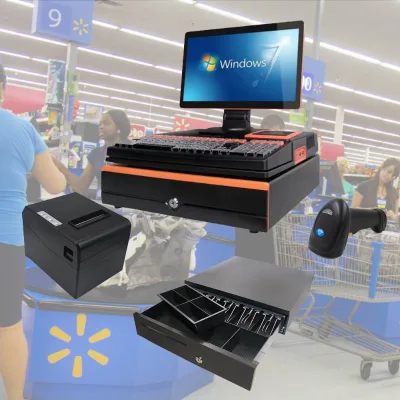
Find and compare 29 POS Cash Register options for retail, hospitality, and supermarket applications. These devices feature Windows operating systems, touch screens, and network management support to streamline transactions.
Key considerations
Products List


POS Systems All in One POS System Terminal Touch Screen Cash Register
$255.00 - $299.00
MOQ: 500 Pieces


Cash Register Machine 15/15.6inch Touchscreen Windows POS System POS Terminal
$239.00 - $249.00
MOQ: 1 Pieces

Electronic Cash Register 11.6 Inch Touch Screen POS Android POS Machines
$128.00 - $139.00
MOQ: 1 Pieces


10.1-Inch Android 11 Touchscreen Cash Register with 2GB+16GB POS Machine
$170.00 - $179.00
MOQ: 1 Pieces


Comprehensive Sourcing Guide
POS Cash Register Sourcing Guide
Sourcing a POS Cash Register requires a clear understanding of the diverse hardware configurations available in the global market. The current landscape includes a wide spectrum of devices, ranging from handheld magcard readers to fixed, all-in-one touchscreen terminals. Buyers must distinguish between these form factors early in the process, as the choice dictates compatibility with existing infrastructure, such as barcode scanners, cash drawers, and customer displays. The observed product count indicates a robust supply chain with significant variation in capabilities, necessitating a structured approach to evaluation rather than a generic search for "POS systems."
The decision-making process is further complicated by the specific functional requirements of different retail environments. Some units are designed primarily for consuming transactions, such as those found in restaurants or hospitality venues, while others support transfer functions suitable for supermarkets or logistics. Additionally, the integration of mobile payment capabilities and network management features has become a standard expectation. Procurement teams must align their technical specifications with the operational workflow of their specific application, ensuring that the selected hardware supports both current needs and future scalability without over-engineering the solution.
Product Scope and Observed Listing Signals
The market for POS cash registers exhibits a broad price range, typically observed between $10 and $6,000 USD, reflecting the disparity between simple peripheral devices and complex, integrated terminal systems. This variance is driven by component quality, processing power, and the inclusion of additional peripherals like thermal printers or dual-screen setups. Buyers should interpret this range as an indicator of the depth of options available, where lower-cost items may serve as specialized add-ons, while higher-priced units represent comprehensive workstations capable of handling high-volume transaction loads. Understanding this spectrum helps in budgeting for both initial deployment and potential expansion.
Minimum Order Quantities (MOQ) also vary significantly, ranging from single units to batches of 500, which impacts procurement strategy for small businesses versus large enterprise rollouts. The availability of customization options suggests that suppliers are willing to tailor hardware configurations, such as adding specific ports or branding, to meet unique client requirements. Furthermore, the presence of various packaging types, from simple paper boxes to protective carton and foam combinations, indicates that logistics and handling considerations are part of the supplier’s value proposition. Buyers should leverage these signals to negotiate terms that align with their inventory management capabilities and distribution needs.
Technical Specifications to Verify
When evaluating POS hardware, the operating system and processing architecture are critical determinants of performance and software compatibility. Many modern units run on Windows 10 or 11, providing a familiar environment for enterprise software integration, while others may utilize specialized embedded systems. The CPU, often based on Intel architecture in higher-end models, ensures the ability to run resource-intensive applications smoothly. Buyers must verify the RAM and SSD configurations, which typically range from 4GB to 16GB of memory and 64GB to 512GB of storage, respectively. These specifications directly influence the speed of transaction processing and the ability to store local data securely.
Display technology and input methods are equally important, with options ranging from standard fixed screens to capacitive touch interfaces with specific resolutions like 1024 x 768. The form factor, whether handheld, fixed, or desktop-mounted, must match the physical constraints of the point of sale. Additionally, the inclusion of compatible devices such as barcode scanners, printers, and cash drawers should be confirmed, as not all POS units come with integrated peripherals. Some models offer optional upgrades like NFC readers or WiFi connectivity, which are essential for modern contactless payment environments. Verifying these technical details prevents costly integration errors during deployment.
Compliance and Safety Documentation
Regulatory compliance is a non-negotiable aspect of sourcing POS equipment, particularly when dealing with financial transactions. Certifications such as CE, FCC, and CCC are commonly observed, indicating that the devices meet specific regional standards for electromagnetic compatibility and safety. For payment processing hardware, EMV certification is crucial, ensuring that the device can securely handle chip card transactions and comply with global banking standards. Buyers must request proof of these certifications from suppliers, as the absence of valid documentation can lead to legal liabilities and operational disruptions in regulated markets.
Beyond hardware certifications, the software and data security protocols embedded within the POS system must be scrutinized. While specific security standards may not always be listed in initial product descriptions, buyers should inquire about encryption methods and data protection measures. The warranty period, often observed as one year for many units, serves as a baseline for supplier confidence in product durability. However, buyers should also consider the availability of extended support and maintenance services, as these are vital for minimizing downtime in high-traffic retail environments. Ensuring that all compliance and safety documentation is up-to-date protects the business from regulatory penalties and enhances customer trust.
Cost Drivers and Commercial Terms
The total cost of ownership for a POS Cash Register extends beyond the initial purchase price, encompassing installation, software licensing, and ongoing maintenance. The observed payment methods, including cash and mobile payments, reflect the flexibility required in modern B2B transactions, but buyers should also negotiate favorable terms for bulk orders or long-term partnerships. The weight and dimensions of the units, ranging from lightweight handhelds to heavier desktop systems, influence shipping costs and installation complexity. Understanding these physical attributes helps in accurately forecasting logistics expenses and warehouse storage requirements.
Customization options can significantly impact the final cost, as tailored features such as specific printer integrations or unique display configurations often incur additional charges. Buyers should clarify whether the quoted price includes all necessary accessories, such as power adapters, cables, and mounting brackets, to avoid hidden costs. The origin of the products, primarily from regions like Guangdong and Guangzhou in China, may also affect lead times and import duties. Establishing clear commercial terms regarding delivery schedules, return policies, and after-sales support is essential for managing financial risk and ensuring a smooth procurement process.
Supplier Qualification and Quality Control
Selecting a reliable supplier for POS cash registers requires a thorough vetting process that goes beyond product specifications. Buyers should assess the supplier’s production capabilities, quality control procedures, and track record in the industry. The availability of customization services suggests a level of manufacturing flexibility, but it also necessitates rigorous quality assurance to ensure that modified units perform as expected. Requesting samples before committing to large orders allows buyers to verify build quality, software stability, and peripheral compatibility firsthand. This step is critical for identifying potential defects or performance issues early in the sourcing cycle.
Communication and responsiveness are key indicators of a supplier’s professionalism and reliability. Buyers should evaluate how quickly and accurately suppliers respond to technical inquiries and provide necessary documentation. The presence of network management support and compatible device lists indicates a supplier’s understanding of the broader POS ecosystem. Establishing a clear channel for technical support and troubleshooting is essential for resolving issues that may arise during deployment or operation. Building a strong relationship with a qualified supplier ensures ongoing support and facilitates smoother future procurement activities.
Long-Term Procurement Checks
Sourcing POS cash registers is not a one-time transaction but an ongoing process that requires regular review and optimization. Buyers should monitor technological advancements in the POS industry, such as the adoption of newer operating systems or payment standards, to ensure that their hardware remains relevant and secure. Regular audits of supplier performance, including delivery times, product quality, and customer service, help maintain high standards and identify areas for improvement. Staying informed about market trends and regulatory changes allows buyers to adapt their procurement strategies proactively.
Additionally, buyers should plan for the lifecycle management of their POS equipment, including software updates, hardware replacements, and end-of-life disposal. Establishing a maintenance schedule and securing service contracts with suppliers can extend the useful life of the devices and reduce downtime. As retail environments evolve, the ability to scale the POS infrastructure up or down is crucial. By maintaining a flexible and informed procurement approach, buyers can ensure that their POS systems continue to meet operational needs efficiently and cost-effectively over time.
FAQs
What customization options are available for these POS systems?
Customization is available for the listed POS Cash Register models. Buyers can select specific configurations such as touch screens, operating systems like Windows 10 or 11, and add-ons like NFC or barcode readers depending on the supplier's capabilities.
Which certifications do these POS devices typically hold?
Many units carry CE, FCC, and CCC certifications, while some models also include EMV compliance. These certifications ensure the devices meet international safety and electromagnetic standards required for commercial use in various regions.
How much does a typical POS Cash Register cost?
The observed price range for these devices spans from 10 to 6000 USD. The final cost depends heavily on the specific model, included features like thermal printers, and the quantity ordered relative to the minimum order quantity.
Can I find POS systems with Windows 10 or 11 operating systems?
Yes, several models support Windows 10 or 11 operating systems. These systems often come with RAM options ranging from 4G to 16G and SSD storage capacities from 64G up to 512G for robust performance.
What are the standard packaging methods for these products?
Products are typically shipped in paper boxes, carton boxes, or carton and foam packaging. The specific packaging type varies by model, with some units having standard dimensions like 48 by 43 by 12 centimeters.
Which locations manufacture these POS cash registers?
Manufacturing origins include China, specifically Guangdong and Guangzhou regions. These locations are known for producing electronic devices that meet international standards and offer various customization options for global buyers.
What payment methods are supported by these POS terminals?
The devices support various payment methods including cash and mobile payments. Some models are designed for transferring funds while others focus on consuming transactions, often compatible with barcode scanners and cash drawers.