Source POS Cash Drawer for Retail, Hospitality, and Banking
Find and compare 25 POS Cash Drawer options for retail, hospitality, and banking applications. These units feature Windows systems, thermal printers, and RJ11 interfaces, with models like GS-410B and GS-400F offering fixed designs and CE/FCC certifications.
Key considerations
Products List


$43.50 - $52.50
MOQ: 100 Pieces






Comprehensive Sourcing Guide
POS Cash Drawer Sourcing Guide
Selecting the right POS Cash Drawer requires balancing mechanical durability with specific interface compatibility to ensure seamless integration with existing point-of-sale hardware. The observed market data indicates a clear distinction between units designed for transferring funds and those optimized for general consumption transactions, necessitating a precise match between the drawer's internal logic and the retailer's operational workflow. Buyers must verify whether the unit supports the specific card types required, such as non-contact IC cards or magnetic cards, as the hardware architecture often dictates the payment processing capabilities available at the terminal.
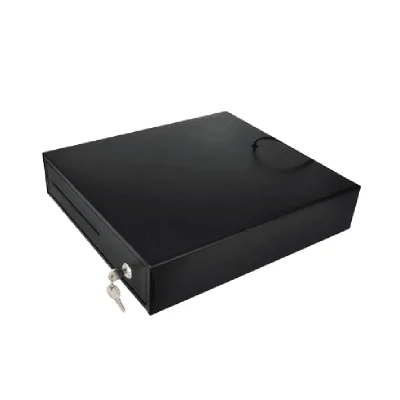
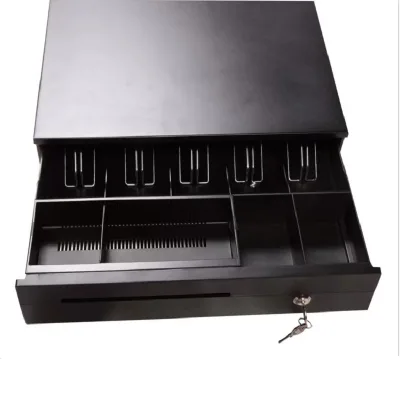
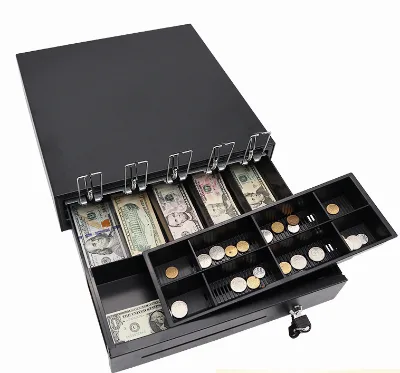
Beyond the electronic interface, the physical construction of the drawer determines its longevity in high-traffic commercial environments. The available inventory highlights a prevalence of steel plate construction with mechanical locking mechanisms, which provides a robust security level suitable for retail applications. However, the variation in dimensions and internal compartment configurations, such as the number of bill and coin boxes, means that a one-size-fits-all approach is rarely effective. Procurement teams must evaluate the specific storage needs of their business, ensuring the selected model accommodates the required volume of currency and receipts without compromising the structural integrity of the unit.
Product Scope and Observed Listing Signals
The current market listings for POS cash drawers reveal a diverse range of functional types, primarily categorized by their intended transactional role. Some units are explicitly configured as POS systems for transferring funds, while others are designated for general consumption purposes, indicating that the internal software or hardware logic may differ significantly between models. This distinction is critical for buyers, as a drawer designed for transfer operations might lack the specific integration points or security protocols required for high-volume consumption environments, potentially leading to operational bottlenecks or compatibility issues with existing payment terminals.
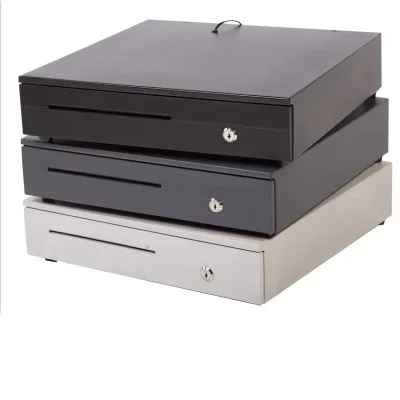
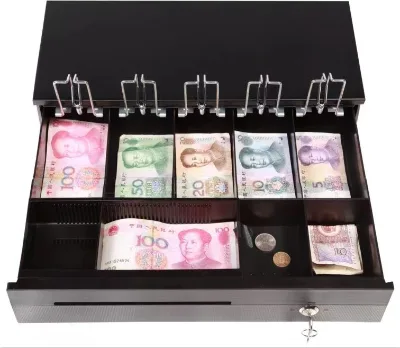
Physical attributes observed in the listings provide further insight into the scope of available products, with color options generally limited to black and white finishes and dimensions varying to suit different counter setups. The presence of specific interface types, such as RJ11, RJ12, and USB, suggests that connectivity is a primary differentiator, requiring buyers to cross-reference their existing POS terminal ports with the drawer's output specifications. Additionally, the variation in bill and coin box capacities, ranging from four to six compartments for each currency type, signals that inventory depth and organization capabilities are key decision factors for businesses managing large volumes of cash transactions daily.
Technical Specifications to Verify
When evaluating the technical specifications of a POS Cash Drawer, the interface compatibility stands out as the most critical verification step for system integration. The observed data lists RJ11, RJ12, and USB as common interface options, meaning buyers must confirm that their point-of-sale terminal supports the specific protocol used by the drawer to ensure reliable communication. A mismatch in interface standards can render the hardware unusable, regardless of its mechanical quality, so procurement teams should physically inspect the port configuration or request detailed pinout diagrams before finalizing a purchase order.
Internal compartment dimensions and currency handling capabilities also require rigorous verification to prevent operational failures during peak business hours. Specifications such as bill lengths of 158mm and coin dimensions ranging from 66mm to 134mm indicate that the drawer is designed to handle standard currency notes and coins, but the exact width and depth of the compartments must align with the local currency in use. Buyers should also verify the total weight of the unit, as observed values around 4.7kg suggest a heavy-duty build, which impacts the stability of the counter setup and the ease of installation for maintenance personnel.
Compliance and Safety Documentation
Compliance and safety documentation for POS cash drawers often involve a mix of electronic certifications and mechanical safety standards that vary by manufacturer and region. The observed listings include certifications such as CE, FCC, and CCC, which indicate that the electronic components meet specific electromagnetic compatibility and safety requirements for the Chinese and international markets. However, the presence of RoHS certification in some listings suggests that environmental compliance regarding hazardous substances is also a factor, and buyers should request specific test reports to confirm that the materials used in the steel plate construction and electronic assemblies adhere to these standards.
Security features are another vital component of the safety documentation, particularly regarding the locking mechanisms and access control. The available data points to the use of mechanical locks with a defined security level, which is essential for protecting cash and sensitive transaction data within the drawer. Buyers must verify the specific security level classification, such as the observed "Level C," to ensure it meets the risk profile of their business environment. Additionally, the password working principle, noted as electronic in some models, requires verification of the backup power and reset procedures to prevent lockouts during power outages or system failures.
Cost Drivers and Commercial Terms
The cost of a POS Cash Drawer is influenced by several factors, including the complexity of the internal mechanism, the quality of the materials used, and the specific interface requirements. The observed price range of 2.2 to 120 USD suggests a significant variance based on these attributes, with higher-priced units likely offering more robust security features, advanced interface options, or specialized customization capabilities. Buyers should analyze the cost per unit against the expected lifespan and transaction volume of their business, as investing in a higher-quality unit with a longer warranty period may yield better long-term value than purchasing a cheaper, less durable alternative.
Commercial terms, including minimum order quantities (MOQ) and payment methods, play a crucial role in the procurement strategy for POS cash drawers. The observed MOQ of 100 pieces for some listings indicates that bulk purchasing is often required to access standard pricing, while other suppliers may offer lower quantities at a premium. Payment terms are typically structured around cash transactions, which requires buyers to ensure they have the necessary liquidity or credit arrangements in place. Additionally, the packaging standards, described as safety packages with Canton boxes and fiber bags, should be factored into the total landed cost, as specialized packaging is essential for preventing damage during international shipping.
Supplier Qualification and Quality Control
Supplier qualification for POS cash drawers should focus on verifying the origin of the product and the consistency of manufacturing processes. The observed data indicates that products originate from China, specifically from regions like Guangzhou and Guangdong, which are known hubs for electronic and hardware manufacturing. Buyers should request evidence of the supplier's production capacity and quality control protocols to ensure that the steel plate construction and mechanical locking mechanisms meet the specified standards consistently across all units in the order.
Quality control measures must also extend to the final assembly and testing of the cash drawers before shipment. The presence of a one-year warranty suggests that suppliers are confident in the durability of their products, but buyers should clarify the specific terms of this warranty, including coverage for mechanical failures versus electronic defects. It is also advisable to request sample units for independent testing to verify the interface connectivity, the smoothness of the bill and coin dispensing mechanisms, and the overall build quality. This proactive approach helps mitigate the risk of receiving substandard units that could disrupt daily operations.
Long-Term Procurement Checks
Long-term procurement success for POS cash drawers depends on establishing a reliable supply chain that can accommodate future growth and maintenance needs. Buyers should assess the supplier's ability to provide spare parts, such as replacement locks or interface cables, to ensure that the units remain operational throughout their lifecycle. The standard dimensions and specifications observed, such as the 410mm width and 420mm depth, should be considered when planning for future hardware upgrades or expansions to ensure compatibility with new POS terminals or counter configurations.
Regular performance monitoring and feedback loops are essential for maintaining the quality of the procurement relationship. Buyers should track the failure rates of the cash drawers in their specific operational environment and compare these metrics against the supplier's warranty claims and response times. By maintaining a record of performance data, organizations can make informed decisions about whether to continue with the current supplier or explore alternative options that offer better reliability or cost efficiency. This data-driven approach ensures that the procurement strategy remains aligned with the evolving needs of the business.
FAQs
What certifications do these POS cash drawers have?
These POS cash drawers feature CE, FCC, and CCC certifications for compliance. Some models also hold RoHS certification. These standards ensure the devices meet international safety and environmental requirements for commercial use in various global markets.
Can I customize the POS Cash Drawer for my business?
Yes, customization is available for these POS cash drawers. Buyers can request specific modifications to suit their operational needs. This flexibility allows businesses to tailor the hardware to their existing point-of-sale systems and workflow requirements effectively.
What is the minimum order quantity for these units?
The minimum order quantity is typically 100 pieces. However, observed ranges indicate MOQs can vary from 1 to 500 units depending on the supplier. Buyers should verify the specific MOQ with the manufacturer before placing an order.
How are these cash drawers packaged for shipping?
The units are packed in safety packages using Canton boxes and fiber bags. This packaging method ensures the devices are protected during transit. The robust packaging helps prevent damage and ensures the cash drawers arrive in good condition for installation.
What payment methods are accepted for these POS cash drawers?
Cash is listed as an accepted payment method for these transactions. Buyers should confirm specific payment terms with the supplier. Understanding the payment process is essential for completing the procurement of these commercial hardware components smoothly and securely.
What is the warranty period for these POS cash drawers?
These POS cash drawers come with a one-year warranty. This coverage provides assurance regarding the product's durability and performance. Buyers can rely on this warranty for support during the initial period of commercial operation and usage.
Where are these POS cash drawers manufactured?
These devices are manufactured in China, specifically in Guangdong and Guangzhou. This origin indicates the production location for the hardware. Buyers sourcing from this region should consider logistics and supply chain factors when planning their procurement strategy.