Source Powder Coated Welded Palisade Fence for Garden, Farm, Highway
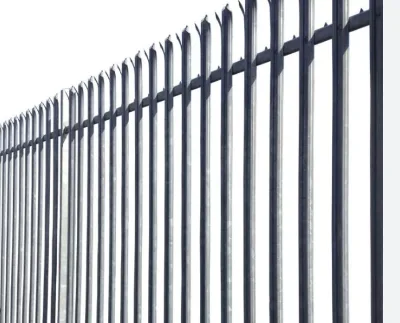
Compare 30 listings of Powder Coated Welded Palisade Fence designed for garden, farm, and highway applications. Buyers can evaluate specifications like height, thickness, and surface treatment options including hot dipped galvanized and PVC coated finishes.
Key considerations
Products List


Comprehensive Sourcing Guide
Strategic Sourcing Guide for Powder Coated Welded Palisade Fences
Understanding Technical Specifications and Material Composition
When sourcing a powder-coated welded palisade fence, the primary objective is to align the physical attributes of the product with the specific security and aesthetic requirements of the project. The core construction of these fences typically relies on low carbon steel wire, which provides the necessary tensile strength while remaining malleable enough for precise manufacturing processes. The welding technique is a critical differentiator; in this context, the panels are constructed using a welded method where wires are fused at their intersections to create a rigid grid structure. This differs significantly from woven or perforated alternatives, offering superior rigidity and resistance to impact.
The physical dimensions of the fence are often customizable to suit site-specific constraints. Buyers should anticipate a standard panel width range of 2.5 meters to 2.75 meters, with heights commonly available in 1.8 meters, 2.0 meters, and 2.4 meters configurations. The vertical pales, which form the primary visual barrier and security element, are frequently specified with a thickness of 2.0mm, 2.5mm, or 3.0mm. The spacing and shape of these pales are also vital; square hole shapes are a common design feature, and the pale size itself may be standardized around 68mm to 70mm. The supporting framework, including angle rails and H-posts, must be robust. Typical angle rail dimensions include 45x45mm, 50x50mm, and 60x60mm, while H-posts often measure 55x100mm or 76x127mm.
The surface treatment process is the defining characteristic of the "powder coated" designation in this keyword. While the base material is low carbon steel, the protective finish involves a multi-step process. The steel is often first hot-dipped galvanized to provide a sacrificial layer against corrosion. Following this, a powder coating is applied, which can be finished in various colors such as black, green, or grey, or customized to match specific branding or environmental guidelines. This dual-layer protection ensures longevity in harsh outdoor environments. The processing services required to achieve these specifications include bending and cutting, which allow for the customization of the final product dimensions.
Compliance, Certification, and Quality Standards
Verifying the compliance and certification status of a supplier is a non-negotiable step in the procurement of industrial fencing. The global market for steel fencing products often references international standards to ensure material integrity and safety. Buyers should look for evidence of ISO 9001:2008 certification, which indicates that the manufacturer adheres to a recognized quality management system. This certification suggests that the production processes, from raw material sourcing to final packaging, are monitored and controlled to maintain consistency.
In addition to general quality management, specific product certifications are essential for different regions and applications. The presence of CE marking is a critical indicator for products intended for the European market, signifying conformity with health, safety, and environmental protection standards. Similarly, ASTM standards are frequently referenced in North American contexts to ensure the steel meets specific mechanical and chemical requirements. The material standard Q235B is a common specification for the low carbon steel used in these fences, indicating a particular grade of structural steel with defined yield strength and chemical composition.
Buyers must verify that the supplier can provide documentation for these certifications rather than relying on verbal assurances. The packaging of the product should also reflect adherence to shipping standards, with items typically packed on pallets to prevent damage during transit. The standard product dimensions, such as 2750x2100mm, should be clearly defined in the technical data sheets to ensure they match the ordered specifications. It is important to note that while specific certifications like CE and ASTM are observed in the market data, the availability of these for any specific batch must be confirmed directly with the supplier, as they are not guaranteed for every listed item without verification.
Cost Drivers and Pricing Dynamics
The pricing of powder-coated welded palisade fences is influenced by a complex interplay of material costs, manufacturing complexity, and logistical factors. The base cost is heavily driven by the price of low carbon steel, which fluctuates based on global commodity markets. The thickness of the pales is a significant cost driver; panels with 3.0mm thickness will inherently cost more than those with 2.0mm thickness due to the increased volume of raw material required. Similarly, the choice of surface treatment adds to the cost. A hot-dipped galvanized finish followed by a high-quality powder coat is more expensive than a simple coated finish, as it involves additional processing steps and energy consumption.
The customization level of the order also plays a pivotal role in the final price. While standard sizes like 2.5m width and 1.8m height may be produced at a lower unit cost due to economies of scale, custom dimensions require specific tooling adjustments and potentially lower production line efficiency. The color selection can also impact pricing; standard colors like black or green are typically more affordable than custom color matches, which may require separate paint batches and quality checks.
Minimum Order Quantities (MOQ) are another critical factor in cost management. Market observations indicate that MOQs can range significantly, from as low as 1 unit for sample orders to 499 units for standard bulk purchases. However, for specific product models or custom configurations, the MOQ might be higher, such as 100 meters of fencing. Understanding these thresholds is essential for budgeting, as ordering below the optimal MOQ can result in a disproportionately high unit price. Additionally, trade conditions such as TT (Telegraphic Transfer), LC (Letter of Credit), and PP (Prepayment) can influence the financial terms and associated banking costs for the buyer.
Typical Applications and Performance Requirements
Powder-coated welded palisade fences are versatile security solutions designed for a wide array of applications. The robust nature of the welded construction and the protective surface treatments make them suitable for environments ranging from residential gardens to high-security industrial zones. In residential settings, these fences serve as boundary markers for gardens and balconies, offering privacy and security while maintaining an aesthetic appeal through color customization. The "eco-friendly" and "rot-proof" features are particularly relevant for these applications, ensuring the fence does not degrade over time or require chemical treatments.
For agricultural and farm use, the "rodent-proof" and "waterproof" characteristics are vital. The fence effectively prevents livestock from escaping and protects crops from unauthorized access or animal intrusion. The "easily assembled" feature is a significant advantage in these scenarios, allowing for rapid deployment and potential future relocation of the fence line. In industrial and municipal contexts, such as highways, railways, and stadiums, the fence must withstand higher levels of stress and potential vandalism. The "welded" technique provides the necessary rigidity to resist impact, while the powder coating ensures resistance to weathering and corrosion, which is critical for infrastructure projects exposed to the elements.
Specific applications like airport fences and bridge fences demand even higher security standards. The ability to customize the height and pale thickness allows these fences to be tailored to meet specific security clearance levels. For instance, a 2.4-meter height with 3.0mm pale thickness might be specified for a high-security perimeter. The "renewable sources" feature mentioned in some product attributes suggests a consideration for sustainable sourcing, which may be a requirement for government or large corporate procurement projects aiming to meet environmental, social, and governance (ESG) goals.
Supplier Evaluation and Sourcing Strategy
Evaluating potential suppliers requires a focus on their manufacturing capabilities and geographical location. The supply chain for these products is heavily concentrated in specific regions known for steel fabrication. Observations indicate that many suppliers originate from Hebei Province, China, specifically Anping, which is a recognized hub for wire mesh and fencing production. This concentration of industry allows for competitive pricing and a wide variety of product options. However, buyers must verify the specific origin of the product, as "China" is a broad designation and the specific province can impact logistics and quality control consistency.
When assessing a supplier, buyers should prioritize those who offer comprehensive processing services, including bending and cutting, which indicates a flexible manufacturing capability. The ability to provide "customized size" options is a strong indicator of a supplier's capacity to handle bespoke projects. Furthermore, the supplier's track record in handling different surface treatments, such as hot-dipped galvanizing and powder coating, should be verified. A supplier that can manage the entire process in-house or through trusted partners is less likely to face quality inconsistencies.
The delivery time is another critical metric for supplier evaluation. A standard delivery time of 30 days is a common benchmark, but this can vary based on order volume and customization. Buyers should clarify the lead time for their specific order requirements to ensure it aligns with project timelines. The selling units, often listed as "single item" for samples or small orders, should be clearly understood to avoid confusion in the ordering process. Finally, the supplier's ability to provide detailed product data, including model numbers like HT-P-003, ensures that the exact specifications are communicated and fulfilled.
Quality Control and Long-Term Procurement Considerations
Ensuring the long-term performance of the fence requires rigorous quality control measures during the procurement process. The integrity of the welds is paramount; any weak points in the welded grid can compromise the structural stability of the fence. Buyers should request visual inspections or third-party test reports to verify the quality of the welding. The surface treatment is equally critical; the powder coating must be applied evenly and cured correctly to prevent peeling or chipping. The combination of hot-dipped galvanizing and powder coating provides a dual defense against corrosion, but the thickness of the coating and the quality of the galvanization layer must be verified against the specified standards.
Packaging is a key aspect of quality control that is often overlooked. The product should be packed on pallets to prevent damage during shipping and handling. The use of "packing on pallet" as a standard practice helps maintain the integrity of the fence panels, ensuring they arrive at the site in the condition required for installation. Buyers should also consider the "TFT" (likely referring to a specific feature or standard) and other listed features like "waterproof" and "rot-proof" as indicators of the product's durability, but these should be validated through actual product testing or supplier guarantees.
For long-term procurement, buyers should establish a relationship with a supplier who can provide consistent quality over multiple orders. The ability to maintain the same color, thickness, and dimensions across batches is essential for large-scale projects where replacement or expansion might be needed years later. The "customization available" feature allows for future adaptability, but it requires clear documentation of the initial specifications to ensure consistency. By focusing on these quality control aspects and maintaining a strategic approach to supplier selection, buyers can secure a reliable supply of powder-coated welded palisade fences that meet their security and aesthetic requirements for years to come.
Comparative Analysis of Fence Configurations
To assist buyers in making informed decisions, the following table compares common configurations of powder-coated welded palisade fences based on the observed market data. This comparison highlights the variations in dimensions, materials, and features that influence the selection process.
| Feature | Configuration A (Standard) | Configuration B (Heavy Duty) | Configuration C (Custom) |
|---|---|---|---|
| Pale Thickness | 2.0mm | 3.0mm | 2.5mm - 3.0mm |
| Panel Height | 1.8m | 2.4m | 1.8m - 2.4m |
| Panel Width | 2.5m | 2.75m | Customized Size |
| Post Type | Standard H-Post | Reinforced H-Post | Custom Angle Rail |
| Surface Treatment | Powder Coated | Hot Dipped + Powder | Hot Dipped + Powder |
| Typical Application | Residential, Garden | Highway, Industrial | Airport, Stadium |
| Material Standard | Q235B | Q235B | Q235B |
| Certification | ISO 9001:2008 | CE, ASTM | ISO 9001:2008 |
This comparison illustrates that while the base material (Q235B low carbon steel) remains consistent, the variations in thickness, height, and surface treatment define the fence's suitability for different environments. Buyers should select the configuration that best balances cost, security requirements, and aesthetic preferences.
FAQs
What materials are used for powder coated welded palisade fences?
These fences are constructed from low carbon steel wire to ensure strength and flexibility. The panels are welded at intersections and finished with hot-dipped galvanizing followed by a powder coat for corrosion resistance.
Which certifications should I look for in a supplier?
Suppliers often hold ISO 9001:2008 for quality management and may provide CE or ASTM certifications for specific regional compliance. Always verify these documents directly as they confirm adherence to international safety and quality standards.
How are the fence dimensions customized for specific projects?
Customized sizes are available with standard panel widths ranging from 2.5 to 2.75 meters and heights of 1.8 to 2.4 meters. Buyers can specify pale thicknesses of 2.0mm, 2.5mm, or 3mm to meet security requirements.
Can the fence be delivered within a specific timeframe?
The standard delivery time is typically 30 days from order confirmation. This lead time may vary based on the order volume and the level of customization required for the specific product dimensions.
What surface treatments protect the steel from corrosion?
The steel undergoes hot-dipped galvanizing before receiving a powder-coated finish in colors like black, green, or grey. This dual-layer treatment ensures the fence remains waterproof, rot-proof, and durable in harsh outdoor environments.
Which applications are suitable for this type of welded fence?
These fences are designed for diverse uses including residential gardens, farms, highways, airports, and stadiums. Their robust welded construction and customizable heights make them ideal for both security and aesthetic boundary marking.
How is the product packed for shipping and transport?
Products are typically packed on pallets to prevent damage during transit and ensure safe handling. This packaging method supports the standard dimensions and protects the powder-coated finish from scratches or impact.