Source PP Flag Drip Emitter for Greenhouse, Pome Culture, Land Cultivation
Compare 30 available options for the PP Flag Drip Emitter designed for efficient water management. Buyers can evaluate specifications including flow rates from 4L/H to 70L/H, materials like PP and PE, and customization features from suppliers in Fuzhou.
Key considerations
Products List


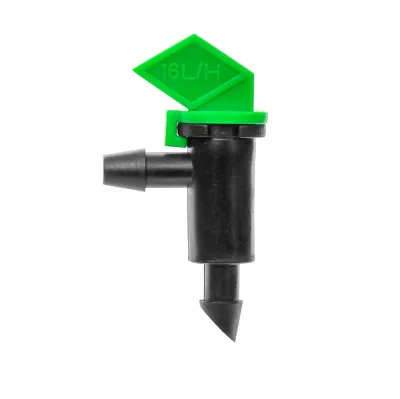


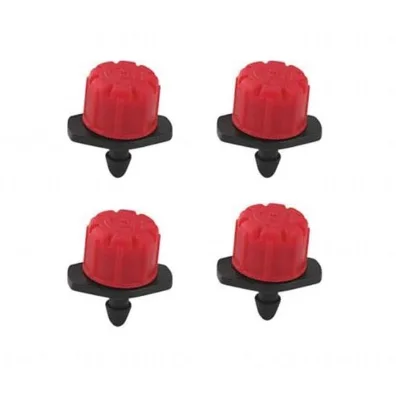
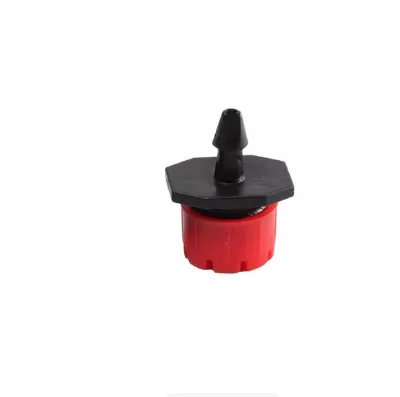

16mm Drip Irrigation Emitter for Efficient Agricultural Watering Solutions
$0.05 - $0.09
MOQ: 1000 Meters


Two Branches Bend Arrow Dripper Emitter for Micro Drip Irrigation System
$0.01 - $0.03
MOQ: 100 Pieces


Greenhouse Irrigation System Plastic 5 Outlet Branches Connector for Arrow Emitter
$0.01 - $0.04
MOQ: 1000 Pieces


Air Cleaning Dispel Ammonia and Dust Reduction Drip Flow Grid Fill
$32.00 - $35.00
MOQ: 10 Square Meters
Shandong Wusen Environmental Control Equipment Technology Co., Ltd
Comprehensive Sourcing Guide
Strategic Sourcing Guide for PP Flag Drip Emitters
Understanding the Technical Profile of Polypropylene Drip Emitters
When sourcing polypropylene (PP) flag drip emitters, buyers must first distinguish between the material properties and the specific functional configurations available in the current market. The core material for these components is explicitly identified as Polypropylene, a thermoplastic polymer known for its chemical resistance and durability in agricultural settings. Unlike other materials such as PVC or PE, PP offers a specific balance of flexibility and rigidity that is crucial for the "flag" style of emitter, which often requires a distinct physical profile to remain visible and functional in the field.
The technical specifications for these devices vary significantly based on the intended flow rate and application method. Market data indicates a wide range of flow capabilities, with observed specifications ranging from 4 Liters per hour (L/H) to a broader adjustable range of 0-70 L/H. This variability suggests that a single SKU may not suffice for a large-scale project; instead, procurement strategies must account for different models, such as the "DFS" or "ADR070" series, which may offer distinct flow characteristics. The "flag" designation often implies a specific shape or mounting mechanism, with some products described as having an "Equal" shape or being designed for "Round" pipe integration.
Furthermore, the connection mode is a critical technical parameter. The supply chain data highlights "Internal Thread" as a standard connection interface, which dictates the compatibility of the emitter with existing irrigation manifolds or tubing. Buyers must verify that the internal thread diameter matches their system's requirements, as mismatched threads can lead to installation failures or leaks. The operating temperature is generally listed as "Ordinary Temperature," indicating that these emitters are designed for standard agricultural environments rather than extreme thermal conditions. The power source is consistently "Manual" in the context of adjustment, meaning the flow rate is set physically by the user rather than through automated electronic controls.
Compliance, Certification, and Material Standards
In the B2B agricultural sector, compliance is not merely a formality but a prerequisite for market access and operational safety. The supplied product data references specific certifications, including "ISO9001-2008" and "CE." These marks indicate that the manufacturing facility adheres to international quality management systems and European safety standards, respectively. However, buyers should exercise caution and verify the current validity of these certifications, as standards evolve and older versions like ISO9001-2008 may be superseded by newer iterations in the global market.
The material composition is another area requiring strict verification. While the primary material is identified as "Plastic" or specifically "PP" (Polypropylene), some listings also reference "PE" (Polyethylene) for related components like hoses or pipes. It is essential to ensure that the specific emitter unit is indeed PP, as the material properties differ significantly regarding UV resistance and chemical compatibility with fertilizers. The "Color" attribute is frequently observed as "Black" or "Blue," which often correlates with UV stabilizers added during the extrusion process to prevent degradation under sunlight.
Standardization is equally important. The data lists "Standard" as a general classification, but specific dimensions such as "Dn20" (nominal diameter 20mm) and packing standards like "543528" (likely referring to carton dimensions or product size) provide concrete benchmarks. Buyers must confirm that the "prod_standard" aligns with their local agricultural regulations. For instance, if the product is intended for export to regions with strict environmental regulations, the "ISO" and "CE" certifications become non-negotiable. Additionally, the "Hardness" attribute is noted as "Hoses" in some contexts, which may refer to the flexibility of the connecting tubing rather than the emitter body itself, necessitating a clear distinction in the technical requirements document.
Cost Drivers and Pricing Dynamics
The pricing structure for PP flag drip emitters is influenced by a complex interplay of material costs, production volume, and logistical factors. The observed price range in the market spans from $0.01 to $35.00 USD. This wide disparity is not indicative of a single product line but rather reflects the diversity of configurations, from basic single-emitter units to complex, pre-assembled drip lines or bulk packaging solutions. The lower end of the spectrum likely represents the unit cost of a single emitter or a small batch, while the higher end may encompass specialized models, bulk orders with custom branding, or integrated systems that include the necessary tubing and connectors.
A primary cost driver is the Minimum Order Quantity (MOQ). The market data shows an MOQ range from 1 to 100,000 units. Suppliers offering an MOQ of 1 are typically trading platforms or distributors catering to small-scale gardeners or researchers, whereas suppliers requiring 100,000 units are likely manufacturers targeting large-scale agricultural contractors. The cost per unit generally decreases as the order volume increases, but the total capital outlay rises. Buyers must calculate the "landed cost," which includes the unit price, shipping, and any potential tariffs, rather than focusing solely on the FOB price.
Packaging also plays a significant role in cost. The data lists various packing configurations, such as "5000" units per carton, "8000PCS/CTN," or specific counts like "270pcs." Efficient packaging reduces shipping volume and protects the product during transit, directly impacting the final price. Additionally, customization services, such as OEM (Original Equipment Manufacturer) branding, are available and will add to the base cost. The lead time, observed between 10 to 25 days, is another factor; expedited shipping or rush production orders may incur premium charges. Buyers should negotiate based on the total cost of ownership, considering that a slightly higher unit price with better packaging or longer warranty terms may result in lower long-term operational costs.
Typical Applications and Operational Scenarios
The versatility of PP flag drip emitters makes them suitable for a wide array of agricultural applications. The primary usage categories identified include "Greenhouse," "Pome Culture," and "Land Cultivation." In greenhouse environments, the precise control offered by adjustable emitters (ranging from 0-70 L/H) is critical for managing humidity and nutrient delivery to sensitive crops. The "Flag" design is particularly advantageous here, as the visible flag allows for easy inspection and maintenance without the need for specialized tools.
For pome culture, such as apple or pear orchards, the durability of the PP material is essential. These trees often require deep watering to encourage root growth, and the adjustable flow rates allow farmers to tailor water delivery to the specific growth stage of the tree. The "Saving Water" feature is a key selling point in these scenarios, as it aligns with modern sustainability goals and reduces operational expenses. In land cultivation, which may involve row crops or open-field farming, the emitters are often integrated into "Round Emitter Drip Pipe" systems. The "Hollow" and "Round" shape attributes suggest that these emitters can be inserted into or extruded alongside the main irrigation pipe, creating a continuous drip line.
The media compatibility is another critical factor. The data specifies "Water" as the primary media, but the PP material's chemical resistance suggests suitability for water mixed with liquid fertilizers or pesticides. The "Usage" attributes list "Drainpipe," "Water Supply Pipe," and "Agricultural Irrigation Pipe," indicating that these emitters can be part of a broader water management system. However, buyers must ensure that the specific emitter model is rated for the pressure and chemical concentration of their intended application. The "Temperature" rating of "Ordinary Temperature" implies that these systems are not designed for extreme heat or freezing conditions without additional protection, which is a crucial consideration for projects in variable climates.
Supplier Evaluation and Verification Protocols
Selecting the right supplier for PP flag drip emitters requires a rigorous evaluation process that goes beyond price comparisons. The origin of the products is consistently listed as "Fuzhou, China," a major hub for plastic manufacturing and irrigation equipment. While this location offers access to a robust supply chain, buyers must verify the specific factory's capabilities. The presence of OEM acceptance indicates that suppliers are willing to customize products, but this capability varies in quality and reliability.
Buyers should prioritize suppliers who can provide clear documentation of their "Certification" status, specifically the ISO9001-2008 and CE marks. It is advisable to request copies of these certificates and verify their authenticity with the issuing bodies. The "Lead Time" of 10-25 days is a standard benchmark, but buyers should confirm if this timeline includes packaging, quality control, and shipping preparation. Delays in lead time can disrupt planting schedules, making reliability a key performance indicator.
Quality control is another vital aspect of supplier evaluation. The "G.W." (Gross Weight) varies between 8kg, 12kg, and 16kg for different products, which can be used to verify the density and material quality of the shipment. Suppliers who provide consistent weight data are likely to have better process control. Additionally, the "Packing" specifications, such as "Carton" or specific counts like "8000PCS/CTN," should be matched against the supplier's actual packaging capabilities to prevent damage during transit. Buyers should also inquire about the "Flow Rate" accuracy, as the range of 4L/H to 70L/H must be consistent across the batch to ensure uniform irrigation.
Quality Control and Long-Term Procurement Strategy
Implementing a robust quality control (QC) strategy is essential for maintaining the integrity of the irrigation system. The "Feature" of "Saving Water" is a performance claim that must be validated through testing. Buyers should request sample batches to test the flow rate accuracy under various pressure conditions. The "Wall Thickness" of related pipes, listed as 0.6/0.8/1/1.2mm, serves as a proxy for the durability of the system; thicker walls generally indicate better resistance to physical damage and pressure surges.
Long-term procurement considerations involve establishing a relationship with suppliers who can support the lifecycle of the irrigation system. The "Customization" attribute being "Available" suggests that suppliers can adapt to changing needs, such as different flow rates or branding requirements. However, buyers must ensure that these customizations do not compromise the standard specifications. The "Product Name" and "Model" consistency is crucial for future maintenance and replacement; ordering the same model (e.g., "ADR070" or "PBV17") ensures compatibility with existing infrastructure.
Sustainability is also a growing concern in agricultural procurement. The "PP" material is recyclable, and suppliers who can provide information on the recyclability of their products may offer a competitive advantage. The "Color" options, such as "Black" or "Blue," often relate to UV stabilization, which extends the product's lifespan. Buyers should verify the UV resistance specifications to ensure the emitters will not degrade prematurely under direct sunlight. Finally, the "Application" scope, including "Greenhouse" and "Land Cultivation," should be matched with the supplier's experience in these specific sectors to ensure they understand the unique challenges of each environment.
| Parameter | Observed Range/Value | Verification Requirement |
|---|---|---|
| Material | PP, Plastic, PE | Confirm PP for emitter body; check PE for tubing. |
| Flow Rate | 4L/H to 0-70L/H | Test sample batches for accuracy at operating pressure. |
| Certification | ISO9001-2008, CE | Verify current validity and scope of certificates. |
| Origin | Fuzhou, China | Confirm factory location and production capacity. |
| Lead Time | 10-25 Days | Confirm if time includes QC, packaging, and shipping. |
| MOQ | 1 to 100,000 | Negotiate based on volume discounts and storage needs. |
| Connection | Internal Thread | Match thread diameter to existing manifold/tubing. |
| Temperature | Ordinary Temperature | Assess suitability for local climate extremes. |
By adhering to these evidence-based guidelines, buyers can navigate the complexities of sourcing PP flag drip emitters, ensuring they acquire products that meet technical, regulatory, and operational requirements while minimizing risk and maximizing efficiency in their agricultural projects.
FAQs
What is the flow rate range for adjustable PP flag drip emitters?
The flow rate ranges from 4 liters per hour to an adjustable 0-70 liters per hour depending on the model. Specific models like DFS offer 4L/H while ADR070 supports up to 70L/H for varied agricultural needs.
Which certifications are available for these plastic irrigation emitters?
Products typically carry ISO9001-2008 and CE certifications to ensure quality and safety standards. Buyers should verify these marks as they indicate adherence to international management systems and European safety requirements.
Can I customize the product with my own brand name?
Yes, OEM customization is available for buyers seeking branded solutions. Suppliers in Fuzhou, China, accept custom orders, allowing for specific branding while maintaining standard product specifications like material and flow rate.
What is the typical lead time for manufacturing these emitters?
The standard lead time ranges from 10 to 25 days for production and preparation. This duration covers manufacturing, quality checks, and packaging before the goods are ready for shipment from the Fuzhou facility.
How does the minimum order quantity affect the unit price?
The minimum order quantity varies from 1 to 100,000 units, directly influencing the unit cost. Lower MOQs suit small projects, while bulk orders often reduce the per-unit price significantly across the observed range.
What material is used to construct these flag drip emitters?
The primary material is Polypropylene (PP), a durable thermoplastic known for chemical resistance. Some related components may use PE, but the emitter body is specifically PP to ensure flexibility and longevity in fields.
What is the connection mode for installing these emitters?
The connection mode is an internal thread, designed to fit standard irrigation manifolds. This interface ensures compatibility with existing systems, though buyers must verify thread diameters match their specific pipe requirements.