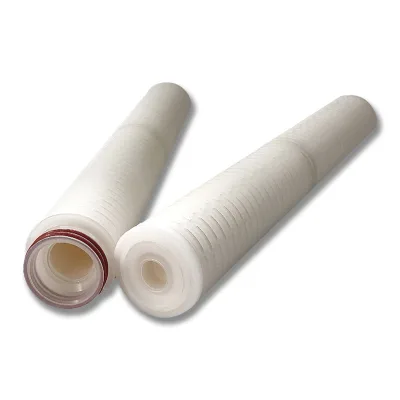
Source PP Pleated Filter Element for Food, Industry, and Medicine
Find 30 listings for the PP Pleated Filter Element suitable for food and beverage, industrial, and medical applications. Buyers can compare specifications like micron ratings, lengths, and connection types to identify the right supplier for their needs.
Key considerations
Products List




Comprehensive Sourcing Guide
Strategic Sourcing Guide for PP Pleated Filter Elements
The global demand for high-efficiency filtration solutions has elevated the PP Pleated Filter Element to a critical component across multiple industrial sectors. Sourcing these elements requires a disciplined approach that balances technical precision with supply chain reliability. Buyers must navigate a landscape where product attributes vary significantly between manufacturers, even when the core keyword remains identical. This guide provides a structured framework for evaluating Polypropylene (PP) pleated filter cartridges, ensuring that procurement decisions are grounded in verified specifications and operational requirements rather than marketing generalizations.
Technical Specifications and Dimensional Standards
The foundational step in sourcing PP pleated filter elements is a rigorous verification of dimensional and material specifications. The market presents a variety of configurations, and assuming uniformity can lead to installation failures or filtration inefficiencies. Based on observed product data, the standard outer diameter (OD) for these elements typically ranges between 68 mm and 70 mm, with some variations noted up to 70 mm. The inside diameter (ID) is equally critical, with common observations ranging from 27 mm to 28 mm. Buyers must explicitly confirm these internal and external dimensions against their housing requirements, as a discrepancy of even a few millimeters can prevent proper sealing or cause bypass.
Length specifications also exhibit significant variation in the supply chain. While the 20-inch length is frequently cited as a standard benchmark, available options span from 5 inches to 40 inches. Specific product listings indicate lengths of 5", 10", 20", 30", and 40", with some specialized entries noting 9.75" or 10" configurations. The filtration media is predominantly Polypropylene, often described as PP Nominal or PP Absolute, though some entries suggest a composite of Glass Fiber and PP. The frame construction is generally a one-piece design, which enhances structural integrity under pressure.
The connection type is a pivotal specification that dictates compatibility with existing filtration housings. Observed connection interfaces include the 222 Connector, as well as 215, 226, M30, and M36 types. Sealing mechanisms vary, with Internal O-Ring and Flat connections being common. The core material is typically Polypropylene or Stainless Steel (Ss), influencing the element's resistance to chemical corrosion and mechanical stress. Buyers should create a checklist of these exact parameters before engaging with suppliers to ensure the requested model matches the physical constraints of their system.
Filtration Performance and Removal Ratings
The primary function of a PP Pleated Filter Element is particle removal, and the removal rating defines its effectiveness. The filtration rating is not a single value but a spectrum of options designed to target specific particle sizes. The observed removal ratings in the market include 0.1, 0.22, 0.45, 1, 3, 5, 10, 20, 30, and 50 micrometers (um). Some detailed product data breaks these down further, listing specific ratings such as 0.65, 0.8, and 1.2 um.
It is essential to distinguish between nominal and absolute ratings. While the media is often described as PP Absolute, the actual performance depends on the pleating density and the specific manufacturing process. The filtration grade is generally categorized as "Medium Filter," suitable for a wide range of applications. The motive force driving the filtration process is pressure, meaning the element must maintain structural integrity under the operating pressure of the system. Efficiency is a key performance attribute, with claims of "Efficient Filtration" being standard. However, buyers must verify that the specific removal rating (e.g., 0.1um vs. 5um) aligns with the purity requirements of their process fluid. Selecting a rating that is too fine may result in rapid clogging, while a rating that is too coarse may fail to protect downstream equipment.
Application Scope and Industry Suitability
PP pleated filter elements are versatile components deployed across diverse industries. The most prominent application sectors identified in product data include Food and Beverage, Industry, Textile, and Medicine. The Food and Beverage sector relies on these filters for process water, syrups, and beverage clarification, where hygiene and material safety are paramount. The Medicine and Pharmaceutical industries utilize them for sterile filtration and process water purification, necessitating strict adherence to purity standards.
Beyond these primary sectors, the Chemical Industry is a significant user, leveraging the chemical resistance of Polypropylene to handle aggressive solvents and acids. The Textile industry applies these filters in dyeing and finishing processes to remove impurities from liquids. The versatility of the PP material allows it to function in environments where temperature and chemical compatibility are variable. When sourcing, buyers should verify that the specific element's seal material—such as Silicone, EPDM, NBR, Viton, or E-FKM—is compatible with the chemicals present in their specific application. A mismatch in seal material can lead to premature degradation and system contamination.
Cost Drivers and Procurement Economics
Understanding the cost structure of PP pleated filter elements is vital for budgeting and total cost of ownership analysis. The observed price range in the market is broad, spanning from 0.95 USD to 150 USD. This wide variance is driven by several factors, including the filtration rating, length, material quality, and the complexity of the connection type. Higher precision ratings, such as 0.1um or 0.22um, typically command higher prices due to the tighter manufacturing tolerances required. Similarly, longer elements (e.g., 40") or those with specialized stainless steel cores will cost more than standard 10" polypropylene cores.
Minimum Order Quantity (MOQ) is another significant economic factor. The observed MOQ range is from 1 to 500 units. Small buyers or those testing new applications may find suppliers with low MOQs of 1 unit, which is ideal for prototyping or emergency replacements. Conversely, large-scale industrial buyers often negotiate MOQs closer to 500 units to secure volume discounts. Packaging also influences cost; options include standard Carton packaging or Shrink Wrap and Box Package configurations. Buyers should factor in the logistics of these packaging types, as bulk shipping efficiency can impact the final landed cost. Additionally, the origin of the product, often cited as China or specifically Zhejiang, can influence pricing due to regional manufacturing costs and shipping logistics.
Supplier Evaluation and Quality Assurance
Evaluating suppliers for PP pleated filter elements requires a focus on consistency and transparency. Since the market contains numerous manufacturers, buyers must verify the supplier's ability to maintain the specific attributes observed in the product data. Key verification points include the consistency of the Outer Diameter (68-70mm) and Inside Diameter (27-28mm), as well as the reliability of the connection types (222, 215, M30, etc.). A supplier that cannot provide precise dimensional data should be flagged as a risk.
Quality control protocols are essential to ensure that the filtration performance matches the stated removal ratings. Buyers should request evidence of testing procedures, although specific test results are not universally provided in standard listings. The presence of certifications, such as ISO9001, is a positive indicator of a supplier's commitment to quality management, though this should be treated as a background factor rather than a guaranteed attribute for every listed product. The material composition must be verified; the media should be confirmed as Polypropylene, and the seal materials (Silicone, EPDM, etc.) must be appropriate for the application.
When assessing suppliers, consider the origin of the product. While many elements originate from China, with specific mentions of Zhejiang, the specific manufacturing location can impact lead times and quality consistency. Buyers should inquire about the production standards and whether the supplier adheres to specific industry norms for the intended application, such as pharmaceutical or food-grade standards.
Long-Term Procurement and Operational Considerations
Sourcing PP pleated filter elements is not merely a transactional activity but a strategic decision affecting long-term operational efficiency. The choice of filter rating and length directly impacts the frequency of replacement and the overall downtime of the filtration system. Selecting an element with a removal rating that is too aggressive for the application can lead to frequent clogging, increasing maintenance costs and labor. Conversely, an undersized element may compromise product quality.
Packaging and storage are also critical long-term considerations. The product data indicates packaging options like Carton and Shrink Wrap. Proper packaging ensures that the pleated media remains undamaged during transit and storage. Buyers should verify that the packaging protects the element from physical deformation, which could alter the filtration performance.
Furthermore, the compatibility of the filter with the system's pressure requirements must be maintained over time. The motive force is pressure, and the element must withstand the system's operating pressure without collapsing or deforming. The one-piece frame design is generally robust, but the integrity of the core (PP or Ss) must be verified for the specific chemical environment. Finally, buyers should establish a relationship with suppliers who can provide consistent lead times and support, ensuring a steady supply of high-quality elements to maintain uninterrupted production. By focusing on these technical and operational details, buyers can secure a reliable supply chain for PP pleated filter elements that meets their specific industrial needs.
Comparative Analysis of Key Specifications
To assist in the decision-making process, the following table summarizes the key specifications observed in the market for PP pleated filter elements. This comparison highlights the variability in dimensions, ratings, and materials that buyers must navigate.
| Specification Category | Observed Range / Options | Critical Verification Point |
|---|---|---|
| Outer Diameter (OD) | 68 mm to 70 mm | Must match housing tolerance exactly. |
| Inside Diameter (ID) | 27 mm to 28 mm | Critical for core fit and flow path. |
| Length | 5", 10", 20", 30", 40", 9.75" | Select based on required flow capacity. |
| Filtration Rating | 0.1, 0.22, 0.45, 1, 3, 5, 10, 20, 30, 50 um | Match to required particle removal size. |
| Connection Type | 222, 215, 226, M30, M36, Internal O-Ring/Flat | Must match housing interface. |
| Media Material | Polypropylene (PP), Glass Fiber/PP | Verify chemical compatibility. |
| Seal Material | Silicone, EPDM, NBR, Viton, E-FKM | Must resist process fluid chemicals. |
| Core Material | PP or Stainless Steel (Ss) | Select based on pressure and corrosion needs. |
| Origin | China (Zhejiang) | Factor into lead time and logistics. |
This table serves as a reference for the critical parameters that define the suitability of a PP Pleated Filter Element for a specific application. By systematically cross-referencing these observed ranges with the specific requirements of the filtration system, buyers can make informed decisions that minimize risk and maximize performance. The diversity of options available underscores the importance of detailed specification verification before placing any order.
FAQs
What filtration ratings are available for pp pleated filter elements?
Available removal ratings range from 0.1 to 50 micrometers, including specific options like 0.1, 0.22, 0.45, 1, 3, 5, 10, 20, 30, and 50 um. Buyers must select the specific micron rating that matches their particle removal requirements to ensure efficient filtration without premature clogging.
Which dimensions are standard for PP Pleated Filter Element cartridges?
Standard outer diameters typically range from 68 mm to 70 mm, while inside diameters are commonly 27 mm or 28 mm. Lengths vary significantly, offering options from 5 inches up to 40 inches, with some specialized entries noting 9.75-inch configurations for specific housing fits.
Can pp pleated filter elements be customized for specific applications?
Yes, customization is available to meet diverse industrial needs across food, beverage, medicine, and chemical sectors. Buyers can specify seal materials like Silicone, EPDM, or Viton to ensure chemical compatibility and select core materials such as Polypropylene or Stainless Steel for structural integrity.
How do connection types vary for pp pleated filter elements?
Connection interfaces include the 222 Connector, as well as 215, 226, M30, and M36 types, often featuring internal O-ring or flat seals. It is critical to verify the exact connection type against housing requirements to prevent installation failures or bypass issues during operation.
What is the typical price range for pp pleated filter elements?
The observed market price range spans from 0.95 USD to 150 USD, driven by factors like filtration rating, length, and material quality. Higher precision ratings and longer elements generally command higher prices, while Minimum Order Quantities can range from 1 to 500 units depending on the supplier.
Which industries commonly use pp pleated filter elements?
These elements are widely deployed in Food and Beverage, Medicine, Industry, Textile, and Chemical sectors for process water and liquid purification. The Polypropylene media offers chemical resistance suitable for aggressive solvents, while seal materials ensure safety in hygienic environments like pharmaceutical manufacturing.