Source Professional Passive Ceiling Speaker for Home Commercial Audio
Compare 30 Professional Passive Ceiling Speaker options from verified suppliers. Buyers can evaluate rated power, material, and customization features for home, commercial, and audio system applications.
Key considerations
Products List


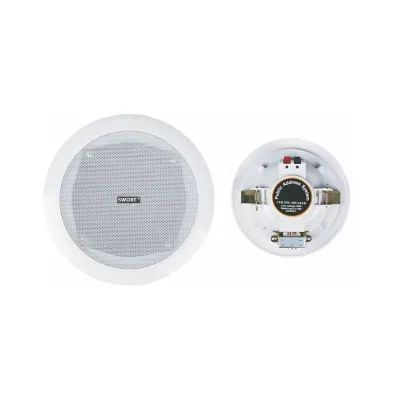


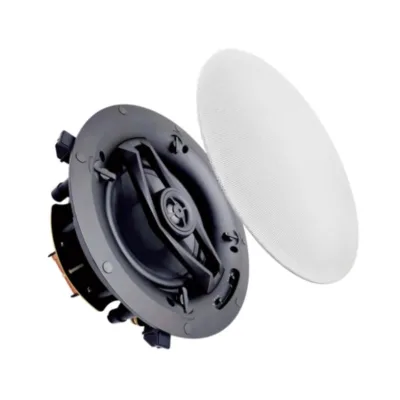


High Fidelity Ceiling Speaker with Crossover Network & Clear Powerful Sound
$23.00 - $38.00
MOQ: 100 Pieces
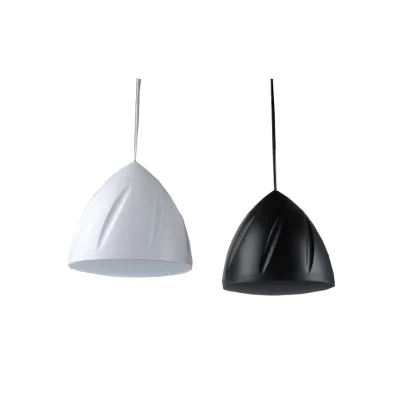
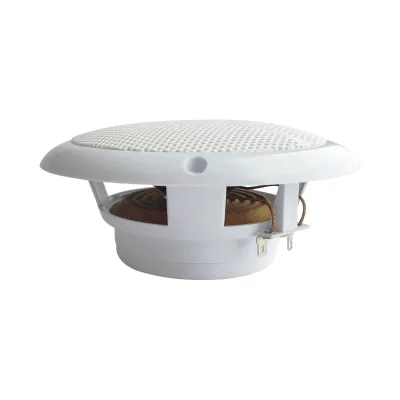
Comprehensive Sourcing Guide
Strategic Sourcing Guide for Professional Passive Ceiling Speakers
Navigating the procurement of professional passive ceiling speakers requires a disciplined approach that balances technical performance, regulatory compliance, and supply chain reliability. In the commercial and residential audio sectors, these components serve as the final interface between the signal chain and the listener, making their selection critical for acoustic integrity. This guide synthesizes observed market data and verified product attributes to provide a framework for buyers evaluating suppliers and specifications for projects ranging from corporate offices to high-end home theaters.
Technical Specifications and Performance Parameters
When sourcing passive ceiling speakers, the primary focus must be on the technical specifications that define acoustic performance and physical integration. The observed product data indicates a diverse range of rated power options, with specific models identified at 3W, 5W, and 1.5W, alongside high-power variants reaching 60W at 16 Ohms. This variance suggests that buyers must align the speaker's power handling with the intended amplifier output and room size to prevent distortion or underutilization. The frequency response for observed units spans from 124Hz to 20kHz, a range that covers the essential mid-to-high frequencies for speech intelligibility and music reproduction, though low-frequency extension may be limited by the passive nature and ceiling mounting constraints.
Physical dimensions are equally critical for installation feasibility. The market data reveals standard dimensions such as 180x68mm, 226x78mm, 195x88mm, and 164x46mm, with larger units reaching 220x194mm. These measurements dictate the required cutout size in the ceiling plenum. Buyers should verify that the selected model's standard dimensions align with the architectural constraints of the installation site. Furthermore, the speaker material is observed in both plastic and metal constructions, with aluminum finishes and coating processes available. Metal constructions often offer superior durability and acoustic rigidity, while plastic options may provide cost advantages and lighter weight for suspended ceiling grids.
The system configuration also varies significantly. While some units operate as single network structures, others support optional combination systems and surround sound audio output modes. The operation mode is typically wired, with some configurations offering remote control capabilities. Crucially, the product attributes indicate a "Without Player" designation, confirming that these are passive units requiring an external amplifier source. The sensitivity rating of 91±2dB at 1W/1m provides a baseline for efficiency, allowing buyers to calculate the required amplifier power for specific sound pressure levels.
Compliance and Certification Verification
In the professional audio sector, regulatory compliance is not merely a formality but a prerequisite for market access and safety. The observed product attributes explicitly list CE and CCC certifications. The CE mark indicates conformity with health, safety, and environmental protection standards for products sold within the European Economic Area, while the CCC mark is the mandatory certification for products sold in China. Buyers must treat these as verified attributes for the specific models listed but should request current certification documentation for any new supplier engagement to ensure validity.
While specific industry standards such as IEC60849, EN60849, UL2043, UL1480, and EN54-24 appear in background knowledge, they should not be assumed as standard features without explicit verification from the supplier. These standards often relate to fire safety, electromagnetic compatibility, and building integration. For instance, UL2043 and UL1480 are critical for ceiling-mounted devices in commercial buildings where fire rating and smoke propagation are concerns. Buyers must explicitly ask suppliers to confirm if their specific models meet these rigorous standards, as the presence of CE and CCC does not automatically guarantee compliance with North American or specialized fire safety codes. The product origin is noted as Hangzhou, Zhejiang, and generally China, which requires careful attention to import regulations and potential trade barriers in the destination market.
Cost Drivers and Pricing Dynamics
The pricing structure for professional passive ceiling speakers is influenced by several key variables, including material composition, power rating, and customization levels. The observed price range in the market spans from 1 to 999 USD, a broad spectrum that reflects the difference between basic plastic units and high-end metal-finished systems with advanced acoustic tuning. The Minimum Order Quantity (MOQ) ranges from 1 to 500 units, indicating flexibility for both small-scale renovations and large-scale commercial deployments.
Material costs are a primary driver; units with metal construction and aluminum finishes generally command higher prices than those with standard plastic housings. Additionally, the rated power significantly impacts cost, with 60W units costing substantially more than 1.5W or 3W models. Customization is a major cost factor; the data confirms that customization is available for design, color, size, and artwork formats (Ai/CDR/Dwg/STP/Step). Buyers should anticipate a price premium for custom dimensions or finishes, as these require dedicated production runs and tooling adjustments. The tolerance level of ±0.03mm for custom parts suggests high-precision manufacturing, which can also influence the unit cost.
Typical Applications and Installation Contexts
The versatility of these speakers allows for deployment in a wide array of environments. The application data lists "Home" and "Commercial" as primary use cases, with specific mentions of "Audio System" and "Bluetooth" integration, though the passive nature implies Bluetooth is likely an external feature or a misattribution to the system rather than the speaker itself. The "Musical Instruments" industry tag suggests potential use in professional rehearsal spaces or recording environments. The mounting type is explicitly identified as "Ceiling," which is standard for these units to maintain a low-profile aesthetic and optimize sound dispersion.
The hole shape is observed as "Round," which is the most common configuration for residential and commercial drop ceilings. However, the availability of custom sizes and designs allows for integration into unique architectural features. The "Single Network" structure indicates suitability for standard distributed audio systems, while "Optional Combination" capabilities support more complex setups like surround sound. Buyers should consider the acoustic environment; for instance, in commercial spaces with high ceilings, higher power ratings (e.g., 60W) and metal construction may be necessary to overcome ambient noise and achieve adequate coverage.
Supplier Evaluation and Production Capabilities
Evaluating a supplier for professional audio components requires a deep dive into their manufacturing capabilities and quality assurance processes. The observed data points to a production origin in Hangzhou, Zhejiang, a hub for manufacturing in China. Buyers should verify the supplier's capacity to handle the required volume, given the MOQ range of 1 to 500. For large projects, a supplier with a stable production line capable of meeting high-volume demands without compromising quality is essential.
The ability to provide custom artwork in formats like Ai, CDR, Dwg, STP, and Step indicates a mature design and engineering team. This capability is crucial for buyers who need speakers to match specific interior design themes or architectural plans. The finish processes, including "Aluminium" and "Coating," suggest a range of aesthetic options. Buyers should request samples to verify the quality of the finish and the precision of the tolerance levels (±0.03mm). Additionally, the "Carton" and "Carton Box" packing methods observed suggest standard industrial packaging, but buyers should confirm if custom packaging is available for retail or specific logistics requirements.
Quality Control and Long-Term Procurement Considerations
Quality control in the audio industry extends beyond initial inspection to long-term reliability and acoustic consistency. The "Single Layer" and "Perforated Metal Mesh" attributes highlight the internal construction, which affects sound transmission and durability. Buyers should inquire about the testing protocols used to verify the frequency response, sensitivity, and power handling claims. While specific test results are not provided in the general data, the presence of CE and CCC certifications implies a baseline of quality control.
For long-term procurement, the availability of spare parts and the consistency of the product model are vital. The observed models, such as CLS-705, CLS-608T, CLS-618, CLS-515, and CLS-03B, represent a specific lineup. Buyers should ensure that the supplier can maintain production continuity for these models to avoid compatibility issues in future expansions. The "Without FM" attribute confirms the absence of built-in radio tuners, which simplifies the internal circuitry and potentially improves reliability.
When planning for the long term, buyers should also consider the environmental impact and sustainability of the materials used. The use of metal and plastic requires careful disposal and recycling planning. Furthermore, the "Customization" feature allows for future-proofing; if a project requires a change in design or color later, a supplier with flexible customization capabilities can adapt without requiring a complete system overhaul.
Comparative Analysis of Product Attributes
To assist in the decision-making process, the following table summarizes the key attributes observed in the market data, facilitating a direct comparison of different product profiles.
| Attribute Category | Observed Options | Implication for Buyer |
|---|---|---|
| Rated Power | 1.5W, 3W, 5W, 60W | Match to amplifier and room size; 60W for large spaces. |
| Speaker Material | Plastic, Metal | Metal offers durability; Plastic is cost-effective. |
| Dimensions | 161x52mm to 226x78mm | Verify cutout size against ceiling grid constraints. |
| Certifications | CE, CCC | Essential for EU and China markets; verify local compliance. |
| Customization | Available (Size, Color, Design) | High flexibility for architectural integration. |
| Operation Mode | Wired, Remote Control | Wired is standard; check for remote needs. |
| Mounting Type | Ceiling | Standard for commercial/residential drop ceilings. |
| Frequency Response | 124Hz~20kHz | Covers speech and music; check low-end needs. |
| Packing | Carton, Carton Box | Standard protection; verify custom packing needs. |
| Origin | Hangzhou, Zhejiang (China) | Factor in logistics and import duties. |
This comparative view highlights the diversity available in the market. A buyer selecting a 1.5W plastic unit for a small office will have different priorities than one sourcing 60W metal units for a concert hall. The key is to map these observed attributes to the specific project requirements, ensuring that the chosen solution delivers the desired acoustic performance while adhering to budget and timeline constraints. By rigorously applying these evaluation criteria, buyers can mitigate risks and secure a supply chain that supports the long-term success of their audio installations.
FAQs
What certifications do professional passive ceiling speakers have?
The observed products carry CE and CCC certifications for European and Chinese markets. Buyers must verify current documentation for specific models as these marks indicate compliance with regional safety standards but do not automatically guarantee other international fire codes.
How can I customize the size and design of these speakers?
Customization is available for design, color, and size with a tolerance of plus-minus 0.03mm. Suppliers accept artwork in Ai, CDR, Dwg, STP, and Step formats, allowing integration into unique architectural plans while maintaining precision manufacturing standards.
Which rated power options are available for different room sizes?
Available rated powers include 1.5W, 3W, 5W, and high-power variants reaching 60W at 16 Ohms. Selecting the correct power handling is critical to match amplifier output and room size, preventing distortion in large commercial spaces or underutilization in small areas.
Can these speakers be mounted in standard drop ceilings?
Yes, these units are designed for ceiling mounting with a round hole shape suitable for standard grids. Dimensions range from 161x52mm to 226x78mm, so buyers must verify cutout requirements against their specific architectural constraints before installation.
What materials are used for the speaker construction?
Speaker materials observed include both plastic and metal constructions, with aluminum finishes and coating processes available. Metal options offer superior durability and acoustic rigidity, while plastic units provide cost advantages and lighter weight for suspended ceiling grids.
How do I determine the frequency response range for my project?
Observed units feature a frequency response spanning from 124Hz to 20kHz, covering essential mid-to-high frequencies. This range supports speech intelligibility and music reproduction, though low-frequency extension may be limited by the passive nature and ceiling mounting constraints.
What is the minimum order quantity for sourcing these speakers?
The minimum order quantity ranges from 1 to 500 units, offering flexibility for small renovations or large deployments. Buyers should confirm specific MOQs with suppliers to align with their project volume and budget constraints effectively.
Where are these professional speakers manufactured and shipped from?
Products originate from Hangzhou, Zhejiang, and generally China, requiring attention to import regulations. Buyers must factor in logistics costs and potential trade barriers when planning procurement from this specific manufacturing hub for global distribution.