Source Professional Production Brake Lining for Trucks, Buses, and Industrial Vehicles
Find 30 verified listings for Professional Production Brake Lining suitable for truck brake systems and industrial applications. Buyers can compare specifications, certifications, and pricing from suppliers in China.
Key considerations
Products List


Comprehensive Sourcing Guide
Strategic Sourcing Guide for Professional Production Brake Lining
Navigating the global market for Professional Production Brake Lining requires a disciplined approach that distinguishes between distinct product categories, verifies technical specifications against operational needs, and rigorously evaluates supplier capabilities. The current supply landscape for brake components is characterized by a diverse range of materials, from traditional friction materials to advanced composites like carbon fiber and basalt. Buyers must understand that "brake lining" is not a monolithic category but encompasses specific applications such as drum brakes and disc brake pads, each with unique manufacturing standards and performance requirements. This guide outlines the critical factors for sourcing these components effectively, focusing on evidence-based verification of product attributes, compliance, and supply chain reliability.
Understanding Product Categories and Technical Specifications
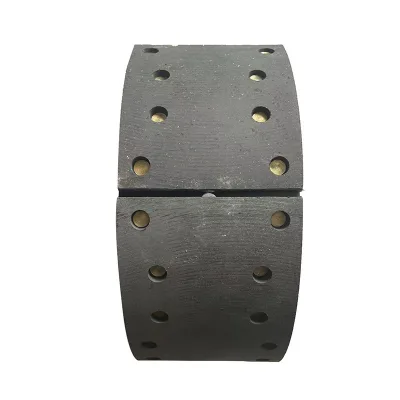
The first step in sourcing professional brake lining is to accurately identify the specific type of component required, as the market offers distinct variations based on vehicle application and braking system architecture. Data indicates a clear bifurcation between products classified as "Brake Lining" for drum systems and "Brake Pads" for disc systems. For instance, specific product listings identify the "Type" as either Brake Lining or Brake Pads, with corresponding "Position" attributes designating them for the Front or Rear of the vehicle. A "Brake Drum" classification is explicitly noted for certain drum brake applications, while other entries specify "Brake Pads" for different systems.
Technical specifications are paramount when evaluating these components. Dimensional accuracy is a primary concern, with observed standards ranging from specific metric measurements such as 195×162×13/16 mm to 208×150×16 mm. Other listings provide granular data including 159.878.822 mm and 208×220×14.5 mm. Buyers must verify that the supplier's product standard matches the exact dimensions required for their fleet or manufacturing line. Furthermore, the material composition varies significantly across the market. While some brake linings utilize traditional friction materials, other entries in the supply chain highlight the use of "Carbon Fiber" or "Basalt" as the primary material. These materials often correlate with specific performance attributes, such as high calorific value, low ash content, and low volatility, which are critical for high-performance or heavy-duty applications.
Compliance, Certification, and Quality Standards
In the automotive aftermarket and original equipment manufacturing (OEM) sectors, compliance with international standards is non-negotiable. The supply chain for professional brake lining includes products that carry specific certifications, such as ISO/TSIATF-Classification and IATF-Classification. These designations are crucial for verifying that the manufacturing process adheres to stringent quality management systems required by the automotive industry. However, buyers must exercise caution and verify that the certification status applies to the specific product model being sourced, as certification claims can vary between different product lines within a single supplier's catalog.
Beyond general certifications, specific material standards and chemical compositions must be scrutinized. For advanced materials like carbon fiber or basalt, buyers should look for detailed chemical specifications. Observed data points to requirements such as a sulfur content of less than 3%, volatile matter under 1%, and water content below 2%. Additionally, fixed carbon percentages exceeding 98.85% and true density ranges between 1.95-2.2 g/cm³ are indicators of high-quality raw materials. For basalt fiber products, specifications regarding fiber length (680um +/- 150um) and fiber diameter (4.5-9.0um) are essential for ensuring the structural integrity and thermal stability of the final lining. Buyers should request test reports that confirm these numerical ranges rather than relying on general marketing claims.
Cost Drivers and Pricing Dynamics
The pricing structure for professional brake lining is influenced by a complex interplay of material costs, manufacturing complexity, and order volume. The observed price range in the market spans from approximately $0.94 to $1250 USD, reflecting the vast difference between individual components and bulk industrial supplies. A significant driver of cost is the material composition; carbon fiber and basalt products typically command higher prices due to the specialized processing required to achieve the desired mechanical and thermal properties.
Minimum Order Quantity (MOQ) is another critical cost factor. The market exhibits a wide MOQ range, from as low as 1 unit to as high as 1600 units, with a specific observation of a 400-piece MOQ for certain brake lining products. Buyers must align their procurement strategy with these thresholds to optimize unit costs. Purchasing below the MOQ often results in significantly higher per-unit pricing or may not be feasible at all. Additionally, packaging requirements can impact the final cost. Options such as neutral packing, color packing, or customized packaging are available, but custom solutions often incur additional charges. The package size, observed at 435285245 mm for certain items, also influences logistics costs, particularly for international shipments where volume and weight are key determinants of freight expenses.
Typical Applications and Market Distribution
Professional brake linings serve a broad spectrum of applications, primarily centered around the truck brake system. The "Application" attribute explicitly links these products to truck braking systems, indicating their use in heavy-duty transportation where reliability and heat dissipation are critical. The versatility of these components is further highlighted by their availability for both front and rear positions, allowing for comprehensive fleet maintenance solutions.
The global market for these products is extensive, with observed distribution across numerous regions including South America, North America, Eastern Europe, the Middle East, Southeast Asia, Africa, Western Europe, Eastern Asia, Northern Europe, Oceania, Southern Europe, Central America, South Asia, and the Domestic Market. This widespread availability suggests a robust global supply chain capable of meeting diverse regional demands. However, buyers should note that specific product models may be optimized for certain markets. For example, some products originate from Zhejiang, China, while others are sourced from Hebei, China. Understanding the origin of the product can provide insights into the manufacturing capabilities and the specific standards the supplier adheres to, as different regions may have varying regulatory environments and industrial focuses.
Supplier Evaluation and Production Capabilities
Evaluating a supplier for professional brake lining requires a deep dive into their production capabilities and customization options. The market offers significant flexibility, with "Customization" listed as an available attribute for many products. This includes options for custom packaging, such as paper bags or specific color and neutral packing, as well as potential customization of the product itself. Buyers should assess whether the supplier can adapt their production lines to meet specific dimensional or material requirements.
Lead times are a critical component of supplier evaluation. Observed delivery times for these products range from 25 to 40 days. This timeframe must be factored into the buyer's inventory planning and supply chain strategy. A longer lead time may indicate a more complex manufacturing process or a higher level of quality control, but it also increases the risk of stockouts if not managed correctly. Buyers should also verify the supplier's ability to handle large orders, given the high MOQs observed in the market. The ability to scale production while maintaining quality is essential for businesses with fluctuating demand.
Quality Control and Long-Term Procurement Considerations
Ensuring the long-term reliability of professional brake lining involves rigorous quality control measures. Buyers should prioritize suppliers who can provide detailed test results and performance data. Attributes such as "Waterproof," "Noise Reduction," "Heat Insulation," "Flame Retardant," and "Durable" are key performance indicators that should be verified through third-party testing. For materials like basalt fiber, the highest working temperature of 800℃ is a critical specification that must be validated to ensure safety under extreme operating conditions.
Long-term procurement considerations also include the stability of the supply chain and the consistency of product quality. Buyers should establish clear communication channels with suppliers to monitor changes in material standards or production processes. The availability of different particle sizes, such as 20-40mesh, 40-60mesh, 60-80mesh, and 60-100mesh, suggests that the supply chain can cater to various processing needs, but consistency in these specifications is vital. Additionally, the low ash content and low moisture content observed in certain products are indicators of high purity, which contributes to the longevity and performance of the brake lining.
Comparative Analysis of Product Attributes
To facilitate informed decision-making, the following table summarizes key attributes observed in the professional brake lining market. This comparison highlights the diversity in specifications, materials, and applications available to buyers.
| Attribute Category | Product Type A (Brake Lining) | Product Type B (Brake Pads) | Product Type C (Advanced Material) |
|---|---|---|---|
| Classification | Drum Brake | Brake Pads | Carbon Fiber / Basalt |
| Position | Front / Rear | Front / Rear | N/A (Raw Material/Component) |
| Key Standard | 195×162×13/16 | 208×150×16 | 20-40mesh / 4.5-9.0um |
| Material | Friction Material | Friction Material | Carbon Fiber / Basalt |
| Certification | ISO/TSIATF / IATF | N/A | N/A |
| MOQ | 400 PCS | Variable | Variable |
| Lead Time | 25-40 Days | 25-40 Days | 25-40 Days |
| Origin | Zhejiang, China | Zhejiang, China | Hebei, China |
This table illustrates that while there is overlap in lead times and origins, the specific technical standards and material compositions vary significantly. Buyers must match these attributes to their specific operational requirements rather than assuming interchangeability between different product types.
Final Procurement Strategy
Sourcing Professional Production Brake Lining is a multifaceted process that demands attention to detail, technical verification, and strategic planning. By focusing on the specific attributes, certifications, and supply chain dynamics outlined in this guide, buyers can navigate the market effectively. The key to success lies in verifying every claim against the supplied facts, understanding the nuances of different product categories, and building relationships with suppliers who demonstrate transparency and consistency. As the market continues to evolve, maintaining a rigorous approach to quality control and supplier evaluation will ensure the procurement of reliable, high-performance brake lining solutions that meet the demanding needs of modern transportation systems.
FAQs
What certifications do Professional Production Brake Lining products have?
Products carry ISO/TSIATF-Classification and IATF-Classification for drum brake systems. These certifications verify adherence to automotive quality management standards. Buyers must confirm the specific certification applies to the intended product model before purchase.
How long is the delivery time for brake lining orders?
The standard delivery time ranges from 25 to 40 days. This timeframe accounts for manufacturing and logistics processing. Buyers should plan inventory accordingly to avoid stockouts during this production window.
Which materials are used in Professional Production Brake Lining?
Materials include carbon fiber and basalt for advanced performance applications. These materials offer high calorific values and low ash content. Selection depends on specific thermal and durability requirements for the truck brake system.
Can buyers request custom packaging for brake lining products?
Yes, customization is available for packaging options. Suppliers offer neutral, color, or custom packing solutions including paper bags. This flexibility allows buyers to meet specific branding or logistical needs without altering the product itself.
What is the minimum order quantity for brake lining products?
The minimum order quantity is 400 pieces for certain brake lining items. Other products may have different thresholds ranging from 1 to 1600 units. Buyers must align their order volume with these specific supplier requirements.
Where are Professional Production Brake Lining products manufactured?
Products originate from Zhejiang and Hebei regions in China. These locations host factories specializing in automotive components and raw materials. Buyers should verify the specific origin to understand manufacturing capabilities and regional standards.