Find PRP Therapy Laboratory Centrifuge for Lab Hospital School
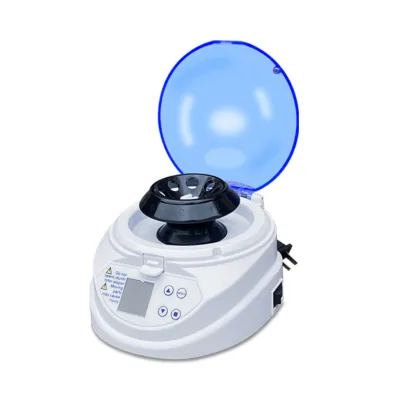
Source 30 PRP Therapy Laboratory Centrifuge units with varying speeds, rotor types, and materials. Compare specifications from suppliers in China to find the right equipment for lab, hospital, and school applications.
Key considerations
Products List


Micro Beauty Biology Chemistry Medicine Low Speed Prp Laboratory Centrifuge
$31.00 - $35.00
MOQ: 1 Pieces

Cheap Mini Centrifuge Prp Machine Laboratory Blood Centrifuge with Good Price C-800
$26.00 - $32.00
MOQ: 1 Pieces

Low Speed Blood separation Prp Therapy Centrifuge Machine for Laboratory Medical
$535.00 - $595.00
MOQ: 1 Pieces


Centrifuge Low Speed Laboratory Plasma Prp Centrifuge Machine Factory Low Price
$40.00 - $100.00
MOQ: 1 Pieces




Comprehensive Sourcing Guide
Strategic Sourcing Guide for PRP Therapy Laboratory Centrifuges
Understanding the Core Technology and Operational Requirements
Procuring a PRP (Platelet-Rich Plasma) therapy centrifuge requires a precise understanding of the mechanical principles that separate blood components without damaging cellular integrity. The core function of these devices is to apply controlled centrifugal force to whole blood, isolating platelets and plasma from red blood cells. In the context of the current market, buyers must distinguish between different rotor configurations, as the separation efficiency is heavily dependent on the rotor type. Available configurations in the supply chain include angle rotors and swing-out rotors, each offering distinct advantages for specific laboratory workflows. Angle rotors are often preferred for rapid processing, while swing-out rotors provide a more uniform separation gradient, which is critical for preserving platelet activation states.
The structural design of the centrifuge also dictates its deployment environment. Buyers will encounter units categorized as either desktop or portable structures. Desktop models are typically designed for fixed laboratory stations in hospitals or clinics, offering larger capacity and stability. In contrast, portable units are engineered for flexibility, allowing for use in smaller clinics or field settings. The motor technology is another critical technical specification; modern units frequently utilize brushless DC motors, which offer superior longevity, reduced maintenance, and quieter operation compared to traditional brushed motors. The display interface is equally important for operator safety and precision, with LCD screens being a standard feature that allows for the clear visualization of speed, time, and temperature settings.
When evaluating technical specifications, the speed range is a primary determinant of the machine's capability. The observed market data indicates speed ranges such as 300-4500 rpm with increments of 100 rpm, while other high-performance models may reach speeds under 8000 rpm. It is essential for buyers to verify that the maximum relative centrifugal force (Rcf) aligns with the specific PRP protocol required by their medical practice. Some units in the current inventory list a maximum Rcf of 1800g, which is a specific threshold that must be matched against the manufacturer's recommended protocols for platelet concentration. The material composition of the chamber and rotor is also vital; stainless steel and alloy materials are commonly cited for their corrosion resistance and ability to withstand repeated sterilization cycles, ensuring the longevity of the equipment in a clinical setting.
Compliance, Certification, and Regulatory Standards
Navigating the regulatory landscape is a non-negotiable aspect of sourcing medical-grade centrifuges. The primary focus for buyers must be on verifying the certification status of the equipment to ensure it meets international safety and quality standards. The market data highlights several recurring certifications, including CE, RoHS, and ISO. These marks indicate that the product complies with European health, safety, and environmental protection standards, as well as international quality management systems. Specifically, some listings reference CE certification backed by TUV, a recognized third-party testing organization, which adds a layer of credibility to the compliance claims.
Buyers must exercise caution when interpreting certification data, as the presence of a certification label does not automatically guarantee that every listed product satisfies the same rigorous standards. The supply chain contains variations where some units are certified under ISO standards while others may only hold CE marks. It is imperative to request specific documentation, such as the Certificate of Conformity or the ISO audit report, rather than relying solely on the product listing description. The standard "35x32x26cm" or "310270220mm" dimensions listed in product attributes often refer to the packaging or the unit's footprint, but these physical standards do not equate to regulatory compliance. Regulatory compliance is a binary requirement: the equipment must be certified for medical use in the target market.
Furthermore, the origin of the product plays a significant role in the compliance verification process. Many of the observed units originate from Changsha City, China, a known manufacturing hub for medical devices. While this location is a valid source for high-quality equipment, it necessitates a thorough review of the supplier's export history and their ability to provide valid certification documents that are recognized in the buyer's jurisdiction. The "Standard Export Package" mentioned in some listings suggests that the packaging is designed to meet international shipping requirements, but this does not replace the need for individual product certification. Buyers should verify that the specific model number, such as TD4C, PRP, or SY-B2140, is associated with the claimed certifications, as model-specific regulatory approvals can vary even within the same manufacturer's catalog.
Cost Drivers and Pricing Structure Analysis
The pricing landscape for PRP therapy centrifuges is characterized by a wide variance, reflecting differences in technology, capacity, and brand positioning. The observed price range in the market spans from approximately 26 USD to over 1013 USD. This broad spectrum indicates that buyers can find options at various price points, but the lowest prices often correspond to basic models with limited features or smaller capacities, while higher prices reflect advanced features like digital displays, brushless motors, and higher maximum speeds. The cost is not merely a function of the machine's size but is heavily influenced by the complexity of the internal components and the level of customization offered.
Several factors drive the final cost of these units. First, the material composition significantly impacts pricing; units constructed with stainless steel or high-grade alloys generally command a premium over those made from plastic or standard steel due to durability and corrosion resistance. Second, the level of customization available is a key cost driver. Some suppliers offer fully customized solutions, including specific rotor configurations or software interfaces, which increases the unit price. Conversely, non-customized, off-the-shelf models are more affordable but may lack the specific features required for specialized PRP protocols. The packaging type, whether standard carton boxes or heavy-duty wooden crates for international shipping, also adds to the overall cost, particularly for buyers importing from regions like Changsha City.
Minimum Order Quantity (MOQ) is another critical financial consideration. The market data shows an MOQ range of 1 to 50 units. For small clinics or research labs, an MOQ of 1 is highly advantageous, allowing for the acquisition of a single unit without the need for bulk investment. However, for larger procurement projects involving multiple facilities, the ability to order in bulk at an MOQ of 50 may unlock volume discounts. Buyers must calculate the total cost of ownership, including shipping, import duties, and potential warranty extensions, rather than focusing solely on the unit price. The warranty terms, often listed as "One Year" for specific models, also influence the perceived value and long-term cost, as extended warranty options can be negotiated as part of the procurement agreement.
Typical Applications and Operational Environments
PRP therapy centrifuges are designed to serve a diverse range of medical and research environments, with the primary applications spanning laboratories, hospitals, schools, and industrial settings. The versatility of these machines allows them to be utilized in various contexts, from small-scale research projects in educational institutions to high-volume procedures in clinical hospitals. The "Lab, Hospital, School" application profile suggests that these units are suitable for academic research, clinical diagnostics, and therapeutic procedures. In a hospital setting, the centrifuge is used to prepare PRP for orthopedic surgeries, dermatological treatments, and wound care, requiring high reliability and consistent performance.
The application environment dictates the required features of the centrifuge. For instance, units designated for "Industry" use may need to withstand more rigorous, continuous operation cycles compared to those used in a school or small clinic. The "Desktop" structure is ideal for laboratory benches where space is limited but stability is required, while "Portable" units are better suited for mobile clinics or field operations where the equipment must be transported frequently. The capacity of the centrifuge, such as the "4*180ml" configuration observed in some listings, is a crucial factor for high-throughput environments. Larger capacity units allow for the processing of multiple samples simultaneously, increasing efficiency in busy hospital laboratories.
Furthermore, the specific application influences the choice of rotor type. Angle rotors are often preferred for applications requiring rapid separation, such as in emergency departments or high-volume clinics, whereas swing-out rotors are utilized when a more gentle separation is necessary to preserve cell viability. The display and control interface must be intuitive for the intended users, whether they are highly trained medical professionals or students in a laboratory setting. The "Brushless DC Motor" and "LCD Display" features observed in the market data are particularly beneficial for applications requiring precise control and minimal noise, ensuring a professional and safe working environment.
Supplier Evaluation and Quality Assurance Protocols
Evaluating suppliers for PRP therapy centrifuges requires a multi-faceted approach that goes beyond simple price comparison. Buyers should prioritize suppliers who demonstrate transparency in their product attributes and provide verifiable documentation. The presence of OEM (Original Equipment Manufacturer) services is a significant indicator of a supplier's flexibility and capability to meet specific client needs. Suppliers offering OEM services can often customize the branding, software, or hardware configurations to align with the buyer's requirements, which is a valuable asset for clinics looking to standardize their equipment across multiple locations.
Quality assurance should be a central component of the supplier selection process. Buyers must verify the manufacturing standards and the quality control measures in place. The "One Year" warranty mentioned in several product listings is a baseline expectation, but buyers should inquire about the scope of this warranty, including what components are covered and the process for repairs or replacements. The material quality, such as the use of stainless steel or alloy, should be confirmed through material safety data sheets or third-party testing reports. Additionally, the "Standard Export Package" and "Carton/Wooden" packaging options should be evaluated to ensure that the equipment arrives in perfect condition, especially for international shipments.
When assessing suppliers, buyers should also consider the location and logistics capabilities. The origin of many units is Changsha City, China, which is a major manufacturing hub. Buyers should verify the supplier's ability to handle international logistics, including lead times and shipping reliability. While specific lead times are not provided in the general data, buyers should request this information during the negotiation phase to ensure that the procurement timeline aligns with their operational needs. The "Customized" and "Non-Customized" attributes indicate that suppliers offer a range of options, and buyers should clearly communicate their requirements to avoid receiving products that do not meet their specific application needs.
Long-Term Procurement and Maintenance Considerations
Sourcing a PRP therapy centrifuge is a long-term investment that requires careful consideration of maintenance, support, and lifecycle management. The durability of the equipment is heavily influenced by the motor type and material construction. Brushless DC motors, for example, are known for their extended lifespan and reduced maintenance requirements compared to brushed motors, making them a preferred choice for facilities with high usage volumes. The "One Year" warranty is a starting point, but buyers should explore the availability of extended warranty programs and service contracts to protect their investment over the long term.
Maintenance protocols are critical for ensuring the continued performance and safety of the centrifuge. Buyers should establish a routine maintenance schedule that includes regular cleaning, calibration, and inspection of the rotor and motor components. The "Carton Box" and "Wooden/Carton" packaging suggests that the equipment is designed for safe transport, but the internal components must be protected from environmental factors such as humidity and temperature fluctuations. The "LCD Display" and digital controls require regular software updates and calibration checks to ensure accurate speed and time settings, which are crucial for the efficacy of PRP therapy.
Finally, buyers should consider the scalability of their procurement strategy. As a clinic or laboratory grows, the need for additional or upgraded centrifuges may arise. Suppliers that offer a range of models with varying capacities and features, such as the "TD5 Tricell PRP kit centrifuge" or "SY-B2140," allow for a flexible procurement strategy. Buyers should also evaluate the availability of spare parts and the supplier's technical support capabilities. A robust supply chain for replacement parts and a responsive technical support team are essential for minimizing downtime and ensuring the continuous operation of the centrifuge in a critical medical environment. By focusing on these long-term factors, buyers can make informed decisions that support the sustained success of their PRP therapy programs.
FAQs
What certifications do prp therapy laboratory centrifuges typically have?
Most units carry CE, RoHS, and ISO certifications to ensure safety and quality. Some listings specifically mention CE backed by TUV testing. Buyers must verify that the specific model holds valid documentation for their target market before purchasing.
Which rotor types are available for these centrifuge machines?
Angle rotors and swing-out rotors are the standard configurations found in the market. Angle rotors often support rapid processing, while swing-out rotors provide uniform separation gradients. The choice depends on the specific PRP protocol and laboratory workflow requirements.
Can I find portable prp therapy laboratory centrifuges for clinics?
Yes, portable structures are available alongside desktop models for flexible deployment. These units are designed for smaller clinics or field settings where mobility is essential. They often feature brushless DC motors and LCD displays for precise control in varied environments.
What is the typical speed range for PRP separation centrifuges?
Speed ranges vary from 300 to 4500 rpm with 100 rpm increments in some models. High-performance units may reach speeds under 8000 rpm or offer a maximum Rcf of 1800g. Selecting the correct speed is critical for effective platelet concentration without damaging cells.
How much does a PRP Therapy Laboratory Centrifuge cost?
Prices in the current market range from approximately 26 USD to over 1013 USD. The cost depends on factors like material, motor type, and customization options. Stainless steel and alloy models generally command higher prices due to durability and corrosion resistance.
What materials are used to construct these centrifuge chambers?
Common materials include plastic, steel, stainless steel, and alloy for the chamber and rotor. Stainless steel and alloy are preferred for their resistance to corrosion and ability to withstand sterilization. The material choice impacts the longevity and maintenance requirements of the equipment.
Do suppliers offer customization services for these centrifuges?
Yes, many suppliers provide OEM services and offer both customized and non-customized options. Customization can include specific rotor configurations or software interfaces to match client needs. Buyers should confirm if the desired features are available before placing an order.
What is the warranty period for prp therapy centrifuges?
A standard warranty period of one year is commonly offered for these medical devices. This coverage typically includes the motor and main components but excludes consumables. Buyers should clarify the specific terms and scope of the warranty during the procurement process.