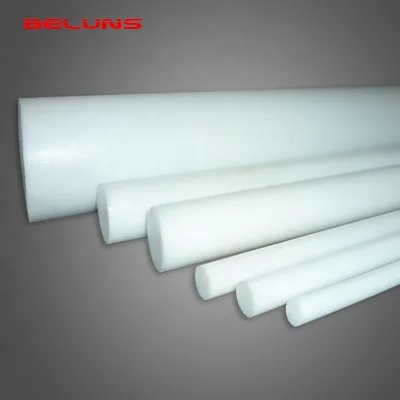
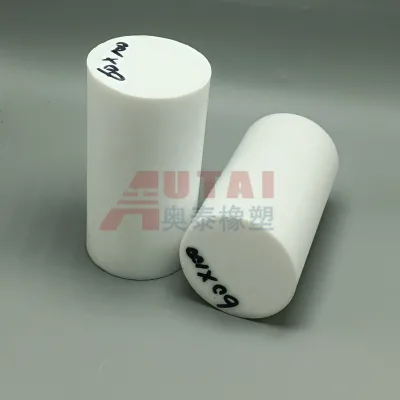
Source PTFE Extruded Round Rod for Sealing, Building, and Bridge
Compare 30 PTFE Extruded Round Rod options from verified suppliers in Jiangsu, China. View specifications including density, temperature range, and certifications like RoHS for sealing, building, and bridge applications.
Key considerations
Products List




Comprehensive Sourcing Guide
Strategic Sourcing Guide for PTFE Extruded Round Rods
Understanding Material Properties and Technical Specifications
When sourcing PTFE extruded round rods, buyers must first establish a clear understanding of the inherent material characteristics that define performance. Polytetrafluoroethylene (PTFE) is renowned for its exceptional chemical resistance, low coefficient of friction, and wide operating temperature range. The specific product category of "extruded round rod" implies a manufacturing process where the material is forced through a die to achieve a consistent cylindrical shape, often resulting in different mechanical properties compared to molded variants.
Based on observed data for virgin PTFE rods, the density typically falls within the range of 2.1 to 2.3 g/cm³, though some specifications note a range of 2.1–2.2 g/m³, requiring careful unit verification during the procurement phase. The material exhibits remarkable thermal stability, with a working temperature range spanning from -180°C to +260°C. The melting point is recorded at approximately 330°C, while the maximum production temperature can reach 390°C. This wide thermal window makes the material suitable for extreme environments.
Mechanical properties are equally critical for application suitability. The tensile strength for these rods varies, with observed values ranging from 14 MPa to 30–40 MPa depending on the specific formulation and processing method. Elongation at break is a key indicator of flexibility, with data points showing values between 200% and 350%, and specific instances noting 340%. The material demonstrates high dielectric strength, exceeding 1400 kV/mm, and maintains a dielectric constant of 2.1, making it an excellent electrical insulator.
Water absorption is exceptionally low, a defining trait of PTFE. Observed ranges include values below 0.01%, as well as ranges between 0.1% and 0.3%, and some general listings noting less than 1%. Buyers should verify the specific water absorption rate for the intended application, as even minor variations can impact dimensional stability in humid environments. Additionally, the contraction percentage is a vital metric for machining and tolerance planning. Data indicates a contraction rate of less than 0.4% for certain grades, while others show a range of 1.0% to 2.5%. This variance suggests that buyers must confirm the specific shrinkage factor with the supplier to ensure final part dimensions meet engineering requirements.
Compliance, Certification, and Regulatory Standards
In the global B2B market, verifying compliance is as important as the physical properties of the rod. PTFE extruded rods are often subject to strict regulatory frameworks, particularly in industries like food processing, medical devices, and electronics. The supply chain data indicates that products may carry certifications such as RoHS (Restriction of Hazardous Substances) and Reach (Registration, Evaluation, Authorisation and Restriction of Chemicals). These certifications are essential for ensuring the material does not contain restricted substances and is safe for use in regulated environments.
Buyers should also look for documentation such as Test Data Sheets (TDS) and reports from third-party verification bodies like SGS. The presence of a TDS provides a detailed breakdown of the material's physical and chemical properties, serving as a baseline for quality assurance. While some suppliers state that standards are "as your requirement" or "under your requirements," this phrasing indicates a high degree of customization capability rather than a lack of standards. It implies that the supplier can align production with specific industry codes, provided the buyer clearly defines these needs upfront.
It is crucial to distinguish between general product claims and verified certifications. While the observed data lists RoHS and Reach, buyers must request current, valid certificates for the specific batch or production run being purchased. Standards are often customized, meaning a buyer should not assume a product meets a specific international standard (such as ASTM or ISO) unless explicitly stated in the contract or supported by a test report. The origin of the product, often listed as Zhenjiang, Jiangsu, or Yangzhong in China, does not inherently dictate compliance, but it highlights the need to verify the manufacturer's quality management systems and their adherence to international norms.
Cost Drivers and Pricing Dynamics
The pricing of PTFE extruded round rods is influenced by a complex interplay of material costs, manufacturing complexity, and order volume. The observed price range for these products spans from $0.18 to $25.00 USD. This wide variance is not indicative of a single product type but rather reflects differences in diameter, length, purity, and order quantity. The Minimum Order Quantity (MOQ) also plays a significant role in the final unit cost, with observed ranges from 1 unit up to 2000 units.
For buyers, understanding the cost drivers is essential for budgeting. The primary driver is the raw material cost of virgin PTFE resin, which is significantly higher than recycled or filled PTFE variants. The extrusion process itself adds value, as it requires specialized machinery to maintain dimensional consistency over long lengths. Customization is a major cost factor; while the data confirms that customization is available, any deviation from standard sizes (such as diameters ranging from 1 to 500 mm) or non-standard colors (beyond the common white or black) will likely increase the price and extend the lead time.
Packing requirements also impact the total landed cost. Standard packaging may involve plastic bags, but for high-value or precision applications, wooden boxes with foam lining in safe conditions are observed. This level of protection adds to the packaging cost but is necessary to prevent damage during transit. Buyers should negotiate based on the total cost of ownership, considering that a lower unit price might result in higher shipping or damage costs if packaging is insufficient. Furthermore, the "customized" nature of the standard suggests that smaller orders may incur a premium due to the setup costs associated with extrusion dies and production lines.
Typical Applications and Industry Use Cases
The versatility of PTFE extruded round rods makes them indispensable across a wide spectrum of industries. The primary application cited is for sealing, where the material's low friction and chemical inertness prevent leakage in harsh environments. This is critical in the chemical processing industry, where rods are used as pump seals, valve stems, and gaskets. The material's ability to withstand temperatures from -180°C to +260°C ensures reliability in both cryogenic and high-heat applications.
Beyond sealing, the rods are utilized in the building and construction sectors. The data explicitly mentions applications in "Building" and "Bridge" contexts. In these scenarios, PTFE rods may serve as expansion joint fillers, bearing pads, or structural components that require resistance to weathering and chemical degradation. The high compression strength of 24 MPa supports their use in load-bearing applications where flexibility is also required.
In the electrical and electronics industry, the dielectric properties of PTFE are leveraged for insulating components. The high dielectric strength (>1400 kV/mm) and low dielectric constant (2.1) make these rods ideal for insulators, spacers, and connectors in high-voltage equipment. The fire resistance rating of V-0 further enhances their suitability for applications where fire safety is paramount. Additionally, the material's non-stick properties and smooth surface finish make it suitable for food processing equipment, provided the appropriate certifications are verified. The shape versatility, including sheets, boards, rods, and tubes, allows for the fabrication of complex components tailored to specific machinery needs.
Supplier Evaluation and Verification Protocols
Selecting the right supplier for PTFE extruded round rods requires a rigorous evaluation process that goes beyond price comparison. Buyers should prioritize suppliers who demonstrate transparency in their manufacturing capabilities and quality control measures. The origin of the product, often listed as Jiangsu China or specific cities like Zhenjiang and Yangzhong, indicates a concentration of manufacturing expertise in this region. However, geographic location alone is not a guarantee of quality.
Key evaluation criteria include the supplier's ability to provide detailed technical documentation, such as TDS and SGS reports. A reputable supplier should be willing to share test results for tensile strength, elongation, and water absorption to validate the claims made in their product listings. The ability to offer customization is a strong indicator of a flexible and capable manufacturer. Buyers should inquire about the specific extrusion processes used, as "mold" and "extruded rod" are listed as distinct processing methods, and the choice between them affects the final product's mechanical properties.
Packaging standards are another critical evaluation point. The observation of "wooden box with foam lined in safe conditions" suggests a commitment to product integrity. Buyers should verify that the supplier has a robust logistics network to ensure that the rods arrive without damage, especially given the precision required for many applications. Finally, the supplier's responsiveness to specific standard requirements is vital. Since standards are often "customized," the supplier must demonstrate the technical expertise to meet unique buyer specifications without compromising the material's integrity.
Quality Control and Long-Term Procurement Strategy
Implementing a robust quality control (QC) strategy is essential for maintaining the performance of PTFE extruded round rods over time. Buyers should establish clear acceptance criteria based on the observed technical parameters, such as density, tensile strength, and dimensional tolerances. Regular sampling and testing of incoming goods can help identify deviations early. The high elongation at break and specific contraction percentages must be verified against the engineering drawings to ensure that machined parts will fit correctly.
Long-term procurement considerations involve building a strategic partnership with suppliers who can offer consistent quality and supply stability. Given the wide range of diameters (1-500 mm) and the availability of customization, a reliable supplier should be able to scale production to meet fluctuating demand. Buyers should also consider the shelf life and storage requirements of the material, although PTFE is generally stable. Proper storage in dry conditions is recommended to maintain the low water absorption characteristics.
Sustainability and regulatory compliance should be integrated into the long-term strategy. As environmental regulations evolve, suppliers with strong RoHS and Reach compliance will be better positioned to support buyers in maintaining their own compliance. The availability of certifications like TDS and SGS provides a foundation for continuous improvement and risk mitigation. By focusing on suppliers who prioritize documentation, transparency, and technical expertise, buyers can ensure a steady supply of high-quality PTFE extruded round rods that meet the rigorous demands of modern industrial applications.
Comparative Analysis of Product Attributes
To assist buyers in making informed decisions, the following table summarizes the key observed attributes of PTFE extruded round rods. This comparison highlights the variability in specifications and the importance of verifying specific data points before purchase.
| Attribute | Observed Range/Value | Significance for Procurement |
|---|---|---|
| Material | PTFE (Virgin) | Determines chemical resistance and thermal stability. |
| Density | 2.1–2.3 g/cm³ | Critical for weight calculations and buoyancy applications. |
| Working Temp. | -180°C to +260°C | Defines the operational envelope for extreme environments. |
| Tensile Strength | 14 MPa to 30–40 MPa | Indicates load-bearing capacity and resistance to pulling forces. |
| Elongation at Break | 200% to 350% | Measures flexibility and resistance to snapping under stress. |
| Water Absorption | <0.01% to 0.3% | Essential for applications requiring dimensional stability in moisture. |
| Contraction % | <0.4% to 1.0–2.5% | Vital for machining tolerances and final part dimensions. |
| Dielectric Strength | >1400 kV/mm | Key for electrical insulation performance. |
| Fire Resistance | V-0 | Indicates self-extinguishing properties in fire scenarios. |
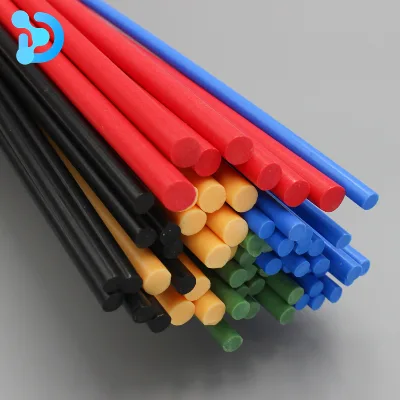
| Color Options | White, Black | Affects visual inspection and specific application requirements. |
| Certifications | RoHS, Reach, TDS, SGS | Ensures regulatory compliance and material safety. |
| Packaging | Plastic Bags, Wooden Box, Foam Lined | Impacts protection during shipping and storage. |
| Origin | Zhenjiang, Jiangsu, Yangzhong (China) | Indicates manufacturing hub and potential logistics considerations. |
This table serves as a reference point for buyers to cross-reference supplier data sheets. It underscores that while general characteristics are consistent, specific values can vary, necessitating a thorough verification process for every procurement transaction.
FAQs
What is the working temperature range for PTFE extruded round rods?
The working temperature range spans from -180°C to +260°C. This wide thermal window allows the rods to function reliably in extreme environments, including cryogenic and high-heat applications, without losing structural integrity.
Which certifications are available for these PTFE rods?
Available certifications include RoHS and Reach compliance. Buyers should also request Test Data Sheets (TDS) and SGS reports to verify material properties and ensure the product meets specific regulatory requirements for their industry.
Can I customize the size and shape of the rods?
Customization is available for both size and shape. The rods can be produced in diameters ranging from 1 to 500 mm, and standard specifications can be adjusted to meet unique engineering drawings or application needs.
How does the water absorption rate affect performance?
Water absorption is exceptionally low, typically ranging from less than 0.01% to 0.3%. This minimal absorption ensures dimensional stability in humid environments, making the material ideal for sealing and precision mechanical applications.
What is the typical density of virgin PTFE extruded rods?
The density typically falls between 2.1 and 2.3 g/cm³. This specific density range is a key indicator of material purity and helps buyers distinguish virgin PTFE from filled or recycled variants during procurement.
Which packaging options are used for shipping these rods?
Standard packaging includes plastic bags, while high-value orders often use wooden boxes with foam lining. This protective packaging ensures the rods arrive without damage, maintaining the smooth surface finish required for precision machining.
What are the primary applications for PTFE extruded round rods?
Primary applications include sealing, building, and bridge construction. The material is also used in electrical insulation due to its high dielectric strength and in chemical processing for its resistance to harsh substances.
How does the tensile strength vary across different grades?
Tensile strength varies from 14 MPa to 30-40 MPa depending on the specific formulation and processing method. Buyers must verify the exact grade to ensure the rod meets the load-bearing requirements of their specific application.