Source PTO Driven Flail Mower for Farmland, Lawn, and Orchard
Find and compare 30 PTO Driven Flail Mower options from China. These hydraulic and rotary units feature 3-point hitch mounting, varying cutting widths, and tractor compatibility for efficient farmland, lawn, and orchard maintenance.
Key considerations
Products List


Heavy Duty for Farm and Pasture Cutting Pto Rotary Tractor Flail Mower
$900.00 - $985.00
MOQ: 1 Pieces


Cost-Effective Hydraulic Heavy Duty Flail Mower Pto Drive for Tractor Hot Sale
$1300.00 - $3500.00
MOQ: 10 Pieces


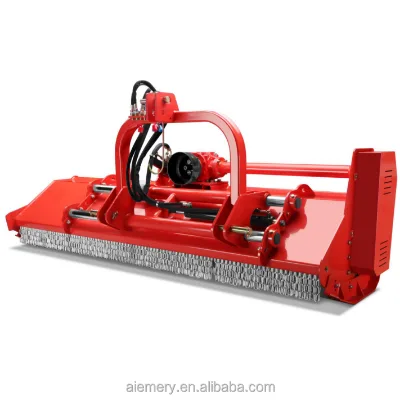

Pto Driven Flail Mower with Double Blades for Cutting Grass for Tractor
$580.00 - $780.00
MOQ: 1 Pieces


Comprehensive Sourcing Guide
PTO Driven Flail Mower Sourcing Guide
Selecting the right PTO-driven flail mower requires a careful balance between tractor compatibility, cutting performance, and long-term durability. These machines are designed to be mounted directly to a tractor’s three-point hitch, utilizing the tractor’s power take-off (PTO) shaft to drive the rotating drum and blades. This configuration eliminates the need for a separate engine, reducing overall weight and maintenance complexity compared to self-propelled units. However, it places strict requirements on the tractor’s hydraulic system, PTO speed, and horsepower output, making accurate matching essential for safe and efficient operation.
The procurement process involves navigating a wide range of models, from compact units suitable for small lawns to heavy-duty agricultural mowers designed for farmland and orchards. Buyers must distinguish between different blade types, such as hammer blades for rough terrain and Y-blades for cleaner cuts, and understand how cutting width and height adjustments impact workflow efficiency. With observed market listings ranging from 400 to 6000 USD and minimum order quantities (MOQ) typically between 1 and 10 units, the market offers flexibility for both individual farm purchases and larger fleet acquisitions.
Product Scope and Observed Listing Signals
The current market for PTO-driven flail mowers presents a diverse array of models tailored to specific agricultural and landscaping needs. Observed product listings indicate a strong focus on versatility, with applications spanning farmland, lawns, fruit trees, paddy fields, and tea plantations. The cutting width is a primary differentiator, with common specifications including 150cm, 1900mm, and 2100mm models. These variations allow buyers to select equipment that matches the scale of their operations, from narrow orchard rows to wide open fields. The working efficiency for these machines is generally reported in the range of 4500 to 8000 square meters per hour, providing a benchmark for productivity expectations.
Another key signal in the market is the emphasis on customization and structural robustness. Many suppliers offer customization options for color and logo, catering to OEM requirements or fleet branding. The standard packaging for these heavy-duty units is typically a steel frame or steel crate, designed to protect the machinery during international shipping. Models such as the AGF200, EF150, and EFGC195-M represent different tiers of capability, with weights ranging from 280kg to 700kg. This weight variation directly correlates with the machine's ability to handle rough terrain and the required tractor power, with some models requiring up to 120HP while others function efficiently with 35-55HP tractors.
Technical Specifications to Verify
Tractor matching is the most critical technical consideration when sourcing a PTO-driven flail mower. Buyers must verify that their tractor’s PTO output matches the mower’s requirement, which is typically 540 RPM for standard models. The horsepower range is equally important; some units are designed for 70-120HP tractors, while lighter models may only require 35-55HP. Additionally, the mounting type is almost universally a three-point hitch, but buyers should confirm the specific category of the hitch and the availability of optional hydraulic side-shift features, which are crucial for maneuvering around obstacles in orchards or uneven terrain.
The cutting mechanism and blade configuration determine the quality of the cut and the machine's durability. Flail mowers typically use either hammer blades or Y-blades, with hammer blades often weighing 800g or 1200g depending on the working width. The cutting height is adjustable, with observed ranges spanning from 10mm to 80mm, allowing for precise lawn maintenance or rougher agricultural clearing. Buyers should also verify the PTO spline specifications, such as 6x6x850, to ensure physical compatibility with the tractor’s driveline. The power source is hydraulic for certain advanced models, which may offer additional control features but requires the tractor to have sufficient hydraulic flow and pressure.
Compliance and Safety Documentation
Certification is a primary indicator of manufacturing quality and regulatory compliance in the global machinery market. Most observed listings for PTO-driven flail mowers include CE certification, which is mandatory for selling within the European Union and serves as a baseline for safety and environmental standards. Some suppliers also reference ISO 9001 certification, indicating that the manufacturing process adheres to international quality management standards. Buyers should request copies of these certificates to verify their validity and ensure they cover the specific model being purchased, as certifications can sometimes be generic rather than product-specific.
Safety documentation must be thorough and provided in the buyer’s local language. This includes detailed operation manuals, maintenance schedules, and safety warnings regarding the rotating PTO shaft and blades. Since these machines operate at high speeds and involve sharp cutting elements, clear instructions on guard installation and emergency stop procedures are essential. Buyers should also verify that the machine’s design includes adequate guarding for the PTO shaft and the cutting drum, as required by regional machinery directives. The absence of proper safety documentation can lead to operational hazards and potential liability issues, especially in commercial or industrial settings.
Cost Drivers and Commercial Terms
The price range of 400 to 6000 USD reflects significant variations in size, power, and feature sets. Larger cutting widths, such as 2100mm, and higher weight capacities, like 700kg, command higher prices due to increased material usage and manufacturing complexity. Models with optional features, such as hydraulic side-shift mechanisms or specialized blade configurations, will also be priced at the higher end of the spectrum. Buyers should analyze the cost per square meter of cutting width to determine the value proposition, keeping in mind that a wider mower may offer better efficiency but requires a more powerful and expensive tractor.
Commercial terms, including MOQ and packaging, also influence the total cost of ownership. With MOQs ranging from 1 to 10 units, small buyers can procure single units, while larger organizations can benefit from bulk pricing. The packaging method, whether steel frame or steel crate, affects shipping costs and insurance premiums. Buyers should clarify whether the quoted price includes export packaging and if it meets the requirements for containerized shipping. Additionally, lead times and payment terms should be negotiated clearly, as delays in production can impact planting or harvesting schedules. Understanding the total landed cost, including freight and duties, is essential for accurate budgeting.
Supplier Qualification and Quality Control
Verifying the supplier’s location and manufacturing capability is a key step in risk mitigation. Many suppliers are based in Shandong, China, a region known for its agricultural machinery manufacturing cluster. Buyers should assess the supplier’s production capacity and quality control processes to ensure consistency in product quality. Requesting factory audits or third-party inspection reports can provide insights into the manufacturing standards and the supplier’s ability to meet delivery commitments. Suppliers with ISO 9001 certification are generally more reliable in maintaining consistent quality across batches.
Quality control should extend to the pre-shipment inspection of the specific units being purchased. Buyers should verify that the cutting width, weight, and PTO specifications match the ordered model exactly. Checking the condition of the blades, the integrity of the steel frame, and the functionality of the three-point hitch is essential. For hydraulic models, testing the side-shift mechanism and checking for leaks is crucial. Buyers should also inquire about the warranty terms and the availability of spare parts, such as replacement blades and bearings, to minimize downtime during operation.
Long-Term Procurement Checks
Sustainability and after-sales support are critical for the long-term viability of the procurement. Buyers should evaluate the supplier’s commitment to providing technical support and spare parts over the machine’s lifespan. The availability of replacement parts, such as hammer blades and PTO shafts, ensures that the mower can be maintained without significant delays. Suppliers that offer comprehensive training materials or video guides for maintenance can also reduce the burden on the buyer’s technical staff.
Finally, buyers should monitor the machine’s performance in the field to identify any recurring issues or design flaws. Feedback from initial use can inform future purchasing decisions, allowing for adjustments in model selection or supplier choice. Keeping detailed records of maintenance costs and operational efficiency helps in calculating the true cost of ownership. By focusing on these long-term factors, buyers can ensure that their investment in PTO-driven flail mowers delivers consistent value and supports their agricultural or landscaping operations effectively.
FAQs
What is the cutting width of the AGF200 model?
The AGF200 model features a cutting width of 2100mm. This specification allows for efficient coverage in large farmlands and paddy fields while maintaining compatibility with tractors ranging from 70 to 120 horsepower.
Can this mower be customized for specific needs?
Yes, customization is available for this tractor flail mower. Buyers can request specific configurations to match their operational requirements, ensuring the equipment fits their unique agricultural or landscaping applications effectively.
Which certification does the product hold?
The product holds ISO 9001 and CE certifications. These standards ensure the machinery meets international quality and safety requirements, making it suitable for export and use in various regulated markets globally.
How does the hydraulic system power the mower?
The mower operates using a hydraulic power source system. This design provides reliable performance for rotary cutting, allowing the machine to function efficiently across different terrains like lawns, fruit trees, and tea plantations.
What is the working efficiency of the EF150 model?
The EF150 model achieves a working efficiency of 4500 to 8000 square meters per hour. This high output rate makes it ideal for large-scale agricultural operations requiring rapid clearing of farmland or paddy fields.
Where is the product manufactured?
The product originates from Shandong, China. This location is a known hub for agricultural machinery manufacturing, ensuring access to established supply chains and production capabilities for these tractor-mounted flail mowers.
What is the weight of the AM model?
The AM model has a structure weight of 280kg. This relatively lightweight design facilitates easier handling and transport while still providing robust performance for matching tractors with power between 35 and 55 horsepower.