Source Boarding Suitcase Options for Travel, Business, and Leisure
Explore 30 Boarding Suitcase models featuring ABS, Nylon, and Polyester materials with sizes from 20 to 28 inches. Compare features like TSA locks, spinner wheels, and waterproof durability for travel, business, and leisure needs.
Key considerations
Products List

Fashionable Suitcase Front-Opening Password Boarding Luggage Universal Wheel Suitcase
$28.81 - $32.65
MOQ: 100 Pieces


New Design Pumpkin Boarding Cabin Suitcase Carry on Luggage Travel Trolley Suitcase
$27.44 - $31.10
MOQ: 100 Pieces

ABS Hardshell Travel Suitcase Cabin Lightweight Trolley Valise Suitcase
$16.76 - $18.99
MOQ: 100 Pieces


20 Inches New Design Diamond Travel Carry-on Business Travelling Suitcase
$13.02 - $14.76
MOQ: 100 Pieces


New Folding Suitcase Luggage Unisex Boarding Case Portable Travel Luggage
$19.23 - $23.07
MOQ: 100 Pieces

Light Luxury Large Capacity for Boarding Custom Travel Suitcase Luggage
$61.00 - $79.00
MOQ: 10 Pieces


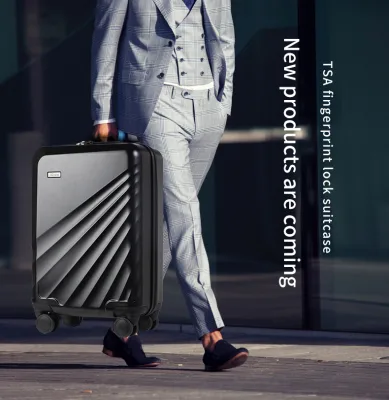


New Arrival Promotion Factory Traveling Suit Case Trolley Luggage Bag Suitcase
$52.99 - $67.99
MOQ: 500 Pieces
Comprehensive Sourcing Guide
Boarding Suitcase Sourcing Guide
Product Scope and Observed Listing Signals
The Boarding Suitcase market encompasses a diverse range of hard-shell and soft-sided luggage designed to meet strict airline carry-on dimensions, typically centered around the 20-inch standard. Sourcing data indicates a significant presence of models constructed from ABS and ABS+PVC composites, which offer a balance of rigidity and impact resistance suitable for frequent travel. These materials are often paired with high-density linings, such as 230d or 210d polyester, to ensure internal durability while maintaining a lightweight profile. Buyers will observe listings that emphasize features like shock-resistance, scratch-resistance, and waterproof capabilities, which are critical for protecting contents during the handling processes associated with cabin storage and overhead bin placement.
Commercial signals from the current market reveal a wide variance in pricing, ranging from approximately $6.42 to $300 USD, reflecting differences in material quality, brand positioning, and feature sets. The minimum order quantities (MOQ) observed span from single units to 100,000 pieces, indicating that suppliers cater to both individual retail buyers and large-scale corporate or distributor contracts. Origin hubs are primarily located in Jiangxi, Zhejiang, and Guangzhou, suggesting a concentrated manufacturing ecosystem in China. Listings frequently highlight customization availability, allowing buyers to tailor colors, logos, and internal structures to specific brand identities, while packaging methods vary from individual OPP bags to bulk carton configurations, impacting logistics and shelf presentation.
Technical Specifications to Verify
Verifying the external dimensions is the most critical technical step, as boarding suitcases must adhere to specific airline constraints, commonly cited as 20-inch standards or precise measurements like 424120cm and 46.54124.5cm. Buyers should confirm whether the listed size includes wheels and handles, as these components often add to the total height and depth, potentially causing the suitcase to exceed carry-on limits if not accounted for. The internal structure should be examined for multiple compartments, expandable layers, and compression systems, which enhance packing efficiency and organization. Models such as MULK134, MULA018, and WG2328 represent specific design iterations that may vary in these internal configurations, requiring close inspection of the product model specifications to ensure they meet the intended use case for business or leisure travel.
The hardware and mobility systems are equally important for the longevity and user experience of the Boarding Suitcase. Buyers must verify the type of wheels, with spinner wheels being a common preference for maneuverability, and ensure they are described as quality silent shock-absorbing units to reduce noise and vibration. The trolley mechanism should be constructed from durable materials, such as aluminum pipes, to support the weight of the packed luggage without bending or failing. Additionally, the handle system, often made from high-quality TPE or strong fabric, must be tested for smooth extension and retraction. Locking mechanisms, whether built-in combination locks or TSA-approved locks, and zipper types, including nylon or anti-theft zippers, should be inspected for reliability, as these are frequent points of failure in lower-quality luggage.
Compliance and Safety Documentation
While specific certification statuses are not universally declared in all listings, buyers must ensure that boarding suitcases comply with international safety standards regarding materials and mechanical performance. This includes verifying that the ABS, PVC, and nylon materials used in construction are free from harmful substances, adhering to regulations such as REACH or CPSIA depending on the target market. The locking mechanisms, particularly TSA locks, must meet specific dimensional and functional requirements set by transportation security authorities to allow for inspection without damage. Buyers should request documentation or test reports that confirm the durability of the wheels and handles under repeated stress, ensuring that the product can withstand the rigors of airport handling without structural compromise.
Documentation should also cover the electrical safety of any integrated features, although most standard boarding suitcases are passive. However, if models include electronic components or charging ports, compliance with relevant electrical safety standards becomes mandatory. Buyers should verify that the packaging materials, such as OPP bags and cartons, meet environmental and safety regulations for disposal and recycling in the destination country. It is essential to confirm that the supplier can provide a Declaration of Conformity or similar documentation that attests to the product's adherence to the stated standards, such as the 20-inch or 24-inch size specifications, ensuring that the product is legally marketable and safe for consumer use.
Cost Drivers and Commercial Terms
The cost of boarding suitcases is primarily driven by the choice of materials, with ABS and ABS+PVC composites offering different price points based on thickness and quality. The inclusion of premium features, such as aluminum trolley pipes, silent shock-absorbing wheels, and high-density linings, significantly increases the unit cost. Buyers should analyze the trade-off between material durability and price, considering that higher-quality materials may reduce warranty claims and returns in the long run. The observed price range of $6.42 to $300 USD reflects these variations, with lower-end models likely using thinner plastics and basic hardware, while higher-end models feature robust construction and advanced mobility systems.
Commercial terms, including MOQ and packaging, play a crucial role in the total landed cost. Suppliers offering low MOQs may charge higher unit prices, while bulk orders can benefit from economies of scale. Packaging methods, such as individual OPP bags versus bulk carton packing, affect shipping efficiency and storage requirements. Buyers should negotiate clear terms regarding customization costs, as adding logos or specific colors may incur additional fees. It is also important to clarify the lead times and payment terms, ensuring that the supplier can meet delivery deadlines without compromising on quality. Understanding these cost drivers allows buyers to make informed decisions that align with their budget and volume requirements.
Supplier Qualification and Quality Control
Selecting a reliable supplier requires verifying their manufacturing capabilities and quality control processes. Buyers should assess the supplier's experience in producing boarding suitcases, particularly those originating from key manufacturing hubs like Jiangxi, Zhejiang, and Guangzhou. Requesting samples is essential to evaluate the build quality, including the smoothness of the wheels, the sturdiness of the handle, and the integrity of the zippers and locks. Buyers should also inquire about the supplier's ability to provide customization services, such as logo printing and color matching, to ensure that the final product meets their brand standards.
Quality control measures should be clearly defined before placing an order. Buyers should establish acceptance criteria for defects, such as scratches, dents, or functional failures, and determine the acceptable quality limit (AQL) for inspections. It is advisable to conduct pre-shipment inspections to verify that the products match the approved samples and meet the specified technical requirements. Suppliers should be able to provide evidence of their quality management systems, such as ISO certifications, although this is not always explicitly stated. Establishing a strong relationship with the supplier and maintaining open communication can help resolve any issues that arise during production or delivery.
Long-Term Procurement Checks
Long-term procurement success depends on continuous monitoring of product performance and supplier reliability. Buyers should track customer feedback and return rates to identify any recurring issues with the boarding suitcases, such as wheel failure or zipper breakage. This data can be used to negotiate improvements with the supplier or to adjust specifications for future orders. Regular audits of the supplier's production processes can help ensure that quality standards are maintained over time, especially as order volumes increase. Buyers should also stay informed about changes in airline regulations and industry trends, such as new size restrictions or material innovations, to keep their product offerings relevant and compliant.
Building a resilient supply chain involves diversifying suppliers and maintaining buffer stock to mitigate risks associated with production delays or quality issues. Buyers should establish clear communication channels with their suppliers to address any concerns promptly and to foster a collaborative relationship. It is also important to review commercial terms periodically, as market conditions and material costs may change. By staying proactive and engaged in the procurement process, buyers can ensure that their Boarding Suitcase offerings remain competitive, reliable, and profitable in the long run.
FAQs
What materials are used for the Boarding Suitcase shells?
The shells are constructed from ABS, Polyester, or a combination of ABS and PVC. Some models feature an aluminum pipe frame for added structural integrity while maintaining a lightweight profile for travel.
Which sizes are available for the boarding suitcases?
Available sizes include 20 inch, 24 inch, 28 inch, and 29 inch options. Specific models like MULK134 and MULA018 correspond to standard dimensions such as 20 inch or 42*41*20cm.
Can the suitcases be customized for business or travel use?
Yes, customization is available for these suitcases designed for travel and business purposes. Buyers can request specific features to meet their unique operational requirements.
How durable are the suitcases against shocks and scratches?
The suitcases are designed to be shock-resistant, scratch-resistant, and waterproof. They feature quality silent shock-absorbing wheels and durable linings like 230d high density or 210d polyester.
What locking mechanisms are included with the luggage?
The luggage includes built-in combination locks or TSA locks for security. Some models specifically utilize number locks or anti-theft zippers to protect contents during transit.
Where are these boarding suitcases manufactured?
Manufacturing origins include Jiangxi, Zhejiang, and Guangzhou regions in China. Different product models are sourced from these specific locations to ensure quality production standards.
What is the standard packaging for the suitcases?
Each suitcase is packed in an OPP bag, with three pieces per carton. Some items are also packed in cartons directly, ensuring safe transport during shipping.