Source PVC Ocean Ball Indoor Playground for Amusement Parks, Supermarkets, and Play Centers
Compare 27 listings for PVC Ocean Ball Indoor Playground equipment suitable for amusement parks, supermarkets, and play centers. Buyers can evaluate models with varying dimensions, certifications like CE and ISO, and custom options from Chinese manufacturers.
Key considerations
Products List


2021 New Amusement Park Kid Soft Mat Ocean Ball Indoor Playground for Sale
$3000.00 - $4500.00
MOQ: 1 Sets


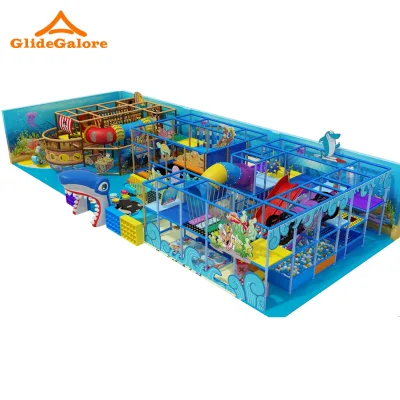


Ultimate Indoor Playground with Colorful Revolving Balls for Kids
$80.00 - $150.00
MOQ: 1 Square Meters


Ultimate Versatile Kids Outdoor Playground with Indoor Fun Areas
$50.00 - $290.00
MOQ: 1 Square Meters


Multi-Functional Indoor Playground with Slides and Climbing Areas
$490.00 - $800.00
MOQ: 100 Square Meters

Spacious Indoor Playground Design for Kids' Entertainment Areas
$680.00 - $700.00
MOQ: 100 Square Meters


Comprehensive Sourcing Guide
Strategic Sourcing Guide for PVC Ocean Ball Indoor Playgrounds
Procuring a PVC Ocean Ball Indoor Playground represents a significant capital investment for amusement parks, family entertainment centers, and commercial play facilities. The decision-making process requires a rigorous examination of material integrity, safety compliance, and logistical feasibility. Unlike standard playground equipment, these structures involve complex assemblies of soft play components, structural enclosures, and specialized ball pits. The following guide outlines the critical factors buyers must evaluate to ensure a procurement strategy that balances safety, durability, and cost-efficiency.
Technical Specifications and Material Composition
The foundation of any indoor playground system lies in its material composition and structural dimensions. The supplied data indicates a diverse range of materials utilized in this sector, including wood, plastic, and specifically PVC for the ball pit components. When sourcing a PVC ocean ball system, the primary focus must be on the durability of the PVC material used for the enclosure and the balls themselves. The data highlights that specific models utilize PVC with a volume capacity ranging from 10 cubic meters to 70 cubic meters. This variance suggests that buyers must define their spatial requirements precisely before requesting quotes, as the volume directly impacts the structural load and the number of balls required.
Structural dimensions are equally critical. Observed specifications include enclosure heights exceeding 2.5 meters and overall sizes that can be customized or fixed at dimensions such as 21601400540cm. Some models are noted to have a height of 2.8 meters, while others are described as having a dimension greater than 16 feet. The shape of the enclosure is often square, but the "Could Be Customized" attribute indicates that non-standard geometries are available. Buyers should verify the exact footprint and vertical clearance required for their specific venue, ensuring the ceiling height of the facility can accommodate the maximum jump weight and enclosure height without safety compromises.
The productive technology employed in manufacturing also influences the final product quality. Rotational moulding is a cited process, which typically offers high durability and seamless construction for plastic components. However, the presence of wooden materials in other listings suggests that hybrid structures may exist. It is essential to confirm the specific material mix for the intended model, as the maintenance requirements for wood differ significantly from those of PVC and plastic.
Compliance and Certification Verification
Safety compliance is the non-negotiable pillar of indoor playground procurement. The market data reveals a wide array of certifications that suppliers may claim, including CE, ISO9001, TUV, GS, ASTM, SGS, and EN1176. While these standards are frequently mentioned, buyers must treat them as verification targets rather than automatic guarantees. The presence of "Allowable Passenger" certifications linked to CE, ISO, and TUV suggests that the equipment is designed to support a specific number of users, often cited as 5 passengers per unit in some contexts, though this may vary by model.
Buyers should explicitly request documentation proving that the specific model they are purchasing has undergone testing against the relevant standards. The data lists EN1176, a standard often associated with playground equipment, alongside ISO9001 for quality management and ISO14001 for environmental management. Additionally, certifications like GS (Geprüfte Sicherheit) and ASTM (American Society for Testing and Materials) indicate adherence to rigorous safety protocols. It is crucial to verify that the certification applies to the specific model number, such as VS1-160125-81A-33 or VS1-170321-400-30A, rather than a generic company-wide claim.
The "Allowable Passenger" attribute is a critical safety metric. Some listings specify a certification linked to a specific passenger count, while others simply list the certification without a number. Buyers must clarify the maximum load capacity and the recommended number of simultaneous users to prevent overcrowding and structural failure. The warranty periods mentioned, ranging from one year to three years, often correlate with the confidence the manufacturer has in their compliance and build quality.
Cost Drivers and Pricing Dynamics
The pricing landscape for PVC ocean ball indoor playgrounds is highly variable, with observed ranges spanning from $0.02 to $50,000. This vast disparity is not indicative of a single product tier but rather reflects differences in scale, customization, material quality, and included accessories. The lower end of the range likely corresponds to individual components, such as replacement balls or small modular units, whereas the upper end represents full-scale, custom-engineered facilities.
Several factors drive the final cost. First, the volume of the structure is a primary determinant; a 70 cubic meter unit will naturally cost more than a 10 cubic meter one. Second, the level of customization plays a significant role. While some models are standard, the "Customized" attribute and "Size: Could Be Customized" indicate that bespoke designs command a premium. Third, the inclusion of additional entertainment projects, such as slides or ocean ball pits, adds to the complexity and cost.
The Minimum Order Quantity (MOQ) also influences the unit cost. The data shows an MOQ range from 1 to 2000 units. For large-scale installations, an MOQ of 20 FCL (28 cubic meters) may apply, which can affect the per-unit pricing for smaller buyers. Buyers should be aware that shipping and packing costs, which include cotton inside and PVC film outside or bubble bags with PP film, are often separate line items that can significantly impact the total landed cost.
Typical Applications and Usage Scenarios
The versatility of PVC ocean ball indoor playgrounds allows them to serve various commercial environments. The data explicitly identifies "Amusement Park" and "Supermarket" as suitable locations. This suggests that these systems are designed to be adaptable to both large-scale entertainment venues and smaller retail spaces where they can function as a draw for families. The "Indoor" usage attribute confirms that these are primarily designed for climate-controlled environments, protecting the PVC and wooden components from weather degradation.
The target age group is consistently listed as "3-12 Years" or simply "Children." This demographic focus dictates the design parameters, including the height of the enclosure, the size of the balls, and the complexity of the play features. The "Entertainment Projects" attribute, which includes "Ocean Ball" and "Slide," indicates that these systems are often part of a larger play complex. Buyers should consider the flow of traffic in their venue; a system suitable for a supermarket might need to be more compact and durable for high-frequency, short-duration use, whereas an amusement park model might prioritize elaborate features and longer operational life spans.
Supplier Evaluation and Origin Analysis
When evaluating potential suppliers, the origin of the product is a key data point. The supplied information indicates that products originate from China, with specific mentions of Wenzhou as a manufacturing hub. While this provides a geographical context, buyers should not rely solely on location. Instead, they must assess the supplier's ability to meet the specific technical and certification requirements outlined earlier.
The "Brand" attribute, such as "Vasia," suggests that some manufacturers operate under established brand names, which can be a proxy for reliability. However, the presence of OEM (Original Equipment Manufacturer) acceptance indicates that many suppliers are willing to produce white-label goods. Buyers should be cautious when dealing with OEM suppliers, ensuring that the quality control processes remain consistent regardless of the branding. The "Acceptant" status for OEM implies flexibility in production, but it also requires the buyer to be more vigilant in defining their quality standards.
Quality Control and Operational Lifespan
Ensuring the longevity of the playground equipment is essential for protecting the investment. The data provides conflicting or varied information regarding the lifespan of the products, with mentions of "Life Spain" (likely a translation artifact for "Life Span") of 7 years, an "Operational Life Span" of 4-7 years, and warranty periods of one to three years. This discrepancy highlights the need for buyers to clarify the expected service life based on usage intensity and maintenance protocols.
Quality control should extend beyond the initial inspection. The "prod_packing" details, such as "Cotton Inside, PVC Film Outside" or "Shipping Standard Package," suggest that proper packaging is part of the quality assurance process to prevent damage during transit. Buyers should verify that the packaging standards are robust enough to protect the PVC and structural components during long-distance shipping. Furthermore, the "Customized" nature of some products means that the quality control process must be tailored to the specific design, requiring pre-shipment inspections to ensure that the custom dimensions and materials match the agreed-upon specifications.
Long-Term Procurement Considerations
Procuring an indoor playground is a long-term commitment that extends beyond the initial purchase. The "Warranty" terms, ranging from one to three years, provide a safety net for manufacturing defects, but they do not cover wear and tear from daily use. Buyers should plan for ongoing maintenance, including the replacement of balls, repair of PVC tears, and inspection of structural integrity. The "Operational Life Span" of 4-7 years suggests that a complete replacement or major renovation may be necessary within this timeframe.
Additionally, the "Customized" attribute implies that future expansions or modifications may be possible, but they will likely require the original manufacturer or a highly specialized supplier. Buyers should consider the availability of spare parts and the ease of maintenance when selecting a supplier. The "OEM" capability of suppliers can be beneficial for future customization, but it requires clear documentation of the original design specifications to ensure compatibility.
In conclusion, sourcing a PVC Ocean Ball Indoor Playground requires a meticulous approach that balances technical specifications, safety compliance, and cost considerations. By carefully verifying certifications, understanding the drivers of cost, and planning for long-term maintenance, buyers can secure a high-quality play environment that serves their target demographic effectively. The diversity of the market, from small supermarket units to large amusement park installations, offers ample opportunity for tailored solutions, provided that the procurement process is grounded in rigorous due diligence and evidence-based decision-making.
FAQs
What materials are used for PVC ocean ball indoor playgrounds?
These structures commonly utilize PVC, plastic, and wooden materials depending on the specific model. Some units feature rotational moulding for durability, while others combine wood and plastic components for structural support and aesthetic variety.
Which certifications ensure safety compliance for these playgrounds?
Verified safety certifications often include CE, ISO9001, TUV, GS, and EN1176 standards. Buyers should confirm that the specific model number holds these credentials to ensure the equipment meets international safety protocols for children.
Can the dimensions of the playground be customized?
Yes, many models offer customizable sizes, including enclosure heights exceeding 2.5 meters or specific dimensions like 2160*1400*540cm. Some units are fixed at standard sizes, while others allow for bespoke designs to fit specific venue requirements.
How many passengers can the equipment safely accommodate?
Allowable passenger counts vary by model, with some units certified for five passengers per section. It is critical to verify the specific load capacity and certification details for the chosen model to prevent overcrowding and ensure structural safety.
What is the expected operational life span of the equipment?
The operational life span typically ranges from four to seven years depending on usage intensity. Warranty periods often cover one to three years, but the actual service life depends on maintenance protocols and the quality of materials like PVC and wood.
Where are these playgrounds manufactured and shipped from?
Products originate from China, with specific manufacturing hubs noted in locations like Wenzhou. Shipping packages usually include cotton inside and PVC film outside to protect the components during transit to international destinations.
What is the minimum order quantity for purchasing these units?
Minimum order quantities range from one unit to 2000 units depending on the supplier and product type. Some large-scale installations may require an MOQ of 20 FCL containers, while smaller modular units have lower entry thresholds.