Source PVDF Prepainted Aluminium Coil for Decorations, Doors, and Walls
Compare 30 listings of PVDF Prepainted Aluminium Coil with thickness from 0.2mm to 1.5mm and widths up to 2000mm. Buyers can evaluate coating types, grades, and certifications for use in decorations, door and window applications, and transportation tools.
Key considerations
Products List




Comprehensive Sourcing Guide
PVDF Prepainted Aluminium Coil Sourcing Guide
Procuring PVDF prepainted aluminium coils requires a disciplined approach to balancing chemical durability with mechanical formability. Buyers must recognize that the coating system is not merely a aesthetic finish but a critical performance layer designed to withstand UV exposure, chemical attack, and mechanical stress. The decision to source PVDF-coated material over other coating types, such as polyester or SMP, hinges on the specific environmental demands of the end application. High-performance architectural projects often mandate PVDF for its superior color retention and chalk resistance, ensuring that the facade or interior element maintains its visual integrity over decades rather than years.
The sourcing process involves navigating a complex matrix of alloy grades, temper conditions, and coating thicknesses. Suppliers typically offer a range of aluminium alloys, including the 3000 and 5000 series, each selected for specific strength and corrosion resistance profiles. The temper designation, ranging from O (annealed) to H112 (strain-hardened), dictates how the coil will behave during subsequent fabrication steps like roll forming, bending, or deep drawing. Understanding these material properties is essential for preventing defects such as cracking or spring-back during manufacturing, which can lead to significant project delays and cost overruns if not addressed during the initial specification phase.
Product Scope and Observed Listing Signals
The market for prepainted aluminium coils presents a wide variance in product specifications, which buyers must carefully filter to match their engineering requirements. Observed listings indicate a thickness range typically spanning from 0.2mm to 1.5mm, allowing for applications ranging from lightweight interior cladding to robust exterior curtain walls. Widths are commonly available up to 2000mm, though some suppliers may offer narrower widths starting from 200mm or specific maximums like 1590mm depending on their production line capabilities. This variability means that buyers cannot assume standard dimensions are universally available and must verify the exact width and thickness tolerances with the supplier before placing an order.
Coating technologies vary significantly across suppliers, with PE, PVDF, FEVE, and Nano coatings being the most prevalent options. PVDF coatings are generally distinguished by their fluoropolymer content, which provides exceptional weatherability, while PE coatings offer a more cost-effective solution for less demanding environments. Listings often mention specific paint brands such as PPG or AkzoNobel, which can serve as a proxy for coating quality and consistency. However, the presence of a brand name does not guarantee the specific formulation or performance characteristics required for a project, so buyers should request detailed technical data sheets that specify the resin type, pigment load, and total coating weight.
Technical Specifications to Verify
Verifying the technical specifications of PVDF coils is critical to ensuring compatibility with downstream manufacturing processes. The alloy grade, such as 3003, 3005, or 3105, directly influences the mechanical strength and workability of the material. Buyers must confirm that the selected alloy meets the structural requirements of the final product, particularly if the coil will be subjected to high wind loads or significant mechanical stress. Additionally, the temper condition must be aligned with the fabrication method; for instance, an O temper is suitable for deep drawing, while an H14 or H16 temper provides higher strength for rigid panel applications.
Coating thickness is another vital parameter that affects both performance and cost. High-quality PVDF coatings often specify a minimum total coating thickness, with some standards requiring no less than 25 microns for the topcoat. Buyers should verify whether the listed thickness refers to the total coating system or just the primer and topcoat layers. Furthermore, the surface treatment process, whether it involves chemical pretreatment or mechanical finishing, impacts the adhesion of the paint to the aluminium substrate. Poor adhesion can lead to peeling or flaking over time, compromising the protective function of the coil.
Compliance and Safety Documentation
Compliance with international standards is a non-negotiable aspect of sourcing PVDF aluminium coils, particularly for architectural and construction applications. Certifications such as ASTM, EN, JIS, and GB/T provide a framework for quality assurance and material consistency. Buyers should request copies of these certifications to verify that the supplier’s production processes adhere to recognized industry benchmarks. The presence of ISO 9001 certification indicates a robust quality management system, while specific product certifications like SGS or ROHS ensure that the materials meet environmental and safety regulations.
Safety documentation, including Material Safety Data Sheets (MSDS) and environmental compliance reports, is essential for managing risk throughout the supply chain. These documents provide critical information on the chemical composition of the coatings, including volatile organic compound (VOC) levels, which may be regulated in certain jurisdictions. Buyers must ensure that the supplier can provide up-to-date documentation that reflects the current formulation of the PVDF coating. This is particularly important for projects with strict green building requirements, where low-VOC and non-toxic materials are mandated to protect indoor air quality and environmental sustainability.
Cost Drivers and Commercial Terms
The cost of PVDF prepainted aluminium coils is influenced by several key factors, including the base aluminium price, the type and quality of the coating, and the complexity of the order. Aluminium prices fluctuate based on global market conditions, and suppliers often pass these changes on to buyers through price adjustment mechanisms. The choice of coating system also significantly impacts the final price, with PVDF coatings being more expensive than PE or SMP alternatives due to their superior performance characteristics. Buyers should request detailed cost breakdowns to understand the proportion of material costs versus processing fees.
Commercial terms, such as Minimum Order Quantity (MOQ), lead times, and payment terms, play a crucial role in the overall procurement strategy. Observed MOQs can range from 1 to 20 tons, depending on the supplier’s production capacity and the customization required. Lead times typically vary based on the order volume and the specific specifications, with standard items potentially available within 15 days. Buyers should negotiate clear terms regarding delivery schedules and penalties for delays, as well as flexible payment structures that align with their cash flow needs. Understanding these commercial dynamics helps in planning inventory levels and managing project timelines effectively.
Supplier Qualification and Quality Control
Qualifying a supplier for PVDF aluminium coils requires a thorough assessment of their manufacturing capabilities and quality control processes. Buyers should verify the supplier’s production facilities, including the age and condition of their coating lines, to ensure they can maintain consistent coating thickness and surface finish. The use of reputable paint brands and advanced curing technologies can be indicators of a supplier’s commitment to quality. Additionally, suppliers should have a robust internal quality control system that includes regular testing of coating adhesion, flexibility, and weather resistance.
Third-party inspections and audits can provide an additional layer of assurance regarding supplier reliability. Buyers may choose to engage independent inspection agencies to verify product quality before shipment, ensuring that the delivered coils meet the specified standards. This is particularly important for large orders or projects with strict quality requirements. Suppliers who are transparent about their quality control processes and willing to accommodate third-party inspections are generally more reliable partners. Establishing a strong relationship with a qualified supplier can lead to better pricing, improved service, and consistent product quality over time.
Long-Term Procurement Checks
Long-term procurement of PVDF aluminium coils requires ongoing monitoring of supplier performance and market trends. Buyers should establish key performance indicators (KPIs) to track supplier reliability, including on-time delivery rates, defect rates, and responsiveness to issues. Regular reviews of these metrics can help identify potential problems early and allow for corrective actions to be taken. Additionally, buyers should stay informed about changes in industry standards and regulations that may affect the specification or use of PVDF coatings, ensuring that their procurement strategies remain compliant and competitive.
Building a diversified supplier base can mitigate risks associated with single-source dependency. By qualifying multiple suppliers, buyers can ensure continuity of supply in the event of production disruptions or capacity constraints at a primary supplier. This strategy also provides leverage in negotiations, allowing buyers to secure better terms and pricing. Furthermore, maintaining open communication with suppliers about future project requirements can help in planning for capacity and inventory, ensuring that the supply chain remains agile and responsive to changing market demands.
FAQs
What thickness options are available for PVDF prepainted aluminum coils?
Thickness ranges from 0.2mm to 1.5mm depending on the specific alloy and application requirements. Common grades include 3003, 3005, and 3105 series aluminum. This flexibility allows for precise material selection for curtain walls, doors, windows, and transportation tools while maintaining structural integrity and coating adhesion.
Which certifications apply to these aluminum coils?
Products typically hold certifications such as ASTM, ISO, CE, SGS, ROHS, and GB/T standards. These ensure compliance with international quality and safety norms. Buyers should verify specific certification documents with suppliers to confirm that the material meets the required project specifications and regional regulatory requirements.
Can the aluminum coils be customized for specific projects?
Yes, customization is available for dimensions, colors, and coatings. Standard sizes like 1220x2440mm are common, but widths up to 2000mm and lengths up to 5800mm can be arranged. Buyers can select from RAL colors, wooden grains, or marble grains, with coatings like PE, PVDF, or SMP applied to meet aesthetic needs.
What is the typical lead time for delivery?
The standard delivery lead time is approximately 15 days after order confirmation. This timeframe allows for production, quality control, and packaging preparation. Buyers should confirm exact schedules with suppliers, as lead times may vary based on order volume, customization complexity, and current production capacity at the manufacturing facility.
How are the aluminum coils packaged for shipping?
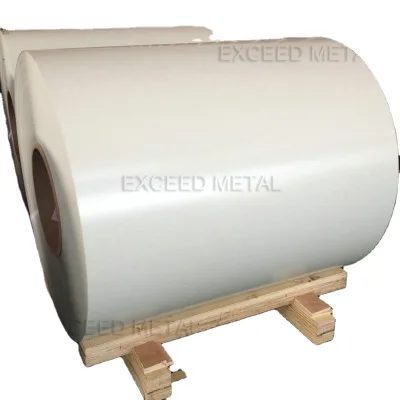
Coils are typically packed in wooden pallets or wooden cases, often with waterproof paper for protection. This packaging ensures the material remains secure and undamaged during transit. The sturdy packaging is designed to handle heavy loads and protect the coated surface from moisture and physical impact during international shipping.
What surface treatments are used for these aluminum coils?
Surface treatments include color coating with PVDF, PE, SMP, or HDPE paints. PVDF coatings offer superior durability and weather resistance, making them ideal for outdoor applications. The coating thickness is often no less than 25um for PVDF, ensuring long-term performance against UV radiation and environmental exposure.