Source Quartz Ball Mill Grinding Machine for Construction, Mine, Stone Powder
Explore 30 listings of the Quartz Ball Mill Grinding Machine designed for construction, mining, and stone powder applications. Buyers can compare specifications like motor power, input size, and output size to find suitable models for their production needs.
Key considerations
Products List


Factory Price Grinding Mill Ball Mill for Limestone Talc Quartz Silica Sand
$10000.00 - $100000.00
MOQ: 1 Pieces


Hot Sale Grinding Small Ball Mill Machine Ball Mill for Gold Mining
$5000.00 - $10000.00
MOQ: 1 Pieces

Small Mini Continuous Type Stone Grinding Small Mill Ball Grinding Machine
$5000.00 - $18000.00
MOQ: 1 Pieces

5-10tph Silica Sand Ball Mill for Stone Quartz Limestone Grinding Ball Mill
$5125.00 - $9852.00
MOQ: 1 Pieces

Small Scale 900X3000 900*1800 Quartz Stone Grinding Ball Mill Machine for Sale
$4800.00 - $52000.00
MOQ: 1 Pieces

Top Quality Quartz Sand Grind Ball Mill with Ceramic Liner and Balls
$5500.00 - $35000.00
MOQ: 1 Pieces

High Efficient Grinder for Quartz Sand with Ball Mill Factory Price Fine Powder Grinder Machine
$10000.00 - $1000000.00
MOQ: 1 Pieces

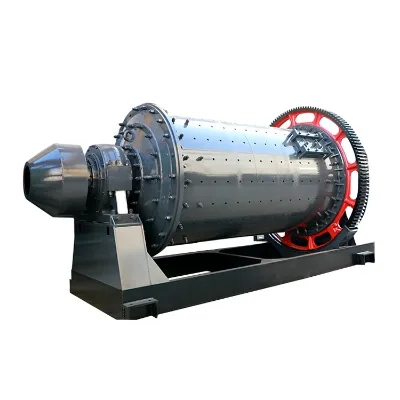
China Ball Mill Grinding for Copper, Gold, Zinc Grinding With High Capacity Good Price
$14500.00 - $15000.00
MOQ: 1 sets


Grinding Machine Ball Mill Spare Parts Gear
$5000.00 - $10000.00
MOQ: 1 Sets
SHENYANG HUAYUE BRILLIANT MINING MACHINERY MANUFACTURING CO.,LTD


Comprehensive Sourcing Guide
Strategic Sourcing Guide for Quartz Ball Mill Grinding Machines
The global demand for high-purity quartz processing has elevated the importance of selecting the right grinding equipment for industrial applications. For procurement professionals, the Quartz Ball Mill Grinding Machine represents a critical capital investment that directly influences product quality, energy efficiency, and operational continuity. This guide synthesizes observed market data and technical parameters to provide a disciplined framework for sourcing these machines. Buyers must navigate a complex landscape of specifications, certifications, and supplier capabilities to ensure a procurement strategy that aligns with long-term production goals. The following sections detail the technical requirements, compliance standards, cost structures, and evaluation criteria necessary for a successful acquisition.
Technical Specifications and Operational Parameters
Understanding the technical architecture of a ball mill is the first step in defining procurement requirements. The core function of these machines is to reduce raw materials, such as quartz, feldspar, and clay, to fine powders suitable for construction and mining applications. Observed market data indicates that the feeding size for these units typically ranges from less than 20mm to 25mm, with some models offering customized input sizes to accommodate specific feedstock variations. The output size is a critical metric, with standard specifications often targeting a range of 0.075mm to 0.4mm, though customization is frequently available to meet precise particle size distribution needs.
The physical dimensions of the mill cylinder are equally significant. Data suggests cylinder diameters can vary from 1200mm to 2800mm, with lengths adjusted based on the required capacity. The type of mill selected—whether continuous or intermittent—depends heavily on the production workflow. Intermittent types are often noted for specific batch processing needs, while continuous models support high-volume throughput. The grinding body capacity is another vital specification, with observed figures reaching up to 20 tons for larger industrial units.
Power consumption and motor selection are primary drivers of operational efficiency. The market features a wide spectrum of motor powers, ranging from 22kW to 1250kW, with specific models citing ranges like 15-1250 or 37-55kW. Most units utilize AC motors, which provide the necessary torque and stability for grinding heavy materials like iron ore and quartz. The rotational speed is another key parameter, with observed ranges typically falling between 13 and 15 revolutions per minute. Buyers must verify that the motor power and rotational speed are synchronized with the cylinder dimensions to prevent mechanical failure or inefficient grinding. Furthermore, the factory area and establishment date of the manufacturer can serve as proxies for production maturity, with some suppliers citing established facilities dating back to 1956 and areas exceeding 55,000 square meters.
Compliance, Certification, and Safety Standards
In the B2B machinery sector, compliance with international standards is non-negotiable for ensuring safety and quality. Procurement teams must verify that the equipment adheres to recognized quality management and environmental standards. The supply chain data indicates that many units are certified under ISO9001 and ISO14000, which validate the manufacturer's commitment to quality control and environmental management systems. Additionally, the CE mark is a frequent certification observed, signifying conformity with health, safety, and environmental protection standards for products sold within the European Economic Area.
When evaluating a potential supplier, buyers should request specific documentation for these certifications rather than relying on general claims. The presence of a "CE" standard on the product listing is a positive indicator, but it must be supported by valid certificates. Similarly, while some listings mention "various" standards, a procurement strategy should prioritize suppliers with explicit, verifiable documentation for ISO9001, ISO14000, and CE. The origin of the machinery is also a factor; the majority of observed products originate from China, specifically from regions like Zhengzhou City. While this location is a major manufacturing hub, buyers must ensure that the specific factory holds the necessary local and international accreditations to guarantee that the machinery meets the required export standards.
Cost Drivers and Pricing Variables
The pricing of quartz ball mill grinding machines is highly variable, influenced by a complex interplay of factors including capacity, customization, and motor power. Observed market data reveals a price range spanning from $1 to $2,800,000, reflecting the vast difference between small-scale laboratory units and massive industrial processing plants. This wide disparity underscores the necessity of defining clear budget constraints and performance requirements before initiating negotiations.
Several specific cost drivers emerge from the technical specifications. First, the motor power is a direct determinant of cost; units with higher kilowatt ratings, such as those exceeding 500kW, will command a significantly higher price point than lower-power models. Second, the customization level plays a crucial role. While standard models are available, many buyers require modifications to the cylinder diameter, feeding size, or output size to fit their specific plant layout. Customization often incurs additional engineering and manufacturing costs. Third, the capacity of the grinding body and the overall production volume (e.g., 5 tons per batch) influence the material costs and the scale of the machine.
Minimum Order Quantity (MOQ) is another financial consideration. The observed MOQ range is 1 to 4,000 units, though this likely refers to the quantity of specific components or the flexibility of the order rather than the number of entire mills, which are typically high-value, low-volume items. Buyers should clarify the MOQ terms to understand if they are purchasing a single unit or a batch of components. Additionally, packaging requirements, such as export standard packages or custom solutions for long-distance sea transportation, can add to the total landed cost.
Typical Applications and Material Compatibility
Quartz ball mills are designed to handle a diverse range of materials, making them versatile assets for various industries. The primary application areas identified in the market data include construction and mining. In the construction sector, these mills are essential for processing materials like quartz, feldspar, and clay into stone powder, which is used in concrete, ceramics, and glass manufacturing. The mining industry utilizes these machines for the grinding of iron ore, copper, and limestone, preparing the ore for further extraction and refining processes.
The material compatibility of the mill is determined by the hardness and abrasiveness of the feedstock. Quartz, being a hard mineral, requires a robust grinding body and a durable cylinder liner to withstand the wear and tear of continuous operation. The observed data highlights that these machines are "special for" quartz, indicating a design optimization for this specific material. However, the versatility is further demonstrated by their ability to process iron, clay, and feldspar. Buyers must ensure that the selected model's specifications, such as the feeding size and output size, align with the specific material properties of their intended application. For instance, a mill designed for a feeding size of less than 25mm may not be suitable for larger raw rocks without a pre-crushing stage.
Supplier Evaluation and Manufacturing Capabilities
Selecting the right supplier requires a thorough evaluation of their manufacturing capabilities and track record. The location of the factory is a significant factor, with Zhengzhou, China, emerging as a primary hub for these machines. Buyers should verify the physical presence of the factory and its operational history. Data points such as a factory establishment date of 1956 and a factory area of 55,000 square meters suggest a long-standing, large-scale operation with the capacity to handle complex orders.
When assessing suppliers, procurement teams should look for evidence of customization capabilities. The market data confirms that customization is available for various aspects, including color, packing, and technical specifications. A supplier's ability to tailor the machine to specific needs is a strong indicator of technical competence. Additionally, the after-sales service is a critical differentiator. The observed data mentions "after sale service for the whole using life," which implies a commitment to long-term support. Buyers should clarify the scope of this service, including the availability of spare parts, technical training, and response times for repairs.
The production model numbers, such as 3660, CIC-QMJ-05, 4077, ZK, and Tcq2500X2900, provide a reference for the specific types of mills available. While these codes may not be universal, they indicate a structured product line. Buyers should request detailed technical drawings and performance data for specific model numbers to ensure they match their operational requirements.
Quality Control and Long-Term Procurement Considerations
Ensuring the quality of the ball mill is paramount to minimizing downtime and maximizing efficiency. Quality control should begin at the design stage and continue through manufacturing, testing, and final delivery. Buyers must verify that the machine meets the specified standards, such as ISO9001 and CE, and that the manufacturing process includes rigorous testing of critical components like the motor, cylinder, and grinding body. The packing method is also a quality indicator; "export standard packages" and "suitable for long-distance and sea transportation" suggest that the supplier understands the risks of international shipping and has measures in place to protect the equipment.
Long-term procurement considerations extend beyond the initial purchase price. The availability of spare parts, the ease of maintenance, and the energy efficiency of the motor are all factors that impact the total cost of ownership. The "after sale service for the whole using life" claim should be backed by a formal service agreement that outlines response times, warranty terms, and the availability of technical support. Furthermore, the color and finish of the machine, which can be customized "as your request," may have implications for maintenance and visibility in the plant environment.
Buyers should also consider the scalability of the equipment. As production needs grow, the ability to upgrade or expand the grinding line becomes important. The modular nature of some models, indicated by the wide range of model numbers and customization options, suggests that the equipment can be adapted to changing production demands. Finally, the environmental impact of the machine, supported by ISO14000 certification, should be factored into the decision-making process, especially for companies with strict sustainability goals.
Summary of Key Procurement Metrics
To facilitate a quick comparison of critical attributes, the following table summarizes the key technical and compliance metrics observed in the market. This table serves as a checklist for buyers to verify against supplier proposals.
| Attribute Category | Observed Standard / Range | Verification Requirement |
|---|---|---|
| Product Type | Ball Mill (Continuous/Intermittent) | Confirm specific type (e.g., Tcq2500X2900) |
| Feeding Size | <20mm to <25mm | Verify input size compatibility with raw material |
| Output Size | 0.075-0.4mm | Check if customized output is needed |
| Motor Power | 22KW to 1250kW | Match power to production capacity needs |
| Cylinder Diameter | 1200mm - 2800mm | Confirm dimensions for plant layout |
| Certifications | ISO9001, ISO14000, CE | Request valid certificate copies |
| Origin | Zhengzhou, China | Verify factory location and capacity |
| Customization | Available (Color, Size, Packing) | Define specific requirements early |
| After-Sales | Whole Using Life | Review service agreement terms |
By adhering to these guidelines and rigorously verifying the provided data points, procurement professionals can navigate the complexities of sourcing quartz ball mill grinding machines. The focus on technical specifications, verified certifications, and long-term service capabilities ensures that the selected equipment will deliver the performance and reliability required for modern industrial operations.
FAQs
What certifications do quartz ball mill grinding machines typically have?
Most units carry ISO9001, ISO14000, and CE certifications to ensure safety and quality. Buyers should verify specific documentation for these standards before purchase. Some listings also mention various standards, but explicit certificates are preferred for compliance.
Which feeding sizes are compatible with these grinding machines?
Standard models accept feeding sizes less than 20mm or 25mm depending on the specific unit. Customized input sizes are frequently available to accommodate different feedstock variations. Ensure the selected model matches your raw material dimensions.
Can the cylinder diameter be customized for specific production needs?
Yes, cylinder diameters can be customized ranging from 1200mm to 2800mm. Suppliers often adjust lengths based on required capacity and specific application requirements. This flexibility allows for tailored solutions for various industrial workflows.
How is the power consumption determined for these ball mills?
Motor power ranges widely from 22kW up to 1250kW depending on the model and capacity. Most units utilize AC motors to provide necessary torque for grinding heavy materials. Higher kilowatt ratings generally correlate with larger industrial processing capabilities.
What is the typical output size range for quartz grinding?
Standard output sizes typically fall between 0.075mm and 0.4mm for fine powder production. Customized output sizes are often available to meet precise particle size distribution needs. This range is suitable for construction and mining applications requiring fine materials.
Which materials can these machines process besides quartz?
These mills are designed to process iron ore, copper, limestone, clay, and feldspar effectively. The equipment is versatile for both construction and mining sectors. Ensure the grinding body and cylinder liners are suitable for the hardness of your specific feedstock.
What after-sales service is provided for the whole using life?
Suppliers often offer after-sales service covering the entire operational life of the machine. This commitment includes support for spare parts and technical maintenance. Buyers should clarify the specific scope of service and response times in the formal agreement.