Source Quarter Zip Hoodie for Outdoor, Work, and Casual Wear
Compare 30 Quarter Zip Hoodie options from verified suppliers in China. Buyers can review specifications like material, size, and customization to find the right garment for winter, work, or casual use.
Key considerations
Products List


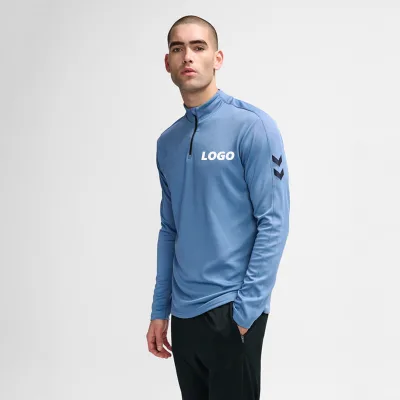
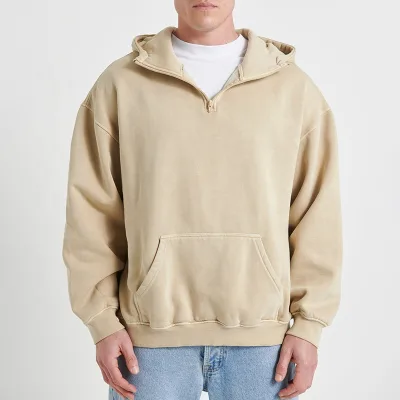
Custom Logo Printed Streetwear Cotton Quarter Zip-up Pullover Hoodie for Men
$4.00 - $14.00
MOQ: 100 Pieces


Mens Quarter Zip Hoodie Sweatshirt Warm Fleece Long Sleeve Pullover Hoodies for Men
$13.00 - $14.00
MOQ: 1000 Pieces





Comprehensive Sourcing Guide
Strategic Sourcing Guide for Quarter Zip Hoodies in the B2B Market
Understanding Product Variations and Technical Specifications
When sourcing quarter zip hoodies, buyers must navigate a landscape defined by diverse technical configurations rather than a single uniform product. The core definition of a Quarter Zip Hoodie involves a pullover garment with a hood and a zipper extending approximately one-quarter of the way down the front placket. However, the specific attributes of this category vary significantly based on the intended application and target demographic. Analysis of available market data reveals that these garments are frequently categorized by their material composition, which directly influences performance and end-use suitability.
A primary distinction lies in the fabric composition. Some listings indicate a pure cotton construction, offering a soft hand feel and high breathability, while others specify a blend of cotton and polyester to enhance durability and shape retention. In specific instances, the material is identified as polyester, often paired with fleece or knitted fabric types to provide thermal insulation. The grammage, or weight of the fabric, serves as a critical indicator of the garment's warmth and seasonality. Observed data points to a range of grammage values, with some products listed at 350-400g and others at 430g, suggesting that buyers should verify the exact weight to ensure the product meets the thermal requirements of their specific season, typically winter.
The structural design also presents variations. While the quarter zip mechanism is standard, the hood type can differ; some models feature a fixed hood, while others may offer adjustable options. Pocket configurations are another variable, with "kangaroo" pockets being a common feature for warmth and utility, alongside "side" pockets. The sleeve length is predominantly long, aligning with the winter season classification, but the fit can range from standard sizing to "Free Size" or specific model numbers like "Molly0912" or "TZ66UN." Buyers must carefully review these specifications to ensure the product aligns with their size chart requirements and functional needs.
Material Composition and Performance Characteristics
The selection of material is the most critical decision in the Quarter Zip Hoodie sourcing process, as it dictates the garment's lifecycle, comfort, and maintenance requirements. The supply chain offers products ranging from 100% cotton to blended fabrics. Pure cotton options are often highlighted for their natural feel and breathability, making them suitable for casual wear or moderate climates. However, the inclusion of polyester in blends is a strategic move to introduce specific performance attributes.
Performance claims found in the market data include "Anti-shrink" and "Breathable" features. These attributes are particularly relevant for buyers targeting active lifestyles or environments where the garment will undergo frequent washing. The "Anti-shrink" claim suggests that the fabric has been treated or constructed to maintain its dimensions after laundering, a vital quality for maintaining the fit of the Quarter Zip Hoodie over time. Additionally, the "Plain dyed" and "Embroidered" techniques indicate different aesthetic and branding approaches. Plain dyed fabrics offer a uniform color base ideal for screen printing or sublimation, whereas embroidered details provide a premium, textured look often used for brand logos.
The fabric type further refines the product's utility. "Fleece" and "Knitted" fabric types are frequently associated with the Quarter Zip Hoodie, providing the necessary loft and insulation for winter applications. The grammage data, such as 430g or the 350-400g range, serves as a proxy for the density of this fleece or knit. A higher grammage generally correlates with a heavier, warmer garment, suitable for colder regions, while lower grammage options may be preferred for layering or milder winter conditions. Buyers should verify these specifications against their target market's climate data to avoid over-engineering or under-specifying the product.
Compliance, Certification, and Quality Standards
Navigating the compliance landscape for textile products requires a rigorous approach to verifying standards and certifications. While the general market context often references safety standards like OEKO-TEX, specific product listings provided in the data do not explicitly confirm this certification status for every item. Therefore, buyers must treat certification claims as variables that require direct verification from the supplier rather than assumptions based on category norms.
The data includes references to specific product standards, such as "cotton" listed under standard attributes, which likely refers to the material composition standard rather than a safety certification. Other entries list dimensional standards, such as "504535cm" or "26165," which appear to relate to packaging dimensions or specific product sizing tolerances rather than textile safety. A critical technical specification noted is the "Tolerance: 1-3cm," which indicates the acceptable variance in garment dimensions. This tolerance level is a standard industry practice but must be explicitly confirmed to ensure that the final product fits within the buyer's quality control parameters.
When evaluating suppliers, buyers should request documentation for any claimed certifications. If a supplier asserts compliance with international safety standards, the buyer must ask for valid test reports from accredited laboratories. The absence of explicit certification data in the product listings necessitates a proactive verification strategy. Buyers should inquire about the dyeing processes, specifically the "Plain dyed" technique mentioned, to ensure that no prohibited substances are used. Furthermore, the "Customizable" nature of the product allows for the integration of specific compliance requirements, such as adding specific labels or tags that meet the regulations of the destination market.
Cost Drivers and Pricing Dynamics
The pricing of quarter zip hoodies is influenced by a complex interplay of material costs, customization levels, and order volume. The observed price range in the market spans from $0.50 to $35.00 USD, a wide spectrum that reflects the diversity of product quality, material composition, and brand positioning. Lower-priced items in this range typically correspond to basic polyester or cotton blends with minimal customization, while higher-priced items likely involve premium materials like high-grammage fleece, complex embroidery, or established brand names such as "Leshine" or "LESHIINE."
Order volume is a primary cost driver. The Minimum Order Quantity (MOQ) observed ranges from 10 to 1000 pieces, with a specific high-confidence data point indicating an MOQ of 100 pieces for certain models. This variability allows buyers to tailor their procurement strategy based on their capital and risk tolerance. Smaller MOQs, such as 10 pieces, are often associated with "Small Orders: Accepted" policies and may carry a higher unit cost due to the setup costs for production lines. Conversely, larger orders of 1000 pieces can leverage economies of scale to reduce the unit price significantly.
Customization is another significant factor affecting cost. The data confirms that customization is "Available" and even "Customizable for 1 Piece" in some cases. However, the extent of customization—whether it involves simple color changes, logo embroidery, or full OEM (Original Equipment Manufacturer) service—will impact the final price. OEM services, which include design, material selection, and branding, typically command a premium over off-the-shelf options. Buyers must balance the desire for unique branding with the budget constraints imposed by the MOQ and unit price.
Supplier Evaluation and Operational Capabilities
Selecting the right supplier requires a thorough evaluation of their operational capabilities, including production capacity, lead times, and service models. The data indicates that suppliers are located in China, with specific mentions of "Fujian China" as an origin point. This geographic concentration suggests a mature supply chain ecosystem with access to raw materials and specialized manufacturing techniques.
Service models vary, with "OEM" being a key attribute. This implies that suppliers are capable of producing goods under the buyer's brand, offering flexibility in design and specification. The "Sample: Customizable" attribute further supports the ability of suppliers to produce prototypes or pre-production samples, which is essential for validating quality before full-scale production. Additionally, the "Supply Status: in Stock" attribute indicates that some suppliers offer immediate availability for certain models, which can be advantageous for buyers needing rapid turnaround times.
Buyers should assess the supplier's ability to handle the "Tolerance: 1-3cm" specification and ensure that their quality control processes are robust enough to maintain this standard across large batches. The "prod_packing" details, such as "1PCS/Polybag" or "1 PCS Per Poly Bag. Fit in Box," highlight the importance of packaging standards. Suppliers who offer flexible packaging options, such as fitting items in boxes or under customer requirements, demonstrate a higher level of service readiness.
Quality Control and Long-Term Procurement Strategy
Establishing a robust quality control (QC) framework is essential for mitigating risks associated with Quarter Zip Hoodie procurement. Given the variability in materials and construction, buyers should implement a multi-stage QC process. This includes pre-production sample approval, in-process inspections during manufacturing, and final random inspections before shipment. The "Tolerance: 1-3cm" specification should be a key metric in the final inspection checklist to ensure dimensional accuracy.
Long-term procurement considerations involve building a relationship with suppliers who can consistently deliver high-quality products while adapting to changing market demands. The "Customizable" nature of the product allows for iterative improvements based on customer feedback. Buyers should prioritize suppliers who offer "Small Orders: Accepted" as a stepping stone to larger commitments, allowing for testing of the supply chain with lower risk.
The "Anti-shrink" and "Breathable" features should be verified through third-party testing for every production batch, especially if these claims are central to the product's value proposition. Additionally, the "Main Label: with" attribute suggests that branding elements are integral to the product; buyers must ensure that these labels are applied correctly and securely to prevent damage during transit or use.
Comparative Analysis of Product Attributes
To facilitate decision-making, the following table summarizes key attributes observed in the Quarter Zip Hoodie market, highlighting the variations that buyers must consider during the sourcing process.
| Attribute Category | Observed Variations | Sourcing Consideration |
|---|---|---|
| Material | Cotton, Cotton/Polyester, Polyester | Verify blend ratios for durability and comfort. |
| Grammage | 350-400g, 430g | Select based on target climate and season (Winter). |
| Fabric Type | Fleece, Knitted | Ensure appropriate texture and insulation level. |
| Pocket Type | Kangaroo, Side | Determine functional needs for warmth and storage. |
| Hood Type | Fixed | Confirm fit and adjustability requirements. |
| Customization | Available, Customizable for 1 Piece | Assess cost implications of branding and design changes. |
| MOQ | 10, 100, 1000 PCS | Align order volume with budget and inventory needs. |
| Origin | China, Fujian China | Consider logistics and lead time implications. |
| Packing | 1PCS/Polybag, Fit in Box | Verify packaging standards for retail readiness. |
This comparative overview underscores the necessity of detailed specification review. By systematically evaluating these attributes, buyers can identify suppliers that align with their specific product requirements, ensuring a successful procurement outcome for quarter zip hoodies. The flexibility in customization and the range of material options provide a robust foundation for building a diverse and competitive product line.
FAQs
What materials are used for quarter zip hoodies?
Quarter zip hoodies are commonly made from cotton, polyester, or blends of both. Some listings specify pure cotton for breathability, while others use polyester fleece for durability and warmth suitable for winter seasons.
Can I customize the design of a Quarter Zip Hoodie?
Yes, customization is available for quarter zip hoodies, including options for one-piece orders. Buyers can request specific features like embroidery, plain dyeing, or custom packaging to meet their branding needs.
What is the typical minimum order quantity for these hoodies?
The minimum order quantity ranges from 10 to 1000 pieces depending on the supplier and model. Specific models may require an MOQ of 100 pieces, while others accept small orders starting at 10 units.
Which features ensure durability and comfort in winter?
Key features include anti-shrink properties and breathable fabrics to maintain fit and comfort. High grammage options like 350-400g or 430g provide the necessary warmth for winter applications while using knitted or fleece materials.
Where are these quarter zip hoodies manufactured?
These products originate from China, with specific manufacturing hubs noted in Fujian. Buyers can expect suppliers to offer OEM services and customizable samples from these established production locations.
How is the product packed for shipment?
Standard packing involves one piece per polybag, which can fit in a box or under customer requirements. Some listings specify dimensions for packaging, ensuring items are protected during transit and storage.