Source Quick Dry Surfing Wetsuit for Diving Surfing Triathlon
Find 30 listings for Quick Dry Surfing Wetsuit options suitable for diving, surfing, and triathlon. Buyers can compare materials like Lycra and Neoprene, sizes, and customization features from verified Chinese suppliers.
Key considerations
Products List


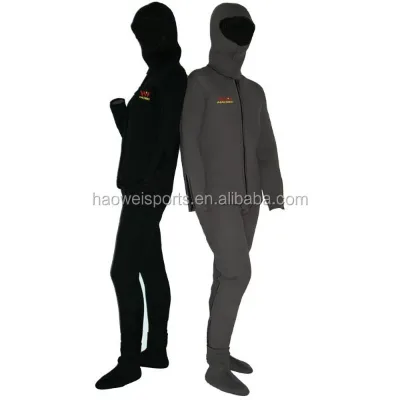
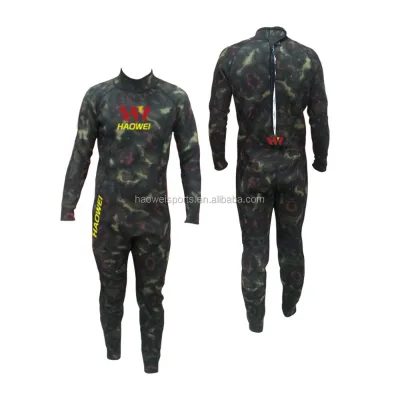
Best Selling Neoprene Diving Suit Swimming Diving Surfing Neoprene Wetsuit
$20.00 - $25.00
MOQ: 100 Pieces




Comprehensive Sourcing Guide
Strategic Sourcing Guide for Quick Dry Surfing Wetsuits
Understanding Material Composition and Functional Attributes
When sourcing a Quick Dry Surfing Wetsuit, the primary technical differentiator lies in the material composition and the specific functional attributes engineered into the fabric. Based on available product data, the market offers solutions utilizing distinct materials such as Lycra and Neoprene, each serving different performance profiles. Lycra-based products are frequently observed in contexts involving swimming pools and sand beaches, often featuring a one-piece style and pure color or logo patterns. These items are typically designed for adult unisex use and may include waterproof properties, though the term "waterproof" in this context often refers to water resistance rather than the absolute impermeability required for deep-sea diving.
In contrast, the core requirement for a "Quick Dry Surfing Wetsuit" aligns most closely with Neoprene-based products. The supplied facts indicate that Neoprene is a primary material for suits designed for diving, surfing, windsurfing, and triathlon applications. These suits often feature specific technical construction methods, including eight-track stitching, overlock seams, and overlapping techniques. These methods are critical for maintaining structural integrity while allowing the material to retain flexibility in the water. The presence of auxiliary materials such as zippers, high-elastic threads, hangtags, and ribbons further defines the construction quality. Buyers must verify that the "quick dry" claim is supported by the specific weave or treatment of the Neoprene or Smooth Skin material, as the data explicitly lists "Quick Dry" and "Anti-UV" as key features for these applications.
The distinction between a standard wetsuit and a quick-dry variant often involves the thickness and the surface texture. While the provided data mentions "Smooth Skin" as a product material, this attribute is particularly relevant for surfing where reduced drag and faster drying times are essential. The observed size standards range from XS to 3XL, indicating a broad market availability, but buyers must ensure the specific model selected matches the intended thermal and buoyancy requirements of the surfing environment.
Technical Specifications and Performance Standards
Technical specifications for quick dry surfing wetsuits are defined by a combination of physical dimensions, construction techniques, and performance standards. The observed product models, such as 156225, YJ4151012, DK003, 1198, and CL617, represent a variety of configurations available in the supply chain. A critical specification to verify is the size standard. While some products list standard sizing (XS, S, M, L, XL), others extend to XXL and 3XL, suggesting a need for precise inventory planning based on the target demographic.
The construction techniques listed, such as "Eight-Track," "Overlock," and "Overlapping," are vital indicators of seam quality. In surfing, where the suit is subjected to constant friction against the board and exposure to saltwater, these seam types prevent water flushing and enhance durability. The "Anti-UV" feature is another non-negotiable specification for surfing gear, as prolonged exposure to sunlight on the water can degrade standard fabrics. The "Quick Dry" attribute, explicitly noted in the product data, implies a lower water absorption rate compared to traditional neoprene, allowing the suit to shed moisture rapidly after exiting the water.
Buyers should also scrutinize the "Standard" field, which in some entries refers to sizing (S, M, L, XL) and in others to regulatory compliance (Rohs, underwater wear). It is essential to distinguish between a sizing standard and a material or safety standard. For instance, while "underwater wear" is listed as a standard in one context, it describes the application rather than a formal certification. The "Rohs" standard, however, is a recognized regulatory framework regarding hazardous substances, which is relevant for the chemical treatments used in the neoprene and auxiliary materials.
Compliance, Certification, and Regulatory Verification
Navigating the compliance landscape for wetsuits requires careful verification of certifications and standards, as the market data presents a mix of formal certifications and descriptive labels. The supplied facts explicitly mention certifications such as CE, CCC, and ISOCCC. The CE marking indicates conformity with health, safety, and environmental protection standards for products sold within the European Economic Area. The CCC (China Compulsory Certification) is a mandatory product certification system for products sold in China. The presence of both suggests that the supplier may be targeting both domestic and international markets, or that the product line covers a broad regulatory scope.
However, buyers must exercise caution when interpreting these certifications. The data lists "Rohs" as a standard and "CE,CCC" as certifications, but it does not provide specific test reports or validity dates. In the context of wetsuits, "Rohs" compliance is less common than in electronics but may apply to the chemical dyes and adhesives used in the "Smooth Skin" or neoprene layers. The "ISOCCC" certification mentioned is likely a composite reference to ISO standards and CCC, but without specific documentation, it should be treated as a claim requiring third-party verification.
Furthermore, the "Standard" field sometimes lists "underwater wear," which is an application descriptor rather than a regulatory standard. Buyers should not assume that a product labeled "underwater wear" meets specific safety standards for professional diving unless explicitly certified by a recognized body like UL or SGS. For surfing applications, the primary compliance focus should be on the chemical safety of the materials (Rohs) and the general product safety (CE), ensuring that the "Nontoxic" and "Waterproof" attributes are backed by verifiable test data rather than just marketing claims.
Cost Drivers and Pricing Dynamics
The pricing for quick dry surfing wetsuits is influenced by several factors, including material quality, construction complexity, and customization options. The observed price range in the market spans from 4 to 80 USD, a significant variance that reflects differences in product tiers. Lower-priced items in the 4-10 USD range are likely to be basic Lycra or neoprene blends with standard packaging (Poly Bag or OPP Bag) and minimal customization. These products often target the recreational swimmer or beginner surfer.
Conversely, the higher end of the price spectrum, approaching 80 USD, likely corresponds to advanced Neoprene suits featuring complex stitching (eight-track, overlock), specialized features like Anti-UV and Quick Dry, and potentially higher-grade auxiliary materials such as high-elastic threads and premium zippers. The cost is also driven by the level of customization. The data indicates that "Customization" is available for some models, while others are "Non-Customized." Customization, such as adding logos or specific color combinations (Yellow, Blue, Orange, Black, Lake Blue), typically incurs additional costs and may affect the Minimum Order Quantity (MOQ).
The MOQ range observed is between 10 and 500 units. A lower MOQ of 10 units allows for smaller buyers to test the market, while an MOQ of 500 units suggests a focus on bulk wholesale. The "Poly Bay" and "Poly Bag" packaging options also contribute to the final cost, with more robust or branded packaging increasing the unit price. Buyers must balance the desire for high-performance features against the budget constraints, understanding that the "Quick Dry" and "Anti-UV" features are value-adds that justify a higher price point within the observed range.
Supplier Evaluation and Geographic Considerations
Evaluating suppliers for quick dry surfing wetsuits requires a focus on their geographic location and production capabilities. The supplied data consistently points to China as the origin, with specific mentions of Dongguang (likely Dongguan) and Guangdong. These regions are established hubs for textile and wetsuit manufacturing, offering a mature supply chain for neoprene and Lycra products. The presence of multiple product models from these locations suggests a high concentration of specialized manufacturers.
When evaluating a supplier, buyers should verify the "Original Place" and "Prod Origin" to ensure consistency. The data lists "Dongguang, China" and "Dongguang, Guangdong," which may refer to the same industrial cluster. A supplier with a verified presence in Guangdong is likely to have access to the necessary raw materials, such as neoprene and smooth skin fabrics, and the technical expertise for complex stitching techniques.
The "Condition" of the products is listed as "New," which is a baseline expectation. However, buyers should also assess the supplier's ability to handle "Customized" orders versus "Non-Customized" stock. The availability of "Customized" options indicates a flexible manufacturing process, which is crucial for branding. Additionally, the "Style" and "Type" of the product (e.g., One-piece, Diving Suit, Diving Mask) must align with the buyer's specific needs. A supplier offering a diverse range of models, from 156225 to CL617, demonstrates a broader capability to meet varied market demands.
Quality Control and Long-Term Procurement Strategy
Implementing a robust quality control (QC) strategy is essential for sourcing quick dry surfing wetsuits, particularly given the functional claims of "Quick Dry" and "Anti-UV." Buyers should establish clear acceptance criteria based on the observed technical specifications, such as the "Eight-Track" stitching and the "Smooth Skin" material finish. Since the data mentions "Nontoxic" and "Waterproof" attributes, QC protocols must include chemical testing to verify the absence of harmful substances and water resistance testing to ensure the suit performs as advertised.
The "Product Packing" details, such as "Poly Bag" or "OPP Bag," should also be part of the QC checklist to ensure that the packaging protects the product during transit without compromising the material's integrity. For long-term procurement, buyers should consider the scalability of the supplier. The observed MOQ range of 10 to 500 units suggests that suppliers can accommodate both trial orders and large-scale deployments. However, buyers must verify lead times and production capacity, as these are not explicitly provided in the data but are critical for supply chain planning.
Long-term success also depends on the supplier's ability to maintain consistency across batches. The "Standard" field, which includes sizing and regulatory references, must be strictly adhered to. If a supplier claims "Rohs" compliance, this should be re-verified with each new order to ensure that raw material sources have not changed. Furthermore, the "Age Group" and "Gender" specifications (Adults, Unisex, Men) must be accurately reflected in the final product to avoid returns and customer dissatisfaction. By focusing on these technical and operational details, buyers can build a reliable supply chain for high-performance surfing wetsuits.
Comparative Analysis of Product Attributes
To facilitate decision-making, the following table summarizes the key attributes observed in the market for quick dry surfing wetsuits and related gear. This comparison highlights the diversity in materials, applications, and features available to buyers.
| Attribute Category | Observed Options | Relevance to Quick Dry Surfing |
|---|---|---|
| Primary Material | Lycra, Neoprene, Smooth Skin | Neoprene and Smooth Skin are critical for thermal insulation and quick-dry performance. |
| Key Features | Quick Dry, Anti-UV, Waterproof | "Quick Dry" and "Anti-UV" are essential for surfing; "Waterproof" is often a marketing term for water resistance. |
| Construction | Eight-Track, Overlock, Overlapping | These stitching methods ensure durability and prevent water flushing in high-motion sports. |
| Applications | Surfing, Diving, Windsurfing, Triathlon | Surfing is the primary use case; other applications indicate versatility. |
| Certifications | CE, CCC, ISOCCC, Rohs | CE and Rohs are key for international compliance; verify specific test reports. |
| Packaging | Poly Bag, Poly Bay, OPP Bag | Packaging affects protection and branding; Poly Bag is common for standard units. |
| Customization | Available, Customized, Non-Customized | Customization allows for branding but may increase MOQ and lead time. |
| Size Standards | XS to 3XL, S, M, L, XL | Ensure the size range matches the target demographic; 3XL availability is noted. |
| Origin | China (Dongguan, Guangdong) | Concentrated manufacturing hubs offer competitive pricing and supply chain efficiency. |
This analysis underscores that while the market offers a wide array of options, the specific combination of Neoprene material, advanced stitching, and verified certifications is necessary to meet the rigorous demands of quick dry surfing wetsuits. Buyers should prioritize suppliers who can demonstrate these attributes through documentation and sample testing rather than relying solely on listed claims.
FAQs
What materials are used for quick dry surfing wetsuits?
Neoprene and Lycra are the primary materials used for these wetsuits. Neoprene suits often feature smooth skin for surfing and include auxiliary materials like zippers and high-elastic threads, while Lycra variants are common for swimming pool and beach use.
Which certifications should I verify for these wetsuits?
Verify CE, CCC, and ISOCCC certifications for safety and compliance. Some products also list Rohs as a standard for hazardous substance control, ensuring the materials are nontoxic and suitable for adult use in various water conditions.
How can I find wetsuits with specific customization options?
Look for products explicitly marked as customized to add logos or specific colors. The market offers options for pure color or logo patterns, allowing buyers to select from colors like yellow, blue, orange, black, or lake blue based on their branding needs.
What construction techniques ensure durability for surfing?
Eight-track stitching, overlock seams, and overlapping techniques are critical for durability. These methods prevent water flushing and enhance structural integrity, making the suits suitable for high-friction activities like surfing, diving, and windsurfing in saltwater environments.
Can I source wetsuits with quick dry and anti-UV features?
Yes, many Neoprene and Smooth Skin wetsuits explicitly feature quick dry and anti-UV properties. These attributes are essential for surfers to shed moisture rapidly and protect against prolonged sun exposure while engaging in activities like triathlon or boating.
What is the typical price range for these wetsuits?
The observed price range spans from 4 to 80 USD depending on features. Basic Lycra or neoprene blends cost less, while advanced suits with complex stitching and specialized features like anti-UV protection command higher prices within this market spectrum.
Where are these wetsuits typically manufactured?
These wetsuits are primarily manufactured in China, specifically in regions like Dongguan and Guangdong. Suppliers in these locations offer a mature supply chain for neoprene and Lycra products with various models available for different size standards.