Find Compare Source Rack Mount Silver GPU Chassis for AI, Data Centers, Rendering
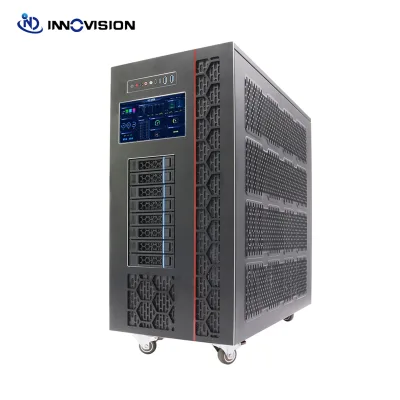
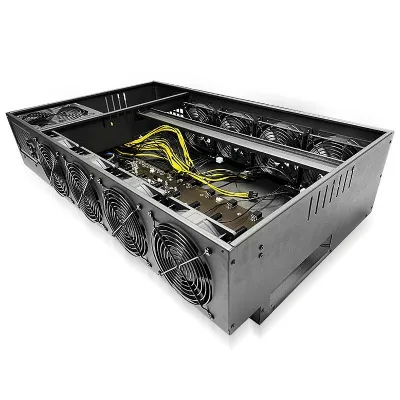
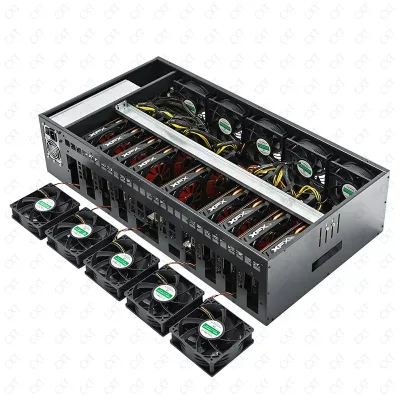
Explore 30 verified options for Rack Mount Silver GPU Chassis designed for AI workloads, data center deployment, and 3D rendering tasks. Buyers can compare specifications like expansion slots, cooling systems, and drive bays across multiple models from Guangdong suppliers.
Key considerations
Products List


5u GPU Server Chassis with Redundant PSU Support 5× GPU OEM Rackmount Case for Ai Computing
$1500.00 - $2500.00
MOQ: 2 Pieces


4u Rackmount GPU Server Chassis 9X GPU Support, 12 Hot-Swap Bays, Redundant Crps PSU
$800.00 - $2000.00
MOQ: 2 Sets


Specifically Designed GPU Ai Server Chassis with 12GB/S Expander Backplane
$487.32 - $490.28
MOQ: 1 Pieces


for Optimal Cooling Custom Server Rackmount Chassis Hot Swap Computer Case
$138.23 - $140.45
MOQ: 1 Pieces
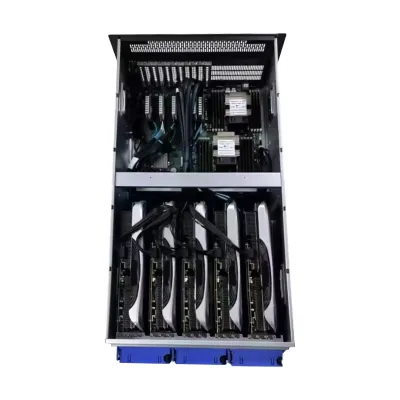
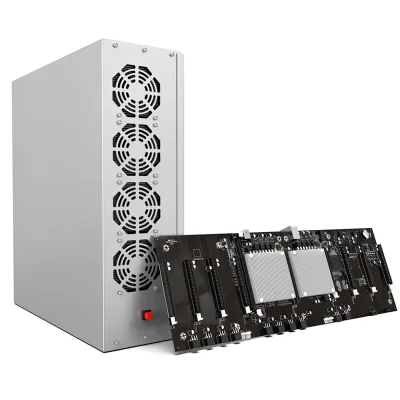
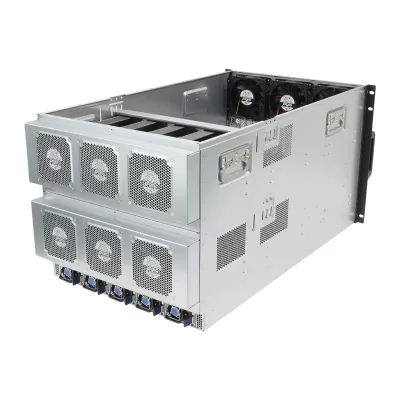
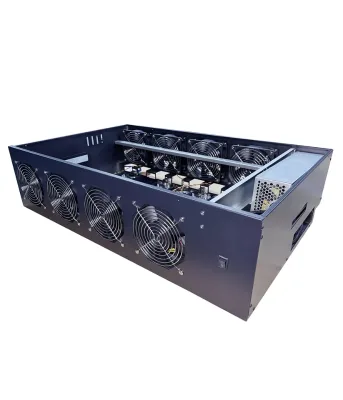
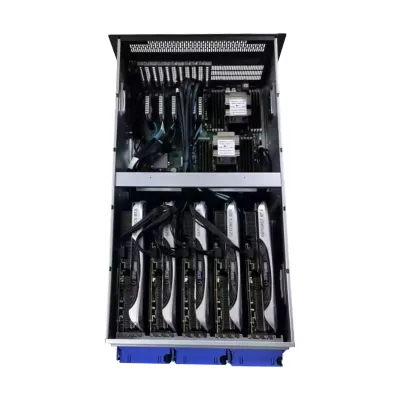
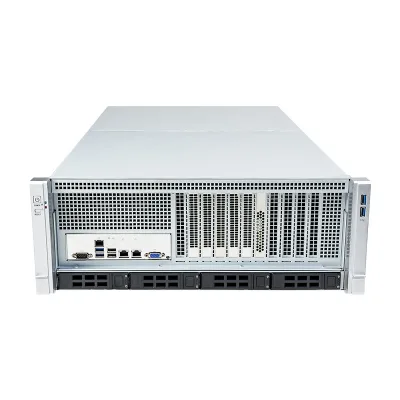
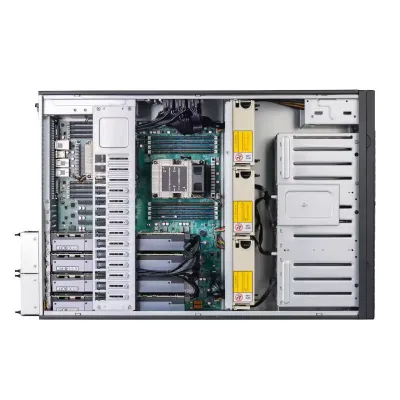
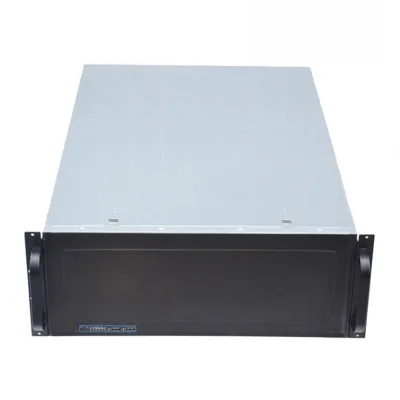
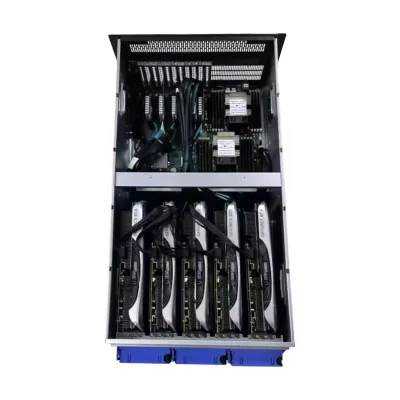

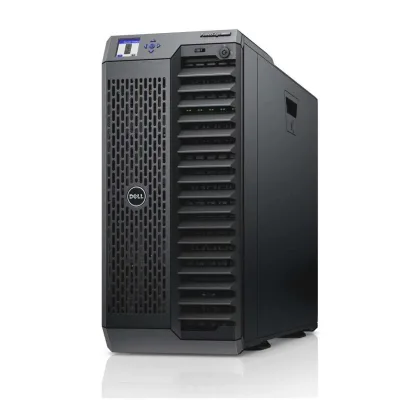

SSD Support GPU Dual Rtx 3090super Micro Chassis Rack Server 480g SSD Support GPU
$1000.00 - $15000.00
MOQ: 1 Pieces
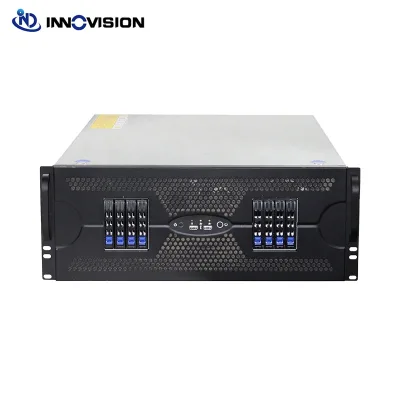
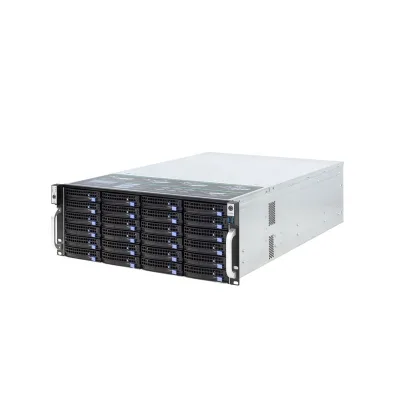

Comprehensive Sourcing Guide
Strategic Sourcing Guide for Rack Mount Silver GPU Chassis
The procurement of Rack Mount Silver GPU Chassis represents a critical decision point for organizations building high-performance computing clusters, AI training farms, or data center infrastructure. These specialized enclosures are designed to house multiple graphics processing units (GPUs) within a standardized rack environment, balancing thermal management, structural integrity, and expansion capabilities. When sourcing these units, buyers must navigate a landscape defined by specific physical dimensions, cooling architectures, and compliance standards. The following guide outlines the essential factors for evaluating potential suppliers and selecting the correct hardware configuration based on verified product attributes and industry requirements.
Technical Specifications and Form Factor Analysis
The foundation of any successful procurement strategy lies in a precise understanding of the physical and technical specifications required for the deployment environment. Rack mount chassis are not monolithic; they vary significantly in height, measured in Rack Units (U), and internal layout. Observed market data indicates a range of configurations, from 4U to 7U units, each catering to different density and cooling needs. For instance, specific models in the current supply pool are designated as 4U, 5U, or 7U, directly influencing the vertical space consumed in a standard 19-inch server rack.
Dimensions are equally critical. The internal volume must accommodate the target GPU count while allowing for adequate airflow. The observed specifications reveal chassis with dimensions such as 880mm depth by 447mm width, or alternative configurations like 900mm depth by 435mm width. These variations dictate compatibility with existing data center racks and cable management systems. Furthermore, the motherboard form factor support is a primary constraint. The available inventory includes support for E-ATX and ATX standards, which determines the compatibility with the server motherboards intended for the build.
Expansion capabilities are another vital technical parameter. The number of available expansion slots directly correlates to the number of GPUs that can be installed. Buyers should verify if the chassis offers 7, 10, or more expansion slots. Additionally, the maximum height for the cooler is a non-negotiable specification for GPU compatibility. Some units support a maximum cooler height of 90mm, which is a common constraint for high-performance air-cooled solutions. The installation orientation is typically horizontal, requiring careful planning for cable routing and airflow direction.
Thermal Management and Cooling Architecture
Effective thermal management is the single most important performance driver for GPU chassis. High-density GPU deployments generate significant heat, and failure to dissipate this heat can lead to throttling or hardware failure. The observed product attributes highlight "Air Cooling" as a primary cooling system type. This necessitates a robust design for air intake and exhaust, often requiring specific fan configurations.
The chassis design must accommodate high-performance cooling modules. Specific models feature hot-swappable system cooling fan modules, such as 4 units of 9238 fans, which allow for maintenance without powering down the entire system. The presence of hot-swappable bays for storage, such as 10*2.5" Hot-Swappable HDD/SSD bays, also impacts thermal dynamics, as these drives generate heat and require dedicated airflow paths.
Buyers must evaluate the airflow path design. The chassis should facilitate a front-to-back or top-to-bottom airflow strategy that aligns with the data center's cold aisle/hot aisle containment. The physical dimensions of the chassis, such as the 438.5mm177.5mm660.5mm profile, must be analyzed to ensure that the internal fan placement does not create dead zones where heat could accumulate around the GPUs. The absence of optical drive support in some models is a deliberate design choice to reduce internal obstructions and improve airflow efficiency, a feature that should be prioritized for pure compute applications.
Compliance, Certification, and Standards Verification
In the B2B procurement of industrial hardware, compliance with international and national standards is mandatory. The supply chain for rack mount chassis is heavily regulated to ensure safety and interoperability. A key observation from the available product data is the presence of CE certification. This indicates that the products meet the health, safety, and environmental protection standards for products sold within the European Economic Area. However, buyers must verify if the specific batch or model they intend to purchase holds this certification, as compliance can vary by production run.
Beyond CE, the products reference "National" standards for their construction. This implies adherence to specific regional manufacturing guidelines, which may differ from international norms like ISO or IEC. It is crucial for procurement teams to request the specific standard documentation (e.g., GB standards for Chinese manufacturing) to ensure the chassis meets the safety requirements of the destination country. The standard dimensions, such as D850 × W438.4 × H310 mm or 505 (D)*428 (W)*172 (H) mm, must align with the 19-inch rack mounting rail specifications to ensure physical compatibility.
Furthermore, the material composition is a factor in both safety and durability. The observed material is listed as Steel, which provides the necessary rigidity for rack mounting and protection against physical damage. Buyers should verify the gauge of the steel and the quality of the powder coating, which contributes to the "silver" aesthetic and corrosion resistance. The packaging standards, ranging from PE EPE Carton to Case + PE Bag + Pearl Cotton, also play a role in ensuring the product arrives without damage, which is a critical aspect of the supply chain's quality assurance.
Cost Drivers and Pricing Dynamics
Understanding the cost structure of rack mount GPU chassis is essential for budgeting and total cost of ownership (TCO) analysis. The observed price range in the market spans from approximately $30.62 to $15,000. This vast disparity is not indicative of quality differences alone but reflects the complexity of the unit. Lower-cost units are likely basic enclosures with minimal features, while the higher-end units represent complex systems with advanced thermal management, extensive expansion capabilities, and specialized backplanes.
Key cost drivers include the number of GPU support slots, the complexity of the backplane design, and the inclusion of hot-swappable components. For example, a chassis supporting 4 GPUs with a direct connection backplane (8*Sas/SATA 12gbps) will inherently cost more than a basic 4U enclosure. The inclusion of hot-swappable fan modules and drive bays adds to the manufacturing complexity and material costs.
The Minimum Order Quantity (MOQ) is another significant factor. The observed MOQ range is 1 to 10 units. For small-scale deployments or prototyping, an MOQ of 1 allows for flexibility. However, for large-scale data center rollouts, buyers may need to negotiate volume pricing, which could lower the unit cost significantly. The packaging requirements, such as double-layer EPE packing, also add to the logistics cost, particularly for international shipping. Buyers should factor in the weight of the unit, with observed gross weights around 25 Kg, as this impacts freight charges and handling requirements.
Supplier Evaluation and Quality Assurance
Selecting the right supplier requires a rigorous evaluation process that goes beyond the initial product listing. The origin of the products is consistently listed as Guangdong, China, a major hub for electronics manufacturing. While this region offers competitive pricing and supply chain efficiency, buyers must conduct due diligence on the specific manufacturing facility. Verification of the supplier's ability to maintain consistent quality control is paramount.
Quality assurance should focus on the consistency of the product attributes. For instance, the "Standard" dimensions listed (e.g., 437.5(W)*885(D)*176.5(H)) must be verified against physical samples to ensure tolerance levels are within acceptable limits. Any deviation in these dimensions can lead to installation failures in the rack. The "Customized" attribute and "Customization: Available" status suggest that suppliers may offer tailored solutions. Buyers should assess the supplier's capability to handle custom requests without compromising the structural integrity or certification status of the chassis.
The packaging quality is a proxy for the supplier's attention to detail. The use of materials like "Pearl Cotton" and "Inner and Outer Box Double Layer Pack" indicates a commitment to protecting the product during transit. Buyers should request photos or samples of the packaging to ensure it meets their logistics requirements. Additionally, the availability of specific components, such as the "8*Sas/SATA 12gbps Direct Connection Backplane," should be verified for long-term availability to ensure the supply chain remains stable for future maintenance or expansion.
Typical Applications and Deployment Scenarios
The specific configuration of the Rack Mount Silver GPU Chassis dictates its ideal application. The observed support for 4 GPUs, combined with high-density storage options like 123.5" HDD and 22.5" CD-ROM, points to use cases in high-performance computing (HPC) and artificial intelligence (AI). These environments require massive parallel processing power and fast data access, which these chassis are designed to facilitate.
The presence of 10*2.5" Hot-Swappable HDD/SSD bays in some models makes them suitable for storage-intensive applications, such as video rendering farms or large-scale database clusters. The horizontal installation orientation and specific rack unit sizes (4U, 5U, 7U) allow for flexible deployment in standard data center racks, making them versatile for both on-premise and colocation facilities.
For smaller deployments or edge computing nodes, the 4U or 5U models with ATX motherboard support and USB 2/3 front panel ports offer a compact solution. The "No" optical drive support in advanced models reflects a trend toward cloud-based or networked storage, reducing the need for local media drives and freeing up space for additional cooling or compute resources.
Long-Term Procurement and Maintenance Considerations
Procuring rack mount GPU chassis is not a one-time transaction but the start of a long-term operational relationship. Buyers must consider the lifecycle of the hardware, including maintenance, upgrades, and end-of-life disposal. The hot-swappable nature of the system fans and storage bays is a critical feature for minimizing downtime. The ability to replace a failed fan or drive without powering down the chassis is essential for 24/7 operations.
The "Customized" and "Customization: Available" attributes suggest that suppliers may offer firmware or hardware modifications for future needs. Buyers should establish a clear communication channel with the supplier to discuss potential upgrades, such as adding more expansion slots or changing the cooling configuration. The "National" standard compliance should be reviewed periodically to ensure that the hardware remains compliant with evolving regulations in the buyer's region.
Finally, the lead time and supply chain stability are crucial. While specific lead times are not provided in the observed data, the MOQ range of 1-10 suggests a flexible supply chain. However, for large orders, buyers should negotiate delivery schedules that align with their deployment timelines. The robust packaging and steel construction ensure that the hardware will withstand the rigors of transport and operation, but regular inspections are recommended to verify the integrity of the chassis over time.
Conclusion
Sourcing Rack Mount Silver GPU Chassis requires a meticulous approach that balances technical specifications, compliance, and cost. The observed market data reveals a diverse range of options, from basic 4U enclosures to complex 7U systems with advanced thermal management and storage capabilities. By focusing on verified attributes such as CE certification, specific dimensions, and cooling architectures, buyers can make informed decisions that align with their operational needs. The key to success lies in thorough supplier evaluation, rigorous quality control, and a clear understanding of the long-term maintenance requirements. With the right strategy, organizations can deploy high-performance GPU clusters that are reliable, efficient, and scalable.
FAQs
What certifications are available for Rack Mount Silver GPU Chassis?
CE certification is available for these chassis, indicating compliance with European safety standards. Buyers must verify if specific batches hold this certification as compliance can vary by production run. National standards are also referenced for construction, requiring verification of specific regional guidelines.
Which rack unit sizes are supported for these chassis?
Supported rack unit sizes include 4U, 5U, and 7U configurations. These dimensions dictate the vertical space consumed in a standard 19-inch server rack. The specific unit size influences internal layout and cooling needs for different density requirements.
Can these chassis support multiple GPUs for high performance?
Yes, specific models support up to 4 GPUs with dedicated expansion slots. Some units feature 10 expansion slots to accommodate various configurations. The maximum cooler height is typically 90mm, which is a constraint for high-performance air-cooled solutions.
How is thermal management handled in these rack mount units?
Air cooling is the primary system type used for thermal management. Some models include 4 hot-swappable 9238 system cooling fan modules for maintenance without power down. The design facilitates front-to-back airflow to align with data center cold aisle strategies.
What are the standard dimensions for these chassis?
Standard dimensions vary, with examples like 880mm depth by 447mm width or 900mm depth by 435mm width. Specific models list sizes such as D850 × W438.4 × H310 mm. These variations dictate compatibility with existing data center racks and cable management systems.
Is customization available for these Rack Mount Silver GPU Chassis?
Customization is available, allowing for tailored solutions to meet specific deployment needs. Buyers should assess the supplier's capability to handle custom requests without compromising structural integrity. The origin is consistently Guangdong, China, a major manufacturing hub.