Source Radio Control Diecast Model Car for toys, displays, and collections
Find 30 Radio Control Diecast Model Car options from suppliers in Shantou and China. Buyers can compare metal materials, scales, certifications, and packing details for recreational or static display uses.
Key considerations
Products List


Customization Metal Car Toys Diecast Toy Vehicles 1/18 Diecast Model Cars
$2.50 - $18.00
MOQ: 50 Pieces


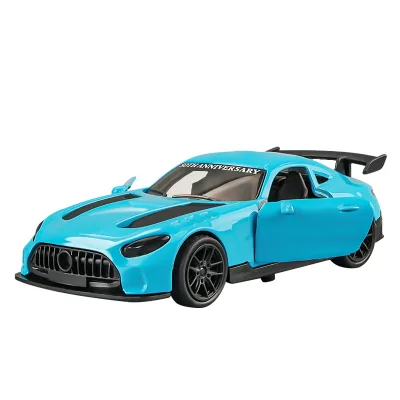

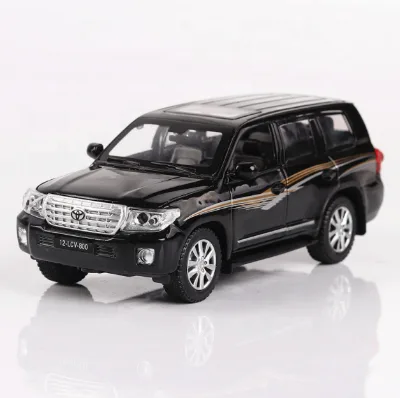
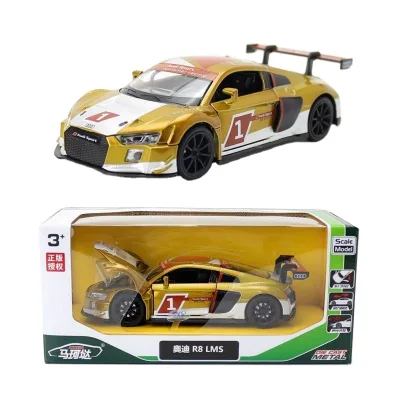


Comprehensive Sourcing Guide
Strategic Sourcing Guide for Radio Control Diecast Model Cars
Understanding Product Specifications and Technical Attributes
When sourcing radio control diecast model cars, buyers must first establish a clear understanding of the technical attributes that define the product category. The core material for these items is consistently identified as metal, which provides the necessary weight and durability required for functional die-cast mechanisms. Unlike plastic replicas, metal construction ensures that the vehicles can withstand the mechanical stress of radio control operations while maintaining a premium feel. The scale of these models varies significantly, with observed specifications ranging from 1/36 to 1/18. This variation allows buyers to target different market segments, from collectors who prefer smaller, highly detailed 1/36 scale models to hobbyists who require larger 1/18 scale vehicles for better handling and visibility.
The physical dimensions of the product are critical for logistics and storage planning. Specific model data indicates that standard packaging dimensions can vary widely, with some units packed in cartons measuring 583967cm, while others utilize smaller configurations such as 401010 cm or 422242cm. The length of the vehicles themselves is another key specification, with documented examples ranging from 12cm to 12.5cm long. These measurements are essential for calculating shipping volumes and determining the most cost-effective freight methods. Furthermore, the shape of the models is generally categorized as Car/Truck, reflecting the diverse vehicle types available in the die-cast market.
Customization is a prominent feature in this sector. Buyers should note that customization options are available, allowing for tailored branding or specific design requests. This includes the ability to apply imprints via silk printing, which is a common method for adding logos or racing numbers to the metal body. The packaging styles also vary, with options including simple packing bags, colors boxes with outer cartons for safety, and paper cartons. Understanding these variations is vital for aligning the product with the intended usage, whether for recreation, static display, or outdoor activities. The functional nature of these items is further defined by their capability as sliding cars, indicating specific mechanical features that differentiate them from static display-only models.
Compliance and Certification Verification
Navigating the regulatory landscape is a fundamental aspect of sourcing die-cast models, particularly when the target audience includes children. The age range for these products is observed to span from 3-8 years up to 8-11 years old, which necessitates strict adherence to safety standards. Buyers must verify that suppliers possess valid certifications such as ASTM, CE, and EN. Specific documentation observed in the market includes certifications labeled as "ASTM, CE, EN" and "ENASTM, CE," which are critical for market entry in North America and the European Union.
While general background knowledge often references standards like ASTM F963-23 and EN71, buyers should treat these as benchmarks for verification rather than assumed facts for every listing. The provided data confirms the existence of EN and ASTM certifications, but the specific version or edition of the standard must be confirmed with the supplier. For instance, a certification marked as "ENFunction:Static Display" suggests that the product may be intended for display purposes, which might alter the safety requirements compared to a toy intended for active play. It is imperative to distinguish between products designed for "Recreation" and those for "Static Display," as the safety testing protocols differ significantly.
The origin of the products is another compliance factor. Most observed data points to "Shantou" and "China" as the primary production locations. While these regions are known for manufacturing capabilities, buyers must ensure that the specific factory has the infrastructure to meet international safety standards. The presence of certifications like "ENCustomized:Customized" indicates that even customized orders must undergo rigorous testing. Buyers should request current test reports and ensure that the certification applies to the specific model number, such as RFD331375 or ST1142, rather than a generic product line. Failure to verify these details can lead to customs delays or product recalls in the destination market.
Cost Drivers and Pricing Structures
The pricing structure for radio control diecast model cars is influenced by several variables, including material costs, scale, and customization levels. The observed price range in the market spans from $0.10 to $18.00 USD. This wide disparity reflects the difference between basic, small-scale models and larger, highly detailed, or customized units. The lower end of the spectrum likely corresponds to smaller scale models (1/36) with minimal customization, while the higher end represents larger scales (1/18) with complex radio control mechanisms and premium packaging.
Minimum Order Quantity (MOQ) is a significant cost driver. The observed MOQ range extends from 1 unit to 8,280 units. For buyers testing the market or those with limited storage capacity, suppliers offering low MOQs are essential. However, purchasing at the lower end of the MOQ spectrum often results in a higher unit cost. Conversely, ordering at the higher end of the MOQ range can significantly reduce the per-unit price, making it a viable strategy for large-scale distributors. The lead time is also a factor in cost management, with a standard lead time of 30 days observed for many models. Delays in production or shipping can impact inventory planning and increase holding costs.
Packaging costs also contribute to the overall price. Options such as "Colors Box and Outer Carton Safety Pack" or "Paper Carton" add to the manufacturing cost but are necessary for protecting the metal components during transit. The standard packing density, noted as 0.11/cbm or 0.099/cbm for certain models, affects the shipping cost per unit. Buyers should calculate the total landed cost, including freight, by considering the volume of the packaging. For example, a model with a carton size of 654059cm will occupy more space than one with 401010cm, directly influencing the freight charges. Understanding these cost drivers allows buyers to negotiate more effectively and select the most economical options for their specific business model.
Typical Applications and Market Segmentation
The applications for radio control diecast model cars are diverse, catering to both recreational and display-oriented markets. The primary usage categories identified are "Recreation" and "Static Display." For recreational use, the products are designed for both indoor and outdoor environments, requiring durability and robust radio control systems. The "Sliding Car" function mentioned in the specifications suggests a specific type of movement or interaction that enhances the play experience. These models are suitable for hobbyists who enjoy building and operating scale vehicles, as well as for children in the 3-11 age range who are interested in automotive mechanics.
In the static display segment, the focus shifts to aesthetics and detail. The "Function:Static Display" certification indicates that these models are intended for collectors who prioritize visual accuracy over mechanical functionality. These items are often used as decorative pieces in offices, homes, or showrooms. The "European & American" style attribute suggests that the designs cater to specific aesthetic preferences, which can be a key selling point in Western markets. The "Single" player attribute implies that these are individual units rather than multi-player sets, which simplifies the user experience for collectors.
The target audience varies based on the age specification. Models suitable for 3-8 years old must prioritize safety and simplicity, while those for 8-11 years old can offer more complex features. The "Update Newest Car Model" specification indicates that the market is dynamic, with suppliers regularly introducing new designs to match current automotive trends. This is particularly relevant for buyers targeting enthusiasts who want the latest vehicle models in die-cast form. Understanding these applications helps buyers align their inventory with customer expectations and market demands, ensuring that the products meet the specific needs of their target demographic.
Supplier Evaluation and Quality Control
Evaluating suppliers for radio control diecast model cars requires a rigorous approach to ensure product quality and reliability. Buyers should prioritize suppliers who can demonstrate consistent adherence to the observed specifications, such as the metal material composition and the specific model numbers like RFD392676 or NH728408. The presence of certifications like ASTM and CE is a baseline requirement, but buyers should also verify the supplier's quality control processes. This includes checking for in-house testing capabilities and the ability to provide third-party test reports for each batch of production.
The customization aspect of the products adds a layer of complexity to supplier evaluation. Suppliers offering "Customized" services must have the capacity to handle silk printing and other branding requirements without compromising the structural integrity of the metal body. Buyers should request samples of customized products to verify the quality of the imprint and the overall finish. Additionally, the packaging quality is a critical indicator of a supplier's attention to detail. The "Colors Box and Outer Carton Safety Pack" option suggests a higher level of care in protecting the product, which is essential for maintaining the condition of the die-cast models during shipping.
Lead time consistency is another key factor in supplier evaluation. The observed lead time of 30 days should be treated as a benchmark, but buyers must confirm the supplier's ability to meet this timeline consistently. Delays in production can disrupt supply chains and lead to missed sales opportunities. Buyers should also assess the supplier's communication channels and responsiveness, as these factors are crucial for resolving issues related to customization or quality defects. A reliable supplier will provide clear documentation, including model specifications, packaging details, and certification copies, to facilitate a smooth procurement process.
Long-Term Procurement Considerations
Sourcing radio control diecast model cars is not just a one-time transaction but a long-term strategic decision. Buyers should consider the scalability of their supply chain to accommodate future growth. The wide range of MOQs, from 1 to 8,280 units, offers flexibility for scaling up or down based on market demand. However, buyers must ensure that the supplier can maintain quality and lead times as order volumes increase. The ability to customize products is a significant long-term advantage, allowing buyers to differentiate their offerings and build brand loyalty.
Inventory management is another critical consideration. The varying packaging sizes and dimensions require careful planning to optimize storage space and shipping costs. Buyers should analyze the volume-to-value ratio of different models to determine the most efficient inventory strategy. For example, smaller scale models with compact packaging may be more suitable for high-volume, low-margin strategies, while larger models with premium packaging may fit a high-margin, low-volume approach. The "Update Newest Car Model" specification highlights the need for a flexible supply chain that can quickly adapt to new product releases and changing market trends.
Finally, buyers should maintain a strong relationship with their suppliers to ensure long-term success. This involves regular communication, joint planning, and a commitment to mutual growth. By staying informed about the latest developments in the die-cast market and maintaining a focus on quality and compliance, buyers can build a resilient supply chain that delivers value to their customers. The combination of technical precision, regulatory compliance, and strategic planning will position buyers for success in the competitive Radio Control Diecast Model Car market.
FAQs
What materials are used for radio control diecast model cars?
These models are constructed primarily from metal to ensure durability and a premium feel. The metal composition allows the vehicles to withstand mechanical stress during radio control operations while maintaining structural integrity for both play and display purposes.
Which certifications are required for these diecast models?
Valid certifications such as ASTM, CE, and EN are required for market entry in North America and the European Union. Buyers must verify that specific model numbers carry these certifications to ensure compliance with safety standards for children aged 3 to 11 years.
How long is the standard lead time for production?
The standard lead time observed for these products is 30 days. Buyers should confirm this timeline with suppliers as delays can impact inventory planning, especially when ordering customized units or large quantities with specific packaging requirements.
Can buyers customize the appearance of these models?
Yes, customization is available for branding or specific design requests including silk printing on the metal body. Suppliers can apply imprints like logos or racing numbers, but buyers must ensure the customization process does not compromise the structural integrity of the die-cast components.
What is the typical price range for these models?
The observed price range spans from 0.10 to 18.00 USD depending on scale and features. Lower prices typically correspond to smaller 1/36 scale models with minimal customization, while higher prices reflect larger 1/18 scale vehicles with complex mechanisms and premium packaging.
Where are these diecast models typically manufactured?
Most observed data points to Shantou and China as the primary production locations. Buyers must ensure the specific factory in these regions has the infrastructure to meet international safety standards and can provide valid test reports for each batch of production.
What packaging options are available for shipping?
Packaging options include simple packing bags, colors boxes with outer cartons for safety, and paper cartons. The choice affects shipping costs, as dimensions like 58*39*67cm or 40*10*10cm directly influence freight charges and volume calculations for logistics planning.