Source Ready-to-Eat Canned Yellow Peaches for Food, OEM, and Retail
Find ready-to-eat canned yellow peaches from verified Chinese manufacturers. Compare 30 listings featuring HACCP and FDA certifications, various weights, and OEM options for food service and retail applications. Explore different packaging sizes and lead times to find the best fit for your business needs.
Updated
Key considerations
Products List
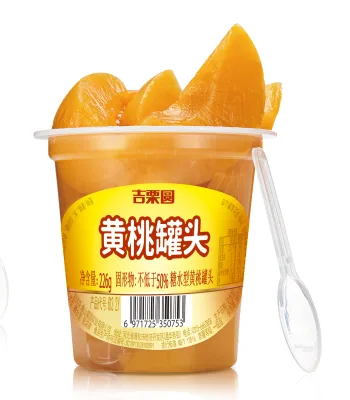
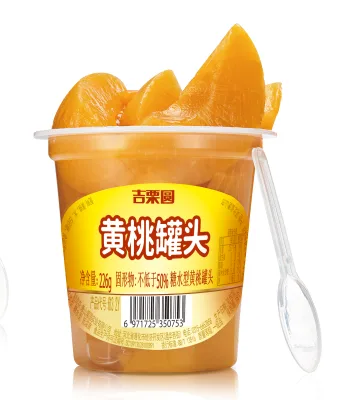
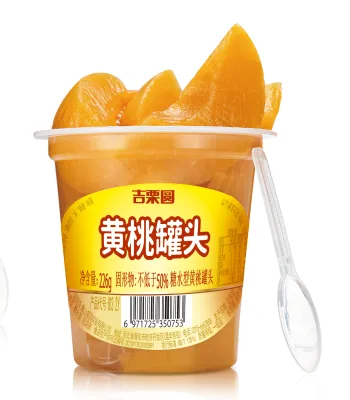
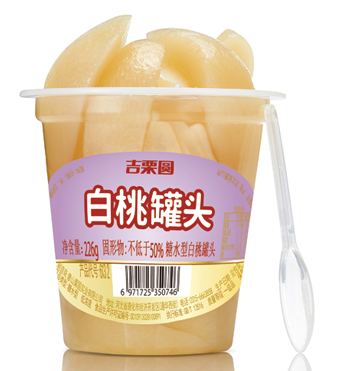


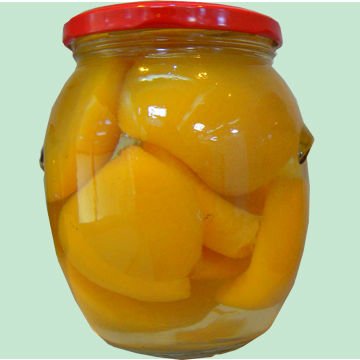
Hot Selling Glass Jar Fresh Fruits Food Halves 820g Canned Yellow Peaches
$11.00 - $13.00
MOQ: 1800 Boxes


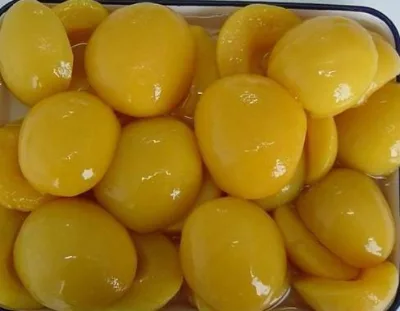
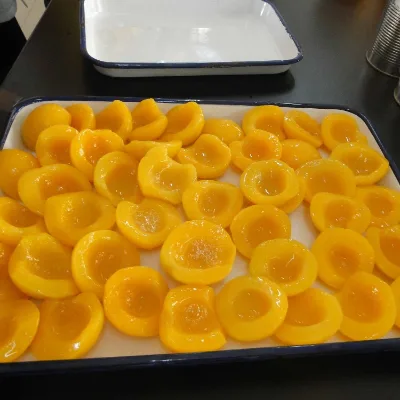

2025 New Crops Canned Yellow Peaches Crisp Taste Very Delicious Yellow Peaches
$6.00 - $18.00
MOQ: 1008 Boxes


Canned Yellow Peaches in Syrup Freshly Crafted for Baking and Beverage Preparation
$6.00 - $18.00
MOQ: 1008 Boxes

Hot Selling Pure Harvest Canned Yellow Peaches in Syrup with Customized Label
$6.00 - $18.00
MOQ: 1008 Boxes
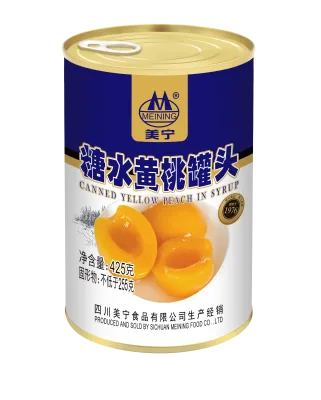
Sold to All Over the World Custom Canned Yellow Peach in Syrup Canned Food Canned Fruit
$1.0173 - $1.5409
MOQ: 12 Minimum


Comprehensive Sourcing Guide
Ready-to-Eat Canned Yellow Peaches Sourcing Guide
Sourcing ready-to-eat canned yellow peaches requires a disciplined approach to verifying product consistency, supply chain reliability, and regulatory compliance. Buyers must navigate a market where specifications vary significantly between manufacturers, particularly regarding net weight, packaging materials, and processing methods. The core challenge lies in distinguishing between standard off-the-shelf offerings and customized solutions that align with specific retail or food service requirements. This guide provides a structured framework for evaluating suppliers based on observable listing signals and technical documentation.
Procurement teams should prioritize transparency in product attributes, such as ingredient composition, shelf life, and storage conditions. The availability of certifications like HACCP, FDA, ISO, and BRC serves as a baseline indicator of manufacturing maturity, but these must be validated against current audit reports. Furthermore, understanding the lead times and minimum order quantities (MOQs) is critical for inventory planning. By focusing on verifiable data points rather than marketing claims, buyers can mitigate risks associated with quality inconsistencies and supply disruptions in the global canned fruit trade.
Product Scope and Observed Listing Signals
The observed market for canned yellow peaches exhibits a wide range of pricing, typically spanning from $0.15 to $28.61 USD per unit, reflecting variations in can size, syrup concentration, and brand positioning. Minimum order quantities (MOQs) are equally diverse, ranging from small trial orders of 10 units to bulk industrial shipments of up to 2,400 units. This disparity allows buyers to scale procurement strategies according to demand forecasts, whether for niche retail distribution or large-scale institutional catering. Understanding these signals helps in aligning supplier capabilities with specific volume requirements and budget constraints.
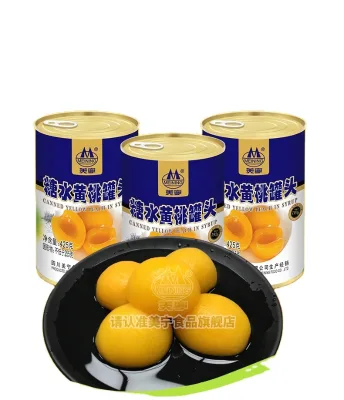
Product attributes indicate a strong emphasis on convenience and versatility, with many listings highlighting "ready to eat" instructions and normal room temperature storage capabilities. The primary ingredient is consistently identified as yellow peaches, often processed in sugar or syrup, and packaged in metal tins with either normal or easy-open lids. Specifications vary from small 226g cans to large 1800g containers, with carton standards such as 425g24tins/ctn or 580g12 tins/ctn defining logistics efficiency. Buyers should verify these physical dimensions and packaging formats to ensure compatibility with existing distribution channels and shelf space requirements.
Technical Specifications to Verify
Technical verification begins with confirming the exact model numbers and net weights, which are critical for inventory management and cost calculation. Listings show model numbers such as 901 and 902, with net weights (Dw) available in 260g, 330g, 460g, and 1800g variants, or customized to specific buyer needs. The shape of the fruit is typically chunks, and the processing method involves immersion in sugar or syrup. Buyers must ensure that the selected model aligns with their product quality standards, particularly regarding fruit integrity and syrup clarity, as these factors directly influence consumer perception and product performance in final applications.
Packaging details are another crucial technical aspect, with options including inner tin outer carton, box packaging, and paper labels. The shelf life is generally stated as 18 months or greater than 12 months, stored in normal, dry, and cool places. Lead times are commonly reported as 30 days, which impacts supply chain planning and order fulfillment cycles. Additionally, the place of origin, often cited as Hebei or Liaoning in China, may influence logistics costs and carbon footprint considerations. Buyers should request detailed packing lists and weight specifications to accurately calculate landed costs and storage requirements.
Compliance and Safety Documentation
Compliance with international food safety standards is non-negotiable for importing canned fruits. Suppliers frequently list certifications such as HACCP, FDA, ISO, and BRC, which indicate adherence to rigorous quality management systems. However, buyers must verify the validity and scope of these certifications through independent audit reports or direct confirmation with the certifying bodies. These documents provide assurance that the manufacturing facility maintains hygiene, traceability, and hazard control protocols essential for preventing contamination and ensuring product safety throughout the supply chain.
Beyond certifications, buyers should request product-specific test results and compliance certificates for the target market. This includes verifying that the product meets local labeling requirements, ingredient declarations, and allergen warnings. The processing method, whether in sugar or syrup, must be clearly documented to ensure accurate nutritional labeling. Additionally, understanding the payment terms, such as TT (Telegraphic Transfer), and the application scope, which is primarily for food use, helps in assessing the commercial viability and regulatory alignment of the procurement deal.
Cost Drivers and Commercial Terms
Cost structures in the canned yellow peach market are influenced by raw material fluctuations, packaging material prices, and labor costs. The observed price range of $0.15 to $28.61 USD reflects these variables, with higher prices often corresponding to larger can sizes, premium fruit grades, or customized packaging solutions. Buyers should analyze the cost per unit weight rather than just the per-can price to ensure accurate comparisons across different product specifications. Understanding these drivers allows for more effective negotiation and budget forecasting, particularly when dealing with long-term supply contracts.
Commercial terms, including MOQs and lead times, play a significant role in total procurement costs. MOQs ranging from 10 to 2,400 units offer flexibility, but larger orders may yield better unit pricing. Lead times of approximately 30 days require careful inventory planning to avoid stockouts or excess holding costs. Payment terms, typically TT, should be negotiated to balance cash flow needs with supplier security. Buyers should also consider the cost of customization, which may involve additional setup fees or higher MOQs, to determine the overall value proposition of the supplier relationship.
Supplier Qualification and Quality Control
Supplier qualification involves a thorough assessment of manufacturing capabilities, quality control processes, and financial stability. Buyers should prioritize suppliers with established track records and verifiable certifications, such as those from Tangshan Liyuan Industrial Co., Ltd., which operates in Tangshan, Hebei. Site audits or virtual inspections can provide insights into production line efficiency, hygiene standards, and raw material sourcing practices. These evaluations help ensure that the supplier can consistently meet quality expectations and deliver products that comply with international safety standards.
Quality control measures should be explicitly defined in the purchase agreement, including sampling plans, inspection criteria, and rejection protocols. Buyers should request pre-shipment inspection reports and third-party verification for critical quality attributes, such as net weight, seal integrity, and sensory characteristics. Establishing clear communication channels for issue resolution and continuous improvement is also essential. By implementing robust quality control frameworks, buyers can minimize the risk of receiving non-conforming products and maintain brand reputation in the competitive canned fruit market.
Long-Term Procurement Checks
Long-term procurement success depends on continuous monitoring of supplier performance and market dynamics. Buyers should establish key performance indicators (KPIs) for delivery reliability, product quality, and responsiveness to issues. Regular reviews of these metrics help identify potential risks and opportunities for improvement in the supply chain. Additionally, staying informed about changes in raw material prices, regulatory requirements, and consumer preferences allows for proactive adjustments to procurement strategies. This ongoing vigilance ensures that the supply of ready-to-eat canned yellow peaches remains stable and cost-effective.
Building strong relationships with suppliers through transparent communication and mutual trust is crucial for long-term collaboration. Buyers should engage in regular business reviews to discuss performance, address concerns, and explore opportunities for innovation, such as new packaging formats or flavor variations. Flexibility in order quantities and specifications can also enhance supply chain resilience. By fostering a partnership-oriented approach, buyers can secure preferential treatment, better pricing, and priority access to inventory, ultimately driving sustainable value for their organizations in the global canned fruit trade.
FAQs
What certifications do the canned yellow peaches have?
The canned yellow peaches hold HACCP, FDA, ISO, and BRC certifications. These credentials ensure that the manufacturing process meets international food safety and quality standards. Buyers can rely on these documented validations for compliance in regulated markets, ensuring the product is safe for consumption and suitable for global trade requirements.
What is the shelf life of the product?
The product has a shelf life of 18 months when stored correctly. It should be kept in a normal room temperature environment that is dry and cool. This storage method preserves the quality of the yellow peaches and ensures they remain ready to eat throughout the entire duration without spoilage or degradation.
Can the packaging be customized for buyers?
Yes, customization is available for various packaging aspects. Buyers can choose between normal lids or easy-open lids, and select from paper labels or other options. The product is packed in metal tins with inner tins and outer cartons, allowing for tailored solutions that meet specific branding or logistical needs for different markets.
What are the available specifications and weights?
Specifications include net weights of 226g, 260g, 330g, 460g, 580g, and 1800g. These options allow buyers to select the most suitable size for their distribution channels. The product is processed in sugar syrup and comes in chunks, providing flexibility in portion sizes to accommodate diverse consumer preferences and retail requirements effectively.
What is the typical lead time for orders?
The typical lead time for orders is 30 days. This timeframe allows for efficient production scheduling and quality control before shipment. Buyers should plan their inventory accordingly to ensure timely delivery, considering that the manufacturer is located in Tangshan, Hebei, China, which may influence logistics planning for international shipments to various global destinations.
What is the minimum order quantity required?
The minimum order quantity varies, with observed values ranging from 10 to 2400 units. Some listings indicate an MOQ of 500 cartons. Buyers should verify the specific MOQ with the supplier based on the chosen specification and packaging type. This flexibility allows businesses of different sizes to place orders that fit their operational scale.