Source Reagent Bottle for Laboratory, Medical, and University Use
Find 30 Reagent Bottle options from Jiangsu and Zhejiang suppliers. Buyers can compare screw and bayonet caps, plastic and glass materials, and capacities ranging from 8ml to 1000ml for laboratory, medical, and university applications.
Key considerations
Products List


Reagent Bottle Round Light Proof Chemical Bottle Liquid Medicine Bottles
$0.75 - $0.80
MOQ: 1000 Pieces




Laboratory Test Reagent Bottle Blood Culture Equipment Laboratory Reagents
$2.00 - $2.50
MOQ: 100 Pieces


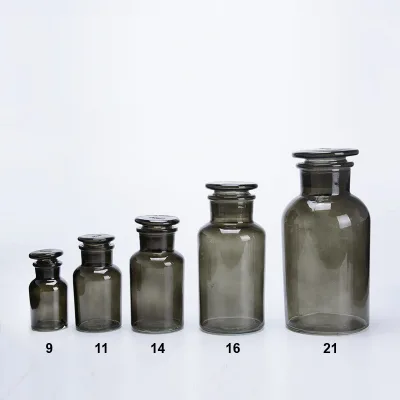
250ml Colored Glass Reagent Bottle Painted Laboratory Glass Bottle with Lid
$0.28 - $0.38
MOQ: 2000 Pieces


Comprehensive Sourcing Guide
Strategic Sourcing Guide for Laboratory Reagent Bottles
Procuring reagent bottles for laboratory, medical, and industrial applications requires a rigorous approach that balances technical specifications with supply chain reliability. The market for these containers is diverse, ranging from disposable plastic units to reusable glass vessels, each serving distinct operational needs. Buyers must navigate a complex landscape of materials, certifications, and capacity standards to ensure that the selected products meet safety protocols and experimental integrity. This guide outlines the critical factors for sourcing reagent bottles, focusing on verified attributes, compliance frameworks, and long-term procurement strategies based on current market data.
Technical Specifications and Material Selection
The foundation of a successful procurement strategy lies in selecting the correct material and physical specifications. The observed market data indicates a primary split between plastic and glass compositions. Plastic options are frequently cited as being made from 100% PP (Polypropylene), offering high chemical stability and suitability for liquid handling applications. These units are often characterized by their screw cap and screw top configurations, which provide a secure seal for volatile or corrosive reagents. In contrast, glass options are available for applications requiring higher thermal resistance or transparency, though they are often non-disposable and may utilize different closure mechanisms.
Capacity is a critical variable that dictates the utility of the bottle within a specific workflow. The standard range observed in the market spans from 8ml to 1000ml, with specific models available in sizes such as 50ml, 65ml, and 250ml. Buyers should verify that the supplier's inventory covers the exact volume requirements of their assays. Some suppliers offer a "Regular Size + Custom Service" model, allowing for bespoke dimensions, while others adhere to strict standard models like the B-250P or RES-PS65. The closure type is equally important; while screw tops are dominant, bayonet tops are also present in the market, necessitating a review of compatibility with existing laboratory equipment.
| Attribute | Plastic Variant | Glass Variant |
|---|---|---|
| Primary Material | 100% PP | Glass |
| Disposability | Disposable | Non-Disposable |
| Common Closure | Screw Cap / Screw Top | Variable (Screw/Bayonet) |
| Chemical Stability | High | High |
| Typical Capacity | 8ml - 1000ml | Variable |
| Sterilization | Ethylene Oxide Available | Variable |
Compliance and Certification Frameworks
In the laboratory and medical sectors, regulatory compliance is non-negotiable. The sourcing process must prioritize suppliers who can demonstrate adherence to recognized international standards. The data confirms that products often carry RoHS, ISO, and CE certifications. Specifically, the ISO 13485 standard is highlighted as a system requirement, which is critical for medical device manufacturing and implies a quality management system focused on safety and efficacy. Additionally, the presence of Sbs/ANSI and Sbs Standard references suggests that some products align with specific industry benchmarks for safety and performance.
Buyers must verify the specific scope of these certifications. For instance, a product labeled with "Ethylene Oxide Sterilization" indicates that the manufacturing process includes a sterilization step, which is vital for applications requiring a sterile environment. The "100,000 Level Dust Free Clean Workroom" attribute points to a controlled manufacturing environment, reducing the risk of particulate contamination. When evaluating suppliers, procurement teams should request documentation proving that the specific batch of reagent bottles meets these standards. Relying on general claims without verifying the certification scope can lead to compliance failures during audits or safety incidents in the laboratory.
Cost Drivers and Pricing Dynamics
Understanding the cost structure of reagent bottles is essential for budget management. The observed price range in the market is extensive, spanning from $0.06 to $526 per unit. This vast disparity is driven by several factors, including material type, capacity, sterilization status, and order volume. The low end of the spectrum typically corresponds to basic, non-sterile plastic bottles in high volumes, while the upper end reflects specialized glass vessels, custom sizes, or sterile, certified medical-grade units.
The Minimum Order Quantity (MOQ) is another significant cost driver, with observed ranges from 1 to 50,000 units. Suppliers offering low MOQs may charge a premium per unit to cover setup and handling costs, whereas high-volume orders often benefit from economies of scale. Buyers should analyze their consumption rates to determine the optimal order size. For instance, a laboratory with high turnover might prioritize the lower unit cost of bulk plastic orders, while a research facility with sporadic needs might accept a higher per-unit cost for smaller, more flexible orders. It is crucial to note that the price range is an observation of the market and does not guarantee that every listed product falls within these bounds; specific quotes must be requested based on the exact specifications required.
Typical Applications and Usage Scenarios
Reagent bottles serve a broad spectrum of applications, primarily within laboratory, medical, hospital, and university settings. The "Application" field in the product data explicitly lists these sectors, indicating that the bottles are designed to handle a variety of chemical and biological substances. The "Usage" attribute specifies "Liquid Handling," confirming their role in storing and transferring reagents. Furthermore, the "Function" is noted as "Assay Use," suggesting that these containers are integral to diagnostic and analytical procedures where precision and contamination control are paramount.
The state of the reactant is another consideration; while most applications involve liquid reagents, some specifications note a "Solid" reactant state, implying versatility in storage capabilities. The "Group" attribute listing "Adult" suggests that certain products may be part of a broader medical supply chain intended for adult healthcare applications. When selecting bottles for specific assays, buyers must ensure that the material compatibility matches the chemical nature of the reagent. For example, high chemical stability is a key attribute for bottles storing aggressive solvents, while sterile packaging is mandatory for biological samples.
Supplier Evaluation and Origin Verification
Evaluating the reliability of a supplier involves more than just checking product listings; it requires assessing the origin and logistical capabilities of the manufacturer. The data indicates that production origins are primarily located in China, with specific provinces like Jiangsu and Zhejiang identified as manufacturing hubs. These regions are known for their established plastic and glass processing industries. However, buyers should verify the specific location of the facility to ensure it aligns with their logistical preferences and risk tolerance.
The "Quality Guarantee Period" of 3 years is a notable attribute that reflects the supplier's confidence in product durability. This warranty period can be a significant differentiator when comparing multiple vendors. Additionally, the "Advantage" of a dust-free clean workroom is a tangible quality indicator that should be verified through site audits or third-party reports. When contacting suppliers, procurement teams should inquire about their production capacity, lead times, and ability to scale during peak demand. The "Customization" attribute being available suggests that many suppliers are flexible, but buyers must confirm the lead time implications of custom orders versus standard stock items.
Quality Control and Packaging Standards
Maintaining product integrity from the factory to the laboratory is a critical aspect of the sourcing process. The packaging specifications observed include "Carton," "Export Carton," and specific counts such as "200PCS/Carton" or "100p/Carton." Some suppliers offer "Bulk Package" options, which may be cost-effective but require careful handling to prevent damage. The "prod_packing" attribute highlights the importance of standardized packaging to ensure that the bottles arrive in optimal condition.
Quality control measures should be a central part of the supplier evaluation. The presence of "Sterile" treatment and "Ethylene Oxide Sterilization" indicates that the supplier employs specific processes to ensure the bottles are free from contaminants. Buyers should request quality control reports that detail the testing procedures used, including checks for chemical stability and structural integrity. The "Standard" attribute, which includes ranges like "8ml-1000ml" and specific model numbers, serves as a benchmark for consistency. Ensuring that the supplier adheres to these standards is essential for maintaining the reliability of laboratory results.
Long-Term Procurement Considerations
Sourcing reagent bottles is not merely a transactional activity but a strategic decision that impacts long-term operational efficiency. The "Quality Guarantee Period" of 3 years suggests that suppliers are committed to the longevity of their products, which can reduce the frequency of replacement and associated costs. However, buyers must also consider the lifecycle of the product, especially for non-disposable glass bottles that may require cleaning and sterilization cycles.
For organizations with fluctuating demand, the availability of "Customization" and a wide range of capacities (8ml to 1000ml) offers flexibility. This adaptability allows laboratories to standardize their inventory while accommodating diverse experimental needs. Furthermore, the "High Chemical Stability" attribute ensures that the bottles will not degrade over time when exposed to various reagents, preserving the integrity of the stored substances. As procurement strategies evolve, buyers should maintain a relationship with suppliers who can provide consistent quality, adhere to evolving standards like ISO 13485, and offer responsive support for any quality issues that may arise. By focusing on these long-term factors, organizations can build a resilient supply chain that supports their scientific and medical objectives.
FAQs
What certifications do reagent bottles typically hold?
Reagent bottles typically hold RoHS, ISO, and CE certifications. Some products also comply with ISO 13485 for medical device quality management and Sbs/ANSI standards for safety and performance benchmarks.
Which materials are used for laboratory reagent bottles?
Laboratory reagent bottles are primarily made from 100% PP plastic or glass. Plastic variants offer high chemical stability and are often disposable, while glass options are non-disposable and suitable for varied thermal applications.
Can I find sterile reagent bottles for medical use?
Yes, sterile reagent bottles are available with Ethylene Oxide Sterilization treatment. These units are manufactured in 100,000 Level Dust Free Clean Workrooms to ensure safety for medical and hospital applications.
What capacity ranges are available for reagent bottles?
Reagent bottles are available in standard ranges from 8ml to 1000ml. Specific models include capacities of 50ml, 65ml, and 250ml, with some suppliers offering regular sizes plus custom service options.
Which bottle top types are available for reagent storage?
Reagent bottles feature Screw Top and Bayonet closure types. Screw caps are common for secure sealing, while bayonet tops are also present in the market to accommodate different laboratory equipment needs.
How are reagent bottles packaged for export?
Reagent bottles are packaged in Cartons, Export Cartons, or Bulk Packages. Common packing configurations include 200 pieces per carton or 100 pieces per carton, ensuring safe transport to laboratory and medical facilities.
What is the typical quality guarantee period for these bottles?
The typical quality guarantee period for reagent bottles is three years. This warranty reflects supplier confidence in product durability and chemical stability for long-term laboratory and medical storage applications.