Source Ready-to-Go 4wd Rock Crawler for Off-Road, Racing, and Crawling
Find 30 ready-to-go 4wd rock crawler with metal chassis options from verified suppliers. Compare specifications like scale, power source, and remote distance to select the ideal vehicle for off-road adventures, racing tracks, or hobbyist crawling.
Key considerations
Products List


Crawler Tracked Under Carriage / Steel Crawler Chassis/ Track Undercarriage
$2000.00 - $4000.00
MOQ: 1 Pieces


Modular Steel Track Undercarriage (Custom Load Range 0.5-120T Crawler-Type Design)
$99.00 - $2999.00
MOQ: 1 Pieces


Comprehensive Sourcing Guide
Ready-to-Go 4WD Rock Crawler with Metal Chassis Sourcing Guide
Sourcing ready-to-go (RTG) 4WD rock crawlers with metal chassis components requires a nuanced understanding of the balance between durability and performance. These vehicles are designed for immediate operation out of the box, eliminating the assembly time associated with kit models, while the inclusion of metal chassis elements addresses the structural weaknesses often found in all-plastic hobby-grade alternatives. Buyers must navigate a market where "metal" can refer to various alloys or composite reinforcements, necessitating clear verification of material composition to ensure the product meets the rugged demands of rock crawling. The primary value proposition lies in the combination of proportional control, four-wheel drive traction, and a reinforced frame that can withstand the high-torque stresses of off-road terrain without bending or breaking.
The procurement process for these specific RC vehicles involves distinguishing between entry-level consumer toys and semi-prograde hobby equipment. While many listings advertise metal parts, the extent of metal usage varies significantly, ranging from simple chassis skid plates to full alloy metal frames. Buyers should focus on products that explicitly state the presence of alloy metal or metal nylon chassis components, as these offer superior impact resistance compared to standard plastic polymers. Understanding the specific scale, such as 1:18 or 1:8, is critical because it dictates the size of the components, the required battery voltage, and the overall footprint of the vehicle, which in turn influences shipping costs and storage requirements for bulk orders.
Product Scope and Observed Listing Signals
The current market landscape for ready-to-go 4WD rock crawlers reveals a diverse range of specifications, with observed price points spanning from $1 to $32,000 USD. This wide variance indicates a segmentation between basic entry-level models and high-end, heavily customized or industrial-grade crawlers. Listings frequently highlight key features such as 2.4GHz radio systems, which provide stable, interference-free control over distances ranging from 50 to 100 meters. Buyers should note that while many products claim a 100-meter range, real-world performance can be affected by environmental factors, and the 50-meter range is often a more conservative, reliable baseline for urban or crowded environments.
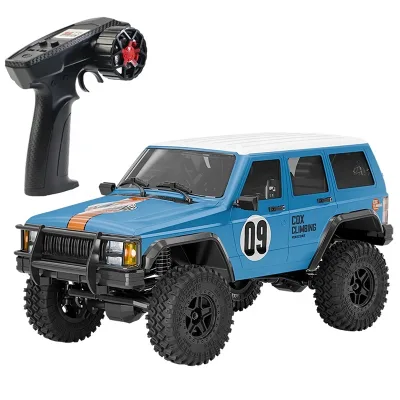
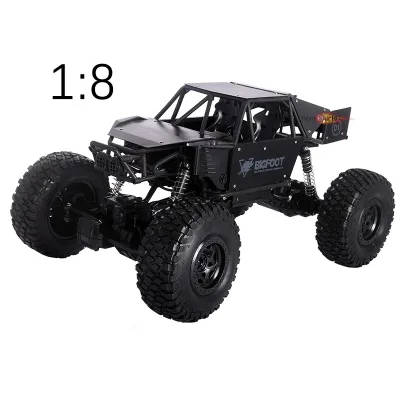
Observed product attributes indicate a strong emphasis on durability and ease of use, with many models featuring metal nylon chassis designs that combine the lightweight nature of nylon with the strength of metal reinforcements. The scale of these vehicles typically falls into the 1:18 or 1:8 categories, with the 1:18 scale offering a more compact footprint suitable for indoor-outdoor use, while the 1:8 scale provides larger tires and greater ground clearance for serious off-road capability. Packaging details often include original boxes, operating instructions, and sometimes batteries or USB cables, though buyers must verify if the controller battery is included, as many listings specify that it is not, requiring separate procurement or immediate purchase upon arrival.
Technical Specifications to Verify
When evaluating technical specifications, the control channel count is a primary differentiator between basic and advanced rock crawlers. Listings show models with both 3-channel and 4-channel configurations, where 4-channel systems offer proportional control for steering, throttle, and often additional functions like winch control or light management. The power source is predominantly electric, utilizing brushed motors in many observed models, which are cost-effective and easier to maintain than brushedless systems. Buyers should verify the motor type and voltage requirements, as some listings specify 9.6V 700mAh Ni-CD batteries, while others may require higher voltage lithium polymer packs for increased torque and speed.
Material composition is another critical technical aspect, with products constructed from a mix of metal, plastic, and ABS plastic. The presence of alloy metal components, such as suspension arms or chassis plates, significantly enhances the vehicle's ability to handle rough terrain. Buyers must confirm the specific type of metal used, as "metal" can sometimes refer to thin steel sheets rather than robust aluminum alloys. Additionally, the design of the drive system, typically 4WD or 4x4, ensures that power is distributed to all wheels, which is essential for maintaining traction on steep or uneven surfaces. The single gross weight of these vehicles can range from 1.5 kg to 3.6 kg, impacting shipping logistics and handling requirements.
Compliance and Safety Documentation
Compliance with safety standards is mandatory for RC vehicles sold in many international markets, with CE certification being a commonly observed requirement. Buyers must ensure that suppliers provide valid CE certificates, which indicate that the product meets European health, safety, and environmental protection standards. This is particularly important for products intended for younger age groups, as regulations often impose stricter limits on battery safety, chemical composition of plastics, and mechanical hazards. The absence of proper certification can lead to customs delays, product seizures, or liability issues in the event of injury or damage.
Safety documentation should also include clear warnings regarding battery handling and disposal, especially for models that use Ni-CD or lithium-based batteries. Since many listings specify that the controller battery is not included, buyers must ensure that any batteries sourced separately meet local safety regulations. Additionally, the packaging details should include operating instructions that highlight safe usage practices, such as avoiding water immersion unless the vehicle is explicitly rated for it. Buyers should verify that the product keywords and descriptions accurately reflect the safety features, such as overload protection or thermal cutoffs, to mitigate the risk of motor damage or fire hazards.
Cost Drivers and Commercial Terms
The cost of ready-to-go 4WD rock crawlers is influenced by several factors, including the scale, material composition, and included accessories. Models with full alloy metal chassis and 4-channel proportional control typically command higher prices than those with plastic chassis and 3-channel systems. The inclusion of batteries, remote controllers, and USB cables in the package can also affect the unit price, although many listings specify that these items are either not included or vary by SKU. Buyers should analyze the cost per unit against the observed MOQ ranges, which typically span from 1 to 12 pieces, to determine the most economical order quantity for their needs.
Commercial terms such as lead times and shipping methods are critical for managing inventory and customer expectations. While specific lead times are not provided in the observed data, buyers should negotiate clear delivery schedules with suppliers, especially for larger orders. The single package size and gross weight are important for calculating shipping costs, with larger 1:8 scale models requiring more robust packaging and potentially higher freight charges. Buyers should also consider the customization options available, as OEM services and color customization can add to the cost but may provide a competitive advantage in niche markets.
Supplier Qualification and Quality Control
Supplier qualification is essential to ensure that the ready-to-go 4WD rock crawlers meet the expected quality standards. Buyers should verify the supplier's location, with many observed products originating from Guangdong, China, a hub for RC vehicle manufacturing. This region offers a mature supply chain for electronic components and plastic injection molding, but buyers must conduct due diligence to ensure that the supplier has a consistent track record of quality. Checking for OEM capabilities and customization options can also indicate the supplier's flexibility and ability to meet specific buyer requirements.
Quality control measures should include pre-shipment inspections to verify the integrity of the metal chassis, the functionality of the 2.4GHz radio system, and the condition of the tires and suspension. Buyers should request sample units to test the vehicle's performance in real-world conditions, paying attention to the crawl speed, torque, and durability of the metal components. Additionally, verifying the condition of the products as "New" and ensuring that the packaging is intact can help prevent damage during transit. Establishing a clear quality agreement with the supplier, including criteria for acceptable defect rates, is crucial for maintaining product reliability.
Long-Term Procurement Checks
Long-term procurement success depends on establishing a sustainable relationship with suppliers and continuously monitoring product performance. Buyers should regularly review customer feedback and return rates to identify any recurring issues with the rock crawlers, such as motor failures or chassis cracks. This data can be used to negotiate improvements with suppliers or to adjust product specifications for future orders. Additionally, staying informed about changes in safety regulations and certification requirements is essential to ensure ongoing compliance in target markets.
Supply chain resilience is another key consideration, with buyers should diversify their supplier base to mitigate the risk of disruptions. Monitoring market trends and competitor offerings can help buyers stay ahead of technological advancements, such as the adoption of brushedless motors or more advanced radio systems. By maintaining a focus on quality, compliance, and supplier relationships, buyers can ensure that their ready-to-go 4WD rock crawler inventory remains competitive and reliable in the long run. Regular audits and performance reviews of suppliers will help maintain high standards and drive continuous improvement in the procurement process.
FAQs
What is the scale of the metal chassis rock crawler?
The metal chassis rock crawler is available in 1:18 and 1:8 scales. The 1:18 model features a metal nylon chassis, while the 1:8 version uses ABS plastic with a brushed motor. Both scales are designed for indoor and outdoor use by beginners.
Can I find a ready-to-go 4wd rock crawler with metal chassis?
Yes, the product is ready-to-go and features a metal nylon chassis for the 1:18 model. It includes a proportional 2.4Ghz remote control system. The 1:8 version comes with batteries and a USB cable, making it fully assembled for immediate operation.
Which control channels does the remote system support?
The remote control system supports either 3 or 4 channels depending on the specific model. The 1:18 model operates on 3 channels, while the 1:8 model utilizes 4 channels. Both systems use 2.4Ghz technology for stable signal transmission up to 100 meters.
How is the power source configured for these crawlers?
The 1:18 model uses an electric power source with a brushed motor, while the 1:8 model includes a 9.6V 700mAh Ni-CD battery. The controller battery is not included for the 1:18 version. Both models are designed for 4WD operation on various terrains.
What certifications do these rock crawlers hold?
The 1:8 scale rock crawler holds CE certification for safety compliance. This ensures the product meets specific standards for electrical and mechanical safety. Buyers should verify certification details for specific batches when sourcing from manufacturers in Guangdong, China.
Can I customize the color of the metal chassis crawler?
Yes, customization is available for the color of the rock crawler. The standard options include black, blue, red, and gold. Buyers can request specific colors or designs, and the manufacturer supports OEM services for tailored production runs.
What is the minimum order quantity for these crawlers?
The minimum order quantity ranges from 1 to 12 units depending on the supplier and model. The 1:18 model is sold as a single item, while the 1:8 model may have different packaging requirements. Buyers should check specific supplier terms for bulk pricing.