Source Real-Time Automated Nucleic Acid Extractor for Labs, Hospitals, and Clinics
Compare 30 real-time automated nucleic acid extractor models from verified suppliers. Evaluate specifications like throughput, extraction time, and magnetic bead recovery to find the right system for your facility.
Key considerations
Products List
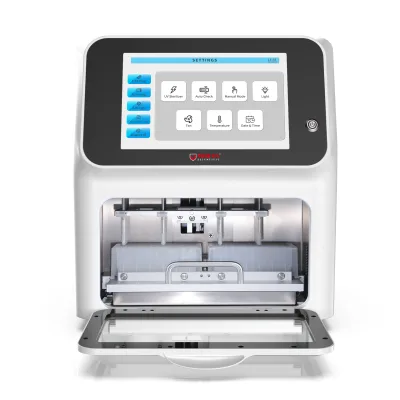
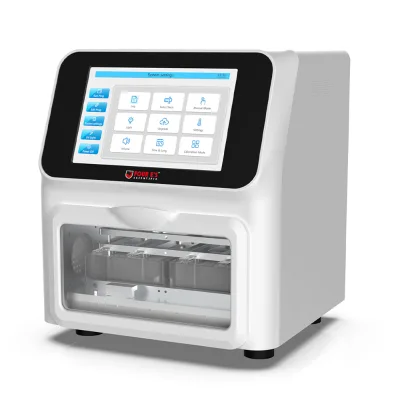
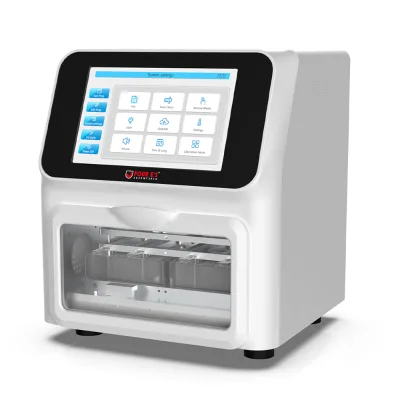

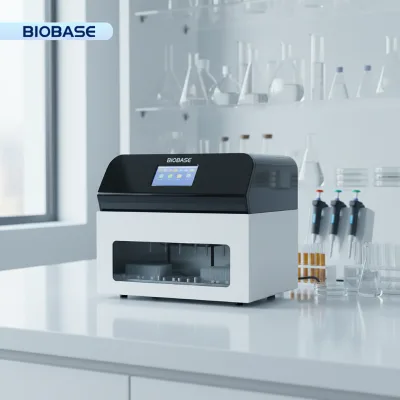
Biobase Automated Nucleic Acid Purification System Nucleic Acid Extractor
$2000.00 - $4000.00
MOQ: 1 Pieces


Biobase Automatic Nucleic Acid Extractor DNA Rna Extraction System Automated Machine
$1200.00 - $3400.00
MOQ: 1 Pieces


Biobase Automatic Nucleic Acid Extraction System for Animal and Plants
$2000.00 - $3500.00
MOQ: 1 Pieces
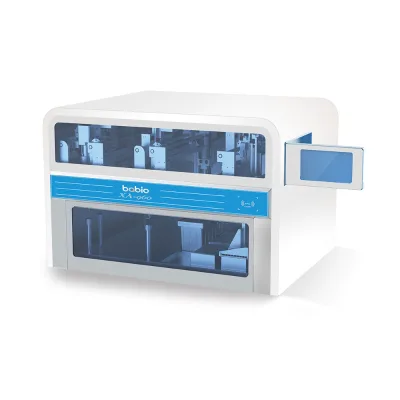


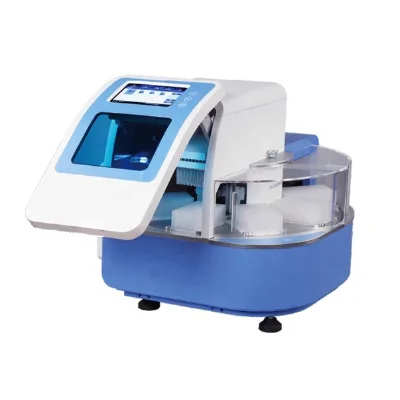


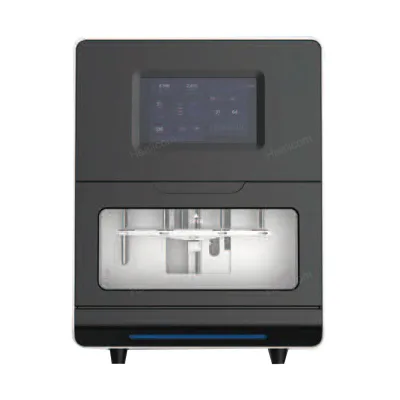
Medical Automated Nucleic Acid Extractor for DNA Extraction Machine (THR-AC20)
$5999.00 - $8999.00
MOQ: 1 Pieces
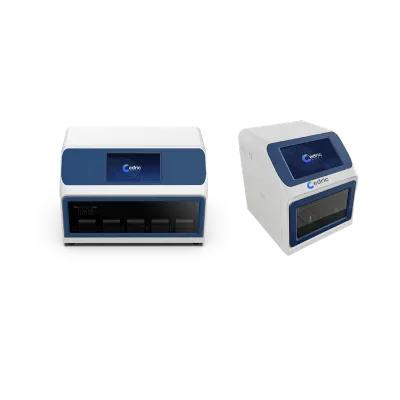



Comprehensive Sourcing Guide
Strategic Sourcing Guide for Real-Time Automated Nucleic Acid Extractors
The global demand for rapid, high-throughput nucleic acid extraction has driven the evolution of laboratory automation. For procurement professionals, selecting a real-time automated nucleic acid extractor requires a granular understanding of technical specifications, operational constraints, and compliance frameworks. These systems are critical in biological diagnostics, serving as the foundational step for downstream applications such as PCR and sequencing. The market presents a wide spectrum of options, ranging from compact benchtop units to large-scale automated platforms. This guide outlines the essential criteria for evaluating suppliers and products, ensuring that procurement decisions are grounded in verified data and operational necessity rather than marketing assertions.
Technical Architecture and Operational Specifications
The core functionality of an automated nucleic acid extractor relies on the magnetic bead method, a technique that offers high recovery rates and minimal cross-contamination. When evaluating potential units, buyers must scrutinize the specific magnetic bead recovery capabilities. Verified data indicates that high-performance systems can achieve magnetic bead recovery rates of up to 98%, a critical metric for maximizing yield from limited sample volumes. The extraction process typically utilizes an open platform for reagents, allowing laboratories to integrate various commercial kits rather than being locked into proprietary consumables.
Processing volume and sample throughput are the primary drivers of system selection. The market offers configurations tailored to different scales of operation. Some models support a processing volume range of 20μL to 1000μL, accommodating both small-volume clinical samples and larger research batches. Throughput varies significantly; observed configurations include systems capable of handling 1 to 8 samples per run, while high-capacity units can process up to 32 or even 48 samples simultaneously. The time required for extraction is another vital specification, with typical cycles ranging from 15 to 40 minutes per round, though some advanced units may extend this to 60 minutes depending on the reagent protocol.
The physical and digital interface of the machine also dictates usability. Modern extractors often feature a 10.1-inch touch screen for sample capacity monitoring and program management. Internal storage capabilities are substantial, with some systems able to store over 100 groups of distinct programs, facilitating complex workflows. Temperature control is precise, with accuracy often specified at 0.1℃, ensuring consistent lysis and binding conditions. Heating modules are frequently independent, allowing for customized lysis temperatures across different sample types. The physical dimensions and weight of the unit must also be considered for laboratory space planning, with package sizes varying from compact footprints to larger industrial units weighing up to 80kg gross.
Compliance, Certification, and Regulatory Standards
In the medical and diagnostic sectors, regulatory compliance is non-negotiable. Buyers must verify that the equipment carries recognized certifications before finalizing a purchase. The presence of CE certification is a standard requirement for products entering the European market, indicating conformity with health, safety, and environmental protection standards. Additionally, ISO certification, specifically ISOCE, is a common marker for quality management systems in manufacturing. These certifications are not merely administrative hurdles but serve as evidence that the manufacturer adheres to rigorous production and testing protocols.
Beyond general certifications, specific product standards must be validated. For instance, operational standards such as rotational speeds (e.g., 6500rpm) or physical dimensions (e.g., 580510700mm) should be cross-referenced with the technical datasheet to ensure they meet the laboratory's infrastructure requirements. It is also essential to confirm the origin of the product, as supply chain transparency impacts lead times and after-sales support. Products originating from established manufacturing hubs, such as Shandong, China, often have mature supply chains, but buyers should verify the specific factory location to assess logistical feasibility.
Safety features are equally critical in the certification review. Ultraviolet (UV) irradiation is a standard safety feature in many modern extractors to prevent cross-contamination between runs. However, the presence of a built-in air duct is not universal; some models are designed without this feature, relying on alternative ventilation methods. Procurement teams must explicitly check for these safety attributes to ensure the equipment aligns with the laboratory's biosafety level requirements.
Cost Drivers and Total Cost of Ownership
The pricing landscape for nucleic acid extractors is vast, with observed ranges extending from approximately $0.40 to over $91,000. This disparity reflects differences in throughput, automation levels, and brand positioning. Low-cost entries may represent consumables or smaller modules, while high-end figures correspond to fully integrated, high-throughput systems. Buyers should look beyond the initial purchase price to understand the total cost of ownership (TCO).
Key cost drivers include the sample capacity and the complexity of the internal programming. Units with higher sample quantities, such as those processing 32 or 48 samples, typically command a premium due to the increased mechanical complexity and larger footprint. The customization options available also influence cost; systems that allow for customized lysis temperatures or unique program storage may carry higher upfront costs but offer greater long-term flexibility.
Packaging and logistics represent another significant variable. Products are typically shipped in either cartons or wooden cases, with dimensions and gross weights affecting shipping costs. For example, a unit with a gross weight of 80kg will incur higher freight charges than a lighter model. Furthermore, the minimum order quantity (MOQ) can range from 1 to 10,000 units, impacting the financial commitment for smaller laboratories or research groups. Buyers must negotiate terms that align with their budget constraints while ensuring they receive the necessary volume to justify the investment.
Typical Applications and Workflow Integration
Real-time automated nucleic acid extractors are primarily deployed in biological diagnostics, where speed and accuracy are paramount. The classification of these devices as biochemistry analyzers underscores their role in processing biological samples for diagnostic purposes. The ability to extract nucleic acids in a time range of 0 to 99 hours and 59 minutes allows for flexible scheduling, accommodating both urgent clinical needs and batch processing for research.
The extraction time of 15 to 40 minutes per round makes these systems suitable for high-volume screening environments, such as public health laboratories or large hospital networks. The coefficient of variation (CV) of 3% for the difference between holes indicates a high level of consistency, which is essential for reliable diagnostic results. This consistency ensures that the quality of extracted DNA or RNA is uniform across all samples in a batch, reducing the need for re-runs and minimizing waste.
Integration into existing workflows is facilitated by the open platform for reagents. This feature allows laboratories to use a variety of magnetic bead reagents, adapting to different sample types and downstream applications. The internal program storage of over 100 groups enables the automation of complex protocols without manual intervention, streamlining the workflow from sample preparation to extraction. This level of automation is particularly beneficial in settings where human error is a significant concern, such as in high-throughput screening or forensic analysis.
Supplier Evaluation and Quality Control
Selecting a reliable supplier is as critical as selecting the right equipment. Buyers should prioritize suppliers that provide transparent documentation regarding product standards, origins, and certifications. The brand reputation, such as Biobase, can serve as an indicator of reliability, but it should not be the sole criterion. Instead, focus on the supplier's ability to provide detailed technical specifications and support documentation.
Quality control measures should be a central part of the supplier evaluation process. Verify that the manufacturer has established protocols for testing product performance, including magnetic bead recovery rates and temperature accuracy. The ability to store multiple program groups suggests a sophisticated internal testing regime to ensure software stability and hardware reliability. Additionally, check the supplier's track record for delivering products that meet the specified dimensions and weight requirements, as discrepancies in these areas can lead to logistical challenges.
When evaluating suppliers, consider their responsiveness to customization requests. The availability of customization options indicates a flexible manufacturing process capable of meeting specific laboratory needs. However, buyers must ensure that any customizations do not compromise the product's compliance with international standards. A robust quality control system should include regular audits and testing to maintain product integrity throughout the supply chain.
Long-Term Procurement Considerations
Sourcing a nucleic acid extractor is a long-term investment that requires careful planning for maintenance, upgrades, and scalability. The operating temperature and system compatibility, such as the Windows system interface, are factors that will influence the longevity of the equipment. Buyers should assess the availability of software updates and technical support to ensure the system remains functional and secure over time.
The lead time and location of the supplier are also critical for long-term planning. Products originating from specific regions, such as China, may have different lead times compared to local suppliers. Understanding these timelines is essential for inventory management and project scheduling. Furthermore, the packaging requirements, such as wooden cases versus cartons, can impact the storage and handling of the equipment upon delivery.
Scalability is another key consideration. As laboratory needs grow, the ability to upgrade the system or add modules becomes important. Systems with high sample throughput and flexible program storage are better positioned to accommodate increased demand. Buyers should also consider the availability of spare parts and consumables, ensuring a steady supply chain to minimize downtime. By focusing on these long-term factors, procurement professionals can secure a solution that delivers value and reliability for years to come.
FAQs
What is the magnetic bead recovery rate for these extractors?
High-performance systems can achieve a magnetic bead recovery rate of up to 98%. This metric ensures maximum yield from limited sample volumes during the extraction process.
How many samples can the BNP32 model process simultaneously?
The BNP32 model is designed to handle a sample quantity of 32 units per run. This throughput allows laboratories to process medium-sized batches efficiently within a single cycle.
Which certifications are required for these biochemistry analyzers?
Products typically carry CE certification and ISOCE certification to meet international standards. These credentials indicate conformity with health, safety, and quality management protocols for medical devices.
Can the extraction time be customized for different reagents?
Yes, the extraction time ranges from 15 to 40 minutes per round depending on the reagent used. Some advanced units may extend this duration to 60 minutes for specific protocols.
What is the minimum order quantity for purchasing these units?
The minimum order quantity ranges from 1 to 10000 units depending on the supplier and specific model. Buyers should verify the exact MOQ to align with their budget and volume needs.
Where are these nucleic acid extractors manufactured?
These units originate from manufacturing hubs in China, specifically Shandong. This location suggests mature supply chains, though specific factory details should be confirmed for logistical planning.