Source Real-time Translation Smart Glasses for Travel, Business, and Education
Explore 30 listings for Real-time Translation Smart Glasses featuring Bluetooth 5.3/5.4, OLED displays, and various battery capacities. Compare models like RC-SG015 and E13 for detection, communication, and fashion applications with customizable packaging and CE/FCC certifications.
Key considerations
Products List


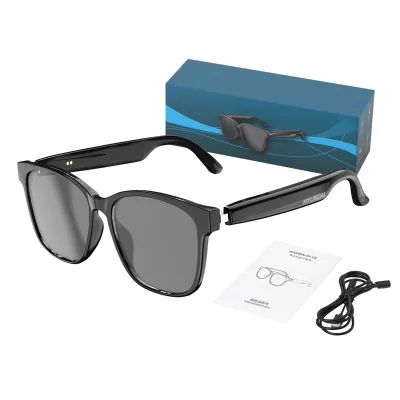


Ai Smart Glasses with Language Translator Real Time Language Translation Glasses with Camera 1080P
$39.00 - $41.00
MOQ: 100 Pieces


Bluetooth Smart Glasses Wireless Audio 800W Camera Ai Translation Smart Glasses
$40.00 - $48.00
MOQ: 20 Pieces


Comprehensive Sourcing Guide
Real-time Translation Smart Glasses Sourcing Guide
The market for real-time translation smart glasses currently features a diverse range of devices, from specialized communication tools to fashion-forward eyewear with integrated technology. Buyers must distinguish between products designed primarily for detection and those optimized for direct communication, as the supplied data indicates varying usage profiles across the catalog. Some units prioritize high-capacity batteries for extended usage, while others focus on compact form factors suitable for daily wear.
Procurement decisions should begin by aligning specific technical requirements with the observed product attributes, such as the presence of Bluetooth 5.3 or 5.4 connectivity and varying battery capacities ranging from 90mAh to 290mAh. It is critical to verify whether the device supports the necessary 3G or WiFi capabilities for real-time data transmission, as these features directly impact the reliability of translation functions in different network environments.
Product Scope and Observed Listing Signals
Buyers should carefully evaluate the display technology and memory specifications, as the available listings include OLED displays paired with memory configurations ranging from 4GB to 32GB. The presence of anti-shake support suggests these devices are engineered for stable video capture or display during movement, which is essential for users who need to maintain focus while translating spoken language in dynamic settings.
Packaging and customization options vary significantly, with some suppliers offering colored boxes and others providing blister packaging that accepts custom branding. The observed range of battery capacities and usage times, from 6 hours to several days, indicates that procurement strategies must account for the specific operational duration required by the end-user, ensuring the selected model aligns with the intended deployment scenario.
Technical Specifications to Verify
Verification of connectivity standards is paramount, as the catalog lists Bluetooth versions 5.3 and 5.4 alongside WiFi and 3G capabilities. Buyers must confirm that the specific unit selected supports the necessary protocols for seamless data exchange with translation servers, ensuring that the latency remains low enough to provide a fluid conversational experience without noticeable lag or connection drops.
Battery performance and charging efficiency require close scrutiny, given the observed variance in capacity and usage time across different models. While some units offer a 270mAh capacity with a 1-hour charge time, others may provide longer usage windows with smaller batteries, necessitating a clear understanding of the trade-offs between physical size, weight, and operational longevity for the target application.
Compliance and Safety Documentation
Regulatory compliance is a critical factor, with observed listings citing standards such as CE, FCC, and RoHS, alongside specific certifications like FDA for certain eyewear frames. Procurement teams must ensure that the supplier provides valid documentation for these standards, verifying that the electronic components and materials used in the glasses meet the safety requirements of the destination market.
Material safety and frame construction also demand attention, particularly for products utilizing TR frame materials and specific nose support designs. Buyers should request test reports confirming that the materials are non-toxic and durable, ensuring that the glasses meet both electrical safety standards and physical comfort requirements for prolonged wear by end-users.
Cost Drivers and Commercial Terms
Pricing structures are influenced by the complexity of the integrated technology, with observed ranges spanning from $8.99 to $620 depending on features like camera resolution and memory size. Units equipped with higher-resolution cameras, such as 13MP sensors, and larger memory capacities typically command higher prices, reflecting the increased cost of components and the advanced functionality they provide.
Minimum Order Quantities (MOQ) and customization options significantly impact the total cost of ownership, with MOQs ranging from 1 to 100 units. Buyers should negotiate based on the desired level of customization, such as custom logos or packaging, as these value-added services often incur additional fees that must be factored into the overall budget and unit economics.
Supplier Qualification and Quality Control
Supplier qualification should focus on their ability to support OEM and ODM services, as the data indicates that many manufacturers accept custom orders for logos and packaging. It is essential to verify the supplier's track record in delivering consistent quality, particularly regarding the assembly of complex electronic components like cameras and sensors within the eyewear frame.
Quality control processes must be robust, ensuring that every unit meets the specified standards for battery life, connectivity, and physical durability. Buyers should implement pre-shipment inspections to verify that the products match the agreed-upon specifications, including the correct battery capacity, charging time, and the integrity of the frame materials used in the final assembly.
Long-Term Procurement Checks
Sustainable procurement requires establishing clear channels for after-sales support and warranty management, especially for devices with complex electronic features. Buyers should confirm the supplier's policy on handling defective units and their ability to provide firmware updates or technical support to ensure the translation functionality remains effective over the product's lifecycle.
Regular performance audits are necessary to monitor the consistency of product quality and adherence to the agreed-upon standards. By maintaining open communication with the supplier and reviewing performance metrics such as battery degradation and connectivity stability, buyers can ensure that the long-term supply chain remains reliable and capable of meeting evolving market demands.
FAQs
What connectivity options do these smart glasses support?
These smart glasses support Bluetooth, WiFi, and 3G connectivity for seamless data transmission. The devices feature Bluetooth versions 5.3 and 5.4 to ensure stable wireless pairing with mobile devices. This multi-network capability allows for reliable real-time translation and communication functions without requiring a direct wired connection to a smartphone.
Can I customize the packaging and branding for bulk orders?
Yes, customization is available for both logos and packaging materials. Buyers can choose from colored boxes, blister packaging, or OPP bags depending on their retail needs. The supplier accepts OEM and ODM requests, allowing businesses to tailor the product presentation to match their specific brand identity and market requirements effectively.
What are the battery capacity and usage time specifications?
Battery capacities range from 90mAh to 290mAh across different models, with usage times varying from 6 hours to 3-6 days. Charging times typically take between 1 to 2 hours to fully power the device. These specifications ensure that users can maintain communication and translation functions throughout their daily activities without frequent recharging.
Which certifications do the smart glasses hold for safety?
The smart glasses hold CE, FCC, RoHS, and FDA certifications to ensure compliance with international safety standards. These certifications verify that the electronic components and materials used in the devices meet rigorous regulatory requirements. Buyers can trust that the products are safe for consumer use and suitable for export to various global markets.
What display and camera features are included in the models?
Some models feature OLED displays for clear visual feedback during translation tasks. Camera options include 2MP and 13MP sensors for capturing images or video during communication. These hardware features enhance the user experience by providing visual aids and recording capabilities, making the smart glasses versatile tools for both professional and personal use scenarios.
Where are these smart glasses manufactured and shipped from?
These smart glasses are manufactured in China, with specific origins noted in Zhejiang province. The products are packed in standard units like colored boxes or blister packs for safe transit. Buyers can expect consistent quality control and efficient logistics from these established manufacturing hubs, ensuring timely delivery for international B2B orders.