Source Multi-Axis Humanoid Robot for Construction, Automotive, and Load Handling
Explore 30 listings of Multi-Axis Humanoid Robot units designed for diverse industrial needs. Buyers can compare specifications such as payload capacity, arm span, and control modes across models like BRTIRUS2030A and BRTIRUS1820A to find the right solution for construction, automotive, or load handling applications.
Key considerations
Products List


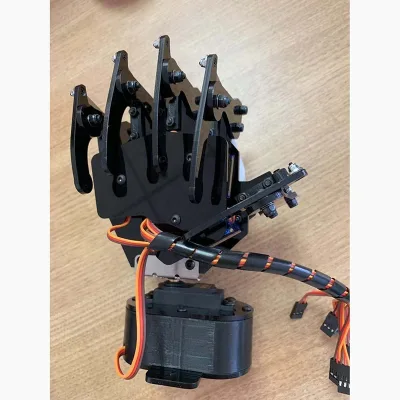


Low noise User-Friendly Design Energy efficient High precision 6 axis robot
$7000.00 - $8000.00
MOQ: 1 Pieces


Robot for Reception and Service / Humanoid AI Interactive Service Robot
$2359.00 - $3069.00
MOQ: 1 Sets


Factory Direct Sales Industrial-Robot / Industrial Robots / Humanoid Robot
$6200.00 - $7499.00
MOQ: 1 SET

Intelligent Control Robotic / Intelligent Robot / Industrial Robot / Robots
$6200.00 - $7499.00
MOQ: 1 SET


Comprehensive Sourcing Guide
Multi-Axis Humanoid Robot Sourcing Guide
Procuring multi-axis humanoid robots requires a nuanced understanding of industrial automation trends and specific mechanical capabilities. These systems are increasingly deployed in complex manufacturing environments where human-like dexterity and mobility offer distinct advantages over traditional fixed-arm robots. Buyers must evaluate how these machines integrate with existing production lines, particularly in sectors like automotive assembly and construction, where precision and adaptability are paramount. The decision to adopt such technology hinges on balancing advanced kinematic features with practical operational constraints.
The market for these robots is characterized by a wide range of specifications, from compact units with limited payload capacities to heavy-duty models designed for substantial loads. Observations indicate that available units often feature six-axis configurations, enabling intricate movement patterns essential for tasks requiring high flexibility. However, the diversity in design means that not all humanoid robots share identical performance metrics. Sourcing teams must carefully distinguish between general humanoid designs and specialized industrial variants, ensuring that the selected model aligns with specific workflow requirements and spatial limitations within the facility.
Product Scope and Observed Listing Signals
The current market landscape for multi-axis humanoid robots reveals a diverse array of product types, including arc welding, friction welding, and plasma welding variants. Listings frequently highlight customization options, allowing buyers to tailor robotic arms to specific industrial needs. For instance, some models are explicitly designed for the construction industry, while others target automotive applications, indicating a broad scope of utility. Buyers should note that while the term "humanoid" suggests a specific form factor, the actual product offerings may vary significantly in terms of structural design and functional focus, requiring careful scrutiny of individual product descriptions.
Observed listing signals also point to a wide variation in technical specifications, such as maximum arm span and loading ability. Some units boast an arm span of up to 3500mm with a loading capacity of 100kg, while others are more compact, with spans around 800mm and payloads of just 10kg. This disparity underscores the importance of verifying exact dimensions and weight limits before making a purchase. Additionally, the presence of features like continuous path control and point-to-point control suggests that buyers must assess which control mode best suits their operational workflow, as this choice directly impacts the robot's precision and efficiency in dynamic environments.
Technical Specifications to Verify
When evaluating multi-axis humanoid robots, verifying the control system and accuracy metrics is crucial for ensuring operational precision. Many advanced models feature artificial intelligence control systems, which can enhance decision-making and adaptability in real-time. However, buyers must also confirm the specific accuracy ratings, which can range from ±0.1 mm to ±1 mm depending on the model and application. Understanding these tolerances is essential for tasks requiring high precision, such as delicate assembly or fine welding. Additionally, the drive mode, typically electric, should be assessed for its compatibility with existing power infrastructure and maintenance protocols.
Another critical aspect is the robot's kinematic capabilities, including the number of axes and maximum reach. Most industrial humanoid robots offer six-axis configurations, providing the flexibility needed for complex maneuvers. The maximum arm span, which can vary from 1800mm to 3500mm, determines the robot's working envelope and its ability to access different areas of a workspace. Buyers should also consider the repeated positioning accuracy, which is often specified at 0.05mm for high-precision models. These technical details collectively define the robot's performance potential and must be aligned with the specific demands of the intended application to avoid operational bottlenecks.
Compliance and Safety Documentation
Ensuring that multi-axis humanoid robots meet relevant safety and compliance standards is a non-negotiable aspect of the procurement process. Buyers should verify that the equipment carries appropriate certifications, such as CE marking, which indicates conformity with health, safety, and environmental protection standards for products sold within the European Economic Area. Additionally, documentation regarding electrical safety and mechanical integrity should be reviewed to ensure that the robot can operate safely in industrial environments. Compliance with local regulations is equally important, as failure to adhere to these standards can result in legal liabilities and operational disruptions.
Beyond formal certifications, buyers must assess the availability of comprehensive safety documentation, including user manuals, risk assessments, and emergency stop procedures. These documents are essential for training operators and establishing safe working practices around the robot. It is also advisable to inquire about the supplier's after-sales support services, such as online support or video inspections, which can aid in troubleshooting and maintenance. By prioritizing compliance and safety documentation, buyers can mitigate risks and ensure that the humanoid robot integrates seamlessly into their facility's safety management system.
Cost Drivers and Commercial Terms
The cost of multi-axis humanoid robots is influenced by several factors, including the complexity of the control system, the precision of the mechanical components, and the level of customization required. Advanced features such as artificial intelligence control and high-precision accuracy typically command higher prices, reflecting the additional engineering and development efforts involved. Buyers should also consider the payload capacity and arm span, as larger and more capable robots often come with a premium price tag. Understanding these cost drivers helps in budgeting accurately and evaluating the return on investment for the selected model.
Commercial terms, such as minimum order quantities (MOQ) and warranty provisions, also play a significant role in the total cost of ownership. While some listings indicate an MOQ of just one unit, others may have different requirements depending on the supplier and product type. Warranty periods, often ranging from one year, provide a safety net against early failures, but buyers should clarify the scope of coverage and the process for claiming repairs or replacements. Additionally, after-sales service options, including online support and video inspections, can reduce long-term maintenance costs by enabling quicker resolution of technical issues.
Supplier Qualification and Quality Control
Selecting a reliable supplier for multi-axis humanoid robots requires thorough due diligence to ensure product quality and service reliability. Buyers should verify the supplier's manufacturing capabilities, including their production standards and quality control processes. Suppliers based in China, for instance, may offer competitive pricing, but it is essential to confirm their adherence to international quality standards. Requesting detailed product specifications and technical datasheets can help assess the supplier's transparency and expertise. Additionally, checking for certifications and compliance with industry standards provides further assurance of the supplier's commitment to quality.
Quality control measures should extend beyond the initial purchase to include ongoing support and maintenance. Buyers should inquire about the supplier's after-sales service offerings, such as online support and video outgoing-inspection services, which can facilitate remote troubleshooting and reduce downtime. It is also advisable to establish clear communication channels for addressing technical issues and obtaining spare parts. By prioritizing suppliers with robust quality control and support systems, buyers can ensure the long-term reliability and performance of their multi-axis humanoid robots, minimizing operational disruptions and maximizing productivity.
Long-Term Procurement Checks
Long-term procurement success with multi-axis humanoid robots depends on establishing a framework for continuous evaluation and improvement. Buyers should regularly review the robot's performance metrics, such as accuracy, speed, and reliability, to ensure they continue to meet operational requirements. Monitoring these metrics can help identify potential issues early, allowing for proactive maintenance and adjustments. Additionally, staying informed about advancements in robotic technology can provide opportunities for upgrades or replacements that enhance efficiency and capabilities. This proactive approach ensures that the investment in humanoid robots remains aligned with evolving business needs.
Furthermore, maintaining strong relationships with suppliers is crucial for long-term procurement success. Regular communication can facilitate better understanding of product updates, new features, and potential improvements. Buyers should also consider the total cost of ownership, including energy consumption, maintenance costs, and potential downtime, when evaluating the long-term viability of their robotic investments. By focusing on these aspects, buyers can optimize their procurement strategies, ensuring that their multi-axis humanoid robots deliver sustained value and contribute to the overall success of their industrial operations.
FAQs
What customization options are available for these robots?
Customization is available for these multi-axis humanoid robots to meet specific industrial needs. Buyers can request tailored configurations for welding applications in construction or automotive sectors. This flexibility allows integration into existing production lines while maintaining high precision and reliability standards.
Which control modes do these robots support for operations?
These robots support both continuous path control and point-to-point control modes for versatile operations. The selection depends on the specific welding task requirements, such as arc welding or friction welding. This dual-mode capability ensures optimal performance across different manufacturing environments and complex trajectory paths.
Can these robots handle heavy payloads up to 100kg?
Yes, certain models can handle payloads up to 100kg, while others support 20kg or 50kg capacities. The maximum arm span varies from 800mm to 3500mm depending on the specific model selected. Buyers should verify the loading ability against their specific application requirements before procurement.
What is the repeated positioning accuracy of these units?
The repeated positioning accuracy is 0.05mm for high-precision models, ensuring consistent weld quality. Some units offer an accuracy of 0.1mm or 1mm depending on the specific configuration and application. This precision is critical for maintaining tight tolerances in automotive and construction industry welding tasks.
How long is the warranty period for these robots?
The standard warranty period for these robots is one year from the date of purchase. This coverage includes essential components and ensures operational reliability during the initial usage phase. Buyers also receive one year of after-sales service support to address any technical issues promptly.
Which certifications do these robots hold for safety compliance?
These robots hold CE certification, indicating compliance with European safety and quality standards. This certification ensures the equipment meets rigorous regulatory requirements for industrial use. Buyers can rely on this certification for safe integration into their manufacturing facilities across various global markets.
What is the origin location for these robot manufacturers?
The origin location for these robots is China, where they are manufactured and assembled. This location provides access to a robust supply chain and competitive pricing structures. Buyers should consider this origin when planning logistics and evaluating potential lead times for delivery.