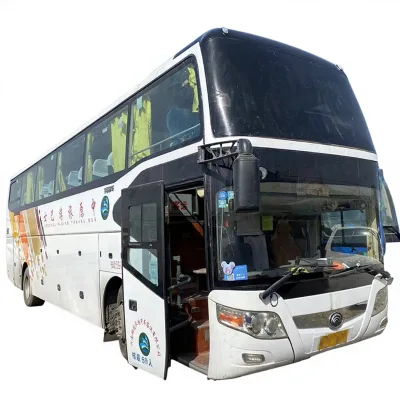
Source Rear Engine Used Coach Bus for transit tours and schools
Find 10 Rear Engine Used Coach Bus options with varying seat capacities and power ratings. Buyers can compare specifications like transmission type, emission standards, and dimensions to select the right vehicle for commercial transport or touring needs.
Key considerations
Products List

Used Refurbished Bus City Transportation Diesel Engine 51 Seat Coach Bus
$8000.00 - $8600.00
MOQ: 1 Pieces


Used Coach Used Coach Second Hand Bus Front Engine Bus Right Hand Drive
$15000.00 - $16500.00
MOQ: 1 Sets

$23528.00 - $35000.00
MOQ: 1 Pieces
Comprehensive Sourcing Guide
Strategic Sourcing Guide for Rear Engine Used Coach Buses
The global market for second-hand heavy-duty transport vehicles presents a distinct opportunity for procurement teams seeking cost-effective mobility solutions. Specifically, the Rear Engine Used Coach Bus segment offers a unique value proposition for operators looking to expand fleets without the capital expenditure associated with new units. This guide synthesizes available product attributes and industry standards to provide a disciplined framework for evaluating, sourcing, and acquiring these assets. The focus remains on objective data points, such as observed power outputs, seating configurations, and emission standards, to ensure that procurement decisions are grounded in verifiable facts rather than speculative marketing claims.
Technical Architecture and Powertrain Specifications
Understanding the mechanical configuration of a rear engine bus is the first step in any technical evaluation. The rear engine layout places the power unit at the back of the vehicle, a design choice that often optimizes floor space and improves passenger comfort by reducing cabin noise. Based on the observed product data, these units frequently feature diesel engines, a standard choice for heavy-duty applications due to their durability and torque characteristics. The observed engine capacity for these units is notably high, with specific records indicating capacities greater than 8 liters. This displacement suggests a robust powertrain designed for sustained highway operation and heavy load carrying.
Power output varies significantly across the available inventory, reflecting different model years and manufacturer specifications. The observed maximum power ratings for these buses range from 153 kilowatts to 243 kilowatts. A unit with 153 kW is suitable for regional transport, while the 243 kW variant indicates a high-performance model capable of maintaining speed on steep gradients or carrying full loads over long distances. Furthermore, torque specifications are critical for acceleration and hill-climbing ability. One observed model lists a maximum torque of 1250 Newton-meters, a figure that underscores the heavy-duty nature of the propulsion system.
Transmission systems in this segment are predominantly manual. The data confirms the presence of manual transmission types, which, while requiring more driver skill than automated systems, offer direct control over gear selection and often result in lower maintenance costs for older vehicles. Steering systems are universally equipped with integral power steering, ensuring that the heavy vehicle remains maneuverable despite its size. The steering position is consistently listed as Left-Hand Drive (LHD), which is a crucial detail for buyers targeting specific regional markets where LHD is the regulatory standard.
Compliance, Certification, and Emission Standards
Navigating the regulatory landscape is perhaps the most critical aspect of sourcing used heavy vehicles. Emission standards vary by region and age, and buyers must verify the specific compliance status of any unit before purchase. The observed data indicates that these buses generally adhere to Euro emission standards, though the specific Euro tier (e.g., Euro 3, Euro 4) is not explicitly quantified in the general product listings. Buyers must therefore request specific emission certification documents to ensure the vehicle meets the local environmental regulations of the destination country.
Certification is another area requiring rigorous verification. The product listings reference ISOCCC and CCC (China Compulsory Certification) as associated certificates. While the presence of these labels suggests a baseline of quality control during manufacturing, the "Used" condition status implies that the original certification may have expired or requires re-validation. The data also notes a "Service Life" attribute of 1-3 years for certain listings, which may refer to the remaining warranty period or the recommended operational window before major overhaul. This discrepancy highlights the need for buyers to distinguish between the original manufacturing certifications and the current operational compliance status.
Additionally, the product origin is identified as China, a major hub for bus manufacturing. This geographic origin influences the supply chain dynamics, including shipping logistics and the availability of spare parts. Buyers should verify that the vehicle's construction standards align with international safety norms, particularly regarding the braking system, which is listed as barometric. Barometric braking systems are standard for heavy vehicles, but their condition must be inspected to ensure they meet current safety requirements.
Cost Drivers and Financial Considerations
The pricing structure for rear engine used coach buses is influenced by a complex interplay of factors, including age, mileage, power output, and seating capacity. The observed listed price range for these units spans from 8,000 to 35,000 USD. This wide variance suggests that price is not solely a function of the base model but is heavily dependent on the specific configuration and condition. For instance, a unit with a 243 kW engine and a seating capacity of 47 may command a higher price than a 153 kW unit with 31 seats, reflecting the higher utility and performance of the former.
Mileage is a primary determinant of value. The observed mileage range for these vehicles is between 10,000 and 30,000 kilometers. While this appears low for a used vehicle, it is essential to verify the authenticity of the odometer reading, as high-mileage vehicles are often reconditioned to appear lower. The "Service Life" attribute of 1-3 years further complicates the cost analysis; a vehicle with a short remaining service life may have a lower upfront cost but higher long-term maintenance expenses.
Minimum Order Quantity (MOQ) for these units is observed to be 1, indicating that buyers can purchase individual vehicles rather than being forced into bulk acquisitions. This flexibility is advantageous for small-to-medium operators. However, the lack of a specified MOQ does not imply that bulk discounts are unavailable; buyers should negotiate based on volume if acquiring multiple units. The "Customization: Available" attribute suggests that some sellers may offer modifications to the interior or exterior, which could impact the final price.
Operational Applications and Seating Configurations
The versatility of rear engine used coach buses makes them suitable for a wide range of applications. The observed usage categories include novice car training, experience car training, commercial vehicle transport, and touring car services. This diversity indicates that these vehicles are not limited to long-distance travel but are also utilized for specialized training and local commercial transport. The "Road Conditions" attribute is listed as "Road," implying that these vehicles are designed for paved surfaces rather than off-road or rugged terrain.
Seating capacity is a critical factor in determining the vehicle's application. The data reveals a variety of configurations, ranging from 31 seats to capacities as high as 70 seats. Specific models are noted with seating capacities of 31, 35, 39, 45, 47, and ranges up to 70. The "Structure" attribute varies between "Single-Deck" and "Low Floor Bus." Low-floor designs are particularly valuable for urban transit and tourist applications as they facilitate easier boarding for passengers with mobility challenges. The "Style" is consistently listed as "Sitting," confirming that these are not standing-room-only commuter buses but are designed for comfort during longer journeys.
The intelligence features of these buses also vary. One observed model is tagged with "BRT" (Bus Rapid Transit), suggesting it may be equipped with features suitable for high-frequency, high-capacity transit systems. However, for general touring or commercial use, standard configurations are more common. The color options observed include blue, though this is likely a specific listing detail rather than a universal standard. Buyers should prioritize the functional attributes of the interior layout over cosmetic details like color.
Supplier Evaluation and Quality Assurance
Evaluating suppliers for used heavy vehicles requires a disciplined approach to risk mitigation. Since the product origin is China, buyers should be aware of the logistical complexities involved in international shipping. The "prod_packing" dimensions vary significantly, with observed measurements ranging from approximately 8,774 mm in length to over 12,800 mm. These dimensions are critical for calculating shipping costs and determining the type of vessel or container required for transport.
Quality control must be a priority, given the "Used" condition of the inventory. The "Service Life" of 1-3 years suggests that some units may be nearing the end of their optimal operational window. Buyers should insist on comprehensive inspection reports that cover the engine, transmission, braking system, and chassis. The "Barometric" braking system mentioned in the data must be tested for responsiveness and wear. Additionally, the "Mileage" of 10,000-30,000 km should be cross-referenced with maintenance records to ensure the vehicle has been properly serviced.
The "Customization: Available" attribute indicates that some suppliers may offer value-added services. However, buyers should verify that any customization does not compromise the vehicle's structural integrity or safety certifications. The presence of "ISOCCC" and "CCC" certificates in the data suggests that the manufacturers adhere to certain quality standards, but the re-certification of used vehicles is a separate process that buyers must manage.
Long-Term Procurement and Lifecycle Management
Procuring a used rear engine coach bus is not merely a transactional event but the beginning of a long-term asset lifecycle. The "Service Life" attribute of 1-3 years implies that buyers should plan for a relatively short operational horizon or significant investment in refurbishment. For operators seeking a long-term solution, the "Max Power" and "Max Torque" specifications are indicators of the vehicle's remaining potential. A unit with 243 kW and 1250 N.m torque may have a longer useful life than a lower-powered model, provided it receives regular maintenance.
The "Emission Standard" and "Fuel" type (Diesel) are also long-term considerations. As environmental regulations tighten globally, diesel vehicles with lower emission standards may face restrictions in certain urban areas. Buyers should assess the future regulatory environment of their target market to ensure the vehicle remains compliant. The "Road Conditions" attribute suggests that these vehicles are best suited for paved roads, so operators planning to use them on unpaved routes should reconsider their suitability.
Finally, the "Seat Capacity" and "Structure" (Single-Deck vs. Low Floor) will influence the vehicle's resale value. Low-floor buses generally have higher resale value due to their accessibility features. Buyers should consider the total cost of ownership, including fuel efficiency, maintenance costs, and potential downtime, when evaluating the initial price range of 8,000 to 35,000 USD. A lower upfront cost may be offset by higher maintenance expenses if the vehicle is not in optimal condition.
Comparative Analysis of Key Specifications
To assist buyers in making informed decisions, the following table summarizes the key technical and operational specifications observed in the market for rear engine used coach buses. This comparison highlights the variability in power, capacity, and dimensions, allowing buyers to match specific needs with available inventory.
| Specification Category | Observed Range / Specific Values | Relevance to Procurement |
|---|---|---|
| Engine Capacity | >8 Liters | Indicates heavy-duty capability for long-haul or high-load scenarios. |
| Maximum Power | 153 kW to 243 kW | Higher power suits steep gradients and full loads; lower power for regional use. |
| Maximum Torque | 1250 N.m | Critical for acceleration and hill-climbing performance. |
| Transmission Type | Manual | Requires skilled drivers but offers lower maintenance complexity. |
| Seating Capacity | 31 to 70 Seats | Determines vehicle suitability for tour, transit, or commercial use. |
| Structure Type | Single-Deck, Low Floor | Low-floor preferred for accessibility; single-deck for standard touring. |
| Emission Standard | Euro (Tier unspecified) | Must verify specific tier against local environmental regulations. |
| Mileage | 10,000 - 30,000 km | Low mileage suggests recent usage; requires verification of service history. |
| Price Range | $8,000 - $35,000 USD | Wide variance based on power, age, and condition; negotiate based on specs. |
| Origin | China | Impacts shipping logistics and spare parts availability. |
| Braking System | Barometric | Standard for heavy vehicles; requires condition inspection. |
| Steering | Integral Power Steering, LHD | Essential for maneuverability; LHD required for specific markets. |
In conclusion, sourcing rear engine used coach buses requires a meticulous approach that balances technical specifications, regulatory compliance, and financial considerations. By focusing on the observed data points—such as the specific power ranges, seating capacities, and emission standards—buyers can navigate the market with confidence. The variability in the product attributes underscores the importance of due diligence, ensuring that the selected vehicle aligns with the specific operational needs and long-term strategic goals of the procurement organization.
FAQs
What is the typical seating capacity for these buses?
Seating capacity ranges from 31 to 70 passengers depending on the specific model configuration. Some units are listed with 31 seats while others accommodate up to 47 or even 70 passengers in a single-deck layout.
How much power do the diesel engines produce?
Maximum power outputs vary between 153 kilowatts and 243 kilowatts across the available inventory. Higher power ratings like 243 kW are suitable for heavy loads and steep gradients, while 153 kW serves regional transport needs.
Which emission standards do these used buses meet?
The buses generally adhere to Euro emission standards with diesel fuel consumption. Buyers must verify specific certification documents as the exact Euro tier is not always quantified in general listings.
Can I find buses with low floor structures?
Yes, low floor bus structures are available alongside standard single-deck options. These low-floor designs facilitate easier boarding and are ideal for tourist applications or urban transit services.
What is the minimum order quantity for purchasing?
The minimum order quantity is one unit, allowing buyers to purchase individual vehicles. This flexibility supports small-to-medium operators who do not require bulk fleet acquisitions immediately.
How long is the service life of these used vehicles?
The listed service life for certain units is between one and three years. This timeframe may indicate the remaining warranty period or the recommended operational window before major overhaul is required.