Source Halogen Free Flame Retardant for Electronics Plastics Textiles
Compare 30 verified Halogen Free Flame Retardant options from Chinese manufacturers. Buyers can evaluate specifications like nitrogen and phosphorus content, particle size, and decomposition temperature for use in electronics, plastics, and textiles.
Key considerations
Products List



Comprehensive Sourcing Guide
Halogen Free Flame Retardant Sourcing Guide
Halogen-free flame retardants represent a critical class of chemical additives designed to suppress combustion without releasing toxic halogenated gases, such as hydrogen chloride or bromine, during a fire. This characteristic makes them increasingly preferred in sectors where indoor air quality and environmental safety are paramount, including electronics, automotive components, and construction materials. Procurement teams must navigate a complex landscape of chemical formulations, ranging from phosphorus-based compounds to melamine cyanurate derivatives, each offering distinct thermal and mechanical properties. Understanding the specific chemical mechanism is the first step in aligning supplier offerings with end-product performance requirements.
The market for these materials is characterized by a wide variance in physical forms, including powders, granules, and specialized compounds, which directly impacts handling, dispersion, and processing efficiency. Buyers often encounter products with varying nitrogen and phosphorus content, decomposition temperatures, and particle sizes, all of which influence the final material’s flame resistance and mechanical integrity. Sourcing decisions must therefore balance technical performance with logistical considerations, such as packaging integrity and storage stability, to ensure that the flame retardant maintains its efficacy from the factory floor to the final assembly line.
Product Scope and Observed Listing Signals
Current market listings indicate a diverse range of halogen-free flame retardant products, with observed price points spanning from approximately $0.10 to $11,000 USD, reflecting significant differences in purity, packaging, and volume. Minimum order quantities (MOQs) vary widely, ranging from small trial batches of 1 unit to large industrial orders of up to 6,100 units, suggesting that suppliers cater to both prototyping phases and high-volume manufacturing. This disparity requires buyers to clearly define their volume needs early in the sourcing process to avoid premium pricing for small orders or inventory risks associated with excessive bulk purchases.
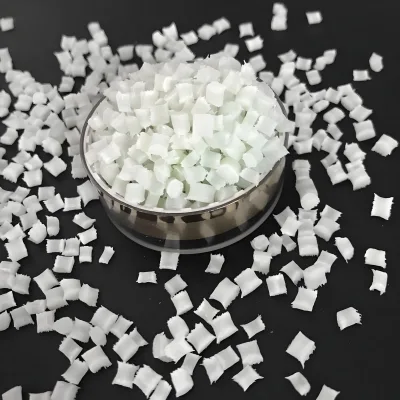
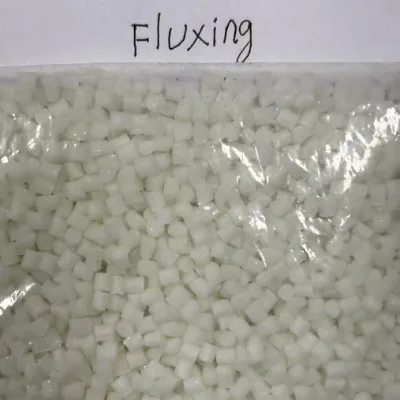
Physical attributes observed in listings include white powders and granular forms, with specific models such as DovaFR PO 313S, DovaFR PA 312a, and DovaFR MCA 306 representing different chemical families. These products often feature high whiteness percentages, typically 94% to 95% minimum, and low moisture content, capped at 0.5% maximum, which are critical for preventing degradation during processing. Buyers should verify that the observed appearance and physical state match their processing equipment capabilities, as powders may require different handling protocols compared to granular materials to ensure uniform dispersion in polymer matrices.
Technical Specifications to Verify
Thermal stability is a primary technical parameter, with decomposition temperatures observed in the range of 270°C to 350°C, depending on the specific chemical formulation. For instance, certain phosphorus-based products may begin to decompose around 270°C, while melamine cyanurate variants may exhibit stability up to 340°C or higher. Procurement teams must verify that the decomposition temperature of the selected flame retardant exceeds the processing temperature of the target polymer to prevent premature degradation, which can lead to gas evolution, discoloration, and reduced mechanical strength in the final product.
Chemical composition and density are equally critical, with nitrogen content often specified at 20% minimum and phosphorus content ranging from 18% to 24.5% in various formulations. The density of these materials typically falls between 1.5 and 1.7 g/cm³, which affects the volumetric dosing and mixing ratios required during compounding. Buyers should request detailed technical data sheets that confirm the main content purity, often listed as 99.5% minimum, and verify the average particle size, which may range from 20 to 40 micrometers, to ensure compatibility with extrusion or injection molding processes.
Compliance and Safety Documentation
Regulatory compliance is a non-negotiable aspect of sourcing halogen-free flame retardants, with REACH registration being a common certification observed in the market. This European regulation ensures that the chemical substances are evaluated for their safety regarding human health and the environment, which is essential for suppliers exporting to or operating within the European Union. Buyers must verify that the specific product model they intend to purchase is covered under the supplier’s REACH registration, as compliance status can vary between different chemical grades and formulations from the same manufacturer.
Additional safety documentation, such as Material Safety Data Sheets (MSDS), is typically provided to outline handling, storage, and emergency response procedures. Furthermore, adherence to environmental protection standards, including RoHS, is often required to ensure that the flame retardant does not contain restricted hazardous substances. Quality management systems, such as ISO 9001, and environmental management certifications, like ISO 14001, provide assurance that the supplier maintains consistent production standards and minimizes environmental impact, which is increasingly important for corporate sustainability reporting.
Cost Drivers and Commercial Terms
The cost of halogen-free flame retardants is influenced by several factors, including the raw material costs of phosphorus and nitrogen compounds, the complexity of the manufacturing process, and the packaging requirements. Products packaged in paper bags or woven bags, with standard weights of 25kg per bag, may have different logistical costs compared to those in craft paper bags or specialized containers. Buyers should consider the total landed cost, including shipping and handling, rather than just the unit price, as packaging integrity can significantly affect product quality during transit.
Commercial terms often include flexible customization options, allowing suppliers to tailor the product to specific customer needs, such as adjusting particle size or blending ratios. Sample availability is frequently offered, with some suppliers providing free samples up to 4kg to facilitate testing and validation before committing to a larger order. Delivery lead times can vary, with some suppliers indicating a standard delivery period of 15 days, while production capacity may reach up to 30,000 tons per year, ensuring supply chain resilience for large-scale procurement needs.
Supplier Qualification and Quality Control
Supplier qualification should extend beyond basic certifications to include an assessment of their production capacity and quality control processes. Suppliers with a stated annual capacity of 30,000 tons are likely to have robust infrastructure and consistent quality, but buyers should verify this through site audits or third-party inspections. The presence of occupational health management systems, such as ISO 45001, indicates a commitment to worker safety, which can correlate with overall operational discipline and product consistency.
Quality control measures should include rigorous testing of key parameters, such as nitrogen and phosphorus content, decomposition temperature, and moisture levels. Buyers should request batch-specific test reports to ensure that the delivered product matches the specifications agreed upon during the sourcing phase. Additionally, warranties, such as a 3-year warranty period, may be offered, providing an additional layer of protection against product defects or performance failures, although the specific terms and conditions of such warranties should be clearly defined in the purchase agreement.
Long-Term Procurement Checks
Long-term procurement success depends on establishing a stable supply chain that can adapt to changing regulatory landscapes and market demands. Buyers should monitor updates to REACH and RoHS regulations to ensure that their suppliers remain compliant, as non-compliance can lead to supply disruptions or legal liabilities. Regular communication with suppliers regarding product updates, such as new formulations or improved packaging, can help buyers stay ahead of industry trends and maintain competitive advantage.
Performance monitoring of the flame retardant in the final product is essential to validate its effectiveness over time. Buyers should track metrics such as flame retardancy efficiency, mechanical property retention, and processing stability to identify any potential issues early. Establishing a feedback loop with the supplier allows for continuous improvement and troubleshooting, ensuring that the flame retardant continues to meet the evolving requirements of the end-product application. This proactive approach helps mitigate risks and fosters a collaborative relationship with the supplier, leading to better long-term outcomes.
FAQs
What certifications do these halogen free flame retardants hold?
These products hold REACH certification and comply with RoHS environmental protection standards. Additional quality and environmental management certifications include ISO 9001, ISO 14001, and ISO 45001 for operational safety.
How is the Halogen Free Flame Retardant packed for shipment?
The product is available in paper bags, craft paper bags, or woven bags depending on the specific model. Each standard package typically contains 25 kilograms of the flame retardant material for safe transport.
Which specifications define the decomposition temperature of this product?
Decomposition temperatures vary by model, with minimum values ranging from 270 to 350 degrees Celsius. Specific models list ranges such as 300 to 340 degrees minimum or a fixed point of 350 degrees for thermal stability.
Can buyers request samples of the Halogen Free Flame Retardant?
Free samples are available within a limit of 4 kilograms for evaluation purposes. This allows potential buyers to test the product performance before committing to larger orders or bulk procurement requirements.
What is the minimum order quantity for purchasing this material?
The minimum order quantity is 500 kilograms for certain product lines. Other models may have lower thresholds starting from 1 unit, but bulk purchasing often aligns with the 500 kilogram standard requirement.
How long is the delivery lead time for these flame retardants?
The standard delivery date is set at 15 days after order confirmation. This lead time applies to the supply chain from the manufacturing facility in China or Guangdong to the buyer's location.
Which applications are suitable for this Halogen Free Flame Retardant?
It is suitable for ABS batteries, sockets, electronics products, textiles, rubber, and coatings. The material serves as a textile auxiliary agent, rubber additive, and electronics chemical for various industrial fire safety needs.