Source Rechargeable Mini Keychain LED Flashlight with Bottle Opener for camping, emergencies, and daily carry
Compare 30 options for a Rechargeable Mini Keychain LED Flashlight with Bottle Opener featuring DC voltage, IP ratings, and LED light sources. Buyers can evaluate specifications like battery capacity, lumens, and customization availability from Ningbo and Guangdong suppliers.
Key considerations
Products List


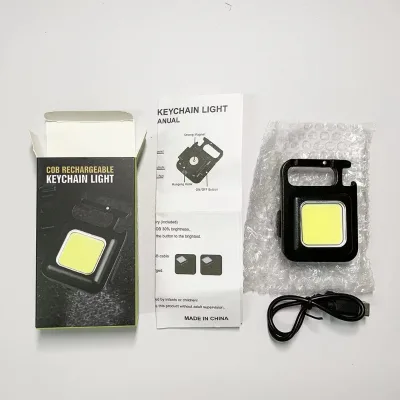

Mini LED Torch Keychain Flashlight with Bottle Opener Metal Promotional LED Flashlight
$0.50 - $1.20
MOQ: 200 Pieces


LED Keychain Flashlight, Strong Light, Portable Mini Lighting, Outdoor Backpack Light
$0.72 - $0.76
MOQ: 200 Pieces


Mini Keychain Torch Portable Folding Bracket Bottle Opener Magnet Base Flashlight
$1.80 - $3.50
MOQ: 150 Pieces


Multi-Functional Rechargeable Flashlight High Quality Pocket Keychains Flashlight
$2.86 - $3.51
MOQ: 150 Pieces

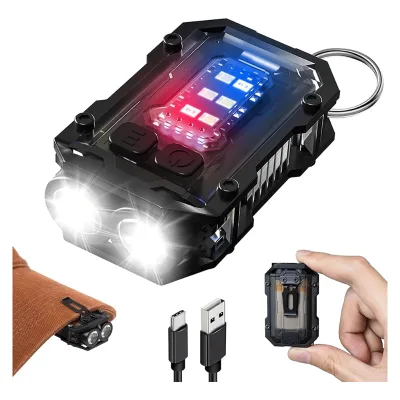


Mini LED Torch Keychain Flash Light COB Rechargeable Keychain Flashlight
$0.99 - $1.99
MOQ: 200 Pieces


Hot Selling Mini Multi LED Flashlight Torch Bottle Opener Keychain Light
$0.20 - $0.30
MOQ: 3000 Pieces

Hot Selling High Power Mini LED Flashlight Torch Bottle Opener Keychain Light
$0.20 - $0.30
MOQ: 3000 Pieces
Comprehensive Sourcing Guide
Strategic Sourcing Guide for Rechargeable Mini Keychain LED Flashlights with Bottle Openers
Procuring specialized lighting solutions for B2B applications requires a rigorous approach to verifying technical specifications, compliance standards, and supply chain reliability. The market for rechargeable mini keychain LED flashlights with integrated bottle openers presents a unique intersection of utility, portability, and promotional value. Buyers must navigate a landscape where product attributes vary significantly between suppliers, even when the core function remains identical. This guide provides a structured framework for evaluating potential suppliers and products based on verified data points and industry best practices, ensuring that procurement decisions are grounded in factual evidence rather than marketing assertions.
Technical Specifications and Functional Requirements
When sourcing a rechargeable mini LED flashlight with a bottle opener, the primary focus must be on the integration of mechanical and electrical components. The product must balance the durability required for a tool with the efficiency needed for a lighting device. Based on observed market data, successful units in this category typically utilize a dual-material construction. The lamp body is frequently constructed from ABS plastic, which offers impact resistance and lightweight properties, often combined with aluminum components to enhance heat dissipation and structural integrity. This combination ensures the device can withstand the mechanical stress of the bottle opener function while protecting the internal electronics.
The lighting performance is governed by specific technical parameters. The light source is predominantly LED technology, often utilizing configurations such as 2COB (Chip on Board) combined with XPE (eXtended Performance Emitter) diodes. These configurations are selected to maximize luminous flux within a compact form factor. The color temperature is a critical differentiator; observed units often feature a Cool White output with a Color Rendering Index (Ra) of 80, providing a daylight-like illumination of approximately 5000K. This ensures high visibility in low-light environments without the yellow tint associated with older lighting technologies.
Power management is equally critical. The devices are designed as USB rechargeable flashlights, utilizing Lithium batteries with capacities observed around 800mAh. This battery size allows for a compact profile suitable for keychain attachment while providing sufficient runtime. The power input is typically DC 6V, and the devices often support multiple operating modes, ranging from five distinct settings to standard High-Medium-Low-SOS sequences. The inclusion of a dimmer support feature allows for variable brightness control, extending battery life during low-usage scenarios. The physical dimensions of these units are tightly constrained; typical single package sizes range from 10x7x5 cm, with the product itself measuring approximately 52x25x74mm. The net weight is generally around 55g, ensuring the device remains unobtrusive when carried.
Compliance and Certification Verification
In the global B2B market, regulatory compliance is non-negotiable. Buyers must verify that suppliers can provide valid documentation for international safety and environmental standards. The most common certifications observed in this product category include CE and FCC. The CE mark indicates conformity with health, safety, and environmental protection standards for products sold within the European Economic Area. The FCC certification is essential for electronic devices sold in the United States, ensuring that the device does not emit harmful levels of radio frequency interference.
Environmental compliance is also a key consideration. Many suppliers offer products that meet RoHS (Restriction of Hazardous Substances) standards, which limit the use of specific hazardous materials in electrical and electronic equipment. When evaluating a supplier, buyers should request copies of these certificates and verify their validity with the issuing bodies. It is important to note that while certifications like CE and FCC are frequently listed, they are not universal guarantees; each specific product model must be tested and certified individually.
Additionally, the IP (Ingress Protection) rating is a vital specification for determining the device's resistance to dust and water. Observed data indicates that some units in this category carry an IP33 rating, which provides protection against solid objects larger than 2.5mm and water spray from any direction. However, for applications requiring higher durability, buyers should verify if a higher IP rating is available, as the standard IP33 may not be sufficient for heavy rain or submersion. The absence of a high IP rating should not be assumed to be a defect but rather a design choice for indoor or light outdoor use.
Cost Drivers and Pricing Dynamics
The pricing of rechargeable mini LED flashlights with bottle openers is influenced by several factors, including material costs, battery capacity, and the complexity of the mechanical integration. The observed price range in the market spans from $0.08 to $5.20 USD, a wide variance that reflects differences in quality, volume, and feature sets. The lower end of the spectrum typically corresponds to basic models with standard battery life and simpler manufacturing processes. The higher end often includes units with enhanced materials, such as aerospace-grade aluminum, higher capacity batteries, or more sophisticated LED arrays.
Volume is a primary driver of unit cost. The Minimum Order Quantity (MOQ) observed ranges from 2 to 3000 units. Suppliers often offer tiered pricing structures where the unit cost decreases significantly as the order volume increases. For buyers planning large-scale promotional campaigns or corporate gifting, negotiating based on volume can yield substantial savings. However, buyers must balance cost against the risk of overstocking, especially given the specific nature of the product.
Other cost drivers include the customization options available. The ability to add custom logos, specific packaging designs, or unique color schemes adds to the production cost. The packaging itself, often a color box combined with a standard export carton, contributes to the overall expense. Buyers should also consider the "Single Gross Weight" of the package, which is observed to be around 0.200 kg. This weight impacts shipping costs, particularly for air freight, where volume and weight are critical factors in logistics pricing.
Typical Applications and Market Segments
The versatility of the rechargeable mini LED flashlight with a bottle opener makes it suitable for a diverse range of applications. The primary application category is commercial, where these devices serve as promotional items, corporate gifts, or trade show giveaways. The integration of a bottle opener adds a functional utility that increases the likelihood of the item being retained and used by the recipient, thereby extending the brand's visibility.
Beyond commercial use, these devices are frequently employed in emergency preparedness kits. The "Emergency" usage designation highlights their role in providing light during power outages or natural disasters. The long lifespan of the LED, often cited as 50,000 hours, ensures that the device remains functional for years without degradation. The inclusion of an SOS mode is particularly valuable in emergency scenarios, allowing the user to signal for help using a standardized light pattern.
The product is also well-suited for outdoor enthusiasts and professionals who require a compact, multi-functional tool. The "Lighting solutions service" offered by some suppliers, including circuitry design, suggests that these products can be customized for specific industrial or professional needs. The "Lighting Period" of over 12 hours indicates that the battery capacity is sufficient for extended use, making it ideal for camping, hiking, or night-shift work. The "Bottle Opener" feature, while seemingly minor, adds a layer of utility that appeals to a broad demographic, from casual users to specialized professionals.
Supplier Evaluation and Sourcing Strategy
Selecting the right supplier is critical to ensuring product quality and supply chain stability. Buyers should prioritize suppliers who demonstrate transparency in their manufacturing processes and provide clear documentation of their capabilities. The "Place of Origin" is a significant factor; observed data indicates that products originate from manufacturing hubs such as Ningbo and Guangdong, China. These regions are known for their expertise in electronics manufacturing and supply chain efficiency.
When evaluating suppliers, buyers should look for those who offer "Lighting And Circuitry Design" services. This indicates a higher level of technical capability and the ability to customize products to meet specific requirements. It also suggests that the supplier has in-house engineering resources, which can be valuable for troubleshooting and product development. The "Customization" attribute being available is a strong indicator of a flexible supplier capable of adapting to unique client needs.
Buyers must also assess the supplier's ability to manage lead times and inventory. While specific lead times are not provided in the observed data, the MOQ range suggests that suppliers are prepared to handle both small and large orders. For large orders, buyers should verify the supplier's production capacity and their ability to meet delivery deadlines. The "Warranty" period, typically observed as 1-Year, is another key metric. A standard warranty indicates confidence in product quality and provides a safety net for the buyer in case of defects.
Quality Control and Long-Term Procurement Considerations
Implementing a robust quality control (QC) process is essential for maintaining product standards. Buyers should establish clear acceptance criteria based on the technical specifications observed, such as the IP33 rating, 5000K color temperature, and 800mAh battery capacity. Regular inspections should be conducted to verify that the physical dimensions, weight, and material composition match the agreed-upon specifications. The "Net Weight" of 55g and "Single Gross Weight" of 0.200 kg are specific metrics that can be used to verify consistency in production.
Long-term procurement considerations involve building a sustainable relationship with suppliers. This includes monitoring the supplier's ability to maintain quality over time and their responsiveness to issues. The "Lifespan" of 50,000 hours for the LED is a long-term performance metric that should be validated through testing. Buyers should also consider the environmental impact of the product, ensuring that the materials used, such as ABS and Aluminum, are recyclable and that the battery disposal is managed responsibly.
Finally, buyers should plan for the lifecycle of the product. The "Warranty" of 1-Year provides a baseline for expected performance, but buyers should consider the total cost of ownership, including potential replacement costs and maintenance. By focusing on high-quality materials and reliable suppliers, buyers can ensure that the rechargeable mini LED flashlights with bottle openers continue to meet their needs over the long term, providing value and reliability for their end users.
FAQs
What certifications do these flashlights typically have?
These flashlights typically carry CE, FCC, and RoHS certifications. Buyers should verify that specific models include these marks to ensure compliance with international safety and environmental standards for electronic devices sold globally.
How long does the battery last on a full charge?
The battery provides a lighting period of over 12 hours on a full charge. This runtime is supported by an 800mAh lithium battery, ensuring sufficient power for extended use in commercial or emergency scenarios.
Can I customize the packaging and logo on these units?
Yes, customization is available for packaging and branding. Suppliers offer color box packaging and can accommodate custom logos, allowing buyers to tailor the product for corporate gifting or promotional campaigns effectively.
Which material is used for the flashlight body construction?
The body is constructed from a combination of ABS plastic and aluminum. This dual-material design ensures impact resistance and structural integrity while facilitating heat dissipation for the LED components during operation.
What is the minimum order quantity for these flashlights?
The minimum order quantity ranges from 2 to 3000 units depending on the supplier. Buyers can negotiate tiered pricing structures where unit costs decrease as the order volume increases within this observed range.
Where are these products typically manufactured?
These products are typically manufactured in Ningbo and Guangdong, China. These regions are established hubs for electronics manufacturing, offering efficient supply chains and expertise in producing compact LED lighting devices.
What is the warranty period for this flashlight?
The standard warranty period is 1 year for this flashlight. This coverage provides a baseline for expected performance and offers buyers protection against defects during the initial year of product usage.