Source Recordable Desk Calendar with Clock for Home, Office, and Gifts
Explore 30 available options for a Recordable Desk Calendar with Clock featuring diverse styles like circular or square faces and power sources including AA or AAA batteries. Buyers can compare specifications such as dimensions, weight, and multifunctional features to find the ideal unit for home use, office gifts, or general decoration.
Key considerations
Products List




Comprehensive Sourcing Guide
Strategic Sourcing Guide for Recordable Desk Calendars with Clock
The global market for office accessories and personalized gifts has seen a steady demand for multifunctional desk items that combine utility with aesthetic appeal. Among these, the Recordable Desk Calendar with Clock represents a niche yet growing segment where functionality meets customization. For procurement professionals, sourcing this specific category requires a disciplined approach to evaluating technical specifications, verifying material composition, and understanding the logistical variables that influence total cost of ownership. This guide provides a structured framework for buyers to navigate the supply chain for these products, relying on observable product attributes and established industry practices rather than unverified marketing claims.
Technical Specifications and Functional Architecture
When evaluating a recordable desk calendar with a clock, the primary focus must be on the integration of two distinct mechanical and electronic systems: the timekeeping mechanism and the audio recording module. Based on observed product data, the movement structures in this category vary significantly. Some units utilize a standard alarm system, while others integrate digital display methods. Buyers must verify the specific movement structure required for their application, as a simple analog clock face differs fundamentally from a digital interface in terms of maintenance and user expectation.
The power consumption profile is a critical technical differentiator. Market observations indicate a range of power solutions, from single AA batteries to dual AAA configurations, and in more advanced models, a combination of batteries with Type-C charging capabilities. For a recordable unit, the power draw is inherently higher than a standard clock due to the memory and playback circuitry. Procurement teams should demand clear documentation on battery life and the specific cell types required. Furthermore, the physical dimensions of the unit are substantial. Observed standard dimensions range from compact profiles around 86mm in width to larger desktop units exceeding 270mm. The product weight also varies widely, from lightweight units at 89 grams to heavier desktop models reaching 500 grams, which directly impacts shipping costs and the stability of the desk placement.
Material Composition and Build Quality
The durability and aesthetic finish of the desk calendar are dictated by the materials used in its construction. The supply chain for these items predominantly features plastic and resin composites. For the calendar component, the binding method is a key indicator of longevity. Spiral binding is a common specification, allowing the calendar pages to rotate freely and lay flat, which is essential for daily use in an office environment. The surface treatment of the calendar pages often involves matt or glossy lamination, a process that protects the printed content from wear and tear while providing a specific tactile feel.
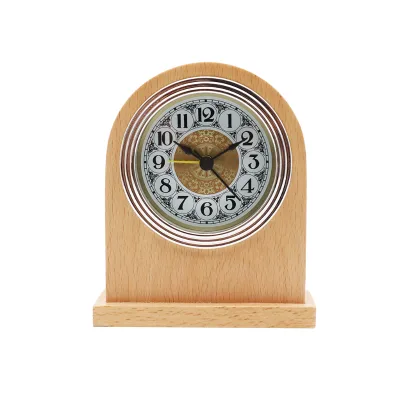
The clock housing material is equally important. While plastic is the dominant material observed, the quality of the resin and the molding process determine the perceived value of the product. Buyers should inspect the finish for uniformity, ensuring that the surface treatment aligns with the intended brand image, whether it be a sleek, modern look or a more traditional, textured appearance. The "European" style mentioned in some product attributes suggests a design language that may influence the shape of the clock face, which can be circular or square. The choice between these shapes often depends on the target demographic and the specific office decor requirements of the end-user.
Compliance, Certification, and Safety Standards
In the realm of consumer electronics and office supplies, compliance is not merely a formality but a prerequisite for market entry. While specific certification statuses like FSC may appear in background data, buyers must not assume a product is certified without verifying the documentation for each batch. The primary concern for recordable devices is electrical safety, particularly regarding the battery compartments and the charging ports if Type-C is involved.
Buyers should verify that the product meets the electrical safety standards of the destination market. This includes checking for proper insulation, secure battery contacts to prevent short circuits, and compliance with local regulations regarding electronic waste and battery disposal. The "16117442.5mm" or "27027028mm" dimensions listed in product data are physical specifications, but they do not constitute a safety standard. Instead, these dimensions should be cross-referenced with the product's internal component layout to ensure there are no exposed sharp edges or fragile components that could pose a hazard. Additionally, the "OEM/ODM: Yes" attribute indicates that customization is possible, which introduces the need for strict quality control on the customization process to ensure that added logos or patterns do not compromise the structural integrity or safety of the device.
Cost Drivers and Pricing Dynamics
The pricing of recordable desk calendars with clocks is influenced by a complex interplay of factors, including the complexity of the electronic components, the volume of customization, and the logistics of shipping. The observed price range in the market spans from $0.50 to $23.00 USD, a wide variance that reflects differences in quality, feature sets, and order volumes. The lower end of the spectrum typically corresponds to basic models with simple alarm systems and standard battery power, while the higher end includes units with digital displays, multifunctional features, and advanced recording capabilities.
The Minimum Order Quantity (MOQ) is another significant cost driver. Data indicates an MOQ range from 2 to 10,000 units. For buyers seeking small batches for testing or niche markets, the lower MOQs are advantageous, though the unit cost will likely be higher. Conversely, large-scale procurement can leverage economies of scale to reduce the per-unit cost, but it requires a commitment to higher volumes. The packaging method, often listed as "Carton," also affects the cost, as bulk packaging for large orders differs from individual retail packaging. Buyers must calculate the total landed cost, including shipping, duties, and packaging, rather than focusing solely on the FOB price.
Typical Applications and Target User Segments
The versatility of the Recordable Desk Calendar with Clock makes it suitable for a diverse range of applications. The "Home Use" and "Office Gifts & Decoration" attributes highlight its dual role as a functional tool and a promotional item. In a corporate setting, these units serve as effective branding vehicles. The ability to accept customized logos and the "Advertising" pattern attribute make them ideal for corporate gifts, trade show giveaways, and employee appreciation programs. The "Target User: General" designation suggests that the design is broad enough to appeal to a wide audience, but the specific style, such as "Simple" or "European," allows for segmentation based on aesthetic preferences.
The "Desk Calendar" type with "Yearly Calendar" functionality addresses the need for long-term planning and organization. The inclusion of a "Nightlight" feature in some models adds value for users who work late hours or require ambient lighting. The "Single Ring" sound type indicates a specific auditory feedback mechanism, which is crucial for the alarm function. Procurement teams should align the product features with the specific use case; for instance, a high-volume office gift program might prioritize the "Multifunctional" aspect and logo customization, while a home-use product might emphasize the "Simple" style and ease of battery replacement.
Supplier Evaluation and Quality Control Protocols
Selecting the right supplier requires a rigorous evaluation process that goes beyond the initial product listing. The "OEM/ODM: Yes" attribute confirms that suppliers are capable of customization, but this capability must be validated through a review of their production capacity and quality assurance protocols. Buyers should request samples to verify the "Product Weight" and "Product Packing" against the specifications. Discrepancies in weight, such as the observed range from 89g to 500g, can indicate variations in material density or component quality that affect the final product's performance.
Quality control should focus on the integration of the clock and the recording function. The "Backlight: No" attribute for some models suggests that users must rely on ambient light, which is a design choice that should be confirmed with the supplier. For models with digital displays, the clarity and responsiveness of the interface are critical. Buyers must also verify the "Power Consumption" specifications to ensure the device operates reliably over time. A robust quality control plan should include functional testing of the alarm, the recording playback, and the calendar mechanism. Additionally, the "Surface Treatment" of the calendar pages should be checked for durability, ensuring that the lamination does not peel or scratch easily.
Long-Term Procurement Considerations
Sourcing recordable desk calendars with clocks is not a one-time transaction but a long-term relationship that requires ongoing management. The "Customization: Available" feature implies a need for continuous communication with the supplier to manage design updates and branding changes. Buyers should establish clear communication channels for handling design files, ensuring that the "Logo" customization is executed with high fidelity. The "prod_standard" dimensions and "prod_model" numbers serve as unique identifiers that should be maintained in the procurement database to ensure consistency across orders.
Furthermore, the supply chain for electronic components is subject to volatility. Buyers should consider the lead times associated with the "Type C" charging components or specific battery types, as these can impact production schedules. The "Carton" packaging standard should be reviewed periodically to ensure it meets evolving sustainability goals or shipping requirements. Finally, the "Product Origin: China" attribute highlights the importance of understanding the logistics and trade regulations associated with importing from this region. By maintaining a disciplined approach to specification verification and supplier evaluation, buyers can secure a reliable supply of high-quality recordable desk calendars with clocks that meet their specific business needs.
FAQs
How is the power consumption managed for these desk clocks?
Power consumption varies by model, typically requiring one AA battery, two AAA batteries, or a combination of batteries with Type-C charging. Buyers must verify the specific power requirement for each model before purchase to ensure compatibility with available power sources.
What customization options are available for the logo and design?
Customization is available for logos and patterns, with options for advertising designs and customized branding. Suppliers support OEM and ODM services, allowing buyers to request specific surface treatments like matt or glossy lamination for the calendar pages.
Which clock face shapes are offered in this product category?
The product range includes both circular and square clock face shapes to suit different aesthetic preferences. The choice between these shapes often depends on the target demographic and the specific office decor requirements of the end-user.
Can these units be used as office gifts and decorations?
Yes, these units are explicitly designed for office gifts and decoration purposes alongside home use. They serve as effective branding vehicles for corporate gifts, trade show giveaways, and employee appreciation programs due to their multifunctional features.
What is the typical weight range for these desk calendar clocks?
Product weights vary significantly across models, ranging from lightweight units at 89 grams to heavier desktop models reaching 500 grams. This variation impacts shipping costs and the stability of the desk placement for the final user.
How does the spiral binding affect the calendar functionality?
Spiral binding allows the calendar pages to rotate freely and lay flat, which is essential for daily use in an office environment. This construction method ensures longevity and ease of flipping through the yearly calendar pages.
What are the standard dimensions for these desk calendar products?
Standard dimensions vary by model, with observed sizes ranging from compact profiles around 86mm in width to larger desktop units exceeding 270mm. Buyers should cross-reference specific model numbers with their required desk space before ordering.
Can buyers find suppliers with specific MOQ requirements?
Yes, suppliers offer Minimum Order Quantities ranging from 2 to 10,000 units depending on the order volume. Lower MOQs are advantageous for testing or niche markets, while larger volumes leverage economies of scale to reduce per-unit costs.