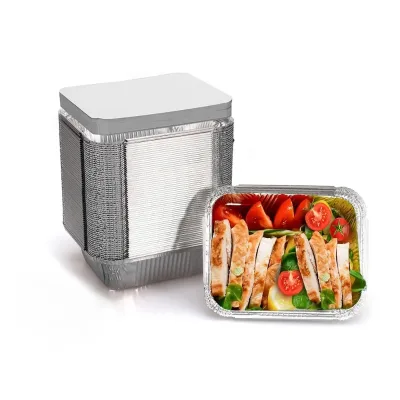
Source Recyclable Aluminum Foil Food Box for food, kitchen, and pharmaceutical use
Compare 21 listings for the Recyclable Aluminum Foil Food Box designed for food, kitchen, and pharmaceutical applications. Buyers can review specifications, packaging details, and customization options from verified suppliers in China.
Key considerations
Products List


Recyclable Aluminum Foil Food Box, Leak-Proof, Heat-Resistant Aluminum Foil Container
$0.03 - $0.03
MOQ: 50000 Pieces




Comprehensive Sourcing Guide
Strategic Sourcing Guide for Recyclable Aluminum Foil Food Boxes
The global demand for sustainable, single-use food packaging has driven a significant shift toward recyclable aluminum solutions. For procurement professionals, sourcing recyclable aluminum foil food boxes requires a nuanced understanding of material properties, manufacturing standards, and supply chain logistics. Unlike plastic alternatives, aluminum offers superior barrier properties and infinite recyclability, yet the procurement process involves specific technical and commercial variables. This guide synthesizes observed market data and technical specifications to provide a disciplined framework for evaluating suppliers and products in this category.
Technical Specifications and Material Composition
The foundation of any successful procurement strategy lies in the precise definition of technical specifications. In the context of recyclable aluminum foil food boxes, the primary material is aluminum foil, often categorized under specific grades such as "Food Grade" to ensure safety for direct food contact. The physical characteristics of the product are critical for both functionality and compliance.
Observations from the current market indicate that these products often adhere to specific thickness standards, such as 0.07mm, which is classified as "Single Zero Foil." This thickness provides a balance between structural integrity and material efficiency. The product attributes frequently include a "Soft" temper, which allows for easy molding and folding without cracking, a crucial feature for disposable lunch boxes that must conform to various food shapes. The color is typically "Silvery," a natural characteristic of untreated aluminum, and the state is usually "Unfolded" prior to use, ready for assembly or immediate filling.
The dimensions of the final product vary significantly based on the intended application. Market data reveals a wide range of standard sizes, including models with dimensions such as 16.1 x 11 x 3 cm, 16 x 11.2 x 3 cm, and larger variants like 32 x 26.5 x 6 cm or 18 x 16 x 10 cm. These variations correspond to different model numbers, such as BUFT-REC161A, buft1722, BUFT1478, and the 1307 style. Buyers must verify that the selected model number aligns with their specific volume requirements and the type of food being packaged. Furthermore, the packaging of the raw material or finished goods often follows specific cartoning standards, such as 250 pieces per bag with 4 bags per carton, or bulk configurations like 1000 pieces per carton, with external carton dimensions ranging from 41.5 x 29.5 x 29 cm to 53.3 x 24 x 34 cm.
Compliance, Certification, and Regulatory Standards
Ensuring regulatory compliance is paramount when sourcing food-contact packaging. While specific certification documents must be verified on a case-by-case basis with the supplier, the product attributes consistently highlight "Food Grade" material and "100% Inspection" protocols. These internal quality controls suggest a commitment to safety, but buyers must independently validate these claims against international standards.
The primary regulatory concern for aluminum food packaging is the migration of aluminum into food, particularly when acidic or salty foods are involved. Buyers should request documentation confirming that the aluminum foil meets the specific migration limits set by the target market, such as the FDA regulations in the United States or the EU Framework Regulation (EC) No 1935/2004. The presence of a "Food Use" and "Kitchen Use" designation in product attributes indicates the intended application, but it does not replace the need for formal test reports.
Additionally, the "Eco-Friendly" attribute is a common marketing claim. To substantiate this, buyers should look for evidence of the product's recyclability and the absence of non-recyclable laminates or coatings that might hinder the recycling process. The HS code 76071900 is a standard classification for aluminum foil, which can assist in customs clearance and tariff verification, but it does not inherently confirm environmental compliance. Procurement teams must ensure that the supplier can provide a Certificate of Analysis (CoA) and a Declaration of Conformity (DoC) that explicitly reference the relevant food safety standards for the destination country.
Cost Drivers and Economic Factors
The pricing of recyclable aluminum foil food boxes is influenced by a complex interplay of raw material costs, manufacturing processes, and order volumes. The observed price range in the market spans from $0 to $3,600, which likely reflects the difference between unit pricing for small samples and bulk container pricing for large orders. However, the unit cost is heavily dependent on the Minimum Order Quantity (MOQ).
Market data indicates a vast range in MOQs, from as low as 1 piece to as high as 200,000 pieces. This disparity suggests that the market accommodates both trial orders and massive industrial contracts. For buyers seeking the most competitive unit price, the data points to high-volume orders, such as the 100,000-piece MOQ observed in specific listings, as a key driver for cost reduction. Conversely, smaller orders may incur higher per-unit costs due to the fixed overhead of production setup and logistics.
Other cost drivers include the customization level. The availability of "Customized" options, including specific dimensions, branding, or packaging configurations, often adds to the production cost. The "Pulp Moulding" process mentioned in some product attributes suggests a hybrid manufacturing approach, which may differ in cost structure from pure aluminum foil stamping. Buyers should also consider the "Delivery Time," which is observed to be around 15 days for certain suppliers. Longer lead times can impact inventory holding costs and supply chain resilience, potentially influencing the total cost of ownership.
Typical Applications and Usage Scenarios
Recyclable aluminum foil food boxes are versatile and serve a wide array of applications across different sectors. The primary use cases identified include "Food Use," "Kitchen Use," and "Pharmaceutical" applications. The "Disposable Lunch Box" classification is particularly prominent, indicating a strong market presence in the food service and catering industries.
The "Barbecue" attribute highlights a specific niche where these boxes are used for "Food Taking," suggesting their utility in outdoor cooking and transport. The "Soft" temper and "Folded" (or rather, foldable) nature of the product make them ideal for packaging hot foods, as aluminum provides excellent heat retention and distribution. The "Label & Tag" usage suggests that these boxes may also serve as a canvas for branding, allowing companies to print logos or nutritional information directly on the packaging.
The "Adult" age designation implies that these products are designed for general consumer use rather than specialized pediatric or geriatric applications. The "Unfolded" state indicates that the product is supplied in a flat or semi-formed state, requiring the end-user or the food service provider to fold or assemble it before filling. This flexibility allows for efficient storage and shipping, as the boxes can be stacked compactly before use.
Supplier Evaluation and Geographic Considerations
When evaluating potential suppliers, geographic origin plays a significant role in logistics and quality perception. The observed data points to China as the primary source, with specific manufacturing hubs in Zhangjiagang and Henan. These regions are known for their robust manufacturing infrastructure and competitive labor costs.
Supplier evaluation should extend beyond location to include the "Quality" assurance mechanisms. The "100% Inspection" claim is a strong indicator of a rigorous internal quality control system. Buyers should verify this by requesting a copy of the supplier's quality management system certification, such as ISO 9001, and asking for detailed inspection reports for recent production batches. The "Custom Order" acceptance capability is another critical factor, as it demonstrates the supplier's flexibility and willingness to adapt to specific buyer requirements.
Branding is also a consideration. While some suppliers operate under their own brand names like "Eming," many offer OEM services. Buyers should assess the supplier's capacity for customization, including the ability to produce specific model numbers like EM-RE210 or 1307 style boxes. The "Process Type" of "Pulp Moulding" mentioned in some listings suggests a diverse manufacturing capability, but buyers must clarify whether the final product is pure aluminum or a composite material, as this affects both performance and recyclability.
Quality Control and Long-Term Procurement Strategy
Establishing a robust quality control (QC) protocol is essential for maintaining product integrity. The "100% Inspection" attribute suggests a high standard, but buyers should implement their own incoming QC checks. Key areas to focus on include verifying the thickness (e.g., 0.07mm), checking for pinholes or defects in the foil, and ensuring the dimensions match the specified standards (e.g., 16.1 x 11 x 3 cm).
Long-term procurement strategies should prioritize supply chain stability and sustainability. The "Eco-Friendly" nature of aluminum makes it an attractive option for companies with corporate social responsibility (CSR) goals. However, buyers must ensure that the "Recyclable" claim is backed by a functional recycling infrastructure in the target market. The "Customization" availability allows for long-term branding opportunities, but it requires clear communication of specifications to avoid production errors.
Buyers should also consider the "Lead Time" of 15 days as a baseline for planning. In times of market volatility, securing a reliable supplier with consistent delivery times is more valuable than marginal cost savings. The ability to handle large MOQs, such as 100,000 pieces, indicates a supplier's capacity to scale, which is beneficial for growing businesses.
Comparative Analysis of Product Models
To assist in decision-making, the following table summarizes key differences between observed product models based on available specifications. This comparison highlights variations in dimensions, packing, and model numbers that buyers should consider when selecting a supplier.
| Model Number | Standard Dimensions (cm) | Carton Packing Dimensions (cm) | Typical MOQ | Key Attributes |
|---|---|---|---|---|
| BUFT-REC161A | 16.1 x 11 x 3 | 45.5 x 28.5 x 33.5 | Variable | Food Use, Kitchen Use |
| buft1722 | 32 x 26.5 x 6 | 46 x 33 x 28 | Variable | Large Capacity, Barbecue |
| BUFT1478 | 18 x 16 x 10 | 52 x 48 x 36 | Variable | Deep Dish, Food Taking |
| 1307 Style | 130 x 90 x 42 | 415 x 295 x 290 | Variable | Extra Large, Industrial |
| EM-RE210 | 30 x 20 x 15 (Single) | Variable | 100,000 Pieces | Factory Price, Brand: Eming |
Note: Dimensions and MOQs are based on observed market data and may vary by supplier. Buyers should verify these figures with the specific vendor before placing an order.
In conclusion, sourcing recyclable aluminum foil food boxes requires a meticulous approach that balances technical specifications, regulatory compliance, and economic factors. By focusing on verified attributes such as material grade, thickness, and inspection protocols, buyers can mitigate risks and secure a supply chain that supports both operational efficiency and sustainability goals. The diversity of available models and customization options provides ample opportunity for tailored solutions, provided that due diligence is maintained throughout the procurement process.
FAQs
What thickness standard applies to recyclable aluminum foil food boxes?
The standard thickness is 0.07mm, classified as Single Zero Foil. This dimension balances structural integrity with material efficiency for disposable lunch boxes used in food service applications.
Can suppliers offer customized dimensions for aluminum foil food containers?
Yes, customization is available for specific model numbers and dimensions. Buyers can request variations like 16.1 x 11 x 3 cm or 32 x 26.5 x 6 cm depending on the intended food volume.
What is the typical minimum order quantity for these aluminum food boxes?
Minimum order quantities range from 1 piece to 200,000 pieces depending on the supplier. Some listings specify a high-volume requirement of 100,000 pieces to achieve competitive unit pricing.
How long does delivery typically take for aluminum foil food packaging orders?
The standard delivery time is approximately 15 days for confirmed orders. This lead time allows for production setup and logistics planning from the manufacturing origin in China.
Which packaging configurations are standard for shipping aluminum foil lunch boxes?
Common configurations include 250 pieces per bag with 4 bags per carton or 1000 pieces per carton. External carton dimensions vary by model, such as 45.5 x 28.5 x 33.5 cm.
What material grade ensures safety for direct food contact in these boxes?
The material must be Food Grade Aluminum to ensure safety for direct food contact. Products often undergo 100% inspection to verify compliance with food safety standards before shipping.