Source Recyclable Kraft Paper Shopping Bag for Shopping, Promotion, and Gift
Compare 30 listings for the Recyclable Kraft Paper Shopping Bag with customizable sizes and handles. Buyers can evaluate options for shopping, promotion, and gift packaging with varying MOQs and lead times from Chinese manufacturers.
Key considerations
Products List
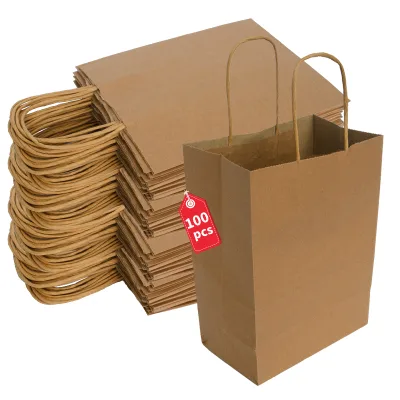

Direct Selling Clothing Gift Bag Custom Kraft Bags Recyclable Shopping Paper Bag
$0.95 - $1.26
MOQ: 1000 Pieces


Recyclable Kraft Paper Bag with Twisted Handle Reusable Shopping Paper Bags
$0.50 - $0.70
MOQ: 500 Pieces


Recyclable Custom Printed Kraft Paper Shopping Bag with Twisted Handle
$0.05 - $0.15
MOQ: 10000 Pieces


Comprehensive Sourcing Guide
Strategic Sourcing Guide for Recyclable Kraft Paper Shopping Bags
Understanding Technical Specifications and Material Composition
When sourcing recyclable kraft paper shopping bags, the primary focus must be on the raw material integrity and the structural specifications that define the product's utility. The core material identified in the market is Kraft Paper, a robust fiber derived from wood pulp that offers high tensile strength and durability. This material choice is fundamental for applications requiring the bag to support significant weight, with observed specifications indicating a weight limit capacity of 5-10 kg for standard configurations. The physical dimensions are rarely one-size-fits-all; instead, the market offers customized sizes to meet specific branding and product volume needs. Buyers should verify that the supplier can accommodate standard dimensions such as 4225 cm or 32cm22cm, alongside fully custom requirements.
The structural design of the bag is equally critical. The product category is defined by the "With Handle" attribute, which is essential for the shopping and gift usage scenarios. The handle construction must be evaluated for its ability to support the stated weight limits without tearing. Furthermore, the paper type is specified as Kraft Paper, which often implies a brown, unbleached appearance, though the market data also notes the availability of Chocolate and White color options. This suggests that while the base material is kraft, the surface can be treated or coated to achieve specific aesthetic finishes. The thickness of the paper, noted in some specifications as 180 microns, is a key indicator of durability. Buyers must ensure that the micron count aligns with the intended load, as thinner papers may fail under the stress of heavier items like electronics or cosmetics.
The manufacturing process is strictly defined as "Paper," indicating a mechanical transformation of raw fibers into the final bag shape. This process includes the creation of the bag body, the attachment of handles, and the application of any necessary printing. The standard export packaging for these items is typically carton-based, ensuring that the bags remain protected during transit. However, some suppliers may offer standard packing or custom packing solutions depending on the order volume. The shape is consistently identified as a "Paper Bag," but the specific geometry, such as gussets or flat bottoms, should be confirmed during the specification phase to ensure the bag stands upright and maximizes shelf space.
Compliance, Certifications, and Regulatory Standards
Navigating the regulatory landscape for paper products requires a rigorous verification of certifications and adherence to international standards. For buyers in the food, chemical, or cosmetic sectors, the safety of the paper material is paramount. The market data indicates that suppliers may hold certifications from recognized bodies such as SGS and TUV. These certifications are not merely marketing claims but serve as evidence that the raw materials and the manufacturing process have undergone third-party testing for safety and quality. When evaluating a supplier, buyers should explicitly request current SGS and TUV reports to verify that the paper is free from harmful substances and suitable for the intended application, whether it is for food packaging or general household use.
The Harmonized System (H.S.) Code for these products is 48173000, which classifies them under paper or paperboard sacks and bags. This classification is vital for importers to determine correct tariff rates and ensure compliance with customs regulations in their destination country. Additionally, the product standard is often referenced as A4 or custom size, but specific dimensional standards like 106040 cm (WidthLengthHeight) may apply to specific models. Buyers must verify that the supplier's production standards align with the regulatory requirements of their target market. For instance, if the bags are intended for food contact, there may be specific migration limits for inks and adhesives that must be met.
Environmental compliance is a significant driver for the "recyclable" aspect of these bags. While the material is inherently recyclable, the buyer must confirm that the inks and adhesives used in the printing and assembly processes do not contaminate the recycling stream. The "Custom Design" attribute allows for branding, but the printing method must be eco-friendly. The market data mentions "Color Printing" as a customizable requirement, but it does not specify the ink type. Buyers should inquire whether the supplier uses water-based inks or soy-based inks to maintain the recyclability of the final product. Furthermore, the "Made in China" origin requires scrutiny regarding the environmental regulations of the manufacturing facility to ensure that the production process itself does not generate excessive waste or pollution, which could indirectly affect the sustainability profile of the product.
Cost Drivers and Pricing Dynamics
The pricing structure for recyclable kraft paper shopping bags is influenced by a complex interplay of material costs, customization levels, and order volume. The observed price range in the market is 0-1.26 USD, a wide spectrum that reflects the variability in product specifications. At the lower end of this range, prices likely correspond to basic, unprinted, or minimally customized bags with standard dimensions and lower paper thickness. Conversely, the higher end of the price range is driven by complex customizations, such as specific color printing, unique handle designs, and thicker paper stocks (e.g., 180 microns).
Order Volume is a primary cost driver, as evidenced by the Minimum Order Quantity (MOQ) ranges observed in the market. The data shows an MOQ range of 2 to 100,000 units, with specific models requiring 500 or 3,000 pieces. This variance suggests that smaller suppliers or those offering highly customized solutions may have lower entry barriers, while larger manufacturers with established production lines may require higher volumes to justify the setup costs. Buyers must balance their budget constraints with the need for economies of scale. Ordering larger quantities typically reduces the unit cost, but it also increases the total capital outlay and storage requirements.
Customization is another significant factor affecting cost. The "Customized Size" and "Custom Design" attributes imply that any deviation from standard dimensions or designs will incur additional tooling or setup fees. The "Logo Printing" feature, while adding value to the brand, also increases the cost per unit due to the complexity of the printing process and the need for color accuracy. Additionally, the "Sample" availability is noted as free in some contexts, but the "Sampling Time" of 3 days indicates that the logistics of sample production and delivery are factored into the overall timeline and potentially the cost structure. Buyers should be aware that while samples may be free, the shipping costs for these samples are often borne by the buyer, which can impact the initial procurement budget.
Typical Applications and Usage Scenarios
The versatility of recyclable kraft paper shopping bags makes them suitable for a diverse range of applications across multiple industries. The market data explicitly lists usage scenarios including Shopping, Promotion, Packing, Gift, and Household applications. This broad applicability is driven by the bag's aesthetic appeal and functional durability. In the retail sector, these bags are frequently used for apparel, cosmetics, and food items. The "Food" application is particularly sensitive, requiring the bags to meet specific hygiene and safety standards, which reinforces the importance of the SGS and TUV certifications mentioned earlier.
For promotional purposes, the "Custom Design" and "Logo Printing" capabilities allow businesses to transform the bag into a mobile advertising medium. The "Promotion" usage category highlights the bag's role in brand visibility. The ability to print logos and custom designs on the chocolate, white, or blue surfaces enables companies to create a cohesive brand identity. The "Gift" application leverages the premium feel of kraft paper, making it an ideal choice for packaging luxury items or special occasion presents. The "Household" usage suggests that these bags are also suitable for general storage and organization, further expanding their market potential.
The "Electronic" and "Chemical" applications indicate that the bags are robust enough to handle a variety of product types. For electronics, the bag must provide adequate protection against dust and minor impacts, while for chemical products, the material must be resistant to potential spills or leaks. The "Weight Limit" of 5-10 kg is a critical specification for these heavier applications. Buyers must ensure that the selected bag model can withstand the weight of the contents without failing. The "Shape" of the paper bag, combined with the "With Handle" feature, ensures that the bag is easy to carry and transport, making it a practical choice for consumers across all these sectors.
Supplier Evaluation and Selection Criteria
Selecting the right supplier for recyclable kraft paper shopping bags requires a comprehensive evaluation of their capabilities, reliability, and compliance record. The "Made in China" origin is a common attribute, but buyers should not rely solely on this geographical indicator. Instead, they must assess the supplier's production capacity, quality control processes, and ability to meet specific customization requirements. The "Production Time" of 20 days and the broader "Lead Time" of 15-40 days are critical metrics for supply chain planning. Buyers should verify if these timelines are consistent with their own delivery schedules and if the supplier has a track record of meeting deadlines.
The "Sample" policy is another important factor in supplier evaluation. The availability of free stock samples and a "Sampling Time" of 3 days suggests that the supplier is responsive and willing to engage with potential buyers. However, buyers should also inquire about the process for custom samples, as these may incur costs and take longer to produce. The "Standard Export Package" and "Carton" packing methods indicate that the supplier understands the importance of protecting the product during transit. Buyers should request photos or videos of the packing process to ensure that the bags will arrive in pristine condition.
Certifications are a key differentiator in supplier selection. The presence of SGS and TUV certifications is a strong indicator of a supplier's commitment to quality and safety. Buyers should request copies of these certificates and verify their validity. Additionally, the supplier's ability to handle "Customized Size" and "Custom Design" requests should be tested through a pilot order or a detailed discussion of their design capabilities. The "MOQ" requirements, ranging from 500 to 3,000 pieces, should be evaluated against the buyer's inventory needs. A supplier with a lower MOQ may be more suitable for startups or small businesses, while a supplier with a higher MOQ may offer better economies of scale for large enterprises.
Quality Control and Long-Term Procurement Considerations
Maintaining consistent quality is essential for long-term procurement success. The "Hardness" attribute, described as "Partial Hard," suggests that the bags have a specific structural rigidity that must be maintained across all production batches. Buyers should implement a rigorous quality control process that includes visual inspections for printing defects, handle attachment strength, and dimensional accuracy. The "Weight Limit" of 5-10 kg should be tested regularly to ensure that the bags can consistently support the intended load. Any deviation from these specifications could lead to product failure and damage to the buyer's brand reputation.
The "Recyclable" nature of the product is a long-term value proposition that must be preserved. Buyers should work with suppliers who are committed to sustainable practices and who can provide documentation on the recyclability of their materials. The "Raw Materials" being paper is a positive sign, but the entire supply chain, including inks and adhesives, must be considered. Long-term procurement strategies should include regular audits of the supplier's facilities to ensure that they continue to meet environmental and quality standards.
The "Product Logistics Attributes" of "General Goods" indicate that the bags are not classified as hazardous materials, which simplifies shipping and handling. However, the "Type of Shipping" options, including Express, Sea/Vessel, and Air, offer flexibility for different budget and timeline requirements. Buyers should evaluate the cost-benefit ratio of each shipping method based on their urgency and volume. The "Lead Time" of 15-40 days should be factored into the procurement planning to avoid stockouts. By maintaining a strong relationship with a reliable supplier and implementing a robust quality control framework, buyers can ensure a steady supply of high-quality, recyclable kraft paper shopping bags that meet their specific needs.
Comparative Analysis of Product Models
To assist buyers in making informed decisions, the following table compares key attributes of the observed product models based on the provided data. This comparison highlights the variability in specifications, certifications, and requirements across different models.
| Attribute | Model CH001 | Model 0007-0029 | Model 0007-0028 | Model 0004-01-1 | Model HTPB |
|---|---|---|---|---|---|
| Size Standard | Customized Size | 42*25CM/Customized | Customized Size | Customize as Requirement | 106040 cm |
| Material | Paper | Paper | Paper | Paper | Kraft Paper |
| Color Options | Chocolate, White | Not Specified | Not Specified | Customize as Requirement | Blue |
| Certifications | Not Specified | Not Specified | Not Specified | SGS, TUV | Not Specified |
| MOQ | 500 PCS | Not Specified | Not Specified | 3000 | Not Specified |
| Lead Time | 15-40 Days | 15-40 Days | 15-40 Days | 15-40 Days | Not Specified |
| Weight Limit | Not Specified | Not Specified | Not Specified | 5-10 kg | Not Specified |
| Packing | Standard | Carton | Standard Export Package | Standard Export Package | CTN |
| Application | Apparel, Chemical, Household, Promotion, Food | Food, Electronic, Apparel, Cosmetics, Household | Food, Electronic, Apparel, Cosmetics, Household | Food, Electronic, Apparel, Cosmetics, Household | Not Specified |
This table illustrates that while the core material remains consistent, the specific requirements for size, color, and certifications vary significantly. Buyers should use this data to identify the model that best aligns with their specific operational needs and regulatory requirements. The presence of SGS and TUV certifications for Model 0004-01-1, for instance, makes it a strong candidate for food and cosmetic applications where safety is paramount. Conversely, the customizable size and color options of Model CH001 make it ideal for brands seeking unique packaging solutions. By carefully analyzing these attributes, buyers can optimize their procurement strategy to achieve the best balance of cost, quality, and functionality.
FAQs
What certifications do recyclable kraft paper shopping bags have?
These bags often carry SGS and TUV certifications to verify material safety and quality. Buyers should request current reports to ensure compliance for food or cosmetic applications before placing large orders.
Can I get free samples for recyclable kraft paper shopping bags?
Free stock samples are available with a sampling time of three days. Custom samples may require different arrangements, but standard options allow buyers to verify quality before committing to production.
What is the minimum order quantity for these paper bags?
The minimum order quantity ranges from 500 to 3000 pieces depending on the specific model and customization level. Some suppliers accept orders as low as 2 units, while others require up to 100,000 units.
How long does production take for custom paper bags?
Production time typically takes 15 to 40 days after order confirmation. Specific models may have a standard production time of 20 days, but lead times vary based on order volume and design complexity.
What size options are available for kraft paper shopping bags?
Sizes are customized to requirements, with standard options like 42x25 cm or 32x22x180 mic available. Buyers can request specific dimensions such as 10x60x40 cm to fit their product volume needs exactly.
What is the weight limit for these recyclable paper bags?
Standard configurations support a weight limit of 5 to 10 kg. This capacity depends on the paper thickness, which can be up to 180 microns, ensuring durability for heavier items like electronics or food.