Source Recyclable Kraft Popcorn Paper Bag for Food, Retail, Events
Explore 30 Recyclable Kraft Popcorn Paper Bag options to compare dimensions, printing capabilities, and packaging details. This guide helps buyers evaluate specifications for food service and retail applications efficiently; compare the available evidence and request quotations based on your requirements.
Key considerations
Products List


Disposable Brown Kraft Paper Bags for Food Packaging Delivery Bag Popcorn Bag
$0.02 - $0.05
MOQ: 50000 Pieces


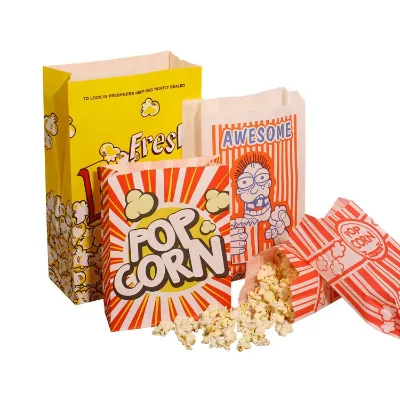
Comprehensive Sourcing Guide
Recyclable Kraft Popcorn Paper Bag Sourcing Guide
Buyers evaluating recyclable kraft popcorn paper bags must first distinguish between standard disposable options and those engineered for specific food safety requirements. The observed market data indicates a strong prevalence of products made from virgin kraft paper or recyclable blends, specifically designed for industrial uses like packaging bread, popcorn, and French fries. These bags often feature a three-dimensional or square-bottom shape to maximize volume while maintaining structural integrity during transport and display.
Procurement decisions should prioritize suppliers who explicitly confirm the material composition as either virgin kraft or recyclable paper, as this directly impacts both sustainability claims and grease resistance. The observed listings highlight that these bags are frequently waterproof and disposable, yet some variants also boast bio-degradable and moisture-proof characteristics. Buyers must verify if the specific bag variety, such as an upright bag, aligns with their filling machinery and retail display needs before committing to a large order.
Product Scope and Observed Listing Signals
The current market for these packaging solutions shows a wide range of customization capabilities, with many suppliers accepting OEM and ODM requests for logos and specific dimensions. Observed product attributes include a medium-soft hardness and a white or customized color palette, catering to unisex and general daily life usage scenarios. The style is often described as the newest fashionable, suggesting that aesthetic appeal is a key differentiator alongside functional performance in the competitive food packaging sector.
Buyers should note that while the core material is paper, the making process often involves composite packaging techniques to enhance durability and barrier properties. The observed listing signals indicate that sample times typically range from five to seven days, allowing for rapid prototyping of custom designs. However, the minimum order quantities (MOQ) vary significantly, ranging from 500 pieces to over a million, requiring buyers to align their initial volume requirements with supplier capacity to avoid unnecessary costs or delays.
Technical Specifications to Verify
Dimensional accuracy is a critical verification step, as observed specifications include models like 285140100mm and 24014095mm, alongside other variations such as 18x4x21 cm. Buyers must confirm that the selected model matches their product's physical footprint to ensure a secure fit without excessive empty space or material waste. The thickness of the paper is another vital parameter, with some listings specifying 30 GSM, which influences the bag's ability to hold heavy or oily contents without tearing.
Printing capabilities also require strict verification, as the observed data points to an eight-color printing limit using flexo or offset printing technologies. This constraint affects the complexity of branding designs and the vibrancy of the final product. Additionally, the bag shape, whether square bottom or three-dimensional, dictates the filling efficiency and shelf stability. Buyers should request physical samples to validate that the printed colors and structural dimensions meet their exact operational standards before proceeding with mass production.
Compliance and Safety Documentation
Food safety compliance is non-negotiable for packaging intended for direct food contact, such as popcorn and French fries. The observed listings frequently cite certifications including FDA, SGS, and QS, which are essential for verifying that the paper and inks used are safe for human consumption. Buyers must ensure that the supplier can provide valid, up-to-date certificates for these specific standards, as these documents serve as the primary evidence of regulatory adherence in international trade.
Beyond food safety, environmental compliance is increasingly important for brands aiming to meet sustainability goals. The observed product features include recyclable, bio-degradable, and antistatic properties, which support eco-friendly marketing claims. However, buyers should verify that these claims are backed by specific test results rather than generic marketing language. While some background information mentions ISO standards, the primary focus for food-grade paper bags should remain on the FDA and SGS certifications that directly address food contact safety and material integrity.
Cost Drivers and Commercial Terms
Pricing in this sector is heavily influenced by the raw material costs of virgin kraft paper and the complexity of the printing process. The observed MOQ range of 500 to 1,200,000 pieces creates a significant variance in unit economics, where larger orders typically yield lower per-unit costs but require higher upfront capital. Buyers must calculate the total landed cost, including the shipping terms which can be by sea, air, or express, depending on the urgency and volume of the shipment.
Packaging and logistics also play a substantial role in the final cost structure. The observed packing methods include individual OPP bags or single items within cartons, with carton dimensions often standardized at 40x35x12 cm. These packing details affect the number of units that can be loaded into a container, directly impacting freight efficiency. Buyers should negotiate clear terms regarding sample times, which are typically within seven days, and ensure that the production lead time aligns with their inventory planning to prevent stockouts during peak demand periods.
Supplier Qualification and Quality Control
Supplier qualification should begin with a thorough review of their production origin and inspection protocols. The observed data indicates origins in Anhui and Qingdao, China, regions known for paper manufacturing capabilities. A robust quality control process is essential, with many suppliers claiming 100% goods inspection before shipment. Buyers should verify if this inspection includes checks for printing alignment, structural strength, and material consistency to ensure that every bag meets the specified standards.
The ability to customize is a key indicator of a supplier's flexibility and technical maturity. Most observed listings accept customized logos and colors, but the buyer must confirm the supplier's capacity to handle these requests without compromising the bag's structural integrity. The making process, often described as composite packaging, requires specialized machinery and expertise. Buyers should request a factory audit or video tour to confirm that the production lines are equipped to handle the specific customization and volume requirements of their order.
Long-Term Procurement Checks
Sustaining a successful supply chain for recyclable kraft paper bags requires ongoing monitoring of material consistency and environmental performance. Buyers should establish a protocol for periodic re-verification of the raw materials, ensuring that the paper remains virgin kraft or recyclable as originally specified. This is crucial for maintaining brand reputation and meeting evolving sustainability regulations that may require higher percentages of recycled content or specific bio-degradation rates.
Regular performance reviews of the supplier's logistics and communication are equally important for long-term stability. The observed shipment terms and sample times provide a baseline, but market conditions can shift rapidly. Buyers should maintain open channels for feedback on delivery times and packaging quality, ensuring that the supplier can adapt to changes in demand or regulatory requirements. Continuous engagement helps in identifying potential risks early and fosters a partnership that prioritizes quality and reliability over the long term.
FAQs
What materials are used for the Recyclable Kraft Popcorn Paper Bag?
The bags are made from recyclable or virgin kraft paper. This material ensures the product is disposable and suitable for food packaging applications like popcorn and french fries while maintaining structural integrity.
Can I customize the logo on these paper bags?
Yes, you can accept customized logos on the product. The supplier supports OEM and ODM services, allowing you to brand the bags with your specific design while maintaining the standard white or customized color options.
What is the minimum order quantity for these bags?
The minimum order quantity starts at 500 pieces. However, observed ranges extend up to 1,200,000 units depending on the specific supplier and customization requirements for your bulk purchasing needs.
How long does it take to receive a sample?
Sample time is typically within 5 to 7 days. This allows you to verify the quality, dimensions, and printing before committing to a larger order for your food and beverage packaging requirements.
Are these bags waterproof and suitable for daily use?
Yes, the bags are waterproof and designed for daily life usage. They feature moisture-proof properties and are ideal for shopping or packing food items like bread and popcorn without leaking.
What certifications do these paper bags hold?
The products hold FDA, SGS, and QS certifications. These standards ensure the materials are safe for food contact and meet quality requirements for industrial use in the global packaging sector.
Which printing technologies are used for these bags?
Flexo printing and offset printing technologies are utilized for these bags. The process supports up to eight colors, allowing for detailed branding while maintaining the recyclable nature of the kraft paper material.