Source Reflectorless Total Station for Land Surveying, Construction, Mining
Compare 30 Reflectorless Total Station models from verified suppliers. Evaluate key specs like accuracy, range, and storage to find the right tool for land surveying, construction, and mining projects; compare the available evidence and request quotations based on your requirements.
Key considerations
Products List


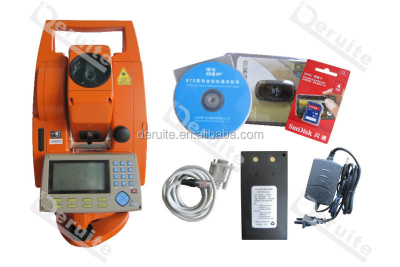


$1799.00 - $1899.00
MOQ: 1 Sets

Non-Prism Total Station Hi-Target Total Station High Performance with 800m Reflectorless
$1050.00 - $1100.00
MOQ: 1 Pieces

High Quality Hi-Target Total Station Hts-520L8 with 800m Reflectorless Range
$850.00 - $900.00
MOQ: 1 Pieces


Measurement Instrument High Performance LCD Display Rts102total Station
$1100.00 - $1300.00
MOQ: 1 Sets


Comprehensive Sourcing Guide
Reflectorless Total Station Sourcing Guide
Procuring reflectorless total stations requires a strategic approach that balances optical precision with rugged field performance. These instruments allow surveyors to measure distances without a retroreflector, significantly increasing efficiency in complex terrains. Buyers must prioritize devices that offer reliable accuracy across varying environmental conditions while maintaining user-friendly interfaces for rapid data collection.
The market presents a diverse array of models, each with distinct capabilities regarding range, accuracy, and storage capacity. Understanding the specific operational needs of your surveying team is crucial before evaluating suppliers. This guide outlines the essential technical, commercial, and quality assurance factors necessary to make an informed procurement decision that aligns with your project requirements and budget constraints.
Product Scope and Observed Listing Signals
The current market landscape for reflectorless total stations includes a variety of models designed for different surveying intensities. Observed listings indicate a price range between $800 and $9,800 USD, reflecting significant variations in feature sets and build quality. Minimum order quantities typically range from one to ten units, suggesting flexibility for both individual professional purchases and small team acquisitions.
Key attributes observed in available products include magnification levels around 30X and objective apertures of 45mm, which contribute to clear target acquisition. Accuracy specifications often center around 2 inches, with some models offering 2"/5" options for versatile use cases. Storage capacities vary widely, from 128MB to 50,000 points, impacting the volume of data that can be collected before transfer.
Technical Specifications to Verify
Buyers should verify the angle measuring method, with absolute angle encoder systems being a preferred choice for reliability and ease of use. The reflectorless range is a critical specification, with observed capabilities extending from 500m to 1000m without a prism. When using prisms, ranges can extend significantly, with some models supporting up to 8km with triangular prisms, enhancing versatility for long-distance surveys.
Optical and electronic features also require careful evaluation. Vertical and horizontal line projections, such as optical vertical lines and telescope-based horizontal lines, aid in precise alignment. Power systems often utilize 7.4V batteries with capacities around 3000mAh, ensuring extended field operation. Waterproof ratings, such as IP66, are essential for durability in adverse weather conditions, protecting internal components from dust and water ingress.
Compliance and Safety Documentation
Certification status is a vital component of the procurement process, ensuring that equipment meets international safety and performance standards. Observed listings frequently mention CE certification, indicating compliance with European health, safety, and environmental protection standards. Buyers should request valid certification documents to verify that the specific model meets the regulatory requirements of their operating region.
Data security and operational integrity are also part of the compliance framework. The use of real-time operating systems ensures stable performance and reliable data processing during critical surveying tasks. Buyers should confirm that the software and hardware integration adheres to industry best practices for data accuracy and system stability, minimizing the risk of operational failures in the field.
Cost Drivers and Commercial Terms
Several factors influence the final cost of a Reflectorless Total Station, including brand reputation, technological sophistication, and included accessories. Models with higher accuracy, longer reflectorless ranges, and greater storage capacities generally command higher prices. Buyers should evaluate the total cost of ownership, considering not just the initial purchase price but also the cost of consumables, maintenance, and potential upgrades.
Commercial terms such as supply ability and packaging details also play a role in the procurement decision. Suppliers with a monthly supply ability of 100 units may offer more consistent availability and potentially better pricing for bulk orders. Packaging, often involving individual cases within cartons, is crucial for protecting the instrument during shipping, especially for long-distance shipments from origins like Jiangxi or Shaanxi in China.
Supplier Qualification and Quality Control
Evaluating supplier qualifications is essential to ensure the reliability of the equipment and the support provided. Buyers should assess the supplier’s after-sales service offerings, with one-year warranties and online after-sale services being common expectations. A robust support network is critical for resolving technical issues quickly, minimizing downtime during active surveying projects.
Quality control measures should be verified through supplier audits or third-party inspections. Buyers should inquire about the manufacturing processes and quality assurance protocols employed by the supplier. Consistency in product standards, such as the observed dimensions of 172177343mm or 160150335mm, indicates a standardized production process, which is a positive indicator of overall product quality and reliability.
Long-Term Procurement Checks
Long-term procurement success depends on the supplier’s ability to provide consistent product quality and support over time. Buyers should establish clear communication channels for ongoing technical support and spare parts availability. Regular reviews of supplier performance, including delivery times and product consistency, help maintain a reliable supply chain for future procurement needs.
Additionally, staying informed about technological advancements in reflectorless total stations is crucial for future upgrades. As technology evolves, newer models may offer improved accuracy, longer battery life, or enhanced connectivity features. Buyers should maintain a flexible procurement strategy that allows for periodic reassessment of their equipment needs and the availability of newer, more efficient models in the market.
FAQs
How does a Reflectorless Total Station measure distances without a prism?
A Reflectorless Total Station bounces its laser directly off the target surface, so no prism or crew member is needed at the measured point. Many models also support prism mode for longer ranges, typically around 5km with a single prism, while reflectorless distances commonly range from 500m to 1000m depending on the model.
What accuracy should buyers expect from a Reflectorless Total Station?
Most listed units offer angular accuracy of 2 inches, and some models cover 2 inch and 5 inch variants. Accuracy choice depends on your application: 2 inch suits control and layout work, while 5 inch is adequate for general topographic surveying. Always confirm the accuracy class of the exact model before ordering.
Which reflectorless range is suitable for my surveying projects?
Listed models offer reflectorless ranges of 500m, 600m, 800m, and 1000m. For building facades, interiors, and short-distance detail work, 500m to 600m is usually sufficient. For tunnel, bridge, or large-structure work, choose 800m or 1000m models, since effective range shortens on dark or angled surfaces.
Can these total stations be customized for specific project requirements?
Yes, customization is available on listed products. Buyers typically discuss configuration options with suppliers before ordering, covering features such as prism ranges, storage capacity, and accessory packages. Because customization may affect price and lead time, confirm the exact specification and terms in writing with the supplier before confirming your purchase order.
What after-sales support and warranty terms apply to these instruments?
Listed products mention after-sales service options such as one year of after-sales service and online after-sale service. Support terms vary by supplier and model, so review the after-sales commitment for the specific listing. Confirm whether calibration, parts, and remote technical support are included before placing an order.
How is a Reflectorless Total Station packed for international shipping?
The instrument is packed in its instrument case, and the case is placed in a carton suitable for long-duration shipment; some listings also note individual package packing. This layered packaging protects the optics and electronics in transit. Buyers should still confirm packaging details and any crating requirements with the supplier for large orders.
What are the power and environmental specifications of listed models?
Representative listings describe power supplies of 7.4V with a 3000mAh battery and an IP66 waterproof rating, which supports work in rain and dusty sites. Operation systems are described as real-time operating systems. Because specifications differ between models, verify battery capacity, ingress protection, and operating conditions for the exact unit you intend to buy.
Which key specifications should be compared before choosing a model?
Compare reflectorless range, accuracy class, magnification, objective aperture, storage capacity, prism range, and weight. For example, listed models show 30X magnification, a 45mm objective aperture, storage of 128m or 50,000 points, and weights around 5.4kgs. Matching these figures to your project conditions is the most reliable way to choose.