Source Remote Controlled Folding Loft Stairs for Villas, Hotels, and Factories
Find and compare 30 Remote Controlled Folding Loft Stairs designed for villas, hotels, and industrial settings. These electric retractable units feature automatic extension mechanisms, anti-slip safety feet, and load capacities up to 500kg, available in various materials including aluminum and carbon steel.
Key considerations
Products List


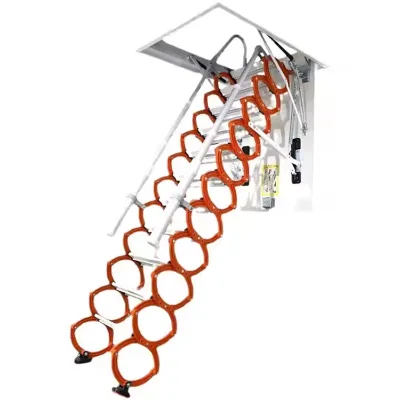


Adjustable Steel Telescopic Electric Remote Attic Folding Ladder Floating Stairs
$2500.00 - $3000.00
MOQ: 1 Sets


Comprehensive Sourcing Guide
Remote Controlled Folding Loft Stairs Sourcing Guide
Sourcing remote-controlled folding loft stairs requires a careful balance between mechanical reliability, electrical safety, and structural integrity. These systems serve as automated access solutions for attic spaces, mezzanines, and high-ceiling areas, replacing traditional fixed ladders or manual pull-down units. The primary value proposition lies in the convenience of motorized operation, which reduces physical strain and enhances accessibility for elderly users or those with limited mobility. Buyers must recognize that this is not merely a hardware purchase but an integrated system involving motors, control units, and load-bearing frameworks that must operate seamlessly within residential or commercial architectural constraints.
The procurement process involves evaluating multiple variables, from the type of extension mechanism to the specific materials used in construction. While the market offers various configurations, the core decision revolves around selecting a unit that matches the floor height, load requirements, and aesthetic preferences of the installation site. Buyers should approach this category with a focus on verification, ensuring that the supplier provides clear technical documentation and that the product specifications align with the intended usage environment, whether it be a private villa or a multi-story industrial facility.
Product Scope and Observed Listing Signals
The current market landscape for automated loft access reveals a diverse range of product attributes, indicating that buyers will encounter significant variation in design and capability. Observed listings highlight products constructed from various materials, including metal, carbon steel, forged titanium magnesium alloy, and aluminum, each offering different trade-offs between weight, durability, and cost. The structural designs vary from straight stairs to telescopic and folding mechanisms, with some units featuring extension ladder configurations or overhanging structures. This diversity means that procurement teams must clearly define their spatial and functional requirements before engaging with suppliers, as the physical footprint and deployment method of the stair unit are critical to successful installation.
Listing signals also indicate a strong emphasis on customization and specific application environments. Many suppliers offer OEM/ODM services and support custom-made solutions, suggesting that off-the-shelf products may not always fit unique architectural dimensions. The observed usage scenarios span indoor and outdoor applications, with specific mentions of villas, hotels, factories, and industrial settings. Furthermore, the presence of features such as anti-slip feet, locking mechanisms, and various color options (black, white, orange, blue) points to a market that prioritizes both safety and aesthetic integration. Buyers should interpret these signals as evidence that the category is highly adaptable, but this adaptability requires precise specification to avoid mismatches between the product and the installation site.
Technical Specifications to Verify
Verifying the technical specifications of remote-controlled folding loft stairs is paramount to ensuring long-term reliability and safety. Key parameters to scrutinize include the load-bearing capacity, which in observed listings ranges from standard human loads to heavy-duty capacities exceeding 150kg or even 500kg. Buyers must confirm the maximum load rating against their intended usage, particularly if the loft will store heavy items or be used by multiple individuals simultaneously. Additionally, the height specifications are critical; observed data indicates floor heights ranging from 2 to 3.5 meters, with some units extending up to 4 meters. It is essential to measure the actual clear height of the loft opening to ensure the selected unit can fully extend without obstruction or safety hazards.
The electrical and mechanical components require equally rigorous verification. The power source is typically electric, operating on standard voltages such as 220V, and the extension mechanism is often automatic, driven by motors that must be compatible with the local power infrastructure. Buyers should inquire about the power supply requirements and the nature of the control system, whether it involves remote controls, wall switches, or smart home integration. Furthermore, the pedal number and step design, ranging from 3 to 15 steps, influence the comfort and safety of the ascent. Insulation properties also vary, with some units being semi-insulating or non-insulated, which is a crucial consideration if the stairs will be installed in areas with potential electrical hazards or extreme temperature variations.
Compliance and Safety Documentation
Safety is the most critical aspect of procuring automated loft stairs, as failures can lead to severe injury. Buyers must demand comprehensive safety documentation from suppliers, including evidence of compliance with relevant structural and electrical standards. While specific standards like EN 14975 are referenced in the broader category context, buyers should verify that the specific product model they are considering meets the applicable safety regulations for their target market. This includes verifying the integrity of locking mechanisms, anti-slip features on the pedals, and the stability of the base or mounting structure. The presence of safety features such as anti-slip feet and secure locking mechanisms should be physically verified or confirmed through detailed technical drawings.
Electrical safety is another area requiring strict documentation. Since these units are motorized, they must comply with local electrical codes regarding insulation, grounding, and overload protection. Buyers should request test reports or certification marks that confirm the motor and control unit meet safety standards for residential or commercial use. Additionally, the structural integrity of the materials, whether aluminum, steel, or alloy, should be backed by material safety data sheets or quality assurance certificates. It is advisable to ask suppliers for case studies or installation records that demonstrate the product’s performance under load, ensuring that the theoretical specifications translate to real-world safety.
Cost Drivers and Commercial Terms
The cost of remote-controlled folding loft stairs is influenced by several factors, including material quality, motor power, and the level of customization required. Observed price ranges in the market are broad, reflecting the variability in specifications and brand positioning. Buyers should expect costs to increase with higher load capacities, more durable materials like forged titanium magnesium alloy, and advanced automation features. The inclusion of accessories such as glass or metal balustrades, specific color finishes, and custom packaging (e.g., wooden boxes) can also impact the final price. Understanding these cost drivers helps buyers budget accurately and avoid unexpected expenses during the procurement process.
Commercial terms, including Minimum Order Quantity (MOQ) and payment conditions, vary significantly among suppliers. Observed MOQs range from single items to larger batches, indicating that both small-scale residential projects and large commercial installations are served. Buyers should negotiate terms that align with their project timeline and volume needs. It is also important to clarify the scope of the quoted price, ensuring it includes all necessary components for installation, such as mounting hardware, control units, and remote controls. Additionally, buyers should inquire about warranty terms, after-sales support, and the availability of spare parts, as these factors contribute to the total cost of ownership and long-term value of the investment.
Supplier Qualification and Quality Control
Selecting a qualified supplier is essential for ensuring the reliability of automated loft stairs. Buyers should prioritize suppliers who demonstrate expertise in manufacturing and installing these specialized systems. Key qualifications to look for include a proven track record in the industry, positive client references, and a robust quality control process. Suppliers located in manufacturing hubs, such as Henan or Changsha in China, may offer competitive pricing, but buyers must verify their production capabilities and quality assurance protocols. It is advisable to request factory audits or third-party inspection reports to confirm that the supplier adheres to strict manufacturing standards.
Quality control should extend beyond the final product to include the entire supply chain. Buyers should ask about the sourcing of raw materials, the testing procedures for motors and electrical components, and the final inspection processes before shipment. Suppliers who offer OEM/ODM services should have clear processes for managing custom specifications to ensure that the final product meets the buyer’s exact requirements. Additionally, buyers should evaluate the supplier’s responsiveness and technical support capabilities, as these factors are crucial for resolving any issues that may arise during installation or operation. A supplier with a strong commitment to quality and customer service is more likely to deliver a product that performs reliably over time.
Long-Term Procurement Checks
Long-term procurement success depends on establishing a relationship with a supplier who can provide ongoing support and maintenance. Buyers should consider the availability of spare parts, such as motors, control boards, and remote controls, to ensure that the system can be repaired rather than replaced in the event of a failure. It is also important to verify the supplier’s ability to provide technical assistance for troubleshooting and installation guidance. Suppliers who offer comprehensive training or detailed installation manuals can significantly reduce the risk of improper use, which is a common cause of premature wear or failure.
Furthermore, buyers should monitor the supplier’s product development and innovation capabilities. The market for automated loft access is evolving, with new features and technologies emerging regularly. A supplier who invests in research and development is more likely to offer improved products with better safety features, energy efficiency, and user experience. Buyers should also stay informed about changes in safety regulations and standards, ensuring that their installed systems remain compliant over time. By maintaining a proactive approach to supplier management and product monitoring, buyers can ensure that their investment in remote-controlled folding loft stairs continues to deliver value and safety for years to come.
FAQs
Can Remote Controlled Folding Loft Stairs be customized for specific villa applications?
Yes, customization is available for these retractable stairs to suit villa environments. The products support OEM and ODM services, allowing for tailored designs. Features include minimalist styling and options for glass or metal balustrades. Buyers can request specific modifications to meet unique architectural requirements for indoor or outdoor installation.
What is the maximum load capacity for these electric retractable stairs?
The load capacity is specified as 500KG for the primary model. Some variants indicate a weight capacity of 0.5ton. The structure is designed to be semi-insulating and includes safety features like anti-slip feet and locking mechanisms. This ensures stability for users accessing lofts or high ceilings in residential or industrial settings.
What materials are used to construct these telescopic folding stairs?
These stairs are constructed from metal, including carbon steel and forged titanium magnesium alloy. Aluminum is also used in certain models. The materials provide durability for both indoor and outdoor usage. The design supports automatic extension mechanisms, ensuring smooth operation while maintaining structural integrity under heavy loads.
What are the standard dimensions for these indoor staircase products?
The standard specification is 800*1200mm. The length can reach up to 3.5M, suitable for floor heights between 2 and 3.5m. The height range generally spans from 1m to 4m. These dimensions accommodate various loft access needs, with options for straight stair configurations and specific pedal numbers ranging from 3 to 15.
How are these retractable stairs packaged for shipping from China?
The products are packaged in wooden boxes to ensure safe transit. This packing method protects the electric and mechanical components during international shipping. The origin is primarily Henan, China, with some items sourced from Changsha. The wooden box packaging is standard for these industrial and residential stair solutions.
What power supply is required for the automatic extension mechanism?
The automatic extension mechanism requires a 220v power supply. The stairs are electrically powered to facilitate smooth retractable and folding operations. This power source supports the motorized functions needed for remote control access. It is suitable for standard residential and commercial electrical systems in villa or factory settings.