Source Remote Control UVC Disinfection Lamp for Home Hospital Industrial
Find 30 verified Remote Control UVC Disinfection Lamp options suitable for home, hospital, and industrial settings. Compare specifications like power, coverage area, and lifespan to select the right UV sterilizer for your needs.
Key considerations
Products List


256nm UVC Germicidal UV Light Disinfection Sterilizer Lamp Ultraviolet Lamp
$11.66 - $12.63
MOQ: 100 Pieces

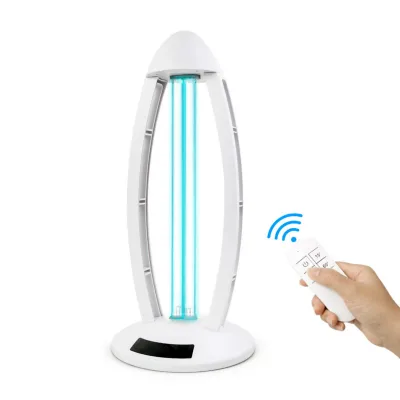


Comprehensive Sourcing Guide
Strategic Sourcing Guide for Remote Control UVC Disinfection Lamps
Understanding Technical Specifications and Operational Parameters
When sourcing remote control UVC disinfection lamps, buyers must first distinguish between the specific technical attributes observed in the market and general performance claims. The available product data indicates a diverse range of configurations, primarily driven by the intended application environment. A critical observation from the current market inventory is the variation in wavelength specifications. While some units are explicitly categorized under UV-B, the majority of disinfection-focused models utilize UV-C wavelengths, which are the standard for germicidal applications. Buyers should verify the specific wavelength output for their intended use case, as UV-C is the primary spectrum for effective pathogen inactivation.
Power consumption and voltage compatibility are equally vital for procurement planning. The observed product range includes models with power ratings of 38W, 40W, 55W, and 38W/55W dual options. Voltage requirements vary significantly across listings, with some units designed for 220V systems, others for 100-130V or 180-305V ranges, and some supporting a universal 220V/110V input at 50Hz/60Hz frequencies. This variability necessitates a strict alignment between the lamp's electrical specifications and the local grid infrastructure of the deployment site. Failure to match voltage and frequency can lead to equipment failure or safety hazards.
The physical construction of these lamps also presents distinct material profiles. The housing materials observed include Plastic and ABS, which are common for consumer-grade home units, while the internal lamp tubes are frequently identified as Quartz UV Lamp or Quartz. The choice of tube material is significant for thermal stability and UV transmission efficiency. Furthermore, the shape of the units varies, with disc-shaped designs noted alongside spiral configurations described as "Half/Full Spiral UVC Germicidal Disinfection." The dimensions of these units range widely, from compact standards like 20(Dia)X42(H)mm to larger industrial housings measuring 426156110mm. Buyers must evaluate whether the form factor supports the required coverage area, which is listed in the data as ranging from 5 to 55 square meters depending on the specific model and power output.
Compliance, Certification, and Safety Standards
Navigating the compliance landscape for UVC disinfection lamps requires rigorous verification of certification status. The market data explicitly lists CE certification for several models, indicating that these products have met specific European health, safety, and environmental protection standards. However, the presence of CE marking on a product page does not automatically guarantee that every unit in a batch complies, nor does it imply adherence to other regional standards like RoHS, which appears in background notes but lacks explicit confirmation in the primary product attributes.
Buyers must treat certification claims as observations that require validation rather than absolute guarantees. When evaluating a potential supplier, the procurement team should request valid, up-to-date certification documents that correspond to the specific model numbers listed, such as SJD-36, ZYUV, SLUV10, or LYL-ZWXTD-03. The data also references specific product standards related to dimensions, such as 171741cm or 191945cm, which likely refer to packaging or unit dimensions rather than safety standards. It is crucial to distinguish between physical standard dimensions and regulatory compliance standards.
In addition to CE, buyers should verify if the product meets local regulatory requirements for the destination market. For instance, while the data mentions a Color Rendering Index (CRI) of >80 and a Power Factor (PF) of 0.5, these are electrical and optical characteristics rather than safety certifications. The PF value of 0.5 is relatively low, which may indicate a need for power factor correction in sensitive industrial applications to avoid penalties from utility providers. The absence of explicit mentions of other major certifications like UL, ETL, or ISO in the high-confidence facts means buyers cannot assume their presence. Due diligence involves requesting third-party test reports that confirm the lamp's output, shielding effectiveness, and electrical safety to ensure the product is safe for use in both home and industrial settings.
Cost Drivers and Pricing Dynamics
The pricing structure for remote control UVC disinfection lamps is influenced by a complex interplay of factors, including power rating, material quality, and certification status. The observed market price range spans from 5 to 300 USD, a broad spectrum that reflects the diversity of product tiers available. Lower-priced units in the 5-50 USD range typically correspond to basic models with lower wattage (e.g., 38W or 40W), plastic housings, and minimal features. These are often suitable for small residential spaces with coverage areas under 20 square meters.
Conversely, the higher end of the price spectrum, approaching 300 USD, generally correlates with industrial-grade units featuring higher power outputs (55W or more), quartz tube construction, and advanced features such as remote control capabilities and extended lifespans. The data indicates a lifespan of 20,000 hours for some models and 6,000+ hours for others. The 20,000-hour lifespan is a significant cost driver, as it implies higher-quality components and better thermal management, reducing the total cost of ownership over time.
Minimum Order Quantity (MOQ) is another critical cost driver. The observed MOQ range is 1 to 500 units. Suppliers offering an MOQ of 1 are likely targeting individual buyers or small retailers, often at a higher per-unit cost. In contrast, suppliers requiring an MOQ of 500 units are targeting bulk procurement, which can significantly reduce the per-unit price but requires a larger upfront capital investment. Buyers must balance their budget constraints with their inventory needs. Additionally, packaging standards, such as "Foma+Yellow Carton" or "10PCS/Carton," can impact shipping costs. Bulky packaging increases freight charges, so buyers should evaluate the efficiency of the packing standard relative to the product dimensions to optimize logistics expenses.
Typical Applications and Coverage Analysis
The versatility of remote control UVC disinfection lamps allows them to serve a wide array of applications, from domestic use to industrial sterilization. The product data explicitly categorizes usage scenarios as "Home," "Hospital," and "Industrial use." This classification suggests that the technology is adaptable to various environments, provided the technical specifications align with the specific hygiene requirements of the space.
For home applications, the focus is often on compactness and ease of use. Models with a coverage area of 5-40 square meters are ideal for living rooms, bedrooms, or small offices. The disc-shaped design and ABS or plastic housing make these units aesthetically pleasing and safe for residential environments. The inclusion of remote control functionality enhances user convenience, allowing for operation without direct physical contact, which is particularly useful in maintaining hygiene protocols.
In hospital and industrial settings, the requirements shift towards higher power and larger coverage areas. The data notes coverage areas up to 55 square meters and power ratings of 55W. These units are better suited for larger rooms, corridors, or manufacturing floors where rapid and thorough disinfection is necessary. The "Half/Full Spiral UVC Germicidal Disinfection" feature suggests a design optimized for maximizing UV exposure in larger volumes. The 20,000-hour lifespan is particularly valuable in these high-utilization environments, reducing the frequency of replacements and maintenance downtime. Buyers must ensure that the selected lamp's irradiation area matches the room dimensions to avoid under-disinfection or the creation of shadow zones where pathogens may survive.
Supplier Evaluation and Quality Control Protocols
Evaluating suppliers for UVC disinfection lamps requires a multi-faceted approach that goes beyond price and product listings. The origin of the products is a key factor, with the data indicating origins in China and specifically Ningbo, Zhejiang. While this provides a geographical context, it does not inherently guarantee quality. Buyers should assess the supplier's manufacturing capabilities, quality control processes, and track record in the disinfection sector.
Quality control should begin with the verification of raw materials. The distinction between Plastic/ABS housing and Quartz lamp tubes is critical. Quartz is generally preferred for its durability and UV transmission efficiency compared to other glass types. Buyers should request material certificates to confirm the purity and composition of the quartz tubes. Additionally, the consistency of the power factor (0.5) and voltage stability across batches must be verified. Inconsistent electrical performance can lead to premature failure or safety issues.
The packaging standards observed, such as "Carton" or specific dimensions like "171741cm," should be evaluated for their ability to protect the product during transit. Fragile components like quartz tubes require robust packaging to prevent breakage. Buyers should also inquire about the supplier's testing procedures for the remote control functionality and the accuracy of the UV output. Since the data mentions specific model numbers like SLUV10 and LYL-ZWXTD-02, buyers should ensure that the supplier can provide consistent quality for these specific SKUs and not just generic samples.
Long-Term Procurement and Lifecycle Management
Long-term procurement considerations for UVC disinfection lamps extend beyond the initial purchase price to include maintenance, replacement cycles, and operational efficiency. The lifespan data, ranging from 6,000 to 20,000 hours, is a primary indicator of the product's longevity. A lamp with a 20,000-hour lifespan offers a significant advantage in terms of total cost of ownership, especially in high-traffic environments where the lamp may be operated for several hours daily.
Buyers should also consider the availability of replacement parts and the ease of maintenance. While the data does not explicitly detail spare part availability, the complexity of the lamp design (e.g., spiral vs. straight tube) can influence the ease of replacement. Models with modular designs may be easier to service, reducing downtime. Furthermore, the power factor of 0.5 observed in some models suggests that energy efficiency might be a concern. In large-scale deployments, improving the power factor could lead to substantial energy savings and reduced electrical load on the facility.
Finally, the evolution of disinfection standards and regulations should be monitored. As technology advances, newer models with improved wavelengths or safety features may become available. Buyers should establish a procurement strategy that allows for flexibility and upgrades. The ability to source units with different power ratings and coverage areas ensures that the procurement strategy can adapt to changing needs. By focusing on suppliers who offer transparent technical data, valid certifications, and reliable product lifespans, buyers can secure a sustainable supply chain for their UVC disinfection needs.
Comparative Overview of Key Product Attributes
To assist in the decision-making process, the following table summarizes the key technical attributes observed in the market data, highlighting the variations that buyers must consider during the sourcing process.
| Attribute Category | Observed Variations | Procurement Consideration |
|---|---|---|
| Wavelength | UV-B, UV-C | Verify UV-C for germicidal efficacy; UV-B is less common for disinfection. |
| Power Rating | 38W, 40W, 55W, 38W/55W | Match power to room size; higher wattage for larger industrial spaces. |
| Voltage/Freq | 220V, 100-130V, 180-305V, 50/60Hz | Ensure compatibility with local grid to prevent equipment damage. |
| Material | Plastic, ABS, Quartz (Tube) | Quartz tubes offer better UV transmission; ABS/Plastic for housing. |
| Coverage Area | 5-40 Sq.M, ≤55 Sq.M | Calculate room dimensions to ensure adequate disinfection coverage. |
| Lifespan | 6,000+ Hours, 20,000 Hours | Higher lifespan reduces long-term replacement costs and maintenance. |
| Certification | CE (Explicit), RoHS (Background) | Request valid CE docs; verify other regional certifications as needed. |
| Packaging | Foma+Yellow Carton, 10PCS/Carton | Evaluate packaging for shipping safety and logistics efficiency. |
| Origin | China, Ningbo, Zhejiang | Assess supplier location for lead times and shipping costs. |
This comparative overview underscores the necessity of precise specification matching. The wide range of options available in the market allows for tailored solutions, but it also demands a rigorous evaluation process to ensure that the selected product meets the specific operational, safety, and compliance requirements of the buyer's organization. By adhering to the principles of evidence-based sourcing and avoiding assumptions about unverified claims, buyers can successfully navigate the complex landscape of UVC disinfection lamp procurement.
FAQs
What wavelengths are available for these lamps?
The available wavelengths include UV-B and UV-C, with UV-C being the standard for germicidal disinfection. Buyers must verify the specific wavelength output for their intended use case, as UV-C is the primary spectrum for effective pathogen inactivation.
Which voltage options support these disinfection units?
Voltage options vary significantly, including 220V, 100-130V, 180-305V, and universal 220V/110V inputs at 50Hz/60Hz. Strict alignment between the lamp's electrical specifications and the local grid infrastructure is necessary to prevent equipment failure or safety hazards.
How long do these lamps typically last?
Lifespan ranges from 6,000 hours to 20,000 hours depending on the specific model and component quality. The 20,000-hour lifespan is a significant cost driver, implying higher-quality components and better thermal management for reduced total cost of ownership.
Can I find models with CE certification?
Yes, CE certification is explicitly listed for several models in the current market inventory. However, buyers must treat this as an observation requiring validation and should request valid, up-to-date certification documents corresponding to specific model numbers like SJD-36 or SLUV10.
What materials are used for the lamp housing?
Housing materials observed include Plastic and ABS, which are common for consumer-grade home units. The internal lamp tubes are frequently identified as Quartz UV Lamp or Quartz, chosen for their thermal stability and UV transmission efficiency.
Which coverage areas do these lamps support?
Coverage areas range from 5 to 55 square meters depending on the specific model and power output. Buyers must ensure the selected lamp's irradiation area matches the room dimensions to avoid under-disinfection or the creation of shadow zones where pathogens may survive.
What is the minimum order quantity for these products?
The observed MOQ range spans from 1 to 500 units across different suppliers. Suppliers offering an MOQ of 1 target individual buyers, while those requiring 500 units target bulk procurement, which can significantly reduce the per-unit price.