Source Remote Control Tracked Lawn Mower for Golf Courses, Soccer Fields, and Forest Lawns
Explore 30 verified listings for the Remote Control Tracked Lawn Mower suitable for golf courses, soccer fields, and forest lawns. Buyers can compare specifications, prices, and certifications to find the ideal machine for large-scale turf maintenance.
Key considerations
Products List
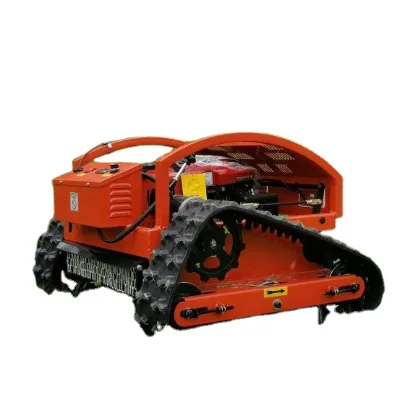

Variable Speed Lawn Mower for Stable Operation Remote Control Tracked Lawn Mower
$2416.00 - $3815.00
MOQ: 1 Sets

Tracked Remote Control Lawn Mower for Soft Ground and Muddy Conditions
$3980.00 - $4900.00
MOQ: 1 Sets


550 Tracked Lawn Mower with Remote Control Engine-Powered Reliable Operation
$777.00 - $1372.00
MOQ: 3 Sets


Comprehensive Sourcing Guide
Strategic Sourcing Guide for Remote-Controlled Tracked Lawn Mowers
Understanding the Technical Architecture and Performance Parameters
When sourcing a remote-controlled tracked lawn mower, the primary objective is to identify machinery that balances high productivity with operational safety in challenging terrains. The core technical identity of these machines is defined by their propulsion and control systems. Unlike traditional walk-behind or ride-on mowers, these units utilize a tracked walking mode, often described as crawler or tracked systems, which provides superior traction on uneven ground, steep slopes, and soft soil conditions. The observed specifications indicate a maximum working slope capability of up to 65 degrees, a critical metric for properties with significant elevation changes or rugged landscapes.
The powertrain configuration is a central consideration. The supplied data reveals a mix of engine displacements and power outputs, ranging from 196cc engines to larger 764cc units delivering approximately 27 horsepower. This variance suggests that buyers must align engine capacity with the specific mowing requirements of their site. A 196cc unit may suffice for smaller, managed areas, while the 764cc engine is better suited for extensive applications such as golf courses, soccer fields, or forest lawns where continuous operation and higher torque are necessary. The fuel source is consistently identified as gasoline or petrol, with a 4-stroke engine configuration being a standard feature. This ensures compliance with modern emission standards while providing the reliability required for commercial-grade equipment.
Control systems have evolved significantly in this category. The operation type is strictly remote-controlled, utilizing continuous path control modes. The remote control distance varies, with observed ranges of 200 meters, 680 meters, or GPS-enabled tracking. This flexibility allows operators to manage large areas from a safe distance, reducing the risk of injury from flying debris or equipment malfunction. The control mode is further specified as either C7, Industrial Grade, or GPS-based, indicating that the sophistication of the control unit should be matched to the complexity of the terrain and the required precision of the mowing pattern.
Compliance, Certification, and Regulatory Standards
Navigating the regulatory landscape is essential for importing and operating heavy machinery internationally. The product data explicitly lists several certifications that serve as indicators of compliance and safety. Buyers should verify that the specific unit they procure carries CE certification, which is a mandatory requirement for selling machinery within the European Economic Area. Additionally, the presence of EPA certification is noted, which is critical for equipment intended for the North American market, ensuring that engine emissions meet strict environmental regulations.
Beyond the major regional certifications, the data mentions Euro 5 standards, indicating adherence to specific emission limits for non-road mobile machinery. This is particularly relevant for buyers operating in regions with strict environmental policies. The inclusion of MSDS (Material Safety Data Sheet) certification is also observed, which is a standard requirement for the safe transport and handling of chemical components, such as fuel and lubricants, often found in the machinery's supply chain.
However, it is imperative to treat these certifications as observations of specific listed products rather than universal guarantees for all inventory. A buyer must request current, valid certificates for the specific model and serial number they intend to purchase. The machinery test report is also listed as "Provided," suggesting that third-party validation of performance and safety is available. Buyers should not assume that a test report is automatically included with every unit; instead, they must explicitly request the latest report to verify that the engine displacement, cutting width, and safety mechanisms meet the claimed specifications. The absence of a specific standard number in the general description requires the buyer to confirm the exact ISO or national standards applicable to the machinery's construction and operation.
Cost Drivers and Pricing Variables
The pricing structure for remote-controlled tracked lawn mowers is influenced by a complex interplay of technical specifications and customization options. The observed price range spans from 1 USD to 10,000 USD, a wide variance that reflects the diversity in engine size, cutting width, and control system sophistication. A unit with a 196cc engine and a 550mm cutting width will naturally be priced differently from a 764cc model with a 900mm mowing width and GPS tracking capabilities.
The minimum order quantity (MOQ) is another significant cost driver. The data indicates an MOQ range of 1 to 3 units. For buyers requiring a single unit for a specific project, the per-unit cost may be higher due to the lack of bulk discounts. Conversely, purchasing three units or more may unlock better pricing tiers. The customization availability is a key factor in cost escalation. While standard models come in red or blue, the option for custom colors or specific branding adds to the manufacturing complexity and final price.
Packaging also impacts the total landed cost. The products are shipped in either wooden boxes or iron frame boxes. Wooden packaging is often lighter and cheaper but may offer less protection for long-distance shipping compared to iron frames. Buyers must consider the destination and shipping method when evaluating the total cost, as heavier or more robust packaging will increase freight charges. Furthermore, the warranty terms, observed as either 1 year or 2 years, can influence the initial purchase price. A longer warranty period often correlates with a higher upfront cost but provides better long-term value and risk mitigation.
Typical Applications and Operational Suitability
The versatility of remote-controlled tracked lawn mowers makes them suitable for a wide array of applications, particularly where traditional mowing equipment is impractical or unsafe. The primary use cases identified include golf courses, soccer fields, rugby fields, common lawns, and forest lawns. The ability to handle slopes up to 65 degrees makes these machines ideal for hilly golf courses or uneven sports fields where safety is a paramount concern.
The cutting width is a critical specification for determining operational efficiency. The data shows cutting widths of 550mm and 900mm. A 900mm mowing width is significantly more efficient for large, open areas like sports fields, allowing for faster coverage of the 1000-5000 square meter applicable area. In contrast, a 550mm width may be more appropriate for tighter spaces or areas with numerous obstacles. The working way is described as reciprocating, and the cutter type is a rotary lawn mower with a swing straight metal blade. This configuration is effective for both weeding and pruning, offering a dual-purpose capability that enhances the utility of the machine.
The fuel tank capacity of 8.5 liters suggests a substantial operational range, allowing for extended periods of work without frequent refueling. This is particularly beneficial for large properties where downtime for refueling can disrupt workflow. The walking speed of 0-6 km/h provides a controlled pace that ensures a high-quality cut, even on difficult terrain. The minimum ground clearance of 0mm indicates that the machine is designed to sit low to the ground, which is essential for achieving a precise cut height ranging from 0 to 200mm. This adjustability allows operators to tailor the mowing height to the specific grass type and aesthetic requirements of the landscape.
Supplier Evaluation and Quality Assurance Protocols
Evaluating a supplier for remote-controlled tracked lawn mowers requires a rigorous assessment of their technical capabilities and quality control processes. The place of origin is identified as China, specifically Shandong, a region known for its manufacturing base. However, the specific supplier name is not provided, and buyers must conduct their own due diligence to verify the manufacturer's reputation and capacity.
Key evaluation criteria should include the availability of a machinery test report and the validity of certifications. Buyers should request detailed documentation proving that the engine, cutting deck, and control systems have been tested according to relevant standards. The warranty terms, whether 1 year or 2 years, should be clearly defined in the contract, including the scope of coverage and the process for claiming service. The after-sales service is listed as "Indefinite," which implies a long-term commitment from the supplier, but buyers must clarify what this entails, such as the availability of spare parts, technical support, and repair services.
Quality control should extend beyond the final inspection. Buyers should inquire about the manufacturing process, including the materials used for the tracks, the engine assembly, and the remote control electronics. The weight of the machine, observed at 130kg and 385kg for different models, is a key indicator of build quality. Heavier units often imply more robust construction, which can enhance durability and stability on slopes. However, the weight must be balanced against the power-to-weight ratio to ensure efficient operation.
Long-Term Procurement and Maintenance Considerations
Long-term procurement success depends on understanding the maintenance requirements and lifecycle costs of the equipment. The engine type is a 4-stroke gasoline engine, which requires regular oil changes, filter replacements, and spark plug maintenance. The startup method is electric, which simplifies the starting process but requires a reliable battery system. Buyers should verify the battery specifications and the availability of replacement batteries to ensure uninterrupted operation.
The remote control system is a critical component that requires ongoing attention. With control modes ranging from C7 to GPS, the complexity of the system varies. Buyers should ensure that the supplier provides comprehensive training on the operation and troubleshooting of the remote control unit. The customization options, such as color and branding, should be considered in the context of long-term maintenance, as custom parts may be more expensive or harder to source than standard components.
The warranty period is a crucial factor in long-term planning. A 2-year warranty offers more protection than a 1-year warranty, reducing the financial risk associated with early failures. Buyers should also consider the availability of spare parts, such as cutting blades, tracks, and engine components. The "Indefinite" after-sales service claim suggests that the supplier is committed to supporting the product throughout its life, but this must be validated through clear service level agreements.
In conclusion, sourcing a remote-controlled tracked lawn mower involves a careful analysis of technical specifications, compliance requirements, cost factors, and supplier reliability. By focusing on the specific attributes observed in the market data, buyers can make informed decisions that align with their operational needs and long-term strategic goals. The combination of high productivity, safety features, and versatile applications makes these machines a valuable asset for modern landscape management, provided that the procurement process is conducted with due diligence and attention to detail.
FAQs
What is the maximum working slope for this mower?
The maximum working slope is 65 degrees, allowing operation on steep terrain. This capability makes the machine suitable for hilly golf courses and uneven forest lawns where traditional mowers cannot safely operate.
Which engine displacement options are available for this unit?
Available engine displacements include 196cc and 764cc models. The 764cc engine delivers 27 horsepower, making it ideal for large areas like soccer fields, while the smaller engine suits managed lawns.
Can the remote control distance reach up to 680 meters?
Yes, the remote control distance can reach 680 meters or utilize GPS tracking. This range allows operators to manage large properties safely from a distance while maintaining continuous path control.
What certifications are typically provided with this machinery?
Typical certifications include CE, EPA, Euro 5, and MSDS. These indicate compliance with emission standards and safety requirements for international markets, though specific units must be verified for current validity.
How is the warranty period defined for this equipment?
The warranty period is listed as either 1 year or 2 years depending on the specific model. Buyers should confirm the exact term in the contract to ensure adequate protection against early failures.
What is the minimum order quantity for purchasing this mower?
The minimum order quantity ranges from 1 to 3 units. Purchasing multiple units may unlock better pricing tiers, while single-unit orders are available for specific project needs.
Which fuel tank capacity supports extended operation times?
The fuel tank capacity is 8.5 liters, supporting extended operation without frequent refueling. This capacity is beneficial for large properties where downtime for refueling can disrupt the mowing workflow.