Source Removable Battery Feature Phone for Seniors, Field, and Travel
Find 26 Removable Battery Feature Phone options with GSM and 4G support. Buyers can compare models like E6000 and 6688V, noting battery capacities from 2001mAh to 3000mAh, screen sizes, and customization availability for various needs.
Key considerations
Products List




Comprehensive Sourcing Guide
Sourcing Guide for Removable Battery Feature Phones
Understanding the Removable Battery Feature Phone Market
The category of removable battery feature phones serves a distinct and vital segment of the global telecommunications market. Unlike modern smartphones where battery replacement is often a complex, warranty-voiding procedure, feature phones with removable power sources prioritize longevity, user autonomy, and ease of maintenance. For B2B buyers, particularly those targeting elderly demographics, industrial workers, or regions with unstable power infrastructure, these devices represent a strategic procurement opportunity. The core value proposition lies in the ability for the end-user to swap batteries instantly, eliminating downtime and extending the operational life of the device beyond the typical lifespan of sealed-unit electronics.
In the current supply landscape, these devices are often categorized under "Elderly Mobile Phones" or "Key Phones," emphasizing simplicity and durability. The market offers a range of configurations, from basic GSM models to more advanced 4G LTE variants. Buyers must navigate a complex array of specifications where attributes like battery capacity, network standards, and physical dimensions vary significantly between models. For instance, observed product data indicates battery capacities ranging from 2001mAh to 3000mAh, with specific models featuring capacities as high as 2400mAh. This variance directly impacts the standby time, which can reach up to 400 hours in optimized configurations, a critical metric for users who may not charge their devices daily.
Technical Specifications and Hardware Configuration
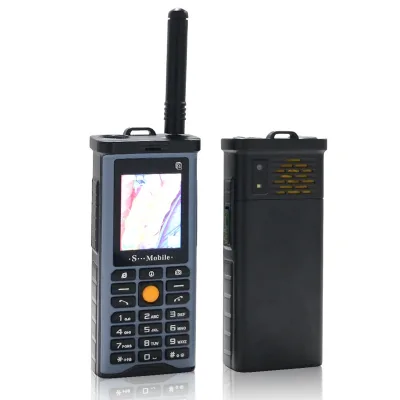
When evaluating removable battery feature phones, the technical architecture is the primary determinant of suitability. The hardware must balance robustness with essential connectivity. A fundamental observation in this category is the prevalence of "Bar" design styles, which offer a compact form factor suitable for one-handed operation. Screen sizes typically fall within the 2.0 to 2.5-inch range, often without touch screen capabilities, relying instead on tactile keypads. This design choice reduces manufacturing costs and increases resistance to accidental inputs, a common issue in high-usage environments.
The internal processing power is generally modest, with single-core CPUs being the standard for this class of devices. Memory configurations vary, with some units offering 48MB or 128MB of storage, sufficient for basic contacts and SMS but not for media-heavy applications. Storage expansion is a point of divergence; while some models support SD card slots, others do not support expansion, necessitating careful selection based on the intended use case. Connectivity options also differ, with data interfaces ranging from Micro USB to the newer Type-C, and network standards spanning from legacy GSM to modern 4G LTE.
One of the most critical technical attributes is the battery configuration. While the core keyword specifies "removable battery," the market also includes sealed units. Buyers must explicitly verify the "Removable Battery" attribute, as some models in the feature phone category are designed with non-removable power sources. For those seeking the removable variant, the physical design must accommodate a battery compartment that allows for easy access without tools. Additionally, the presence of auxiliary features such as FM radios, Bluetooth connectivity, and emergency flashlights adds functional value. The inclusion of multiple SIM slots, such as 4-slot configurations in some industrial models, further expands the utility of these devices for multi-network operations.
Compliance, Certification, and Regulatory Standards
Navigating the regulatory landscape is essential for international procurement. Feature phones must comply with the safety and electromagnetic standards of their target markets. A key certification observed in the supply chain is the CE mark, which indicates conformity with health, safety, and environmental protection standards for products sold within the European Economic Area. Buyers should verify that the specific models they intend to source carry valid CE certification, as this is often a prerequisite for customs clearance and retail distribution in Europe.
Beyond CE, the physical dimensions of the device must align with local regulatory requirements for radio equipment. Standardized size specifications are common, with observed dimensions ranging from 134mm x 60.3mm x 29.3mm to more compact forms like 121.5mm x 50mm x 12.8mm. These variations affect the device's portability and compatibility with holsters or mounting systems used in industrial settings. Network compatibility is another regulatory hurdle; devices must support the specific network standards of the deployment region. While GSM remains a global baseline, the transition to 4G LTE is accelerating. Buyers must ensure that the selected models support the correct "Network Standard," whether it is GSM for legacy coverage or 4G/LTE for modern data requirements.
The origin of the product also plays a role in compliance. Many of these devices originate from manufacturing hubs in Guangdong, China. While this region is a leader in mobile device production, buyers should request documentation confirming that the manufacturing process adheres to international quality management standards. The "Condition" of the product should always be verified as "New" to avoid issues with refurbished or gray-market goods. Furthermore, the packaging standards, such as "Standard Packing" or "Gift Box" options, must be clear, as they often influence the perceived value and suitability for corporate gifting or bulk distribution.
Cost Drivers and Procurement Economics
The pricing of removable battery feature phones is influenced by a complex interplay of hardware components, network capabilities, and order volume. The observed price range for these devices in the market spans from approximately $5.28 to $36 USD. This wide variance reflects differences in network technology (GSM vs. 4G), battery capacity, and additional features like Bluetooth or dual SIM support. Lower-priced models typically rely on older network standards and simpler hardware, while higher-priced units may offer 4G connectivity, larger batteries, or enhanced durability features.
Minimum Order Quantity (MOQ) is another significant cost driver. The market exhibits a broad MOQ range, from as low as 1 unit for sampling or small pilots to 10,000 units for large-scale enterprise deployments. Buyers should negotiate based on their volume requirements, as higher volumes often unlock tiered pricing structures. The "Customization" attribute is a notable cost factor; many suppliers offer customized options, including branding, specific color schemes (such as Black/Green), and tailored packaging. While customization adds value, it may increase the unit cost and extend lead times.
Other economic considerations include the "Standard Packing" versus "Gift Box" options. Premium packaging can increase the unit price but may be necessary for specific market segments. Additionally, the material composition, predominantly plastic in this category, keeps manufacturing costs low but also dictates the device's durability. Buyers must weigh the cost savings of plastic construction against the potential need for more ruggedized materials if the devices are intended for harsh industrial environments.
Typical Applications and Use Cases
Removable battery feature phones are uniquely suited for specific applications where reliability and simplicity are paramount. The "Elderly Mobile Phone" segment is a primary use case, where large buttons, clear displays, and long battery life are essential. The absence of a touch screen and the presence of a physical keypad make these devices accessible for users with limited dexterity or visual impairments. Features like emergency flashlights and FM radios provide additional safety and entertainment value for this demographic.
In the industrial sector, these phones serve as reliable communication tools for workers in environments where smartphones may be impractical or prone to damage. The removable battery allows for continuous operation by swapping charged units, a critical feature for shift work in remote locations. The support for multiple SIM slots in some models enables workers to switch between different network providers to ensure coverage in areas with varying signal strength. Furthermore, the durability of the "Bar" design and the robustness of the plastic casing make these devices suitable for construction, logistics, and agricultural settings.
For humanitarian and emergency response organizations, the long standby time of up to 400 hours is a decisive factor. In disaster zones where power grids are down, the ability to use a device for weeks on a single charge, or to easily swap batteries, can be life-saving. The simplicity of the interface ensures that even non-technical users can operate the device effectively in high-stress situations.
Supplier Evaluation and Quality Control
Selecting the right supplier requires a rigorous evaluation process focused on consistency and reliability. Buyers should prioritize suppliers who can demonstrate a track record of producing devices with the specific attributes required, such as removable batteries and the correct network standards. The "prod_origin" of Guangdong, China, is a common indicator of established manufacturing capabilities, but buyers must verify the specific factory's quality control processes.
Quality control should begin with the verification of product attributes against the order specifications. This includes checking the "prod_model" (e.g., E6000, 6688V, VK-F1818) to ensure the correct variant is being supplied. Buyers must confirm the "Removable Battery" status, as this is a critical differentiator. Additionally, the "Condition" must be strictly "New," and the "Data interface" type (Micro USB or Type-C) must match the requirements of the deployment environment.
Testing protocols should include functional checks for all advertised features, such as Bluetooth connectivity, FM radio operation, and flashlight functionality. The "Memory" capacity and "Storage Expansion" capabilities should be verified to ensure they meet the operational needs. For network-dependent devices, field testing in the target region is recommended to confirm signal reception on the specified "Network Standard." Finally, the packaging and labeling must be accurate, with clear indication of the "Standard" and "Certification" details to facilitate smooth customs clearance and retail readiness.
Long-Term Procurement and Sustainability Considerations
Sourcing removable battery feature phones offers long-term advantages in terms of sustainability and total cost of ownership. The ability to replace the battery rather than the entire device significantly reduces electronic waste. As battery technology evolves, users can upgrade to higher-capacity cells without discarding the phone, extending the product's lifecycle. This aligns with growing corporate sustainability goals and environmental regulations.
From a procurement strategy perspective, the modularity of these devices allows for flexible inventory management. Buyers can stock a variety of battery capacities or colors to meet diverse customer needs without committing to a single configuration. The "Customization" options available in the market further enhance this flexibility, allowing companies to brand devices for specific internal departments or external clients.
However, buyers must remain vigilant regarding the obsolescence of network standards. As the industry transitions away from 2G and 3G networks, the long-term viability of GSM-only models may be compromised. Procurement strategies should prioritize 4G LTE models to ensure future compatibility. Additionally, the availability of spare parts, particularly batteries and chargers, should be secured to maintain the operational readiness of the fleet. By focusing on these long-term factors, buyers can build a resilient supply chain that delivers value over the extended lifespan of the devices.
FAQs
What battery capacity is available for these phones?
Battery capacity ranges from 2001mAh to 3000mAh, with specific models like the E6000 featuring a 2400mAh unit. This capacity supports a standby time of up to 400 hours, ensuring long operational periods without frequent recharging for users.
Which network standards do these devices support?
Devices support GSM and 4G LTE network standards depending on the model. Some units are configured for 2G GSM networks, while others operate on 4G LTE, allowing buyers to select models based on their specific regional connectivity requirements.
Can I find models with removable batteries?
Yes, many models feature removable batteries, though some units have non-removable designs. Buyers must verify the specific product attribute to ensure the selected model allows for easy battery replacement, which is critical for industrial or elderly use cases.
What certifications are required for European distribution?
The CE certification is a key requirement for products sold within the European Economic Area. Buyers should verify that the specific models they intend to source carry valid CE certification to ensure compliance with safety and environmental protection standards.
How does customization affect the product options?
Customization is available for branding, colors, and packaging options like gift boxes. While this adds value, it may increase the unit cost and extend lead times, so buyers should confirm specific customization capabilities before placing large orders.
What is the typical price range for these phones?
The observed price range spans from 5.28 to 36 USD per unit. This variance reflects differences in network technology, battery capacity, and additional features, with lower prices typically associated with older GSM standards and simpler hardware configurations.
Which screen sizes are common for these devices?
Screen sizes typically fall within the 2.0 to 2.5-inch range and often lack touch screen capabilities. This design relies on tactile keypads, reducing manufacturing costs and increasing resistance to accidental inputs in high-usage environments.