Source Replacement Water Pump for BMW for 3 Series, 5 Series, X5
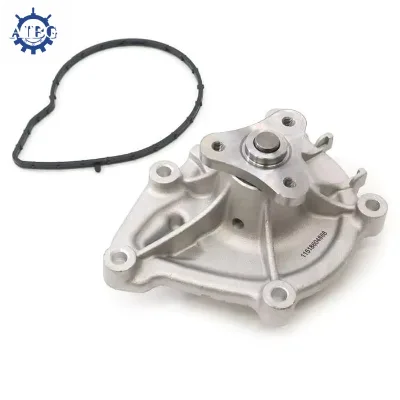
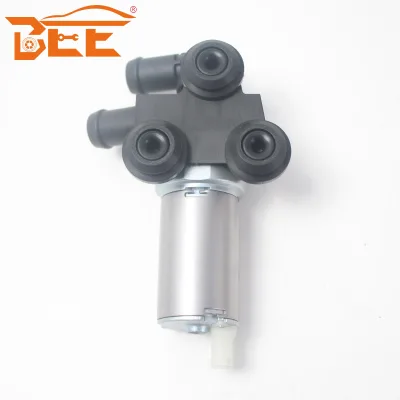
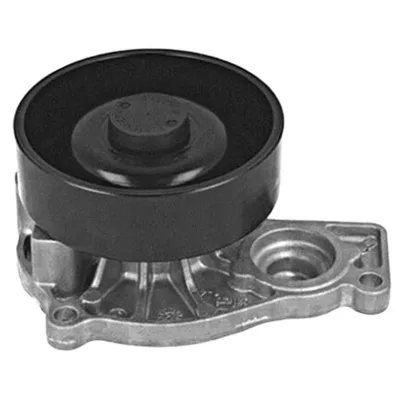
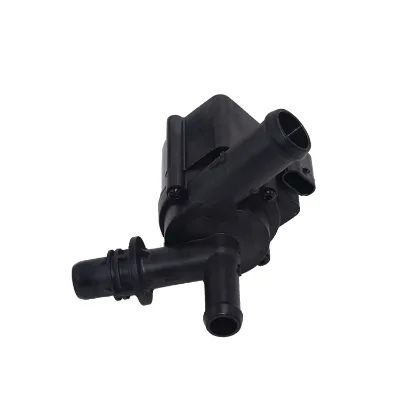
Find 30 verified Replacement Water Pump for BMW options with varying OEM codes like 11518635089 and engine compatibility for N52 and N20 models. Buyers can compare casting techniques, plug types, and packaging details across multiple listings.
Key considerations
Products List







Comprehensive Sourcing Guide
Strategic Sourcing Guide for BMW Replacement Water Pumps
Navigating the global market for replacement water pumps for BMW vehicles requires a disciplined approach that balances technical precision with rigorous supplier evaluation. The automotive cooling system is a critical subsystem where failure can lead to catastrophic engine damage, particularly in high-performance models. Buyers must move beyond simple part number matching to understand the underlying engineering specifications, material science, and compliance frameworks that define a genuine replacement component. This guide synthesizes available product data and industry standards to provide a framework for procurement professionals seeking reliable supply chains for BMW water pumps, specifically targeting models equipped with N52, N54, and N20 engines.
Technical Specifications and Engineering Variations
The primary challenge in sourcing BMW water pumps lies in the significant variation in design across different engine families and model years. The supplied product data indicates that a single generic search term covers multiple distinct engineering configurations. For instance, the product attributes distinguish between pumps designed for the BMW N52 engine with a bracket versus those without a bracket, as well as specific variants for the N20 engine featuring either a square plug or a flat plug. These physical and electrical differences are not merely cosmetic; they dictate the mounting interface, the electrical connector type, and the internal impeller geometry.
Furthermore, the cooling system architecture varies between direct-flow and tube-fin core types, with some units utilizing a bar and plate radiator core structure. The body material is predominantly aluminum alloy, which offers a favorable strength-to-weight ratio and thermal conductivity, though some specifications list steel as a material component, likely referring to internal shafts or mounting hardware. The cooling fluid type is noted as alcohol-based in specific contexts, which necessitates compatibility checks with the vehicle's existing coolant mixture to prevent chemical degradation of seals. Additionally, the water temperature sensor type is specified as digital, requiring precise integration with the vehicle's electronic control unit (ECU).
Buyers must verify that the specific OEM part numbers align with the vehicle's production year and engine code. The data lists a wide array of OEM identifiers, including 11518635089, 11517597715, 11517583836, 11517604027, and 11518625097. These numbers correspond to specific applications ranging from the BMW 1, 3, 5, and 7 Series to the X1, X3, X4, X5, and X6 models. For example, the 11517583836 variant is explicitly linked to the F10/F11/F18 (5 Series) and F01/F02 (7 Series) produced between 2008 and 2016, as well as the F25 X3. Misidentifying the plug type or bracket configuration during the sourcing phase can result in immediate rejection of the shipment or costly installation failures.
Compliance, Certification, and Quality Standards
In the B2B automotive aftermarket, compliance is not optional; it is a prerequisite for market entry and liability protection. The product attributes highlight several critical certifications and standards that must be verified during the supplier selection process. The data explicitly mentions TSISOMaterial and TS certification, alongside ISO 9001 and TS 16949. These standards indicate that the manufacturing facility adheres to international quality management systems and specific automotive industry requirements for continuous improvement and defect prevention.
ISO 9001 is a general quality management standard, while TS 16949 (now IATF 16949) is the specific technical specification for automotive production and relevant service parts organizations. A supplier claiming compliance with these standards must provide valid, up-to-date certificates from accredited bodies. The absence of such documentation should be treated as a red flag, regardless of the product's apparent quality. Additionally, the product is described as a "Standard Component," which implies it must meet baseline dimensional and performance tolerances defined by industry norms, though specific numerical tolerances are not provided in the source data and must be verified through technical drawings.
The sourcing guide emphasizes that "Standard Component" status does not guarantee universal fitment. Buyers must cross-reference the "prod_standard" field, which lists specific part numbers like 11518635089 and 1151759715, against the vehicle's service manual. The data also notes that some products are manufactured "as drawing," suggesting a custom or semi-custom production process where the final product must match the provided engineering blueprint exactly. This level of customization requires a robust quality control protocol to ensure that the casting and machining processes do not deviate from the original equipment manufacturer (OEM) specifications.
Cost Drivers and Pricing Dynamics
Understanding the cost structure of BMW water pumps is essential for budgeting and negotiation. The observed listed price range in the market spans from $0.50 to $500 USD. This wide variance is driven by several factors, including the complexity of the design, the quality of materials, the level of customization, and the volume of the order. The lower end of the spectrum likely represents basic, non-branded units or components with minimal packaging, while the higher end may include premium units with advanced features like integrated digital sensors, high-grade aluminum alloys, or specialized packaging for high-value logistics.
The Minimum Order Quantity (MOQ) also plays a significant role in the final unit cost. The observed MOQ range is between 1 and 500 units. Suppliers offering an MOQ of 1 are typically targeting small retailers or emergency procurement scenarios, often at a higher per-unit price. Conversely, buyers ordering near the 500-unit threshold can leverage economies of scale to negotiate more favorable pricing. The customization availability noted in the attributes suggests that bespoke orders, such as those requiring specific OEM branding or unique packaging, will incur additional setup costs and potentially higher MOQs.
Buyers should be wary of prices that seem anomalously low, as they may indicate the use of inferior materials or a lack of proper certification. The data indicates that the product origin is China, a major manufacturing hub for automotive components. While this offers competitive pricing, it necessitates a thorough vetting of the supplier's production capabilities. The delivery time is cited as 15 days, which serves as a benchmark for lead time planning. Any deviation from this timeframe should be investigated, as it could signal supply chain bottlenecks or production issues.
Typical Applications and Fitment Verification
The application scope for these water pumps is extensive, covering a wide range of BMW models and engine types. The data confirms compatibility with the BMW 1, 3, 5, 7, X1, X3, X4, X5, and X6 series. However, the engine specifications are the critical differentiator. The pumps are designed for the N52, N54, and N20 engine families, but even within these families, there are distinct variations. For example, the N20 engine has specific variants with square plugs and flat plugs, while the N52 engine has versions with and without brackets.
To ensure accurate fitment, buyers must utilize a systematic verification process. The first step is to identify the vehicle's VIN (Vehicle Identification Number) and cross-reference it with the engine code. The second step is to match the engine code to the specific water pump configuration. The data provides a list of OEM numbers that serve as a primary reference, but buyers should also consider the physical attributes, such as the cooling fluid type and the structure of the pump (sealed type). The product packing is listed as plastic bag, carton, or pallet, which indicates that the packaging must be robust enough to protect the component during international shipping, especially given the delicate nature of the impeller and the precision of the sealing surfaces.
A comparison of key application parameters is provided below to assist in quick reference during the sourcing process.
| Parameter | Specification A | Specification B | Specification C |
|---|---|---|---|
| Engine Type | BMW N52 | BMW N20 | BMW N54 |
| Plug Type | N/A | Square Plug / Flat Plug | N/A |
| Bracket | With / Without | N/A | N/A |
| OEM Reference | 11517586924 | 11517604027 | 1151759715 |
| Vehicle Models | 1, 3, 5, 7, X1, X5 | 1, 3, 5, X1, X3, X4 | 1, 3, 5, X1, X3, X4 |
| Production Years | 2008-2015 | 2009-2016 | 2008-2015 |
Supplier Evaluation and Quality Control Protocols
Evaluating a supplier for automotive components requires a multi-dimensional approach that goes beyond price and lead time. The data indicates that the manufacturing process involves casting and sandblasting, which are critical steps in achieving the desired surface finish and structural integrity. Buyers should request evidence of the supplier's casting capabilities, including the type of molds used and the quality control measures in place to prevent porosity or inclusions in the aluminum alloy.
Quality control should also extend to the surface finish. The attribute "Sand Blasting" suggests a specific post-processing step that removes casting defects and prepares the surface for coating or painting. This process must be consistent to ensure that the pump does not suffer from premature corrosion or fatigue failure. Furthermore, the "Sealed Type" structure implies that the sealing mechanism is integral to the pump's performance. Buyers should verify that the supplier has a protocol for testing the sealing integrity under pressure and temperature conditions that simulate real-world operation.
The "Standard Component" designation suggests that the product must meet general industry tolerances, but buyers should insist on specific test results for critical dimensions. The data mentions "TSISOMaterial" and "TS" certification, which implies a focus on material traceability and process control. A robust supplier will provide material test reports (MTRs) for the aluminum alloy and steel components used in the pump. Additionally, the "as drawing" standard indicates that the supplier must have the capability to produce to exact engineering specifications, which requires a rigorous inspection process to ensure dimensional accuracy.
Long-Term Procurement and Supply Chain Resilience
Sourcing water pumps for BMW vehicles is not a one-time transaction but a long-term relationship that requires strategic planning. The 15-day delivery time cited in the data is a baseline that must be maintained consistently to avoid production delays for the buyer's customers. Buyers should establish clear communication channels with suppliers to monitor production schedules and anticipate potential disruptions. The ability to customize the product, as noted in the attributes, offers a competitive advantage but also introduces complexity into the supply chain.
To mitigate risks, buyers should diversify their supplier base to avoid dependency on a single source. The wide range of OEM numbers and the variety of engine applications suggest that there are multiple suppliers capable of producing these components. However, not all suppliers will meet the same quality standards. Buyers should prioritize suppliers who can demonstrate a history of compliance with ISO 9001 and TS 16949 standards and who have a proven track record of delivering high-quality components to the automotive industry.
Finally, the procurement strategy should include a plan for continuous improvement. As vehicle technology evolves, the requirements for water pumps may change. Buyers should maintain a dialogue with suppliers to stay informed about new technologies, such as improved cooling fluid compatibility or enhanced sensor integration. By fostering a collaborative relationship with suppliers, buyers can ensure a steady supply of high-quality components that meet the rigorous demands of the BMW aftermarket. The observed price range and MOQ flexibility provide opportunities for buyers to optimize their inventory levels and cost structures, provided that the quality and compliance standards are never compromised.
FAQs
What certifications do Replacement Water Pump for BMW suppliers typically hold?
Suppliers typically hold ISO 9001 and TS 16949 certifications for quality management. These standards ensure the manufacturing process meets automotive industry requirements for defect prevention and continuous improvement before shipping the aluminum alloy components.
Which engine types are compatible with these Replacement Water Pump for BMW units?
These units are compatible with BMW N52, N54, and N20 engine families. Specific variants exist for N20 engines with square or flat plugs, and N52 engines with or without mounting brackets to ensure proper fitment.
Can I find Replacement Water Pump for BMW with a 15-day lead time?
Yes, standard delivery times for these components are approximately 15 days from the factory. This timeline applies to orders originating from China and may vary slightly based on specific packaging requirements or customization requests.
What is the minimum order quantity for Replacement Water Pump for BMW?
The minimum order quantity ranges from 1 to 500 units depending on the supplier. Lower MOQs are available for small retailers, while larger volumes near 500 units often unlock better pricing tiers and economies of scale.
How are Replacement Water Pump for BMW units packaged for shipping?
Products are packaged in plastic bags, cartons, or on pallets for secure transport. The packaging method depends on the order size and whether the unit requires specific protection for its sealed type structure and aluminum body.
Which OEM part numbers match the Replacement Water Pump for BMW inventory?
Common OEM references include 11518635089, 11517597715, and 11517583836. Buyers must verify these numbers against their specific vehicle model and engine code to ensure the correct plug type and bracket configuration are selected.
What material is used to construct the Replacement Water Pump for BMW body?
The pump body is primarily constructed from aluminum alloy for optimal thermal conductivity. Some internal components may use steel, and the surface finish often includes sand blasting to ensure durability and resistance to corrosion.