Find Compare Source Retractable Aluminium Pergola with Blinds for Hotels Resorts Patios
Explore 30 listings of Retractable Aluminium Pergola with Blinds featuring motorized control, customizable sizes, and waterproof options. Buyers can compare aluminum profiles, blade types, and sensor integrations for commercial and residential applications.
Key considerations
Products List


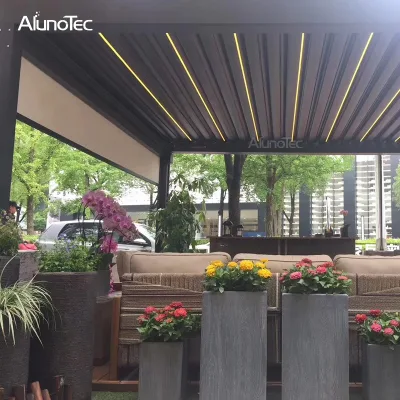
2020 Hot Sale Waterproof Retractable Aluminium Pergola with LED
$70.00 - $130.00
MOQ: 100 Square Meters


Outdoor Full Retractable Aluminum Louvre Roof Pergola with Aluminum Shutter
$225.00 - $300.00
MOQ: 5 Square Meters

Outdoor Rainproof Retractable Roof Pergola with Side Aluminum Glass Doors and Windows
$225.00 - $300.00
MOQ: 5 Square Meters

Hot Selling Competitive Price Retractable Roof Aluminum Pergola
$225.00 - $300.00
MOQ: 5 Square Meters


Aluminum Pergola with Retractable PVC Roof for Quiet Outdoor Spaces
$100.00 - $165.00
MOQ: 9 Square Meters


Aluminum Retractable Pergola with Adjustable Roof for Commercial Outdoor Restaurant
$100.00 - $165.00
MOQ: 9 Square Meters

Customized Rainproof Aluminum Pergolas with Adjustable Blinds for Garden House
$95.00 - $210.00
MOQ: 5 Square Meters


Retractable Pergola Outdoor Patio Garden Outdoor View Retractable Aluminum Gazebo
$88.00
MOQ: 10 Square Meters


Customized Retractable High Quality Outdoor Gazebo Aluminum Waterproof Pergola
$700.00 - $800.00
MOQ: 1 Pieces


Balcony Pergola Electric Pergola Canopy PVC Roof Awning Retractable Pergola
$125.00 - $320.00
MOQ: 1 Square Meters


Custom Aluminum Pergola Featuring Retractable Roof for Backyard Shade
$80.00 - $160.00
MOQ: 9 Square Meters

Comprehensive Sourcing Guide
Strategic Sourcing Guide for Retractable Aluminium Pergolas with Blinds
The global market for outdoor living structures has seen a significant shift toward motorized, retractable solutions that blend architectural aesthetics with functional weather protection. For procurement professionals targeting the specific niche of retractable aluminium pergolas with blinds, the supply landscape is defined by a convergence of structural engineering, automated control systems, and customizable finishing. This guide synthesizes observed market data and technical attributes to provide a disciplined framework for evaluating suppliers, validating product specifications, and managing procurement risks. The focus remains strictly on evidence-based attributes derived from current product listings, ensuring that buyers can make informed decisions without relying on unverified marketing claims.
Technical Architecture and Material Specifications
The foundational integrity of a retractable aluminium pergola relies heavily on the alloy composition and structural dimensions of its components. Based on observed product data, the industry standard for the primary frame material is Aluminum Alloy, specifically grade 6063 T5. This alloy is selected for its optimal balance of tensile strength, corrosion resistance, and extrudability, allowing for complex profiles required in louvered systems. Buyers must verify that the aluminum profile meets the 6063 T5 specification, as lower grades may compromise the structural load-bearing capacity required for motorized operation.
The wall thickness of the aluminum profiles is a critical dimension that directly influences durability and wind resistance. Market observations indicate a standard thickness range of 2.0mm to 3.0mm for motorized louver roof systems. This range accommodates both residential light-duty applications and commercial-grade installations requiring higher wind load ratings. When evaluating a supplier, procurement teams should request mill certificates or third-party test reports confirming the actual wall thickness, as variations below 2.0mm can lead to premature fatigue in the moving parts of the louver blades.
The louver blades themselves are available in two primary configurations: the 200mm Aerofoil Blade and the 150mm Flat Blade. The aerofoil design is engineered to optimize water runoff and wind aerodynamics, making it suitable for regions with heavy rainfall or high winds. Conversely, the flat blade offers a more traditional aesthetic and may be preferred for specific architectural styles. The surface treatment of these blades is equally vital; observed data points to a variety of finishing processes including Anodized, Powder Coated, and PVDF (Polyvinylidene Fluoride). The choice of finish impacts the long-term color retention and resistance to UV degradation. For instance, PVDF coatings generally offer superior weather resistance compared to standard powder coatings, a factor that should be weighed against the project budget and environmental exposure.
Operational Mechanics and Control Systems
Modern retractable pergolas are defined by their transition from manual to automated operation. The core operational mechanism for these units is motorized, utilizing electric motors that facilitate remote control switching. This automation allows for precise adjustment of the louver angles to control sunlight and ventilation. The system typically supports an operating type described as "Electric/Motorized with Remote Control," ensuring seamless integration into smart home ecosystems or building management systems.
A critical component of the operational system is the sensor suite. High-end units observed in the market include options for Rain, Wind, and Light sensors. These sensors are not merely add-ons but essential safety features that automatically retract the pergola or close the louvers in response to adverse weather conditions. Procurement specifications should explicitly require the inclusion of these sensors for commercial applications, such as hotel terraces or restaurant patios, where unattended exposure to sudden weather changes poses a liability risk. The lighting options further enhance the utility of the structure, with LED Spot Lights and Linear Strip LED Lights being standard optional accessories. These lighting systems are integrated into the frame or louver structure, providing ambient illumination without compromising the retractable function.
The fabric or blind component, often referred to as the sail material in product listings, is typically made from Acrylic or PVC. Observed data indicates a fabric weight of 850g/Sqm for these materials, which suggests a heavy-duty construction capable of withstanding tension and wind loads. The fabric is often PU Coated or treated with PVC to achieve a waterproof index ranging from 1000mm to 1500mm. This waterproof index is a measurable standard indicating the hydrostatic pressure the fabric can withstand before leaking. Buyers should verify that the specific fabric chosen meets the required waterproof index for their local climate; a 1000mm rating may suffice for light rain, while areas prone to heavy downpours may necessitate the 1500mm rating.
Customization, Standards, and Compliance
One of the most significant advantages of sourcing from the current market is the high degree of customization available. The product standard is frequently listed as "customized size," allowing for bespoke dimensions that fit unique architectural openings. The color options are extensive, with "Any Ral Colour Is Available" being a common offering. This allows architects and designers to match the pergola precisely to the building's façade. The design options further expand flexibility, with configurations available for both Wall Mounted and Freestanding installations.
However, customization introduces complexity regarding compliance and standardization. While the product origin is consistently listed as China, with specific hubs like Foshan identified, buyers must navigate the lack of a single universal standard for these bespoke structures. The observed standard "180cm" likely refers to a specific module or height, but it should not be assumed as a universal ceiling or floor height. Instead, procurement teams must verify that the customized design adheres to local building codes, particularly regarding wind load, snow load, and seismic requirements.
Certification checks are essential when dealing with motorized systems and electrical components. While specific certification names are not universally listed in the provided data, buyers should demand proof of compliance with relevant electrical safety standards (such as CE, UL, or local equivalents) for the motors and control units. Additionally, the structural integrity of the aluminum frame should be validated against local engineering standards. The "Undisassembly" attribute noted in some listings suggests a permanent or semi-permanent installation, which may require specific permits or structural engineering sign-offs before installation.
Cost Drivers and Procurement Economics
The pricing for retractable aluminium pergolas with blinds is influenced by a complex matrix of factors. The observed price range in the market spans from $49 to $1500 USD, a variance that reflects differences in size, motorization complexity, material grade, and customization level. The lower end of the spectrum likely corresponds to smaller, manual, or basic motorized units with standard finishes. The higher end reflects large-scale commercial installations with premium PVDF coatings, advanced sensor suites, and bespoke architectural designs.
The Minimum Order Quantity (MOQ) is another critical economic factor. The observed MOQ range is 1 to 100 units, with a specific listing noting an MOQ of 1 Unit. This flexibility is advantageous for buyers who need a single unit for a pilot project or a specific residential application. However, for larger commercial projects, negotiating a lower unit price based on volume is standard practice. The packing method also impacts logistics costs; options range from "One Unit Packing in a Carton" to "Solid Plywood Box Packing" or "Foam, Firm Carton Packaging." For international shipping, the Solid Plywood Box is often the preferred method to prevent damage during transit, though it adds to the overall weight and shipping cost.
Supplier Evaluation and Quality Assurance
Evaluating suppliers for this specialized product requires a rigorous approach to quality control. The "Condition" of the product is listed as "New," but this is a baseline requirement. Buyers must go further to assess the supplier's manufacturing capabilities. The "Surface Treatment" process, whether Anodized, Powder Coated, or PVDF, must be performed in a controlled environment to ensure uniformity and adhesion. Inconsistent surface treatment can lead to peeling or discoloration over time, particularly in harsh UV environments.
The "Folding" and "Disassembly" attributes provide insight into the installation and maintenance profile. The "Unfolding" nature of the product suggests a mechanism that deploys smoothly, while "Undisassembly" implies a robust, permanent frame. Suppliers should provide detailed installation manuals and maintenance guides. Quality control protocols should include pre-shipment inspections that verify the motor operation, sensor functionality, and the integrity of the louver blades. Testing the waterproof index of the fabric on-site or via third-party certification is highly recommended to ensure the 1000mm-1500mm claim is accurate.
Application Scenarios and Long-Term Value
The primary usage for these structures is identified as "Hotel," but the application extends to commercial and residential sectors. The "Style" is described as "Modern," aligning with contemporary architectural trends that favor clean lines and functional outdoor spaces. In a hotel context, these pergolas enhance guest experience by providing flexible shade and protection, directly impacting property value and occupancy rates. For residential applications, they serve as an extension of the living space, creating a comfortable outdoor room regardless of weather conditions.
Long-term procurement considerations must focus on the lifecycle cost of the system. While the initial investment may be higher for motorized units with advanced sensors, the operational benefits and durability justify the cost. The "Practical Function" of being waterproof and sunshade ensures year-round usability. Buyers should also consider the availability of spare parts, particularly for the motors and control units, to ensure the system remains operational for decades. The "Standard Export Package" and "One Unit Packing" suggest that the supplier is experienced in international logistics, which is crucial for maintaining supply chain continuity.
In conclusion, sourcing a Retractable Aluminium Pergola with Blinds requires a meticulous balance of technical verification, customization management, and supplier evaluation. By focusing on the core attributes of aluminum alloy 6063 T5, wall thickness, motorized control, and surface treatment, buyers can secure high-quality products that meet their specific architectural and functional needs. The market offers a wide range of options, from basic units to complex, sensor-equipped systems, allowing for tailored solutions that enhance both commercial and residential outdoor environments.
FAQs
What is the standard wall thickness for the aluminum profile?
The standard wall thickness for the aluminum profile ranges from 2.0mm to 3.0mm. This dimension ensures structural integrity for motorized louver roof systems and supports wind load requirements for both residential and commercial applications.
Which aluminum alloy grade is used for the frame construction?
The frame construction utilizes Aluminum Alloy 6063 T5. This specific grade is selected for its optimal balance of tensile strength, corrosion resistance, and extrudability required for complex louvered profiles and motorized operation.
How is the fabric waterproofing performance measured and rated?
The fabric waterproofing performance is measured by a hydrostatic pressure index ranging from 1000mm to 1500mm. This rating indicates the fabric can withstand significant water pressure before leaking, suitable for various climate conditions.
Can the system operate with remote control and sensors?
Yes, the system operates via remote control switch and supports electric motorized operation. Optional accessories include rain, wind, and light sensors that automatically adjust the louvers to protect against adverse weather conditions.
What customization options are available for color and size?
Customization allows for any RAL color and customized sizes to fit unique architectural openings. The product standard supports bespoke dimensions, enabling wall-mounted or freestanding designs that match specific building facades.
Which blade options are available for the louver system?
The louver system offers 200mm Aerofoil Blades and 150mm Flat Blades. The aerofoil design optimizes water runoff and wind aerodynamics, while the flat blade provides a traditional aesthetic for different architectural styles.
What surface treatment processes are applied to the aluminum?
Surface treatments include Anodized, Powder Coated, and PVDF finishes. These processes ensure long-term color retention and resistance to UV degradation, with PVDF generally offering superior weather resistance for harsh environments.