Source Retro Foil Balloon for Weddings, Birthdays, and Parties
Compare 30 listings for Retro Foil Balloon options featuring customizable logos and eco-friendly materials. Buyers can evaluate suppliers based on MOQs, lead times, and shipping methods for various festival decorations.
Key considerations
Products List


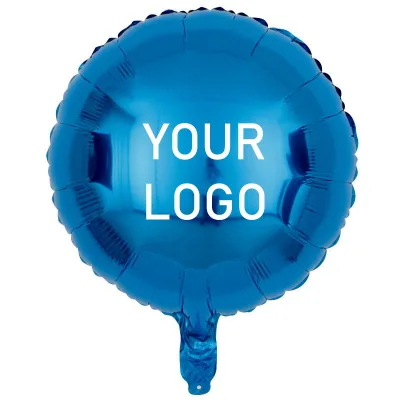


Unicorn Balloons Birthday Party Decorations Colorful Party Supplies Foil Balloons
$0.37 - $0.57
MOQ: 3000 Pieces

18 Inch Happy Birthday Floating Foil Balloons Foil Mylar Balloons Decoration
$0.15 - $0.25
MOQ: 1000 Pieces


Comprehensive Sourcing Guide
Strategic Sourcing Guide for Retro Foil Balloons
The global market for decorative party supplies has seen a sustained shift toward durable, visually striking, and customizable options, with retro foil balloons emerging as a dominant category. These products, often characterized by their metallic sheen, specific vintage color palettes, and distinct shapes, serve as critical visual anchors for events ranging from corporate anniversaries to intimate birthday gatherings. For procurement professionals, sourcing these items requires a nuanced understanding of material properties, supply chain logistics, and compliance frameworks. Unlike standard latex balloons, foil balloons present unique challenges regarding packaging, gas retention, and customization capabilities. This guide provides a structured approach to navigating the procurement landscape, ensuring that buyers secure high-quality inventory that aligns with their specific operational and branding needs.
Material Composition and Technical Specifications
The foundational element of any foil balloon procurement strategy is the verification of material composition. The supplied product data explicitly identifies the core material as "foil," specifically distinguishing it from other types like "Helium balloon" in certain contexts, though the primary gas type observed in the listings is "Air." This distinction is vital for logistics and usage planning. The standard specification for these products often cites dimensions such as "40cm" or specific inch measurements like "16inch or 32inch." Buyers must recognize that "Foil Balloon" is the standard product type, yet the specific model numbers vary significantly across suppliers, ranging from "HN009" to a series of "sl-" prefixed models like "sl-465," "sl-470," "sl-469," "sl-464," and "sl-463."
Furthermore, the physical attributes of the balloon extend beyond simple dimensions. The "Shape" is noted as "Other," indicating a high degree of variability where custom molds are common, particularly for "Number Foil Balloons" or specific themes like the "Football series." The "Pattern" is consistently "Printed," which allows for the application of complex graphics, including the "Retro" aesthetic requested by the market. The "Style" is frequently categorized as "Western," suggesting a design language that aligns with traditional Western party trends. When evaluating technical specifications, procurement teams should verify the exact "prod_standard" for each batch, as the industry does not universally adhere to a single size standard, with variations between 16-inch and 32-inch formats being the most common observed ranges.
Compliance, Certification, and Safety Standards
Safety and regulatory compliance are non-negotiable in the toy and party supply sector. The supplied data highlights a specific certification: "En71-123." This reference points to European safety standards for toys, which are often adopted as a benchmark for global quality. However, buyers must exercise caution; the presence of this certification in a listing does not guarantee that every unit in a large order meets these standards unless explicitly verified. The "Feature" of the product is described as "Eco-Friendly and Safe," but this is an observation of the product line rather than a universal claim for every SKU.
When sourcing retro foil balloons, procurement officers should prioritize suppliers who can provide current, valid test reports for the En71 series, specifically focusing on mechanical and physical properties, flammability, and chemical migration. The "prod_packing" is listed as "OPP Bag or Other Customized Package," which implies that the packaging itself must also comply with safety regulations regarding choking hazards and material toxicity. For markets in North America, buyers should also verify compliance with ASTM F963, while European buyers must ensure strict adherence to EN71. It is critical to treat the "Certificate: En71-123" as a starting point for verification rather than a blanket guarantee. The "Place of Origin" is predominantly "China," with specific mentions of "Anhui" and "Tianjin," regions known for manufacturing these goods. Buyers should request country-of-origin documentation to ensure that the specific batch being shipped originates from the certified facility.
Cost Drivers and Pricing Dynamics
Understanding the cost structure of retro foil balloons is essential for budgeting and margin analysis. The observed listed price range in the market data is "0.01-3" USD. This wide variance indicates that pricing is heavily influenced by size, customization complexity, and order volume. The "MOQ" (Minimum Order Quantity) range is equally broad, spanning from "6" to "10000" units. This suggests a market that accommodates both small boutique buyers and large-scale corporate procurement.
Several factors drive the final unit cost. First, the "Customization" attribute is marked as "Available," and the "Logo" is listed as "Customized" or "Can Be Customized." Custom printing, especially for retro designs requiring specific color matching or intricate patterns, adds a premium to the base cost. Second, the "Service" model offered by suppliers, which includes "OEM, ODM, Retailer, Wholesaler," affects pricing. ODM (Original Design Manufacturing) services, where the supplier provides the design, may be cheaper than OEM (Original Equipment Manufacturing) where the buyer provides the artwork. Third, the "prod_packing" method plays a role; standard "OPP Bag" packing is cost-effective, while "Other Customized Package" options will increase the unit price. Buyers should note that the "Delivery Time" of "5-7 Working Days" or "5-7 Days" for some suppliers suggests a tiered pricing structure where expedited shipping or smaller MOQs might carry a higher per-unit cost compared to bulk orders with longer lead times.
Typical Applications and Usage Scenarios
The versatility of retro foil balloons makes them suitable for a diverse array of applications. The "Usage" data lists a comprehensive range including "Gift, Promotion & Advertisement, Wedding, Carnival, Birthday, Christmas, New Year, Baby Shower, Anniversary." This broad applicability means that procurement strategies must be flexible enough to serve different end-users. For instance, "Wedding" and "Anniversary" orders often require higher aesthetic standards and specific color palettes, whereas "Promotion & Advertisement" orders prioritize durability and logo visibility.
The "Occasion" is frequently categorized as "Party Decoration" or "Themed Decoration," with specific mentions of "Holiday Party" and "Festival Decorations." The "Festival" attribute specifically notes "Halloween," indicating seasonal demand spikes. The "Product Name" "Number Foil Balloons" suggests a strong use case for milestone celebrations like 21st birthdays or anniversaries. Additionally, the "Party Type" is identified as "Holiday Party," reinforcing the seasonal nature of the product. Buyers should consider the "Style" of "Western" design when targeting specific cultural markets, as retro aesthetics may not resonate equally across all regions. The "Shape" being "Other" allows for creative applications in "Decoration" and "Product Type: Festival Decorations," making these items ideal for creating immersive environments for events.
Supplier Evaluation and Service Capabilities
Selecting the right supplier is a critical step in the sourcing process. The data indicates that suppliers offer "OEM, ODM, Retailer, Wholesaler" services, providing flexibility for different business models. A key evaluation metric is the "Sample" availability, which is listed as "Provided" with a "Sample Time" of "7 Days." This allows buyers to physically inspect the quality, print fidelity, and material thickness before committing to a large order. The "Delivery Time" of "5-7 Working Days" or "5-7 Days" for some suppliers suggests a relatively quick turnaround for standard orders, but the "Lead Time" for custom production is noted as "Usually 35days After Sample Approval." This significant difference between sample turnaround and full production lead time must be factored into project timelines.
When evaluating suppliers, buyers should look for those with a clear "Shipping Ways" strategy, which includes "by Courier, by Air, by Sea." The ability to offer multiple shipping methods indicates logistical maturity and the capacity to handle different urgency levels. The "Place of Origin" being "China" with specific hubs in "Anhui" and "Tianjin" suggests a concentrated manufacturing base, which can be advantageous for supply chain consolidation. However, buyers should verify the specific factory location to ensure it matches the claimed origin, as this impacts shipping costs and lead times. The "MOQ" of "10 PC" or "100" depending on the supplier offers entry points for small businesses, while the upper limit of "10000" supports large-scale distributors.
Quality Control and Long-Term Procurement Considerations
Maintaining consistent quality in foil balloon procurement requires a robust quality control (QC) framework. The "Feature" of being "Eco-Friendly and Safe" must be validated through batch testing, as the material properties can vary between suppliers. The "Pattern" being "Printed" necessitates checks for color consistency, registration accuracy, and ink adhesion, especially for retro designs that rely on specific color gradients. The "prod_packing" of "OPP Bag" or "25PCS/Bag" requires verification to ensure that the packaging protects the balloons from punctures and creasing during transit.
For long-term procurement, buyers should establish a relationship with suppliers who can maintain consistent "prod_model" numbers. The data shows a variety of models (HN009, sl-465, etc.), and switching between models can introduce variability in size and finish. Standardizing on a specific model or a set of models can streamline the ordering process and ensure brand consistency. Additionally, the "Customization" aspect should be managed carefully; while "Logo" customization is available, the complexity of the design can impact the "Lead Time" and "Sample Time." Buyers should plan for the "35days After Sample Approval" lead time for custom orders to avoid delays. Finally, the "Service" model of "Wholesaler" or "Retailer" suggests that buyers should consider the scalability of the supplier. A supplier capable of handling both small and large orders ensures that the procurement strategy remains viable as the business grows. By focusing on these technical and operational details, buyers can secure a reliable supply of high-quality retro foil balloons that meet their specific market demands.
FAQs
What certifications do retro foil balloons have?
Some listings indicate compliance with En71-123 safety standards for toys. Buyers must verify that specific batches hold valid test reports, as this certification is not guaranteed for every unit in an order.
How long is the lead time for custom orders?
Custom production usually takes 35 days after sample approval. Standard orders may have shorter delivery times of 5 to 7 days, but customization significantly extends the manufacturing timeline.
Which sizes are available for foil balloons?
Standard specifications include 40cm, 16-inch, and 32-inch sizes. The product type varies between common balloons and number foils, with dimensions determined by the specific model number selected.
Can I customize the logo on these balloons?
Yes, logo customization is available for most products. Suppliers offer OEM and ODM services, allowing buyers to add specific branding or designs to the printed foil surface.
What is the minimum order quantity for these items?
Minimum order quantities range from 10 pieces to 10,000 units depending on the supplier. Small buyers can access low MOQs, while large distributors may negotiate higher volume thresholds.
Where are these balloons manufactured?
Products originate from China, with specific hubs in Anhui and Tianjin. Buyers should verify the exact place of origin to ensure it matches the claimed manufacturing facility for quality control.