Source Retro Wide Toothed Acetate Comb for Home Salon Travel
Compare 30 listings for the Retro Wide Toothed Acetate Comb suitable for home, salon, and travel use. Buyers can evaluate customized colors, sizes, and private label options from manufacturers in Zhejiang, China.
Key considerations
Products List


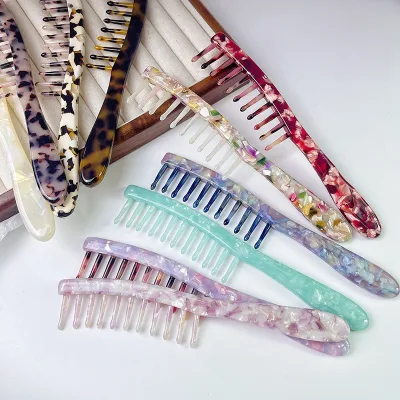
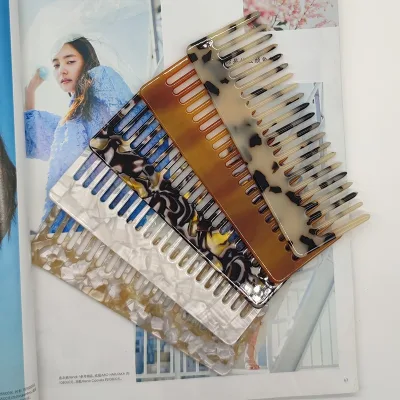


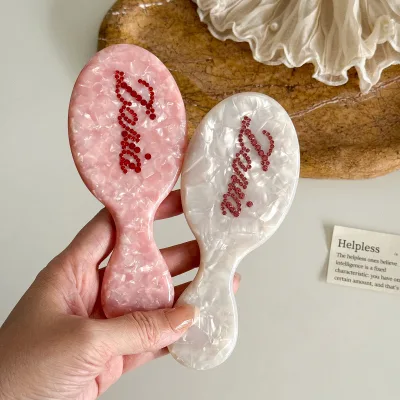
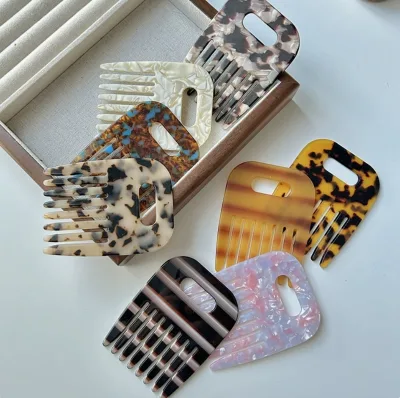
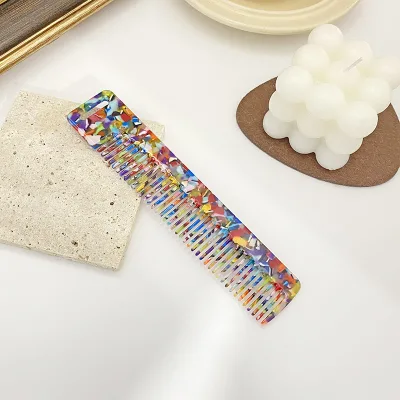
New Korean Vintage Acetate Comb Acetate Plate Wide Tooth Pocket Hair Comb
$1.00 - $1.80
MOQ: 500 Pieces


Travel Size Anti-Static Acetate Dertangling Comb Cellulose Acetate Comb Set
$1.00 - $1.50
MOQ: 500 Pieces
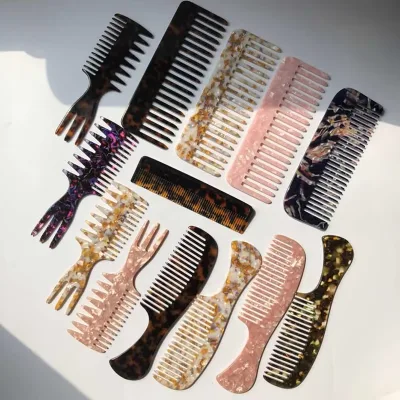
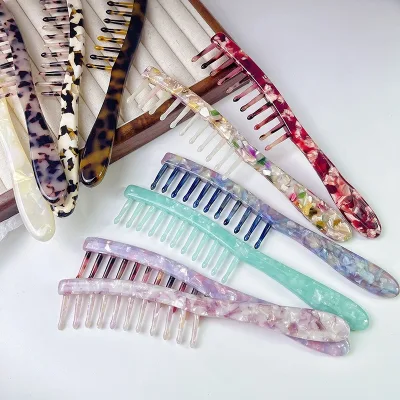


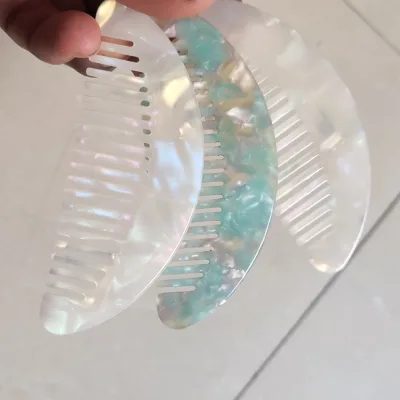
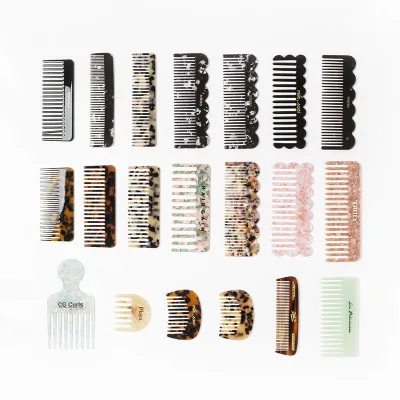
Factory Wholesale Custom Logo Wide Tooth Hair Eco Cellulose Acetate Hair Comb
$1.22 - $1.88
MOQ: 100 Pieces




Comprehensive Sourcing Guide
Strategic Sourcing Guide for Retro Wide Toothed Acetate Combs
The global market for hair care accessories has seen a resurgence in demand for vintage-inspired tools, specifically the Retro Wide Toothed Acetate Comb. This category combines the aesthetic appeal of classic styling with the functional benefits of modern cellulose acetate materials. For B2B procurement professionals, sourcing these items requires a nuanced understanding of material properties, manufacturing capabilities, and supply chain logistics. This guide provides a comprehensive framework for evaluating suppliers and products based on verified market data and industry standards, ensuring that procurement decisions are grounded in factual evidence rather than speculative claims.
Material Composition and Technical Specifications
The defining characteristic of a high-quality Retro Wide Toothed Acetate Comb is its material composition. While general listings may refer to the material simply as "plastic," the specific grade of cellulose acetate is critical for performance. Cellulose acetate is distinct from standard thermoplastics because it offers a unique balance of flexibility, durability, and static resistance. In the observed market data, specific product attributes confirm that "Acetate" and "Plastic Material" are the primary descriptors, with "cellulose acetate" serving as a key search keyword.
When evaluating technical specifications, buyers must look for precise dimensional data. The market data indicates that sizes are often customized, with specific observed dimensions ranging from 14 cm to 19.5 cm in length, and widths varying between 3.5 cm and broader profiles suitable for wide-toothed designs. The "Single package size" varies significantly based on the model, with observed ranges from 11.5 cm to 19 cm in length, and thicknesses as low as 0.4 cm. These dimensions directly impact the comb's ability to detangle thick or curly hair without causing breakage.
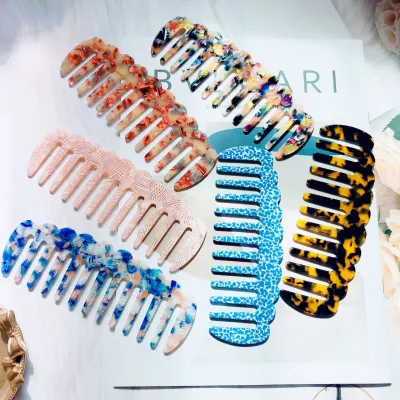
Furthermore, the shape and style are often customizable. The "Classical" style is a frequent attribute in this category, aligning with the retro aesthetic. Buyers should verify that the mold-making capabilities of the supplier allow for the creation of specific tooth spacing and curvature required for wide-toothed designs. The material must also support the "Customized Color" requirement, as the market data shows a wide spectrum of available colors, ranging from standard single shades to palettes of 13 distinct colors. The ability to produce consistent coloration across batches is a critical technical indicator of a supplier's quality control.
Compliance, Certification, and Regulatory Checks
In the realm of personal care accessories, compliance with safety and environmental standards is paramount. While the provided market data does not explicitly list specific certification numbers for every product, it references background standards such as ISO 9001 and certifications like BSCI and FSC. Buyers must treat these as verification targets rather than guaranteed attributes of every listing.
Procurement teams should request current, valid certificates from potential suppliers to confirm adherence to international quality management systems. ISO 9001 certification indicates a supplier's commitment to consistent quality processes, which is essential for maintaining the structural integrity of acetate combs. Similarly, BSCI (Business Social Compliance Initiative) certification is a strong indicator that the manufacturing facility adheres to ethical labor practices, a requirement for many Western retailers.
Environmental compliance is another critical area. The FSC (Forest Stewardship Council) reference in the background data suggests a potential link to sustainable sourcing, particularly if the acetate is derived from wood pulp. Buyers should verify if the supplier uses sustainable raw materials and if the packaging, often listed as "OPP Bag" or "Card Board," meets local environmental regulations regarding recyclability. It is vital to note that while these certifications are mentioned in the background context, they are not automatically attached to every product listing. Therefore, the procurement process must include a specific request for documentation to validate these claims before finalizing any order.
Cost Drivers and Pricing Structures
Understanding the cost structure of acetate combs is essential for budgeting and margin analysis. The observed market data reveals a price range in USD from 0.33 to 4.95 per unit. This significant variance is driven by several factors, including material grade, customization complexity, and order volume. The lower end of the price spectrum typically corresponds to standard, non-customized units with minimal branding, while the higher end reflects custom molds, complex color gradients, or premium packaging.
Minimum Order Quantity (MOQ) is a primary driver of unit cost. The data shows an MOQ range from 5 pieces to 1,200 units. Suppliers offering an MOQ of 5 pieces are likely targeting small businesses or sample orders, which naturally carry a higher per-unit cost. Conversely, orders exceeding 50 or 100 units often benefit from economies of scale, reducing the cost per item. The specific MOQ of 50 pcs is noted for certain models, while others may require 1,200 pcs for the most competitive pricing.
Payment terms also influence the financial planning of the procurement cycle. The standard payment structure observed involves a 30% deposit, which is common in international trade to secure production slots. Buyers should negotiate terms that align with their cash flow, potentially seeking extended payment windows for repeat customers. Additionally, the "Sample Time" of 7 days and "Deliver time" of 15-30 days must be factored into the total cost of ownership, as delays can impact inventory planning and sales cycles.
Typical Applications and Market Positioning
The versatility of the Retro Wide Toothed Acetate Comb allows it to serve multiple market segments. The product attributes highlight usage scenarios including "Home," "Salon," "Promotion," and "Travel." In a professional salon setting, these combs are valued for their ability to detangle without static buildup, making them ideal for wet or dry styling. The "Hair Smooth+massage Brush" function suggests a dual-purpose utility, where the comb can be used for both detangling and scalp stimulation.
For promotional campaigns, the "Acceptable Private Label" and "Customized Logo" capabilities make these combs an attractive choice for brand giveaways. The "Portable" nature of the product, combined with its aesthetic appeal, ensures it is well-suited for travel kits and hotel amenities. The "Daily" occasion attribute indicates that these combs are not just niche items but are intended for regular consumer use.
The market data also points to specific branding strategies. Brands like "xingyi," "SICHER," and "GLORY" are present in the listings, alongside generic "other" or "Hot Sale" designations. This suggests a market that accommodates both established brand owners and private labelers. The "Hair Decoration Accessories" function further expands the application, positioning the comb as a fashion accessory rather than just a utility tool. Buyers should align their product selection with their target audience's specific needs, whether that is high-volume salon use or boutique retail.
Supplier Evaluation and Selection Criteria
Selecting the right supplier requires a rigorous evaluation process based on the available data points. The "Place of Origin" is consistently listed as "Zhejiang, China," a region known for its manufacturing capabilities in plastic goods. However, origin alone does not guarantee quality. Buyers should prioritize suppliers who demonstrate transparency in their production capabilities.
Key evaluation metrics include the supplier's ability to provide "mould making and sample making service." The data confirms that "sample making" is available, with a sample time of 7 days. This capability is crucial for verifying the physical attributes of the comb before committing to a large order. Buyers should request physical samples to test the flexibility of the acetate, the sharpness of the teeth, and the finish of the color.
The "Logo" customization options are another critical factor. Whether the requirement is a simple imprint or a full mold-based logo, the supplier must demonstrate experience in private labeling. The "Packing customization" options, such as "CARD BOARD" or "Opp Bag," should be evaluated for their ability to protect the product during shipping while enhancing brand presentation. Additionally, the "Shipment" options listed, including DHL, EMS, FedEx, and UPS, indicate the supplier's logistical flexibility. A supplier offering multiple shipping partners is better equipped to handle urgent orders or specific delivery requirements.
Quality Control and Long-Term Procurement Considerations
Maintaining product quality over time requires a robust quality control (QC) framework. Given that the material is "Acetate," which can be sensitive to temperature and humidity, buyers must ensure that the supplier has protocols in place to prevent warping or discoloration during production and storage. The "Single gross weight" varies between 0.030 kg and 0.050 kg, which serves as a baseline for checking consistency in production batches. Significant deviations in weight can indicate inconsistencies in material density or molding processes.
Long-term procurement considerations involve building a relationship with a supplier who can scale with demand. The "Model Number" variations, such as "20240308-6," "s004," and "GHJ24111802," suggest a dynamic product line. Buyers should seek suppliers who can maintain continuity in their product offerings while allowing for future customization. The "Selling Units" being listed as "Single item" implies that the supply chain is set up for individual unit handling, which is beneficial for retail distribution.
Finally, buyers should establish clear communication channels for addressing any quality issues. The "Sample Avaiable" status should be leveraged to create a "golden sample" that serves as the benchmark for all future production runs. Regular audits and quality checks, potentially aligned with the ISO 9001 standards mentioned in the background, will help ensure that the retro wide toothed acetate combs continue to meet the high standards expected by end consumers. By focusing on these technical and operational details, procurement professionals can secure a reliable supply of high-quality acetate combs that drive value for their businesses.
FAQs
What material is used for the Retro Wide Toothed Acetate Comb?
The combs are made from cellulose acetate and plastic material. This specific grade offers flexibility and static resistance, distinguishing it from standard thermoplastics used in general hair accessories.
Can I customize the color and shape of the acetate comb?
Yes, the product supports customized color and shape options. Buyers can choose from a palette of up to 13 distinct colors or specific single shades to match their brand requirements.
What is the minimum order quantity for these hair combs?
The minimum order quantity ranges from 5 pieces to 1,200 units depending on the supplier and model. Lower MOQs like 5 pieces are available for samples, while bulk orders often start at 50 pieces.
How long does it take to receive samples and bulk orders?
Sample making takes approximately 7 days, while delivery time for bulk orders is 15 to 30 days. These timelines allow for quality verification before committing to large production runs.
Where are these acetate combs manufactured and shipped from?
The products originate from Zhejiang, China, and are shipped via carriers like DHL, EMS, FedEx, and UPS. This location is a known hub for plastic goods manufacturing with established logistics networks.
What payment terms are required for purchasing these combs?
The standard payment term requires a 30% deposit to secure production slots. This structure is common in international trade to manage cash flow and confirm order commitment before manufacturing begins.