Source Retrofit Battery Tie Down Bracket for Solar, Home, Commercial
Compare 30 verified listings for the Retrofit Battery Tie Down Bracket designed for solar panels, home installations, and commercial applications. Buyers can evaluate aluminum and metal options with customization services from suppliers in China; compare the available evidence and request quotations based on your requirements.
Key considerations
Products List


Hight Quality Aluminum Adjustable Tilt Front Leg Rear Leg Solar Mounting Bracket
$1.85 - $1.90
MOQ: 100 Pieces


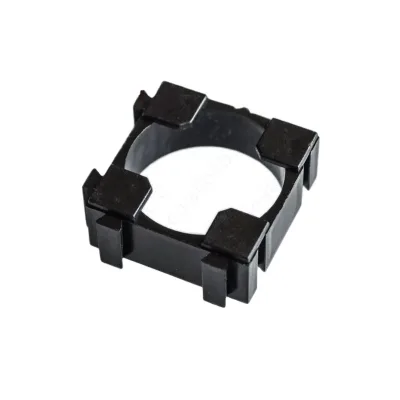
Holder Fixing Bracket for 18650 Lithium Battery Separate Packing and Shipping
$0.12 - $0.15
MOQ: 1 pieces


Comprehensive Sourcing Guide
Retrofit Battery Tie Down Bracket Sourcing Guide
Procuring a Retrofit Battery Tie Down Bracket requires identifying components that secure energy storage units in mobile or stationary applications without modifying the original chassis. The observed market data indicates that aluminum and metal alloys are the primary materials used for these brackets, offering a balance of corrosion resistance and structural rigidity. Buyers must verify that the specific alloy composition matches the environmental conditions of the installation site, as exposure to salt or extreme temperatures can degrade standard metal finishes over time.
The customization landscape for these brackets is extensive, with suppliers offering design, processing, and assembly services tailored to unique mounting geometries. While standard models exist, the majority of listings emphasize OEM capabilities, allowing buyers to specify dimensions such as the 19 cm or 400 mm radii observed in current catalogs. This flexibility is critical for retrofitting older battery systems where factory mounting points may be incompatible with modern safety standards or new battery chemistries like Lithium Iron Phosphate.
Product Scope and Observed Listing Signals
The product scope for battery tie down brackets spans from simple metal casting parts to complex fabrication casings designed for specific machinery applications. Listings frequently reference applications in metal processing, drawing, and straightening machinery, suggesting these components are often integrated into industrial automation lines or heavy-duty transport vehicles. Buyers should scrutinize the product name and description to ensure the item is explicitly designed for battery retention rather than general-purpose structural support, as the load-bearing requirements differ significantly.
Observed listing signals reveal a wide variance in packaging and model identification, ranging from standard box packaging to custom wooden cases and pallets. The presence of specific model numbers like GV-BTD or YLJ-400 indicates that manufacturers often maintain distinct SKUs for different load capacities or mounting configurations. Procurement teams must cross-reference these model identifiers with their engineering drawings to confirm that the physical footprint and hole patterns align with the existing battery enclosure or vehicle frame.
Technical Specifications to Verify
Dimensional tolerance is a critical technical specification that directly impacts the fit and safety of the installed bracket. The observed data highlights a tolerance of +/-0.10mm for certain precision components, which is essential for ensuring that the tie-down mechanism engages correctly with the battery terminals or chassis rails. Buyers must request detailed engineering drawings that explicitly state these tolerances, as even minor deviations can lead to misalignment, resulting in inadequate clamping force or interference with adjacent components during operation.
Load capacity and environmental resistance are equally vital parameters that define the operational limits of the bracket. While specific wind load ratings like <42m/s are noted for related solar mounting systems, the tie-down bracket itself must be rated for the dynamic forces generated by vehicle acceleration, braking, and vibration. Procurement teams should verify the material grade and surface treatment, such as galvanization, to ensure the component can withstand the mechanical stress and environmental exposure without fatigue failure or corrosion.
Compliance and Safety Documentation
Safety compliance for battery retention systems often involves adherence to international standards such as ANSI, GB, and ASTM, which govern material strength and testing protocols. The observed listings mention certifications like ISO9001:2000 and CE, indicating that the manufacturing processes meet quality management and safety requirements. However, buyers must confirm that the specific certification applies to the finished tie-down product and not just the general factory operations, as this distinction affects liability and regulatory acceptance in the target market.
Documentation regarding the electrical and mechanical safety of the bracket is necessary to ensure it does not interfere with the battery management system or create short-circuit hazards. Some listings reference CE and TUV certificates for related power systems, suggesting that the bracket design must be evaluated for its impact on the overall electrical safety of the installation. Buyers should require a declaration of conformity that explicitly addresses the mechanical integrity of the bracket under load and its compatibility with the specific battery chemistry being secured.
Cost Drivers and Commercial Terms
The cost of a Retrofit Battery Tie Down Bracket is heavily influenced by the degree of customization required and the volume of the order. While the observed MOQ ranges from 5 pieces to 10,000 units, the unit price fluctuates significantly based on whether the buyer utilizes a standard off-the-shelf model or requests a fully custom design. High-volume orders typically benefit from economies of scale in material procurement and tooling amortization, whereas low-volume custom runs incur higher per-unit costs due to setup time and specialized labor.
Commercial terms regarding packaging and logistics also play a significant role in the total landed cost. The data shows varied packaging options, including cartons, wooden cases, and custom requests, which directly impact shipping volume and protection during transit. Buyers should negotiate clear terms for packaging specifications to prevent damage during shipping, as the cost of replacing a damaged bracket or the battery it secures far exceeds the initial savings from cheaper packaging methods.
Supplier Qualification and Quality Control
Supplier qualification for battery tie down brackets requires a thorough assessment of their manufacturing capabilities, specifically their experience with metal casting, forging, and precision machining. The observed service scope includes design, processing, and assembly, indicating that capable suppliers offer end-to-end solutions. Buyers should verify that the supplier has a proven track record in producing components for the specific industry sector, such as automotive or renewable energy, to ensure they understand the unique stress profiles and safety requirements of battery mounting systems.
Quality control processes must be robust enough to detect defects in material consistency and dimensional accuracy before shipment. The presence of ISO certifications suggests a baseline quality management system, but buyers should request specific inspection reports for the production batch, including material test certificates and dimensional verification data. Implementing a pre-shipment inspection protocol is essential to catch any deviations in the +/-0.10mm tolerance or surface finish that could compromise the safety of the battery installation.
Long-Term Procurement Checks
Long-term procurement success depends on establishing a reliable supply chain that can maintain consistent quality and availability over the product lifecycle. Buyers should conduct periodic audits of the supplier's production lines to ensure that the manufacturing processes have not drifted from the agreed-upon specifications. This is particularly important for custom components where tooling wear or material substitution could subtly alter the performance characteristics of the tie-down bracket over time.
Continuous monitoring of market trends and regulatory changes is necessary to ensure the brackets remain compliant with evolving safety standards. As battery technologies advance, the mechanical requirements for retention systems may change, necessitating updates to the design or material specifications. Procurement teams should maintain open communication with suppliers to anticipate these shifts and ensure that future orders can be fulfilled with components that meet the latest industry requirements without requiring a complete redesign of the mounting system.
FAQs
What materials are used for retrofit battery tie down brackets?
Brackets are typically manufactured from aluminum or metal to ensure structural integrity and corrosion resistance. The specific material choice depends on the application requirements, with aluminum being a common selection for its lightweight properties and durability in various industrial and commercial settings.
Can these brackets be customized for specific battery sizes?
Yes, customization is available to meet unique design and processing needs. Suppliers offer OEM services that include design, processing, and assembly, allowing for tailored solutions such as specific sizes like 19 cm or customized radii to fit particular battery configurations and mounting requirements.
What certifications do these brackets typically hold?
Manufacturers often hold ISO9001:2000 certification to ensure quality management standards are met. Additionally, products may comply with ANSI, GB, and ASTM standards, and some components carry CE or RoHS certifications, ensuring they meet international safety and environmental regulations for industrial use.
What is the typical minimum order quantity for these brackets?
The minimum order quantity generally starts at 5 pieces, though it can range up to 10,000 pieces depending on the supplier and customization level. This flexibility allows buyers to order small batches for prototyping or large volumes for mass production needs.
Where are these brackets typically manufactured?
These components are primarily manufactured in China, with key production hubs located in Ningbo and Guangdong. This geographic concentration supports efficient supply chains and access to specialized metal processing and fabrication capabilities required for high-precision battery mounting hardware.
What tolerances are maintained during fabrication?
Fabrication processes maintain tight tolerances, typically around +/-0.10mm, to ensure precise fitment and secure mounting. This precision is critical for battery tie down brackets to prevent movement and ensure safety during transport and operation of heavy machinery or energy storage systems.