Source Reversible Plus Size Purple Tracksuit for gyms, travel, and casual wear
Find 30 verified listings for a Reversible Plus Size Purple Tracksuit suitable for athletic and casual use. Buyers can compare features like fabric weight, closure types, and printing methods across multiple suppliers offering OEM services from Guangdong, China.
Key considerations
Products List
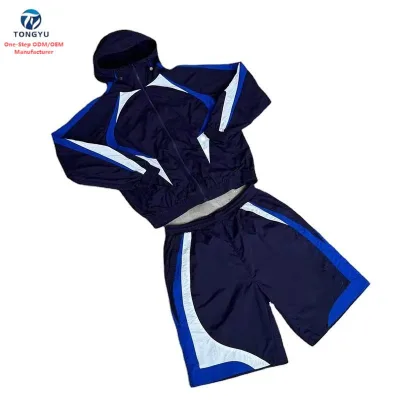
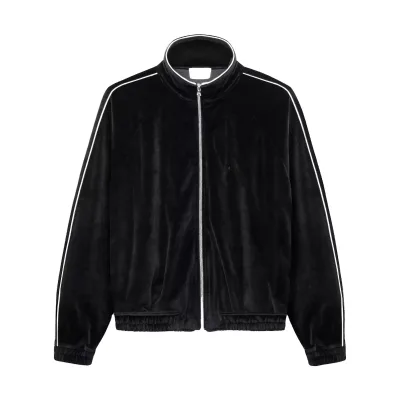
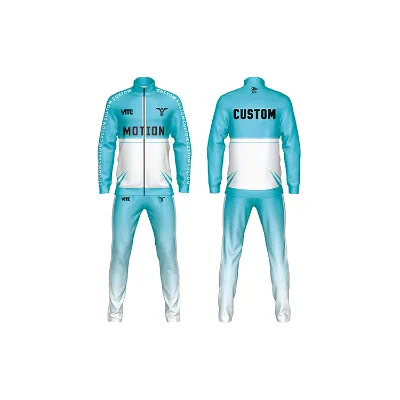
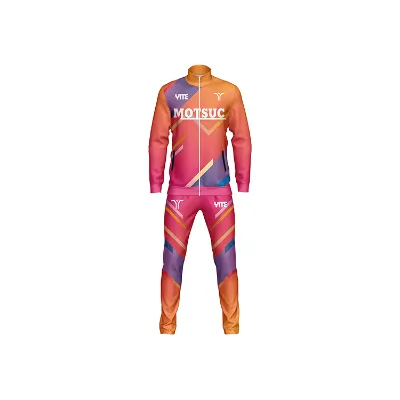
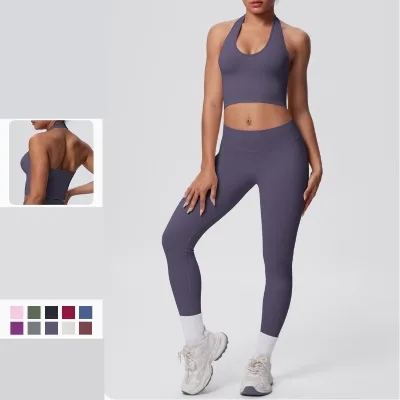






Comprehensive Sourcing Guide
Strategic Sourcing Guide for Reversible Plus Size Purple Tracksuits
Navigating the global apparel market for specialized activewear requires a disciplined approach to verifying product attributes against supplier claims. For buyers seeking a Reversible Plus Size Purple Tracksuit, the procurement process must move beyond visual marketing to a rigorous examination of material composition, construction techniques, and supply chain reliability. The following guide synthesizes observed market data and technical specifications to provide a framework for evaluating potential suppliers and ensuring the final product meets operational and quality standards.
Technical Specifications and Material Composition
The foundation of a successful tracksuit procurement lies in the precise definition of technical specifications. When searching for a Reversible Plus Size Purple Tracksuit, buyers must scrutinize the material composition, as this dictates the garment's performance, durability, and comfort. Market observations indicate that polyester and nylon blends are prevalent in this category, often cited as "polyester/nylon/custom" or "100% Polyester." These materials are selected for their ability to facilitate quick-drying properties and breathability, which are critical for athletic and casual wear.
The fabric weight is another critical parameter that influences the seasonal suitability of the garment. Data suggests a range of fabric weights, with specific observations noting 300 grams and 220 grams per square meter. A weight of 300 grams typically aligns with a lightweight to medium-weight construction suitable for autumn wear, offering enough substance for structure without excessive bulk. Conversely, lighter weights may be preferred for high-intensity activities. The "Fleece" thickness option observed in some listings suggests an alternative construction for colder climates, though buyers must verify if this applies to the reversible variant specifically.
Color and pattern execution are equally vital. While the core keyword specifies "purple," observed listings include colors such as "Deep Blue," "Black yellow," "Black," and "Silver." A supplier claiming a "purple" tracksuit must demonstrate the ability to match the requested hue accurately, potentially through "full sublimation printed" or "Heat-Transfer Printing" methods. The pattern type is often listed as "Print" or "Letter," with "Plain Dyed" and "GARMENT DYED" techniques available. Buyers should confirm that the dyeing process ensures colorfastness, especially since the garment is reversible, meaning both sides must maintain color integrity.
Compliance, Certification, and Safety Standards
In the B2B apparel sector, compliance is not merely a formality but a prerequisite for market access and brand safety. While specific certification statuses like OEKO-TEX are noted in background contexts, buyers should not assume a supplier possesses these certifications without requesting valid documentation. The absence of a specific certification in a product listing does not preclude compliance, but it necessitates a proactive verification step.
Safety standards are paramount, particularly regarding chemical usage and physical safety. One observed attribute, "Needle detection: Yes," indicates a supplier's commitment to metal detection protocols, a standard practice in many regions to prevent physical injury from manufacturing defects. Buyers should explicitly require this feature in their specifications for any tracksuit intended for mass distribution. Furthermore, the "Eco-Friendly" feature listed in several observations suggests a market trend toward sustainable manufacturing. However, "Eco-Friendly" is a broad claim. Procurement teams must define what this entails, such as the use of recycled polyester or low-impact dyes, and request third-party test reports to substantiate these claims.
Supply chain transparency is also a component of compliance. The "Supply Type: Oem Service" indicates that the supplier is capable of Original Equipment Manufacturing, allowing for customization of branding and design. This flexibility is essential for buyers seeking a private label tracksuit. However, OEM capability must be paired with adherence to labor standards and environmental regulations in the place of origin, which is frequently identified as "Guangdong, China." Buyers should verify that the supplier's facilities adhere to local labor laws and international safety standards, even if specific certification labels are not immediately visible in the product description.
Cost Drivers and Pricing Dynamics
Understanding the cost structure of a reversible plus size tracksuit is essential for budgeting and negotiation. The observed price range in the market spans from $3.60 to $35.91 USD. This significant variance is driven by several factors, including material quality, production complexity, and order volume. The lower end of the spectrum likely corresponds to basic polyester constructions with standard printing methods, while the higher end may reflect premium blends, complex reversible construction, or specialized finishes like "GARMENT DYED."
Order volume is a primary driver of unit cost. The observed Minimum Order Quantity (MOQ) ranges from 1 to 500 units. Suppliers offering an MOQ of 1 are typically catering to sample orders or very small boutique runs, which often carry a higher per-unit cost due to the lack of economies of scale. Conversely, an MOQ of 500 suggests a focus on bulk production, where the unit price is optimized through efficient material purchasing and automated cutting processes. Buyers should align their order volume with their financial constraints and inventory needs, recognizing that a lower MOQ may result in a higher total cost per unit.
Additional cost factors include the complexity of the design and the specific features requested. A "Reversible" tracksuit inherently requires more complex construction than a single-sided garment, as it involves sewing two distinct fabrics together or utilizing a dual-sided fabric weave. This adds labor time and material waste, potentially increasing the base cost. Features such as "Side Pockets," "Drawstring" closures, and specific "Logo position" placements (Front, back, Left Sleeve, Right Sleeve) also contribute to the final price. Buyers must balance these feature requirements against their budget, prioritizing essential elements like fit and material quality over optional aesthetic details.
Typical Applications and Market Positioning
The versatility of a reversible plus size tracksuit makes it suitable for a wide range of applications, from athletic training to casual streetwear. The "Style: Sporty" and "Fit Type: Regular" attributes indicate that the garment is designed for active movement while maintaining a standard silhouette. The "Plus Size" designation ensures inclusivity, catering to a demographic that often requires extended sizing options, such as "3 XL" and "4 XL," which are observed in the market data.
Seasonal suitability is another key application factor. The "Season: Autumn" classification suggests that the tracksuit is optimized for cooler weather, likely due to the fabric weight and thickness. However, features like "Quick Dry" and "Breathable" properties make the garment suitable for transitional weather or indoor activities where temperature regulation is important. The "Lightweight" thickness observation further supports its use in scenarios where mobility is prioritized over heavy insulation.
The "Design: Simple" attribute points to a minimalist aesthetic that appeals to a broad consumer base. This simplicity allows for easy customization through "Heat-Transfer Printing" or "Silk Screen Printing," making the tracksuit an ideal canvas for corporate branding, team uniforms, or promotional merchandise. The ability to place logos on multiple areas, including the front, back, and sleeves, enhances its utility for branding purposes. Buyers should consider the end-user's environment when selecting the specific color and pattern, ensuring that the "Deep Blue," "Black," or other available colors align with the intended brand identity or team colors.
Supplier Evaluation and Verification
Selecting the right supplier is a critical step that goes beyond comparing prices. Buyers must evaluate suppliers based on their technical capabilities, production capacity, and reliability. The "Place of Origin: Guangdong, China" is a common location for apparel manufacturing, known for its extensive supply chain and expertise in textile production. However, the concentration of suppliers in this region necessitates thorough due diligence to ensure quality consistency.
Key evaluation criteria include the supplier's ability to meet specific technical requirements, such as the "Needle detection" protocol and "Automated cutting" techniques. These capabilities indicate a commitment to precision and safety. Buyers should also assess the supplier's sample lead time, with observations noting a "7 days sample order lead time" as a benchmark for responsiveness. A shorter lead time can be advantageous for accelerating the product development cycle, but it must not come at the expense of quality.
The "Available Quantity: 2000pcs" observation provides insight into a supplier's inventory capacity. While this figure may represent current stock for a specific model, buyers should verify the supplier's ability to scale production to meet larger orders. The "Selling Units: Single item" attribute suggests flexibility in packaging, which can be beneficial for buyers who need to ship individual units or small batches. Additionally, the "Single package size" and "Single gross weight" data are crucial for logistics planning. For instance, a package size of "36X25X8 cm" and a weight of "0.650 kg" will impact shipping costs and storage requirements. Buyers should request detailed packaging specifications to optimize their supply chain efficiency.
Quality Control and Long-Term Procurement
Ensuring consistent quality is essential for maintaining brand reputation and customer satisfaction. Quality control measures should be integrated into every stage of the procurement process, from material sourcing to final inspection. The "Needle detection: Yes" attribute serves as a baseline for physical safety, but buyers should also implement checks for stitching quality, color consistency, and dimensional accuracy. The "Fabric Weight" variations observed (220g vs. 300g) highlight the need for strict material verification to ensure the product matches the agreed-upon specifications.
Long-term procurement considerations involve building a sustainable relationship with suppliers who can consistently deliver high-quality products. This includes establishing clear communication channels for addressing any quality issues and defining expectations for future orders. The "Oem Service" capability allows for ongoing customization and improvement of the product line, enabling buyers to adapt to changing market trends and consumer preferences.
Buyers should also consider the environmental impact of their procurement decisions. The "Eco-Friendly" feature observed in the market suggests a growing demand for sustainable products. By prioritizing suppliers who use eco-friendly materials and processes, buyers can align their brand with environmental values and potentially access new market segments. However, these claims must be verified through documentation and, where possible, third-party testing.
Finally, buyers should maintain a flexible approach to their procurement strategy. The "MOQ range" of 1 to 500 units offers opportunities to test the market with small orders before committing to larger volumes. This approach allows for the validation of product quality and market demand without significant financial risk. By combining rigorous quality control, strategic supplier evaluation, and a focus on long-term relationships, buyers can successfully source high-quality reversible plus size purple tracksuits that meet their specific business needs.
FAQs
What materials are used for reversible plus size purple tracksuits?
These tracksuits typically use polyester, nylon, or custom blends. Specific listings show options like 100% polyester or mixed fabrics weighing 220 to 300 grams, ensuring breathability and quick-dry performance for active wear.
Can suppliers provide custom logo placement on these garments?
Yes, OEM services allow for custom logo placement on the front, back, and sleeves. Suppliers support heat-transfer or silk screen printing methods to apply designs to the fabric while maintaining the reversible structure.
How does the fabric weight affect the tracksuit's seasonal use?
Fabric weights of 220 to 300 grams determine the garment's suitability for autumn. Heavier weights offer more structure, while lighter options ensure mobility, making them ideal for transitional weather or indoor activities.
What is the typical minimum order quantity for these tracksuits?
Minimum order quantities range from 1 to 500 units depending on the supplier. Lower MOQs allow for sample orders, while higher volumes optimize costs through automated cutting and bulk material purchasing strategies.
Which safety standards are verified during production?
Many suppliers implement needle detection protocols to ensure physical safety. Additionally, eco-friendly features are often claimed, though buyers should request third-party test reports to verify specific environmental compliance claims.
How long does it take to receive a sample order?
Sample order lead times are typically supported within 7 days. This quick turnaround allows buyers to verify quality and design before committing to larger production runs of the reversible plus size tracksuits.
What packaging dimensions should be expected for shipping?
Single package sizes vary, with observations showing dimensions around 36 by 25 by 8 cm. Gross weights range from 0.65 to 1.01 kg, which impacts logistics planning and storage requirements for bulk orders.