Source Running Shorts for Running, Fitness, and Yoga
Compare 30 Running Shorts from verified suppliers offering quick-drying and breathable options. Buyers can evaluate fabric types like polyester and cotton, customization features, and pricing for bulk orders in sports and leisure applications.
Key considerations
Products List


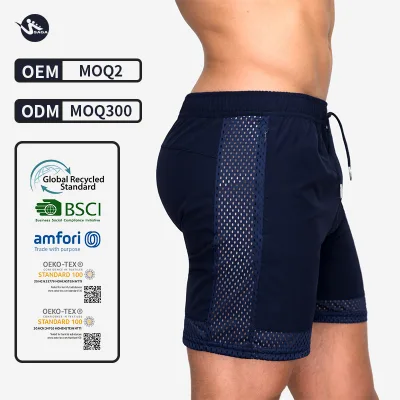


Mens Lightweight Running Shorts with Pockets Drawstring Athletic Workout
$3.60 - $5.04
MOQ: 100 Pieces


Comprehensive Sourcing Guide
Strategic Sourcing Guide for Running Shorts in the B2B Market
Navigating the global marketplace for Running Shorts requires a disciplined approach that balances technical performance with supply chain reliability. For procurement professionals, the core keyword "Running Shorts" represents a dynamic category where material science, customization capabilities, and logistical efficiency converge. The following guide synthesizes observed market data and essential verification protocols to assist buyers in making informed decisions without relying on unverified claims or specific supplier endorsements.
Technical Specifications and Material Composition
The foundation of any successful procurement strategy for Running Shorts lies in a precise understanding of technical specifications. Market observations indicate a diverse range of material compositions, necessitating careful verification of the supplier's actual inventory. A significant segment of the market offers products constructed from 100% Polyester, often highlighted for their durability and moisture-wicking properties. Conversely, other listings specify a Polyester/Spandex blend, which introduces elasticity crucial for high-movement activities like running and fitness. Some suppliers also note the use of Chemical Fiber Blending, a broad category that requires buyers to request specific fiber content breakdowns to ensure performance expectations are met.
Beyond the base fabric, the physical dimensions and structural features define the utility of the garment. Observed specifications include a "Mid-Thigh" length, which is a standard cut for athletic performance, allowing for a full range of motion without excess fabric drag. The presence of side pockets is a frequent attribute, offering practical storage for keys or small devices during runs. Furthermore, the sizing infrastructure varies; some listings adhere to standard alphanumeric sizing (S, M, L, XL, XXL), while others utilize specific measurement ranges such as 54cm-63cm, likely referring to waist or hip circumferences. Buyers must cross-reference these standards with their target demographic's sizing charts to avoid fit-related returns.
| Feature Category | Observed Market Attributes | Verification Requirement |
|---|---|---|
| Primary Material | 100% Polyester, Polyester/Spandex, Chemical Fiber Blending | Request specific fiber blend percentages and origin. |
| Length & Cut | Mid-Thigh, Shorts | Confirm hem length and cut style (e.g., loose vs. fitted). |
| Functional Details | Side pockets, Quick-Drying, Breathable | Verify fabric treatment for quick-drying and breathability claims. |
| Sizing Standards | S-M-L-XL-XXL, 54cm-63cm, One Size | Match supplier size charts to target market demographics. |
| Color Options | Black, Dark Blue, Solid Pattern | Confirm availability of custom colorways if branding is required. |
Compliance, Certification, and Standard Verification
In the B2B sector, compliance is not merely a formality but a critical risk mitigation strategy. While the supplied data mentions "Eco-Friendly" as a feature for certain Running Shorts, this is an attribute that requires rigorous third-party validation rather than acceptance at face value. Buyers should not assume that a product labeled "Eco-Friendly" possesses specific certifications unless the supplier provides documented proof of compliance with recognized environmental standards. Similarly, the mention of "Gold Stamp" craft or "Embroid" technology refers to manufacturing processes rather than safety certifications.
When evaluating suppliers, procurement teams must verify adherence to international textile standards. The observed data includes a reference to "prod_standard: S M L XL XXL," which indicates a sizing standard, but does not inherently cover safety or chemical compliance. Buyers should explicitly request documentation regarding REACH compliance, OEKO-TEX certification, or ISO standards relevant to textile manufacturing. The absence of specific certification data in general product listings means the onus is on the buyer to verify that the chemical treatments used for features like "Quick-Drying" or "Reversible" properties do not violate the safety regulations of the destination market.
Cost Drivers and Pricing Dynamics
Understanding the cost structure of Running Shorts is essential for budgeting and margin analysis. The observed price range in the market spans from $0.86 to $15.99 USD, a variance that reflects differences in material quality, customization levels, and order volume. The lower end of this spectrum typically corresponds to basic 100% Polyester models with minimal customization, while the higher end likely encompasses complex blends like Polyester/Spandex, advanced features like reversible designs, and significant branding efforts.
A primary cost driver is the level of customization. The market data confirms that "Customization" and "Customized Logo Printing" are widely available. However, the cost impact of these services is often non-linear. Suppliers offering "Good discount for large quantity and repeat customer" indicate that unit costs are highly sensitive to order volume. The Minimum Order Quantity (MOQ) observed ranges from 2 to 1000 units. An MOQ of 2 suggests a capability for small-batch or sample orders, which may carry a higher per-unit cost, whereas an MOQ of 1000 implies a focus on bulk manufacturing where economies of scale significantly reduce the unit price. Buyers must calculate the total landed cost, including the potential premium for custom packaging, which is listed as "Customized Packaging" or "Boxed Cartoned" in various listings.
Typical Applications and Use Cases
The versatility of Running Shorts allows them to serve multiple applications beyond simple jogging. The data explicitly links these products to "Running and Fitness," "Sports, Leisure," and "Fitness & Yoga Wear." This broad applicability suggests that the design must balance performance with comfort for varied activities. For instance, the "Quick-Drying" feature is critical for high-intensity running where sweat management is paramount, while the "Breathable" attribute is equally important for yoga or leisure activities where thermal regulation is key.
The target demographic is identified as "Adults," with specific gender targeting noted as "Men" in some listings, though the "One Size" and "Plus Size" attributes suggest inclusivity across different body types. The "Spring, Summer, and Autumn" seasonal classification indicates that these products are designed for warmer weather, utilizing lightweight materials to prevent overheating. Buyers sourcing for specific events, such as marathons or corporate fitness challenges, should verify that the "Applicable Sports" classification aligns with the specific demands of their event. For example, a marathon requires different durability and moisture management than a casual gym session.
Supplier Evaluation and Production Capabilities
Selecting the right supplier involves assessing their production capacity and flexibility. The observed data highlights a "Supply Type: In-Stock Items," which is advantageous for buyers needing immediate fulfillment. However, the presence of "Custom 1: Bra" and "Custom 2: Group Clothing" attributes indicates that many suppliers offer a broader range of sportswear solutions beyond just shorts. This suggests a potential for bundling orders to optimize logistics.
Lead time is a critical factor in supplier evaluation. The data notes a "7 days sample order lead time: Support," which is a strong indicator of a responsive supply chain capable of rapid prototyping. For bulk orders, buyers must verify the standard lead time, as this is not explicitly provided in the general data. A supplier that supports quick sample turnaround is more likely to have efficient production lines, but this does not guarantee speed for large-scale manufacturing. Buyers should also evaluate the "Single package size" (e.g., 40X30X1 cm) and "Single gross weight" (0.250 kg) to calculate shipping costs accurately. These metrics are vital for determining the most cost-effective shipping method, whether by air or sea.
Quality Control and Long-Term Procurement
Quality control (QC) must be integrated into the procurement process from the initial sample stage. Given the variety of materials and finishes, such as "Gold Stamp" or "Embroid," visual and tactile inspection is essential. Buyers should verify that the "Customized Logo Printing" is durable and does not crack or fade after washing, a common issue in sportswear. The "Reversible" feature, if present, requires a double-check of the stitching integrity on both sides of the garment.
For long-term procurement, building a relationship with a supplier that offers "Good discount for large quantity and repeat customer" is strategic. This implies a willingness to negotiate pricing as volume increases, which can significantly improve profit margins over time. However, consistency is key. Buyers should ensure that the "prod_model" numbers (e.g., 36333, 69785, MS68) correspond to consistent quality across batches. Relying on a single supplier for "In-Stock Items" can be risky if that supplier faces capacity constraints. Diversifying the supplier base while maintaining a core relationship with a reliable partner who can handle both standard and customized orders is a prudent strategy.
Final Procurement Considerations
In conclusion, sourcing Running Shorts requires a meticulous approach that prioritizes verified technical data over marketing claims. The market offers a wide array of options, from basic 100% Polyester models to complex Polyester/Spandex blends with advanced features. Buyers must navigate the variance in pricing, MOQs, and customization capabilities by conducting thorough due diligence. By focusing on material verification, compliance checks, and supplier flexibility, procurement professionals can secure high-quality Running Shorts that meet the specific demands of their target market. The key to success lies in treating product attributes as observations to be validated rather than guarantees, ensuring that every purchase aligns with the brand's quality standards and operational goals.
FAQs
What materials are used for Running Shorts?
Running Shorts are commonly made from 100% Polyester or Polyester/Spandex blends. Some listings also specify Chemical Fiber Blending, so buyers should request specific fiber content breakdowns to ensure performance expectations are met for their target activities.
Which sizes are available for these shorts?
Sizing standards vary between alphanumeric options like S, M, L, XL, and XXL, or specific measurement ranges such as 54cm-63cm. Buyers must cross-reference these standards with their target demographic's sizing charts to avoid fit-related returns.
Can I get custom logo printing on the shorts?
Yes, customization including customized logo printing is widely available for these products. However, the cost impact is often non-linear, and buyers should verify the durability of the printing method, such as embroidery or gold stamp, before placing bulk orders.
How long does it take to receive sample orders?
Sample order lead time is supported within 7 days for responsive suppliers. For bulk orders, the standard lead time is not explicitly provided in general listings, so buyers must verify this directly with the supplier to ensure it meets their schedule.
What is the minimum order quantity for these items?
The minimum order quantity ranges from 2 to 1000 units depending on the supplier. Lower MOQs may carry higher per-unit costs, while higher MOQs allow for economies of scale, so buyers should calculate total landed costs including potential customization fees.
Are these shorts suitable for running and fitness activities?
Yes, the products are explicitly applicable for running, fitness, and yoga wear. Features like quick-drying and breathable fabrics are critical for high-intensity activities, making them versatile for various sports and leisure scenarios during spring, summer, and autumn.
What packaging options are available for bulk orders?
Packaging options include customized packaging, boxed cartoned, or plastic bag plus carton configurations. Buyers should verify the single package size and gross weight to accurately calculate shipping costs and determine the most cost-effective shipping method for their volume.