Source RF Hard Security Tags for Retail, Warehouse, and Library
Compare 30 RF Hard Security Tag options from verified manufacturers. Evaluate UHF and LF/HF chips, EAS compatibility, and customization features for garment, jewelry, and bookstore applications. Review specifications and request quotes for bulk procurement; compare the available evidence and request quotations based on your requirements.
Key considerations
Products List




Comprehensive Sourcing Guide
RF Hard Security Tag Sourcing Guide
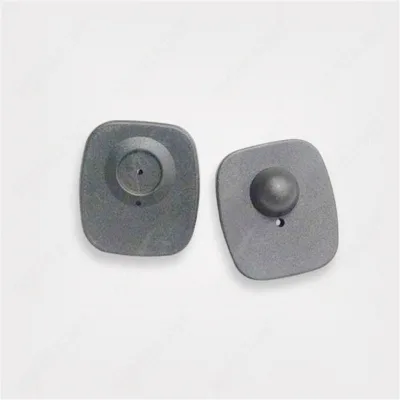
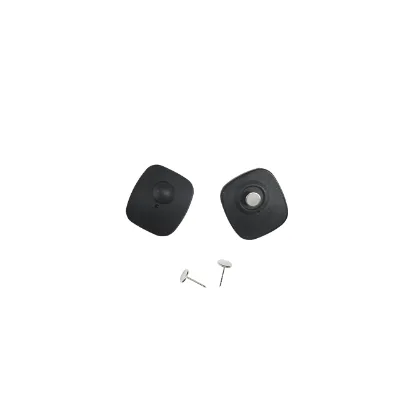
Buyers must first distinguish between the two primary operational frequencies observed in the market, as this dictates the entire security ecosystem. One variant operates at 8.2MHz, utilizing a three-ball clutch lock mechanism suitable for specific retail environments, while the other functions within the 860-960MHz UHF band using Impinj Monza R6 chips for broader inventory tracking. Selecting the wrong frequency can render the tags incompatible with existing store antennas, leading to immediate operational failure and wasted capital.
The physical form factor and intended application also require careful alignment with your specific loss prevention needs. Some models feature an irregular shape designed for jewelry or high-value items, whereas others are circular and optimized for garment applications. Understanding whether you need a passive power supply system with read/write capabilities or a simpler detection signal is essential before engaging with any supplier to ensure the hardware matches your store's layout and product types.
Product Scope and Observed Listing Signals
The current market listings reveal a diverse range of models, including the ANG-HT and ANG-RHST series, which cater to different security requirements. Buyers should note that some products are explicitly marketed as RF Hard Tags with a 53mm diameter, while others are defined by precise dimensions like 21.57317.6mm for specialized garment use. This variation in physical standards means that a single procurement order often requires verifying the exact model number against your specific security gate dimensions and product categories.
Listing signals also indicate significant customization options, with colors available in white, black, or fully customized schemes to match brand identity. The packaging details suggest a standard paper carton format, typically containing 1000 pieces per carton with a gross weight of 10kg, which impacts your logistics planning. When reviewing supplier catalogs, buyers must verify if the "Customize" attribute applies to the tag shape, color, or chip encoding, as this flexibility can be a critical differentiator for large retail chains needing uniform branding.
Technical Specifications to Verify
Technical verification begins with the chip architecture, as the market presents both LF/HF chips operating at 125kHz and 13.56MHz and UHF chips operating at 860-960MHz. You must confirm that the selected tag supports the EPC C1g2 protocol if you require long-range reading capabilities, or ISO11784/785 standards for shorter-range, high-security applications. Mismatching the chip type with your store's reader hardware will result in a complete failure of the security system, making this the most critical technical parameter to validate before placing an order.
The detection signal and range are equally vital for operational success, with observed detect distances ranging from 1.2 to 2.0 meters depending on the specific model and antenna configuration. Buyers should verify the system design, which is typically RF-based, and ensure the tag's locking mechanism, such as the three-ball clutch, is robust enough to prevent unauthorized removal. Additionally, checking the personalization capabilities, such as chip encoding, ensures that the tags can be uniquely identified for inventory management rather than just serving as a simple alarm trigger.
Compliance and Safety Documentation
Compliance documentation is a non-negotiable requirement for international procurement, with suppliers typically providing CE, ISO, and RoHS certifications for their products. Some listings also include CCC certification, which is essential for selling within the Chinese market, while others may reference SGS standards for material safety. Buyers must request the specific test reports associated with these certifications to ensure the tags meet the regulatory requirements of their destination country, as generic claims of compliance are insufficient for legal importation.
Safety standards also extend to the physical construction of the tags, particularly regarding the materials used in the casing and the locking mechanisms. The observed products adhere to standards like RoHs, which restricts hazardous substances, but buyers should verify that the specific batch they receive matches the certified samples. Ensuring that the packaging details and production quality control measures, such as the four tests conducted during production, are documented in the supplier's quality manual helps mitigate the risk of receiving non-compliant or defective units.
Cost Drivers and Commercial Terms
Cost drivers in this category are heavily influenced by the chip technology and the level of customization required. UHF tags with advanced chips like the Impinj Monza R6 generally command a higher price point compared to standard LF/HF tags, and the ability to customize colors or print specific security ink adds to the unit cost. Buyers should analyze the observed price range of 0.03 to 4.5 USD to understand the variance, recognizing that the lower end likely represents basic, non-customized units while the higher end includes specialized features or premium branding.
Commercial terms such as Minimum Order Quantity (MOQ) and lead times are critical factors in budgeting and inventory planning. The market shows an MOQ range of 100 to 10,000 units, requiring buyers to balance their initial investment against their storage capacity and sales velocity. Furthermore, delivery times can vary, with some suppliers offering a five-day turnaround after deposit receipt, while others may have longer lead times depending on the complexity of the customization and the current production load.
Supplier Qualification and Quality Control
Supplier qualification should focus on their demonstrated quality control processes, such as the four tests conducted during production before delivery. Buyers must verify that the supplier has a documented procedure for inspecting the locking mechanisms, chip functionality, and physical dimensions to ensure consistency across the entire batch. A supplier that can provide detailed quality control records and evidence of their testing protocols is more likely to deliver reliable products that function correctly in a live retail environment.
Geographic origin and production capacity are also key indicators of supplier reliability, with many manufacturers based in Guangzhou, Guangdong, China. Buyers should assess the supplier's ability to scale production to meet their volume needs, especially given the wide range of observed MOQs. Verifying the supplier's history of delivering on time and their responsiveness to quality issues is essential, as the warranty period of two years from the date of delivery is only valuable if the supplier remains operational and supportive throughout that term.
Long-Term Procurement Checks
Long-term procurement success depends on establishing a robust warranty and support framework that extends beyond the initial purchase. The observed two-year warranty from the date of delivery provides a baseline for protection, but buyers should negotiate specific terms regarding the replacement of defective units and the availability of spare parts. Ensuring that the supplier has a clear process for handling warranty claims is crucial for maintaining operational continuity and minimizing the financial impact of any hardware failures.
Finally, buyers must plan for the lifecycle management of the tags, including the need for re-encoding or replacement as security protocols evolve. The ability to personalize chip encoding suggests that the tags can be updated for new inventory systems, but this capability must be verified with the supplier to ensure compatibility with future upgrades. Regular audits of the tag performance and supplier relationship will help identify any drift in quality or service levels, ensuring that the security system remains effective and cost-efficient over the long term.
FAQs
What chip options are available for rf hard security tags?
The available chips include UHF Impinj Monza R6 for long-range reading and LF/HF chips for close proximity. These support Read/Write capabilities and comply with EPC C1g2 protocols. Buyers can choose based on their specific detection distance and inventory management needs.
Can these tags be customized for specific branding needs?
Yes, customization is available for color and chip encoding. Options include white, black, or custom colors to match brand identity. The tags support personalization through chip encoding, allowing unique identification for each item. This ensures seamless integration into existing retail or warehouse security systems.
What certifications do these security tags hold?
The tags hold CE, ISO, RoHS, and CCC certifications. These standards ensure compliance with international safety and environmental regulations. The certifications verify the quality of materials and manufacturing processes, providing assurance for global distribution and use in regulated markets across different regions and industries.
How long is the delivery time for orders?
Delivery typically takes five days after the deposit is received. This lead time applies to standard production runs. Buyers should account for this timeframe when planning inventory replenishment. The efficient turnaround supports just-in-time stocking strategies for retail stores and distribution centers requiring rapid deployment.
What is the minimum order quantity for these tags?
The minimum order quantity ranges from 100 to 10,000 units depending on the specific model and customization requirements. This flexibility accommodates both small boutique retailers and large enterprise chains. Buyers can select quantities that align with their budget and inventory turnover rates without excessive upfront capital investment.
What detection distance can be expected from these tags?
Detection distances typically range from 1.2 to 2.0 meters for RF systems. UHF variants may offer extended ranges depending on antenna configuration. This range ensures effective perimeter security for stores and warehouses. The performance is optimized for standard gate installations, providing reliable alarm triggers for unauthorized item removal.